43° and Overcast
Image



The first sign appeared not as a sudden rupture, but as a quiet distortion in the drywall. Inside the family home, overhead in the ceiling, a strange bubble had begun to form. For days, it remained a minor domestic eccentricity: the kind of cosmetic flaw a busy household notes in passing and promises to fix when time allows.
Then the ceiling gave way.
What followed was a cascading crisis that quickly outgrew the boundaries of a simple household mishap. The resulting flood displaced the family for months, forcing a complex, highly coordinated ecosystem of thirteen people to drift between Airbnbs, residential hotels, and temporary rentals. For any family, sudden displacement is an emotional and financial shock. But for Natalie Beazer’s household, which includes neurodivergent adults, medically fragile children, and individuals with profound mobility challenges, the event became an existential reckoning.
To move meant more than packing boxes; it meant uprooting carefully calibrated sensory environments, disrupting rigid behavioral routines, and navigating a rental market fundamentally hostile to accessibility. They moved multiple times, balancing the logistics of property sales with the relentless demands of county waivers, medical transport, and specialized care. Even after securing a new property, a secondary wave of hidden water damage left them without a functioning kitchen for months.
Yet, inside this prolonged upheaval, the infrastructure of family life refused to collapse. Birthdays were marked with improvised cakes; children sat cross-legged on hotel beds for homeschool lessons; physical therapies were conducted in cramped corridors. The household moved forward because, for families living at the intersection of profound disability and systemic neglect, adaptation is not a choice; it is the only mechanism of survival.
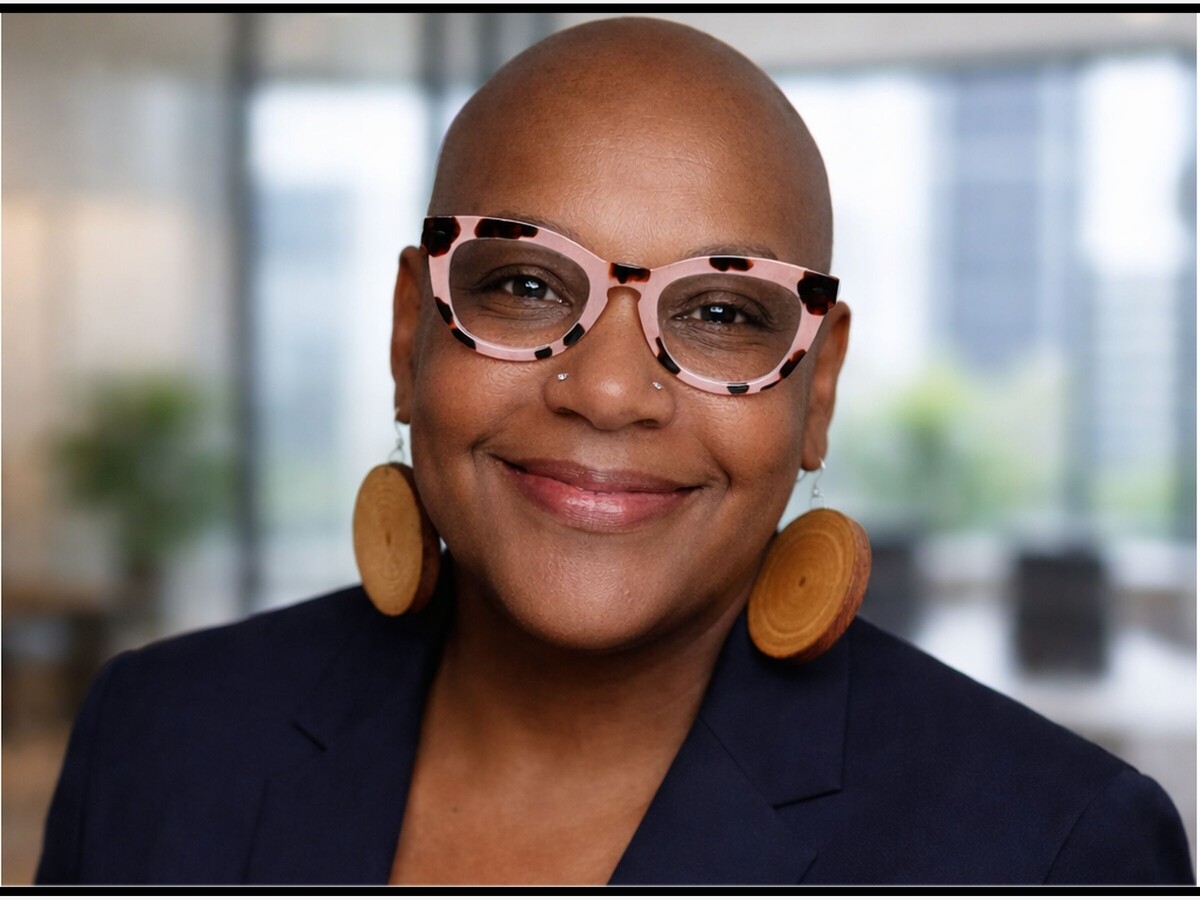
For Beazer, the crisis was an unvarnished confirmation of a truth she had long suspected: the institutional systems designed to support disabled individuals remain fundamentally disconnected from the messy, lived realities of the families who care for them.
It is this precise realization that forms the foundation of the NeuroNest Collaborative, now known as NeuroNeiche, Inc., the Minnesota-based initiative Beazer is currently engineering. The project did not emerge from the clinical detachment of policy papers or academic think-tanks. It was forged in the immediate, daily labor of keeping a family whole.
“I wanted him to be around family,” Beazer says, her mind resting on one of her adult sons who requires continuous, lifelong support. “I wanted him to be supported.”

Beazer’s trajectory begins far from the midwestern prairie, in the Caribbean, where she first entered the field of deaf education. Working on a small island with scarce specialized resources, she quickly recognized the stark boundaries of regional educational frameworks. Driven by a desire for deeper expertise, she immigrated to the United States to pursue advanced training in disability education, unwittingly setting her life on a dual track. Not long after her arrival, both of her sons were diagnosed with autism.
Suddenly, her professional journey collided with an intimate, permanent reality. She found herself at a geographic and maternal crossroads: return to her home country or remain in the United States, where the institutional infrastructure for developmental disabilities was more robust, even if labyrinthine.
“I got to a point where I had to choose between going back to my country or having the support for my boys,” she recalls. “And so I chose the latter.”
That choice dictated the next two decades of her life. Professionally, Beazer ascended into higher education administration, directing disability services at universities. In lecture halls and dean's offices, she became a fierce bureaucratic shield for students who were routinely underestimated by an academic system built on assumptions of deficit.
“I was a very strong advocate for students,” she says, a sharp edge of recollection entering her voice. “Instructors would say, ‘Well, they cannot do this course because...’ and it allowed me to look at different ways the course goals could be met, ways to adjust and adapt.”
Yet, when the workday ended, Beazer returned home to fight the exact same battles on a personal front. For years, she compartmentalized these realities, keeping her institutional expertise separate from the raw, emotional labor of caregiving. “I always had these two lanes in my life,” she notes. “I had the professional lane and my mother lane.”
The lanes finally converged eleven years ago when Beazer experienced her own significant health challenges, forcing her to confront mobility limitations and the often difficult realities of accessibility in deeply personal ways. What had once been professional advocacy became lived experience, including ongoing efforts to secure the kinds of mobility supports and home accessibility modifications many families struggle to obtain. She was no longer just an administrator rewriting university accommodations or a mother managing her sons’ schedules; she was now navigating many of the same physical and bureaucratic barriers affecting the families and individuals she had spent years advocating for.
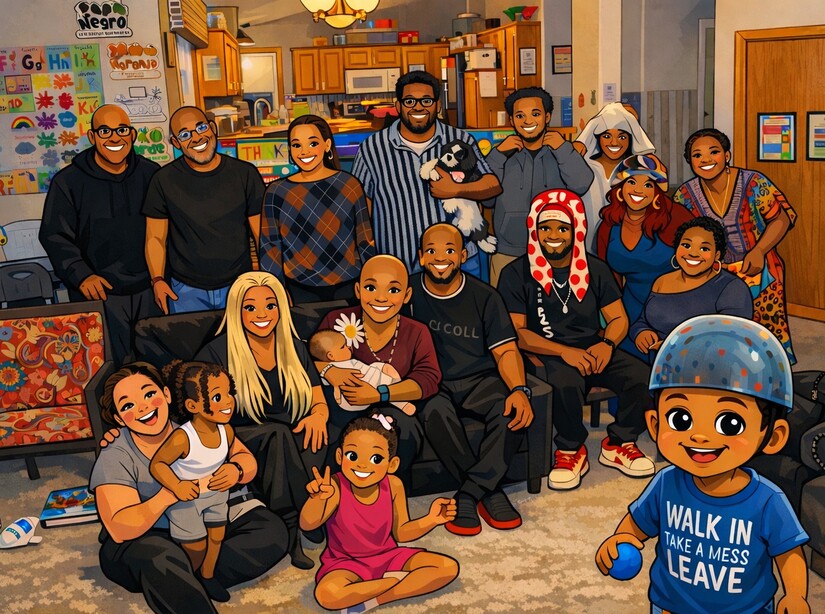
By 2022, that convergence materialized into a radical domestic experiment. Beazer and her sister combined their households, establishing what they now call a "neurohub": a multi-generational, self-sustaining sanctuary of thirteen family members living under one roof.
To step inside this home on a typical morning is to witness a masterclass in symphonic coordination. The physical space itself has been adapted out of necessity. Visual schedules line the entryways, and heavy noise-canceling headphones rest on countertops alongside coffee mugs. The home itself reflects the family’s ongoing efforts to adapt to varying mobility and accessibility needs, realities that shape nearly every aspect of daily life within the household. In the kitchen, meals are prepared not in standard portions, but with careful consideration for sensory sensitivities, varying dietary restrictions, and anatomical needs.
The home operates as an intricate, interdependent ecosystem. It spans from aging matriarchs to young children, balancing an extraordinary array of neurological, developmental, and medical profiles. Among them is Beazer’s nine-year-old niece, Zion, who was born prematurely at five months and survives with seventeen distinct medical and developmental diagnoses.
During periods when Zion required multiple major surgeries in a span of mere weeks, the home transformed into a decentralized clinic. Family members rotated shifts to manage post-operative care, monitor vitals, and administer medications, while simultaneously insulating the younger children from the ambient anxiety of medical trauma. When one part of the ecosystem fractures, the remaining members redistribute the weight.
To witness this household is to witness a profound rejection of the hyper-individualism that defines modern American life. Here, care is communalized. The daily schedule is built on mutual aid: older generations pass down traditional skills like gardening, culinary arts, and tactile crafts, while the younger, tech-literate generation instructs the adults in digital communication, social media strategy, and adaptive assistive technologies. It is an intentional cross-pollination of knowledge where everyone is simultaneously a teacher and a student.
It was within this domestic crucible that the blueprint for NeuroNest was born.

“What we are trying to solve is the disconnected services,” Beazer explains. In her estimation, the crisis facing families today is not a lack of resources, but the profound fragmentation of those resources.
The institutional landscape of American disability support is a dizzying, multi-tiered bureaucracy that operates with little to no central coordination. In Minnesota, a state often lauded for its progressive social safety nets, families are routinely swallowed by the labyrinth of the Medicaid Home and Community-Based Services (HCBS) waiver systems. Securing a waiver, whether it be the Community Alternative for Community Inclusion (CACI), Community Access for Disability Inclusion (CADI), or the Developmental Disabilities (DD) waiver, is merely the first battle in a lifelong war.
Once a waiver is allocated, the administrative burden falls squarely on the shoulders of the household. A single family must frequently manage an exhausting constellation of independent actors: county case workers, private speech and occupational therapy clinics, school district Individualized Education Programs (IEPs), specialized transit providers, medical specialists, and personal care assistants. Each entity operates within its own silo, bound by distinct regulatory constraints, reporting structures, and documentation demands.
The result is that parents are involuntarily drafted into the role of unpaid, lifelong case managers for a complex bureaucratic machine they were never trained to navigate. They must defend their children’s diagnoses to state auditors, fight for the retention of service hours, and resolve conflicting requirements between housing programs and employment services. The system demands total, flawless compliance from individuals who are already operating under conditions of chronic sleep deprivation and emotional exhaustion.
“There are parents who are doing an amazing job,” Beazer says softly. “But at what cost?”
The cost, she observes, is a quiet epidemiological crisis of caregiver burnout. The data on parental caregivers of profoundly neurodivergent or medically fragile individuals reveals disproportionately high rates of divorce, prolonged financial insecurity due to restricted career mobility, and secondary chronic health conditions triggered by decades of elevated cortisol and neurological stress.
Furthermore, because the broader community lacks the infrastructure to absorb or support these families, they gradually retreat from public spaces, parks, and traditional social networks. They vanish into their homes, struggling behind closed doors to preserve the dignity of their loved ones. “Parents are struggling in silence,” she says.

NeuroNest is Beazer’s attempt to break that silence. Crucially, the project rejects the traditional models of institutional care: the clinical, highly regulated group home or the isolated, independent apartment complex. Group homes, while providing basic safety, often strip individuals of autonomy, segregating them from the broader community and enforcing rigid institutional schedules. Independent living arrangements, conversely, can lead to severe social isolation for neurodivergent adults who lack the organic social scaffolding required to maintain meaningful relationships.
Instead, Beazer envisions a comprehensive architectural and social ecosystem designed around universal design principles, sensory-informed spatial layouts, and permanent, community-centered belonging.
The architectural philosophy behind NeuroNest challenges the very metrics by which society measures a successful life for neurodivergent individuals. “It is not just about having a home,” Beazer insists. “That is wonderful. Having a job, which is very hard for a lot of neurodivergent people, that is great. But life is so much more than that.”
In Beazer’s world, a life lived successfully is one enriched by the freedom of unquantifiable joy, creative expression, and authentic self-actualization. In her own home, specialized interests, be it an intense fixation on anime, the tactile rhythm of sorting marbles, the cultivation of a garden, or a childhood passion for breakdancing, are not treated as behavioral symptoms to be modified, scheduled, or extinguished. They are treated as vital expressions of human identity and intelligence.
When her son expressed an interest in breakdancing at four years old, external observers questioned her decision to permit it. Rather than discouraging the impulse or forcing him into a more conventional athletic box, she encouraged total exploration. “I wanted him to be the one to say, ‘Nope, I am not trying that anymore,’” she notes.
This perspective positions Beazer at the vanguard of the modern neurodiversity movement, which views conditions like autism, ADHD, and sensory processing differences not as medical pathologies to be cured or corrected, but as natural variations in human neurology. She points out that the dominant public discourse around developmental disabilities focuses almost exclusively on behavioral outbursts: the "meltdown."
“They see them as something wrong that needs to be fixed,” Beazer says. But in her decades of experience, a meltdown is rarely an act of defiance or a behavioral failure; it is the predictable biological response of a highly sensitive nervous system subjected to an unaccommodating environment.
A standard public space or typical modern home is often a minefield of sensory trauma. Fluorescent lighting flickers at a frequency invisible to neurotypical eyes but agonizing to autistic individuals. Open-concept architecture allows acoustic echoes to multiply, while HVAC units hum with an oppressive baseline drone.
“When you have a neurodivergent mind, all those things come in at the same speed, same level, same sound,” she explains. Her adult son still carries heavy noise-canceling headphones everywhere he goes, a simple piece of plastic acting as a vital shield against the cacophony of modern public infrastructure.
For Beazer, the diagnostic gaze is pointed in the wrong direction. The focus shouldn't be on medicating or ‘behavioralizing’ the individual to tolerate a hostile world. “What needs to be fixed,” she says firmly, “is the environment.”
To that end, NeuroNest is exploring structural designs that feature acoustic dampening, indirect and customizable LED lighting spectrums, clear transitional spaces that prevent spatial disorientation, and shared communal hubs that open directly into private residential quarters. This layout ensures that an individual can move seamlessly between deep privacy and social connection without facing environmental barriers.

NeuroNeiche, Inc. is currently moving from concept to concrete planning, with Beazer and her network of collaborators exploring long-term designs for a flagship community in Minnesota, one she believes can ultimately serve as a scalable national model. The objective is to establish an open-source framework that can be adapted by communities across the country, showing that cooperative, multi-generational disability housing is not only socially superior but economically sustainable over the long term.
Despite the grand scale of her ambition, Beazer does not carry herself with the rehearsed charisma of a career activist or a polished public figure. She speaks with the measured, grounded focus of an educator and mother who has spent decades solving immediate, practical problems in the shadows of larger systems. “I am very quiet in the background,” she admits.
But the background, she has realized, is no longer a sustainable place to hide. The stakes are simply too high for the generation coming behind her. As the aging parents of neurodivergent adults face their own health declines, the lack of sustainable community-based housing looms as an urgent societal crisis. Without models like NeuroNest, thousands of neurodivergent individuals risk being forced back into institutional settings or nursing facilities that are ill-equipped to support their needs.

As part of her expanding work, Beazer is developing a podcast series focused on "the first ninety days", the disorienting, often grief-laden period immediately following a child's developmental diagnosis. During this time, families are routinely handed clinical terminology and medical prognoses but are left entirely without a map for daily survival. They are given lists of services but no guidance on how to preserve their families' emotional and mental health.
What she is building through NeuroNest is that missing map. It is a vision of disability advocacy that refuses to separate high-level policy from the ordinary, domestic realities of human vulnerability: children searching for confidence, adults yearning for a place where they do not have to mask their differences to be accepted, and exhausted parents who simply need to know that if they fall, an entire community is standing by to catch them.
When asked to define leadership, Beazer does not cite organizational theories, corporate paradigms, or strategic growth models. Her answer is immediate, anchored in the same protective, maternal instinct that kept her in the United States decades ago.
“To me, leadership is about being a servant,” she says. “Seeing what the need is and doing everything that I can to make it better.”
The infrastructure of NeuroNest may still be evolving, its physical walls yet unbuilt. But the proof of concept already exists. It is alive in the multi-generational household Beazer commands every day; it is woven into the adaptive strategies her family deploys with every sunrise; and it is reflected in the eyes of her children, who are growing up with the radical certainty that they are whole, just as they are.
Natalie Beazer has not just built a home. She has drawn the blueprint for a more humane world.
MinneapoliMedia | Community. Culture. Civic Life.



Sunny, with a high of 52 and low of 41 degrees. Overcast in the morning, sunny during the afternoon, clear in the evening, overcast overnight.