Image
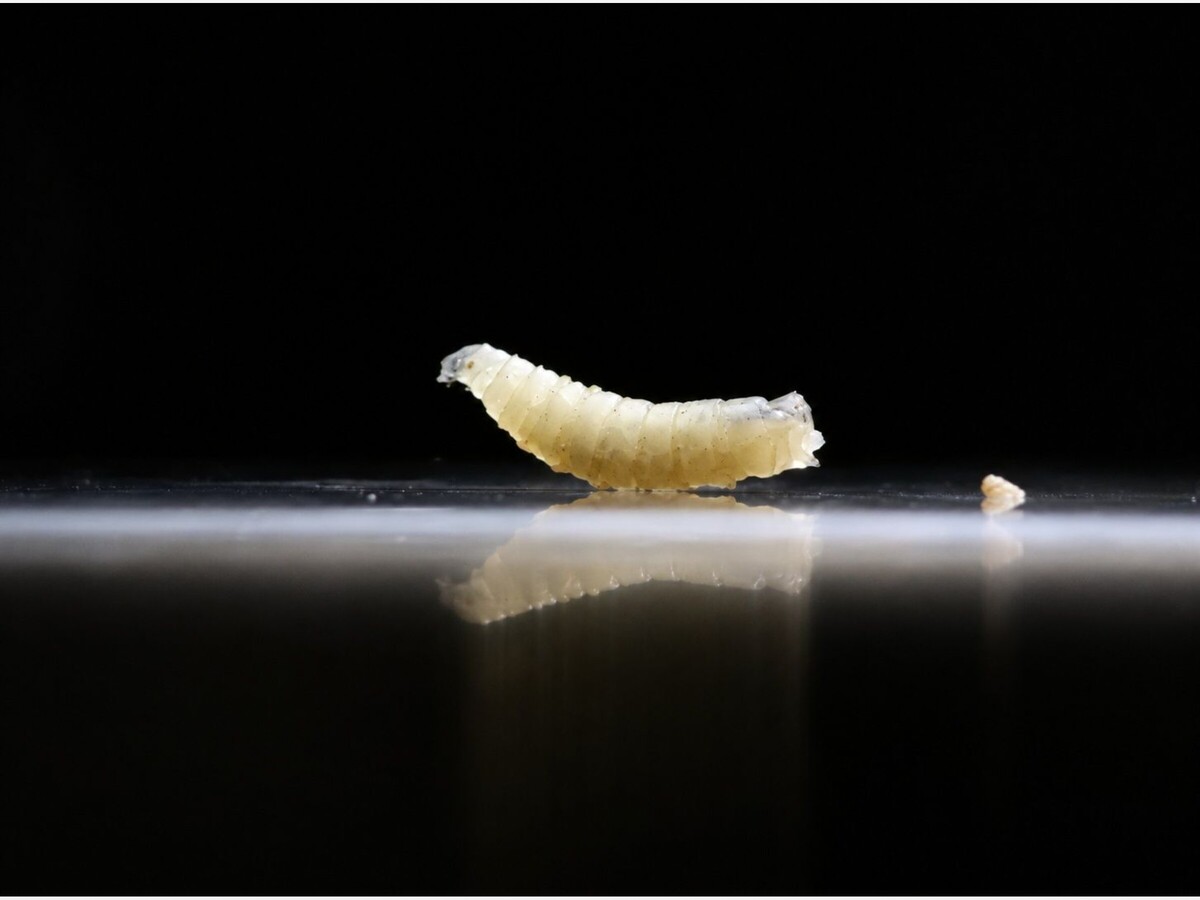



The Minnesota Board of Animal Health says the discovery of the flesh-eating parasite in South Texas does not currently pose an immediate threat to Minnesota livestock, pets, or wildlife. Nevertheless, veterinarians and agricultural officials are maintaining heightened awareness as federal authorities mobilize a large-scale containment effort designed to prevent the parasite from becoming reestablished in the United States.
The concern stems from a June 3 confirmation by the U.S. Department of Agriculture that New World screwworm larvae were discovered in the umbilical region of a three-week-old calf near La Pryor in Zavala County, Texas, approximately 50 miles north of the Mexican border. Laboratory testing conducted by the USDA National Veterinary Services Laboratories in Ames, Iowa, confirmed the diagnosis, marking the first known locally acquired U.S. case since the parasite was eradicated from the country in the 1960s.
For agricultural officials, the finding represents far more than an isolated animal health incident. It is a reminder of a pest once capable of inflicting devastating losses across the American livestock industry before a decades-long eradication campaign succeeded in removing it from the country.
"This is definitely something worth maintaining awareness around," said Dr. Katie Cornille, Senior Veterinarian with the Minnesota Board of Animal Health.
Cornille noted that the adult flies themselves are not expected to migrate from Texas to Minnesota.
"The fly itself doesn't fly very far," she said. "So we don't expect it to immediately fly all the way from Texas to here."
Instead, she said, animal movement remains the primary concern.
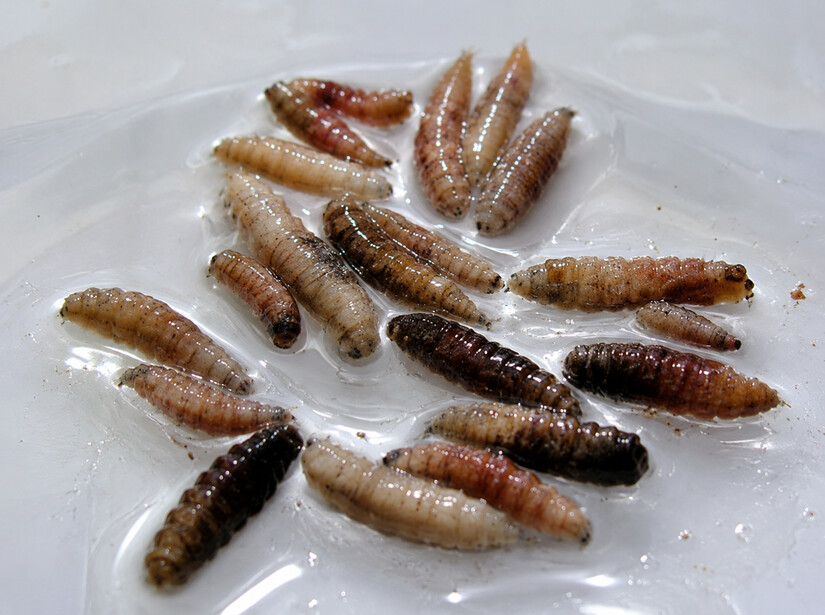
The New World screwworm, scientifically known as Cochliomyia hominivorax, differs dramatically from the flies and maggots commonly encountered around decaying organic material.
Most fly larvae feed on dead tissue. New World screwworm larvae feed on living tissue.
Female flies are attracted to open wounds, surgical sites, scratches, mucous membranes, and the unhealed navels of newborn animals. A single female can deposit hundreds of eggs in or near a wound. Once the eggs hatch, the larvae burrow into healthy flesh and begin feeding.
The result can be severe tissue destruction, expanding wounds, secondary infections, intense pain, and, in severe cases, death.
Because the larvae literally screw themselves deeper into tissue as they feed, the parasite acquired its common name decades ago.
Veterinary experts describe infestations as particularly dangerous because they often worsen rapidly if left untreated. Animals may exhibit unusual behavior, signs of discomfort, reluctance to eat, foul-smelling wounds, bloody discharge, or visible masses of larvae within affected tissue.
According to the Minnesota Board of Animal Health, adult female screwworm flies are somewhat larger than common houseflies and possess distinctive metallic blue-green bodies marked by three dark stripes on the thorax and a reddish-orange head.
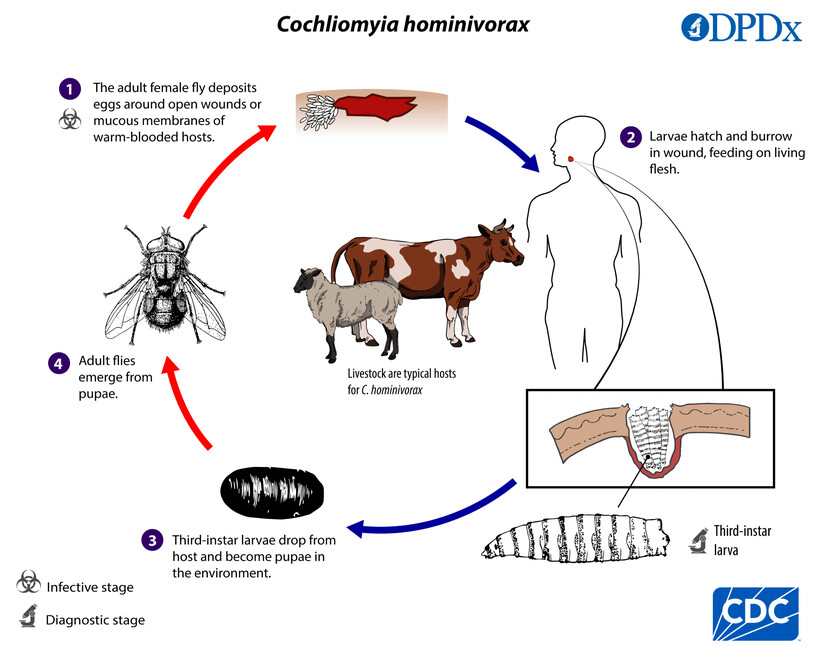
Although cattle have historically suffered the greatest economic impact from screwworm infestations, the parasite is not limited to livestock.
The larvae can infest virtually any warm-blooded animal, including:
Newborn animals are considered especially vulnerable because their healing umbilical cords provide an ideal site for egg deposition.
Livestock that have recently undergone procedures such as branding, dehorning, castration, ear tagging, or other activities resulting in open wounds face elevated risk during periods when screwworm flies are present.
Pet owners are also being encouraged to remain vigilant.
Dogs and cats with surgical incisions, scratches, bite wounds, or other skin injuries can become targets if the parasite were ever introduced into an area.
Veterinarians advise pet owners to keep wounds clean and monitored and to seek immediate veterinary care if unusual maggot infestations, foul odors, excessive drainage, or worsening tissue damage are observed.
The confirmation of the Texas case immediately triggered a coordinated federal and state response aimed at preventing the parasite from becoming established within U.S. livestock populations.
Authorities established a quarantine and surveillance zone extending approximately 20 kilometers, or 12.4 miles, around the affected property in Zavala County.
Movement restrictions require inspections of susceptible animals before they may leave the designated area.
The cornerstone of the eradication strategy is a technique that has been used successfully against screwworm populations for decades: the Sterile Insect Technique.
Under the program, millions of laboratory-raised sterile male screwworm flies are released into affected areas.
Because female screwworm flies mate only once during their lifetime, mating with sterile males produces no offspring. Over time, repeated releases collapse the breeding population and interrupt the insect's life cycle.
The strategy proved extraordinarily successful during the original U.S. eradication campaign. Beginning in the 1950s, federal and international partners systematically eliminated screwworm populations across the United States, Mexico, and much of Central America through massive sterile-fly release programs.
The current Texas response is built upon that same model.
Federal officials have also expanded trapping operations, intensified surveillance efforts, and maintained restrictions on certain livestock imports from Mexico as the parasite has advanced northward through portions of Central America and southern Mexico in recent years.
More than 8,000 monitoring traps have reportedly been deployed along portions of the southern border to provide early detection capability.
While New World screwworm is generally associated with tropical and subtropical climates, state veterinarians emphasize that Minnesota cannot simply dismiss the risk.
Cornille said the greatest concern involves infected animals being transported into areas where the parasite is not normally found.
During Minnesota's warmer months, environmental conditions can support portions of the screwworm life cycle.
Experts note that while adult populations would likely struggle to survive long-term in northern climates, the parasite could potentially complete portions of its two- to three-week life cycle during the summer if introduced through infected animals.
Winter conditions provide a significant natural barrier.
Research indicates that screwworm pupae cannot survive prolonged freezing temperatures and generally fail to develop when soil temperatures drop below approximately 46 degrees Fahrenheit.
That climatic limitation reduces the likelihood of permanent establishment in Minnesota but does not eliminate the risk of temporary infestations during warmer periods.
As a result, the Minnesota Board of Animal Health is encouraging livestock producers to routinely inspect animals, especially those with fresh wounds or recent surgical procedures.
Producers are also being advised to maintain biosecurity protocols, monitor newly acquired animals carefully, and report unusual wound infestations immediately.
Animal health officials recommend immediate veterinary evaluation if animals exhibit:
Livestock owners are encouraged to inspect newborn animals, particularly calves with healing navels, and animals recovering from veterinary procedures.
For pets, veterinarians recommend keeping wounds clean, limiting exposure to flies during healing periods, and monitoring outdoor animals closely.
Any suspected cases should be reported immediately to veterinarians, state animal health officials, or the USDA for evaluation and laboratory testing.
Federal and state officials emphasize that the current situation is an animal health and economic concern rather than a food safety emergency.
New World screwworm does not infect agricultural crops and does not contaminate commercial meat products entering the food supply.
The primary concern involves animal welfare, livestock losses, veterinary costs, and the potential economic consequences of a widespread outbreak within the cattle industry.
For Minnesota, home to one of the nation's significant livestock sectors, maintaining awareness remains the immediate priority.
The Texas case may be more than 1,200 miles from Minnesota's farms and ranches, but animal health officials say early detection has always been the first line of defense against invasive agricultural threats.
For now, no cases have been reported in Minnesota. State officials say they will continue monitoring developments closely as federal eradication efforts move forward in Texas and along the southern border.
"Awareness is key," Cornille said. And for a parasite that once took decades and enormous resources to eliminate from the United States, agricultural authorities across the country appear determined to ensure history does not repeat itself.
MinneapoliMedia | Community. Culture. Civic Life.



Sunny, with a high of 96 and low of 64 degrees. Sunny in the morning, clear overnight.