59° and Mist
Image



The 2026 FIFA World Cup returns to the pitch Saturday afternoon for its penultimate competitive event as France and England lock horns at Miami Stadium in the tournament’s third-place playoff.
Neither heavyweight nation expected to be contesting this fixture. France arrived at the semifinal stage carrying a flawless, unbeaten campaign record, sixteen tournament goals, and an opportunity to reach the World Cup Final under Didier Deschamps. Spain systematically dismantled that ambition through a highly controlled 2-0 victory in Arlington. England came even closer; Thomas Tuchel’s squad led defending champion Argentina during Wednesday’s semifinal block in Atlanta before surrendering two late strikes in a painful 2-1 heartbreaker.
The ultimate championship opportunity has permanently disappeared for both programs. What remains is a high-profile match frequently dismissed as the contest nobody desires to play, yet one carrying far more historical consequence than its reputation suggests. France and England will compete for an official podium position on the world stage. The result will enter each nation’s permanent World Cup record. Kylian Mbappé, Lionel Messi, Harry Kane, and Jude Bellingham remain intrinsically linked to the Golden Boot matrix.
Most importantly, the match marks the definitive conclusion of Deschamps’ extraordinary fourteen-year tenure as France manager. For France, Saturday offers the chance to send one of the most successful managers in World Cup history away with a final medal. For England, it offers the possibility of securing the program's best men’s World Cup finish on foreign soil since 1966. The emotional burden remains substantial, but the competitive opportunity is absolute.
|
Time (ET) |
Event Operational Milestone |
Venue / Portal |
Broadcast |
|
2:00 PM |
Stadium Turnstiles & Gates Open |
Miami Stadium, Miami Gardens, FL |
Security Screening |
|
3:30 PM |
Squad Arrivals & Dressing-Room Lockdowns |
Sector 4 Facilities |
Closed Feed |
|
4:15 PM |
On-Field Physical Warmups & Hydration Blocks |
Playing Surface |
Live Track |
|
5:00 PM |
France vs. England Kickoff |
Main Bowl Grid |
FOX / Telemundo |
|
6:50 PM |
Regulation Concludes |
Subject to Stoppage |
Pitch Feed |
|
Post-Match |
Bronze-Medal Presentation & Ceremonies |
Podium Platform |
Global Broadcast |
The defining variable surrounding a third-place playoff is rarely structural; it remains entirely psychological. France and England spent four intense weeks believing they could become world champions, navigating the expanded group phase and four grueling single-elimination rounds before arriving within 90 minutes of the Final. The subsequent transition from championship focus to a bronze-medal playoff occurs with brutal rapidity. Players have little opportunity to metabolize elimination before returning to the treatment rooms, data reviews, and another match blueprint.
French coaching personnel openly acknowledged the difficulty of the assignment, emphasizing France’s corporate responsibility to represent the national shirt with absolute seriousness. French players have spoken about securing a victory as an ultimate tribute to the manager who guided the country to the 2018 title and the 2022 Final in Lusail.
England faces an identical emotional calculation. Tuchel’s team did not simply lose to Argentina; they surrendered a lead late in a semifinal after appearing positioned to reach the final match. The immediate challenge is the total restoration of tactical concentration. The team that accepts the match first will dictate it. Third-place playoffs historically transform into open, high-scoring contests because both sides play with less structural fear than they would in a final, creating an environment where rotated lineups can disrupt familiar relationships and allow attackers to engage directly.
The primary narrative surrounding the French camp extends far beyond the bronze medal itself. Saturday marks the definitive final match for Deschamps in charge of Les Bleus. His historic tenure launched in 2012 and transformed France into the most consistently successful men’s international program of its era, reaching the European Championship Final in 2016, winning the World Cup in 2018, returning to the final block in 2022, and reaching another final four in 2026.
The semifinal loss to Spain prevented Deschamps from exiting through the ultimate match, pushing his final assignment to Miami. The third-place playoff therefore operates as a closing ceremony for a managerial era that lasted fourteen years and permanently reshaped France’s competitive expectations. His players now carry an additional obligation to prevent one of France’s defining football figures from concluding his international career with consecutive defeats. Deschamps has confirmed that while heavy tournament workloads will produce substantial rotation across the starting eleven, Mbappé is physically available to feature.
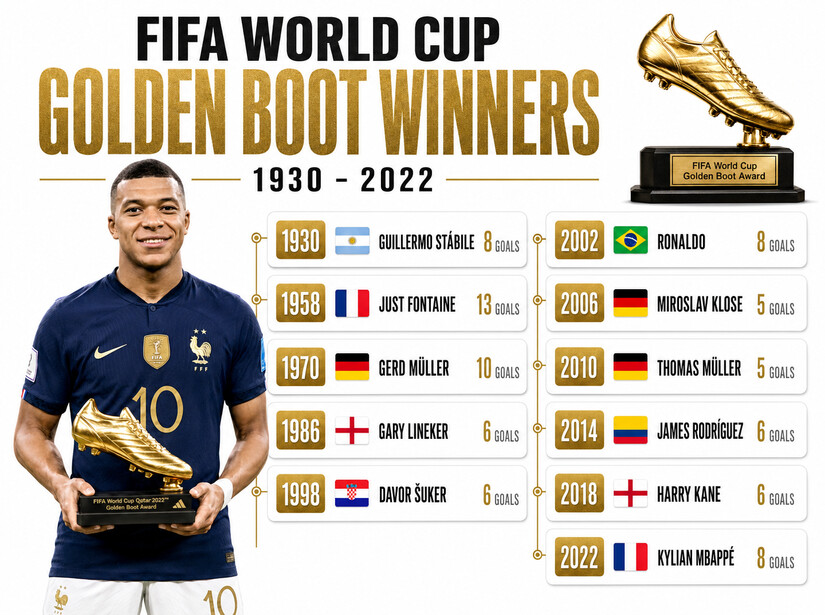
No individual subplot carries greater statistical importance than Mbappé’s pursuit of the Golden Boot. The French captain enters the weekend level with Lionel Messi on eight goals. Messi holds the advantage under official FIFA assist-based tiebreaking procedures, meaning Mbappé requires a clean goal against England to reclaim absolute control of the race before Argentina meets Spain in Sunday’s Final.
Because goals scored in the third-place playoff count toward the official tournament standings, Mbappé receives the initial opportunity to establish the final scoring target. One goal places him alone on nine; a double would force Messi to produce an exceptional championship performance against Spain's record-setting defense.
The chase will heavily influence France’s attacking configuration. If the captain starts, France will aggressively attempt to release him early into open space, particularly against an England defense that may include heavily rotated personnel. The matchup offers a considerably different environment from the semifinal against Spain, which denied Mbappé space through rigid geometric compression. England is highly likely to play a transitional match, creating exactly the high-velocity corridors the forward prefers.
Neither manager is expected to deploy a conventional knockout structure, as heavy cardiovascular fatigue and squad management dictate the team selections:
Goalkeeper Brice Samba is tipped to receive the nod to preserve Mike Maignan's physical reserves. In front of him, Ibrahima Konaté and Maxence Lacroix are projected to form a new central defensive partnership to manage William Saliba’s sudden back strain, supported by Jules Koundé and Theo Hernández out wide. The double pivot will feature Manu Koné and Warren Zaïre-Emery to inject defensive energy, freeing Michael Olise, Rayan Cherki, and Désiré Doué to operate in advanced spaces behind central forward Kylian Mbappé.
Jordan Pickford is expected to retain his post between the woodwork to marshal a rotated backline featuring Trent Alexander-Arnold and Luke Shaw in the wide slots, with John Stones and Marc Guéhi anchoring the central lanes. Midfield enforcer Declan Rice will shield the back four alongside Conor Gallagher, allowing Jude Bellingham to operate in advanced half-spaces. Up front, Bukayo Saka and Anthony Gordon will provide explosive horizontal width to support captain Harry Kane.
The baseline characteristics of the bronze-medal playoff highlight several critical strategic elements:
The operational pause concludes as the squads take the pitch in Miami. While neither giant can capture the ultimate trophy they came to North America to secure, the match will permanently dictate who leaves the tournament with a world-class medal and a final podium validation.
MinneapoliMedia | Community. Culture. Civic Life.


Overcast, with a high of 67 and low of 51 degrees. Partly Cloudy in the morning, overcast in the afternoon, clear overnight.