66° and Partly cloudy
Image



The neon digits glowing above the asphalt along the North Lane commercial corridor in Coon Rapids have ceased to be a mere reflection of global commodities markets. Instead, they have transformed into a relentless, daily gauge of suburban anxiety, shrinking household safety margins, and a growing realization among Minnesotans that the basic cost of participating in everyday life is rapidly outpacing wages. What is happening at the neighborhood service station is no longer just a localized inconvenience or a temporary hitch in the consumer price index. It is an immediate, quiet raid on the economic baseline of the American middle class, playing out on every corner, at every intersection, and across every highway across the state of Minnesota.
In a staggering surge, regular unleaded prices across Minnesota jumped 24.1 cents in less than a single week, pushing statewide averages to an aggressive $4.41 per gallon, with specific regional spikes in areas like Mankato climbing to $4.48 and Rochester hitting $4.51. For a dual-income family in Blaine, Brooklyn Park, or Andover, where public transit alternatives thin out to the point of structural irrelevance, this sudden escalation represents a forced reallocation of capital. When a commuter is forced to drive forty miles down Interstate 35W or Highway 169 just to maintain employment, mobility functions as a mandatory tax on survival. Consumers can choose to delay a vacation, cut back on discretionary retail spending, or postpone an entertainment purchase, but they cannot stop driving to work without threatening their entire household stability.
The result is that the gas pump is increasingly functioning as one of the clearest, most emotionally tangible indicators of economic strain across the state. Long periods of elevated costs produce an all-encompassing exhaustion that numbers on a state balance sheet fail to capture. Many families already feel they are budgeting with extreme care, making responsible choices, and reducing unnecessary overhead, only to find that the cost of simply moving from point A to point B threatens to wipe out their remaining financial breathing room. When essential costs continue rising regardless of personal responsibility, public frustration deepens into discouragement, and the social fabric of our communities begins to show signs of wear.
To understand why this current energy spike feels so catastrophic for ordinary Minnesotans, one must look at the physical architecture of the state itself. Minnesota’s geography, economic development patterns, and infrastructure investment history make it uniquely and dangerously exposed to fuel volatility. Unlike denser, older metropolitan regions on the East Coast or the Pacific Northwest, where expansive public transportation networks serve as a viable release valve for a large portion of the population, Minnesota’s modern growth was explicitly engineered around automobile dependence.
Over the past five decades, the Twin Cities region expanded outward in vast concentric rings of suburban development. Large numbers of residents commute significant distances between these outer-ring residential communities, regional employment centers, and commercial corridors. Outside the immediate urban cores of Minneapolis and Saint Paul, public transit access drops off precipitously. In the northern suburbs, routes are often limited to peak-hour express buses designed strictly for white-collar commuters heading into downtown offices, leaving service industry workers, healthcare aides, and tradespeople completely stranded without a personal vehicle. In rural counties, reliable transportation alternatives are not merely limited; they are virtually nonexistent.
This highly auto-dependent infrastructure means that the residents of Anoka County suburbs like Coon Rapids, Blaine, and Brooklyn Park face a severe commuter squeeze. With limited or non-existent off-peak mass transit options, their daily highway commute along Interstate 35W, Highway 169, or Highway 10 forces them into forty to eighty miles of roundtrip travel just to reach regional employment centers. When fuel costs skyrocket to more than $4.40 per gallon, this structural reality turns fuel into an unavoidable tax, triggering an immediate and painful reduction in local, discretionary spending across these communities.
That reality means fuel inflation impacts Minnesotans with a severity that residents of mass-transit-heavy states rarely experience. In Minnesota, higher gas prices immediately translate into higher participation costs for daily life itself. A commuter driving an older, less fuel-efficient sport utility vehicle or pickup truck from Anoka County down to a job site in Bloomington can easily see monthly fuel costs rise by hundreds of dollars during prolonged price surges. When a household features multiple working adults commuting in opposite directions to separate employers, the burden doubles, absorbing money that would otherwise fund childcare, healthcare premiums, or retirement savings.
For lower-income households, the consequences of this spatial mismatch between affordable housing and employment centers are especially severe. Transportation costs consume a disproportionately large share of disposable income for working-class families. Because fuel functions as a non-negotiable expense category, the money must be found immediately, and it is almost always carved out of other essential needs. This dynamic is becoming increasingly visible across Minnesota communities, transforming the ways ordinary people interact with their local economies.
The compounding financial pressure is triggering distinct, defensive shifts in consumer behavior that are visible to anyone watching the neighborhood pumps. Drivers are purchasing smaller quantities of gas at a time, stopping at half-tanks or buying exactly ten or fifteen dollars worth of fuel because a full fill-up requires an upfront capital layout that threatens to overdraw their checking accounts. This piecemeal purchasing behavior is a classic early indicator of severe household stress and declining consumer confidence, signaling that families are living entirely from paycheck to paycheck, managing cash flow on a day-to-day basis.
Yet, one of the least understood and most tragic aspects of the current fuel crisis is that the independent gas station operators themselves are under the exact same economic microscope as the drivers they serve. Public frustration naturally and aggressively centers on the rising prices displayed on the signs outside, leading to an assumption that station owners are profiteering off local misery. The reality inside the station office tells a far different story. Independent station owners across the state are facing severe cash flow strain and operational jeopardy as wholesale fuel costs escalate rapidly.
Independent neighborhood anchors are facing a severe operational crisis as inventory costs for a single wholesale fuel delivery climb from approximately $25,000 to upwards of $33,000, quickly exhausting small business lines of credit. At the same time, credit card processing fees intersect destructively with the total pump cost, meaning that as transaction totals skyrocket, the fees collected by financial conglomerates rise automatically, eroding what little remains of a station's razor-thin retail margins. Compounding this double squeeze is a sharp drop-off in inside-store customer purchases, as cash-strapped drivers stop buying the high-margin snacks, coffee, and convenience items that traditionally keep these local businesses solvent.
Gas stations traditionally generate the vast majority of their actual profitability not from the fuel flowing through the pumps, but from inside-store purchases. As consumers pull up to the pump, look at the total, and experience immediate financial anxiety, they completely eliminate those high-margin inside purchases. They pay at the pump and drive away without stepping inside. The result is that independent neighborhood operators find themselves squeezed simultaneously by wholesalers, regional competition, processing fees, and a defensive, retreating customer base. In smaller communities or outer suburbs, where an independently owned station serves as an important commercial anchor, prolonged economic stress could create broader local consequences, leading to business closures that leave entire areas underserved.
For much of the public, macroeconomic discussions regarding inflation can feel deeply detached from daily experience when they are framed primarily through abstract statistical indices, consumer price indices, or the complex policy language emanating from the Federal Reserve. A decimal point shift in a core inflation report does not resonate in the human gut.
Gasoline changes all of that. Fuel prices are immediate, highly visible, and emotionally tangible. They are lit up in giant numbers for all to see, impossible to ignore, and updated in real time. Drivers see the cost every morning before work, every weekend while running errands, and every time family budgets are recalculated on kitchen tables. This visibility gives gasoline prices an outsized psychological impact compared to almost any other inflation category, functioning as a constant reminder of financial vulnerability.
Minnesota households are confronting these overlapping cost increases not in a vacuum, but across multiple essential areas simultaneously. Housing costs across the Twin Cities remain stubbornly elevated, with rent and property taxes squeezing tenants and homeowners alike. Grocery prices continue to pressure family budgets, ensuring that a trip to the supermarket requires painful trade-offs. Insurance premiums for both homeowners and automobiles have climbed sharply, utility expenses remain high, and healthcare affordability continues to be a major source of anxiety. Concurrently, elevated interest rates continue to affect vehicle loans, mortgages, and credit card debt, penalizing those who rely on credit to bridge the gap.
Gasoline does not exist separately from these pressures. It compounds them, acting as a multiplier of economic pain. A family already struggling with rent increases and rising food bills experiences fuel inflation not as an isolated, manageable event, but as another layer added onto existing financial exhaustion. The cumulative effect is creating growing concern among economists and social service organizations that an increasing percentage of households are operating with absolutely zero remaining financial flexibility. When unexpected medical expenses, minor car repairs, or brief employment disruptions occur, families already strained by rising daily mobility costs have no reserves left to absorb the shock, pushing them toward food shelves and county emergency assistance programs.
The burden of higher fuel prices is not distributed evenly across our state’s geography. While suburban commuters face severe stress, rural Minnesota is experiencing the deepest, most existential economic impacts because transportation dependency is absolute outside metropolitan areas. In Greater Minnesota, the distance to the nearest regional medical center, specialty clinic, agricultural cooperative, or full-service grocery store is measured in half-hours and dozens of miles rather than blocks.
Residents in rural communities must travel long distances for everyday necessities: employment, specialized medical care, education, retail shopping, and government services. Out of necessity, many households rely on larger trucks or sport utility vehicles that are better suited for challenging winter conditions, agricultural work, hauling equipment, or long-distance driving on rural highways. These vehicles consume more fuel, making their owners uniquely vulnerable to price spikes. At the same time, wage growth in many rural regions has failed to keep pace with these compounding inflationary pressures, creating a highly volatile economic environment.
The agricultural sector, which forms the very backbone of Minnesota’s economic identity, is uniquely exposed. Minnesota’s farming economy depends heavily on diesel fuel for planting, harvesting, transportation, irrigation systems, grain drying operations, and the movement of heavy machinery. Rising fuel costs therefore affect agriculture at nearly every stage of production, introducing massive overhead increases during an already difficult economic cycle marked by high equipment costs, elevated financing expenses, and volatile global commodity markets.
During critical seasonal windows, some operations are paying significantly more for diesel fuel compared to prior years, with statewide diesel averages climbing stubbornly to $5.38 a gallon. This directly threatens the financial viability of family farms operating on narrow margins. Because agriculture is so deeply intertwined with Minnesota’s broader economic infrastructure, these rising costs never remain isolated on the farm. Eventually, these higher production and transportation costs move directly through the supply chain into food processing facilities, regional transportation networks, distribution centers, and grocery pricing systems. Consumers who think they are insulated from the fuel crisis because they live in an urban neighborhood eventually encounter its effects at the grocery store checkouts, paying higher prices for milk, meat, and bread as businesses attempt to offset their transportation expenses.
This systemic, statewide pain is precisely why the compromise struck in the final hours of the legislative session in St. Paul feels so profoundly small-minded and disconnected from reality. Lawmakers clapped themselves on the back for delivering a $1.24 billion capital investment bonding package, trading political favors until midnight to fund localized projects, while simultaneously greenlighting a heavily praised vehicle registration tax adjustment.
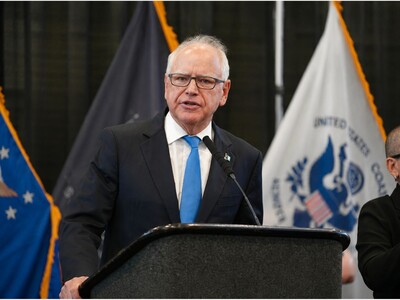
While any immediate financial shift is analyzed for consumer relief, this late-stage deal struck between legislative leaders and Governor Tim Walz fundamentally misses the broader mark. The much-touted one-year rollback of license tab fees to the pre-2023 tax rates will indeed offer an estimated $245 million in near-term savings for Minnesota drivers whose vehicle fees have stayed stubbornly high. Yet, the cost of this political maneuver is immense: it directly reduces the Highway User Tax Distribution Fund by $119 million in Fiscal Year 2027 and $135 million in Fiscal Year 2028. The Capitol remains trapped in a cycle of short-term reactive governance, allocating $177 million for transportation and $47 million for local road improvements within the bonding package, yet leaving transit advocates like Senator Scott Dibble openly noting that the package features exactly zero dollars for transit, a glaring omission that penalizes those who need alternatives to the pump the most.
Minnesota leadership can no longer treat energy volatility as an abstract, external storm driven entirely by regional refinery bottlenecks or geopolitical disruptions. If mobility is the gateway to employment, education, and healthcare, then affordable transit must be guarded as a fundamental public utility, not an afterthought left to the whims of global oil markets. The state cannot safeguard its historical identity of robust economic stability and high quality of life if its working class is being steadily hollowed out at the pump.
True editorial honesty requires looking past the end-of-session celebrations in St. Paul. Real legislative courage requires a permanent commitment to diversified regional transit corridors, robust rural economic backstops, and aggressive infrastructure independence. We must invest in expanded suburban bus rapid transit networks, regional rail possibilities, and localized clean-energy transit alternatives that decouple the cost of human movement from the price of crude oil. Until state leaders stop managing this systemic crisis with short-sighted tax adjustments that rob our long-term highway funds and start building a resilient, accessible transportation network for the entire state, the numbers on the gas pump will continue to serve as a stark indictment of political inaction, recording the quiet, daily erosion of the Minnesota middle class.
Ultimately, the current fuel surge reminds us that what begins as international energy volatility eventually reaches ordinary households in deeply personal, devastating ways. Global oil markets remain hyper-sensitive to geopolitical instability, shipping disruptions in crucial maritime corridors, and refinery maintenance schedules across the Midwest. But a refinery disruption thousands of miles away quickly becomes a Minnesota parent sitting in a vehicle, calculating whether to delay a grocery trip or skip a medical appointment until payday. A crude oil price increase becomes a worker reconsidering whether taking a lower-paying job closer to home is financially necessary simply to eliminate a punishing commute. Global market instability becomes local emotional strain.
The gas pump has become something far larger than a place where Minnesotans refuel their vehicles. It has become a daily public mirror reflecting our broader economic realities, capturing wage strain, inflation fatigue, rural vulnerability, supply chain fragility, and consumer anxiety. In a state built around movement, mobility is not a luxury. It is access to opportunity itself. And when the cost of mobility rises faster than household stability, the effects eventually touch nearly everyone, serving as a powerful reminder that our economic identity depends on our willingness to build an infrastructure that protects, rather than exploits, the people who rely on it.
MinneapoliMedia | Community. Culture. Civic Life.



Sunny, with a high of 87 and low of 64 degrees. Sunny during the morning, patchy rain nearby overnight.