73° and Overcast
Image
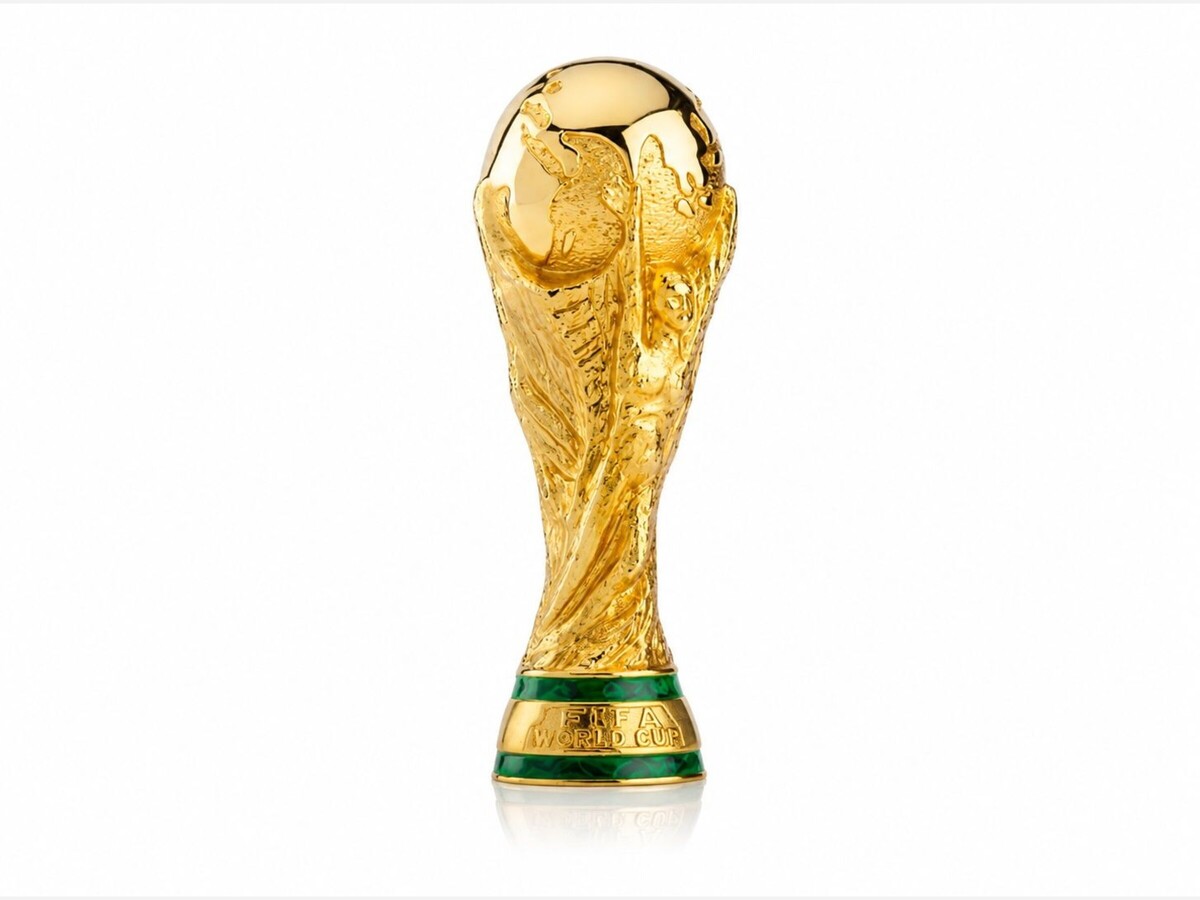



As the opening match of the 2026 FIFA World Cup approaches, football once again finds itself at the intersection of certainty and uncertainty. Every tournament begins with favorites, just as every tournament produces surprises, meaning the true analytical challenge lies in determining exactly where one ends and the other begins. History suggests that World Cups are generally won by nations possessing elite talent, tactical sophistication, organizational stability, and enough tournament experience to survive football's most unforgiving stage. Yet history also reminds us that World Cups rarely unfold exactly as expected. The tournament has a remarkable ability to expose weaknesses that appeared manageable during qualification and magnify vulnerabilities that remained hidden during friendlies and continental competitions.
The 2026 FIFA World Cup arrives at a particularly fascinating moment in football history because, for the first time, forty-eight nations will participate. For the first time, three countries will jointly host the tournament, and for the first time, the World Cup will operate across a continental footprint stretching from Mexico City to Toronto, from Miami to Vancouver, from Los Angeles to New York. The travel demands will be completely unprecedented, the logistical complexity will be extraordinary, and the tournament itself will be larger than anything football has ever attempted before. Yet the significance of this tournament extends far beyond format, as World Cup 2026 arrives during a period of profound transition within the sport itself. The traditional powers remain powerful, with Europe and South America continuing to dominate the highest levels of international football, yet the distance separating the established elite from the emerging challengers has narrowed considerably. Nations once viewed as peripheral participants now enter major tournaments with genuine expectations of competing deep into the knockout rounds. The historic rise of Morocco in 2022 was not an accident, Japan's consistency is not an accident, and the growth of football development systems across Africa, Asia, and North America is not an accident. The sport is becoming broader, deeper, and far more competitive, a reality that introduces intense uncertainty into a tournament that already specializes in producing it.
Yet despite these structural changes, one truth remains remarkably stable: the list of genuine title contenders remains relatively small. The conversation begins with Argentina, before quickly expanding to include France, whose consistency has made them the defining international team of the last decade. It includes Brazil, whose partnership with Carlo Ancelotti has reignited dreams of a sixth world title, and England, a nation carrying perhaps the heaviest emotional burden in world football. It includes Spain, whose youth movement has become one of the sport's most compelling projects, and it includes Portugal, whose extraordinary depth may finally position it among football's true powers. Each nation enters the tournament believing it can lift the trophy, each possesses compelling reasons for confidence, and each also carries fault lines that could end its campaign. Understanding those strengths and weaknesses may provide the clearest roadmap to how World Cup 2026 is likely to unfold. Because beneath every World Cup lies a deeper contest, given that nations do not simply bring players; they bring football philosophies, developmental systems, historical identities, and national expectations. The World Cup becomes the place where competing visions of football are tested against one another, and that is what makes the 2026 tournament so fascinating, not simply who may win, but what kind of football nation will ultimately prevail.
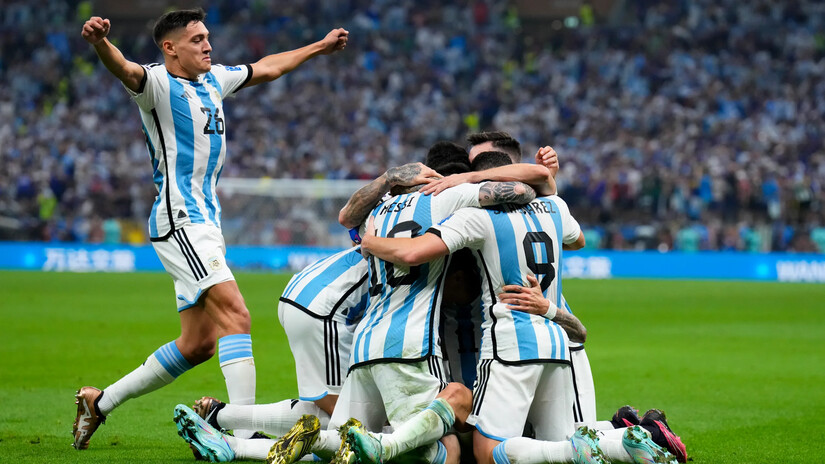
No nation enters the tournament carrying a more complicated burden than Argentina, as the defending champions arrive with the confidence that accompanies success but also with the reality that every champion eventually becomes a target. Opponents no longer view Argentina as an aspiring contender, but instead view them as the absolute standard. That distinction matters deeply because the journey to a title is fundamentally different from the effort required to defend one. Argentina's triumph in Qatar represented far more than a World Cup victory, representing the culmination of nearly a century of complex football history. It stretches from the heartbreak of losing the inaugural World Cup final in 1930 to the revolutionary vision of César Luis Menotti, and from Carlos Bilardo's pragmatism to Diego Maradona's genius, leading through decades of frustration to Lionel Messi's ultimate redemption.
Argentine football has always been defined by continuity. Generations change, styles evolve, and players come and go, yet the underlying identity remains remarkably consistent. Argentina believes football should be emotional, it believes suffering is an essential part of greatness, and it believes adversity reveals character. Those beliefs shaped the team that won in Qatar, where coach Lionel Scaloni constructed a squad that combined technical quality with emotional resilience. It was not always the most talented team in every match, but it was often the most resilient, and that distinction proved decisive.
The challenge entering 2026 is not whether Argentina possesses talent, which it clearly does, but whether the team can successfully navigate the transition away from the Messi era without losing the qualities that made it champion. This is the true fault line running beneath Argentina's campaign. For nearly two decades, every major football conversation in Argentina eventually returned to Messi. Even when the national team struggled, even when coaching staffs changed, and even when generations rose and fell, Messi remained the fixed point around which everything else revolved. Now, whether Messi plays a major role in 2026 or not, Argentina is approaching a new reality where somebody else must become the emotional center, somebody else must become the reference point, and somebody else must inherit the responsibility of carrying national expectation.
That transition is rarely seamless, as football history is filled with nations that struggled immensely after losing transformational figures. Brazil experienced it after Pelé, France experienced it after Zidane, and Portugal spent years navigating life beyond Ronaldo's peak, meaning Argentina now confronts the exact same challenge. The encouraging reality is that Scaloni has spent years building a collective rather than a one-man operation. The squad remains highly experienced, the midfield remains intelligent, and the defensive structure remains organized. Most importantly, the group understands tournament football. World Cups are not won through beauty alone; they are won through survival. Argentina demonstrated repeatedly in Qatar that it could absorb pressure, recover from adversity, and perform under extraordinary scrutiny. Yet vulnerabilities exist, as age is becoming a factor, and the emotional energy generated by Messi's pursuit of a first World Cup cannot be replicated. Defending champions historically face unique psychological challenges because every opponent approaches them with heightened motivation. Argentina remains one of the favorites, and the question is whether continuity can survive transition.
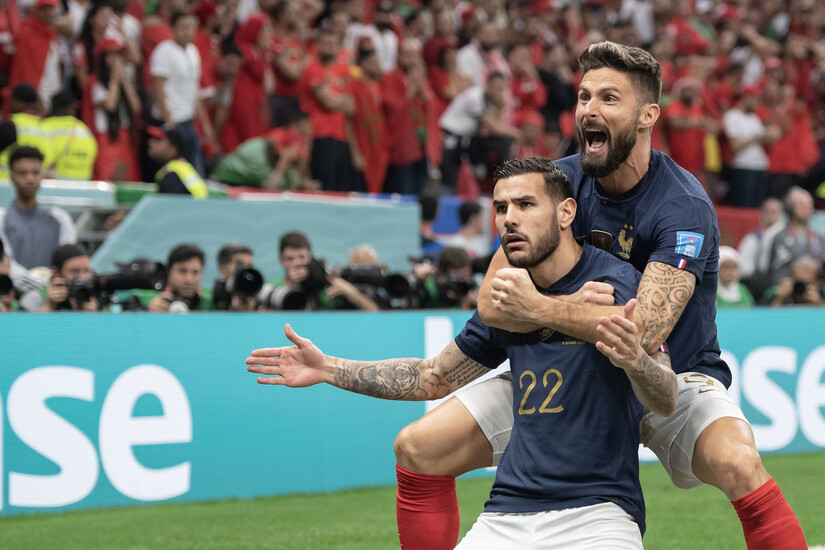
If one nation has defined international football consistency during the last decade, it is France. The French have reached multiple World Cup finals, won the 2018 tournament, reached another final in 2022, and continue producing elite players at a rate unmatched by almost any nation in football history. France's greatest advantage is not a single player, but a system. The modern French football machine may be the most effective talent-production structure the sport has ever seen, and at its center sits Clairefontaine alongside an extensive academy network that identifies, develops, and refines players from every single corner of the country. France's football success is also inseparable from its broader social story, as immigration profoundly transformed French football, with players from diverse cultural backgrounds helping create one of the deepest talent pools in the world.
The result is a national team capable of regenerating itself repeatedly, so while other powers worry about replacing aging stars, France simply produces another generation. Kylian Mbappé remains the centerpiece, a figure whose speed, finishing ability, and competitive intensity have already established him among football's defining figures. Yet France's strength extends far beyond one superstar, as its defense remains athletic, its midfield remains versatile, its attack remains dangerous, and its bench could easily start for many other nations in the tournament. Just as importantly, Didier Deschamps understands tournament football completely. He understands that World Cups are not beauty contests; they are elimination tournaments where efficiency matters, defensive discipline matters, and game management matters.
France consistently excels in those precise areas, meaning its fault line is not talent, but rather something far more subtle: can excellence sustain hunger? Every dynasty eventually confronts the same challenge. At some point, success becomes normal, winning ceases to feel extraordinary, and maintaining urgency becomes more difficult than achieving success in the first place. Football history is littered with dynasties that assumed their dominance would continue indefinitely, though most eventually discovered otherwise. France enters 2026 carrying the massive burden of expectation that accompanies greatness, meaning anything less than a semifinal appearance will be viewed as a definitive failure. That pressure is both a compliment and a challenge. France enters the tournament as perhaps the most complete team in the field, but completeness alone does not guarantee a title, and history repeatedly reminds us of that lesson.
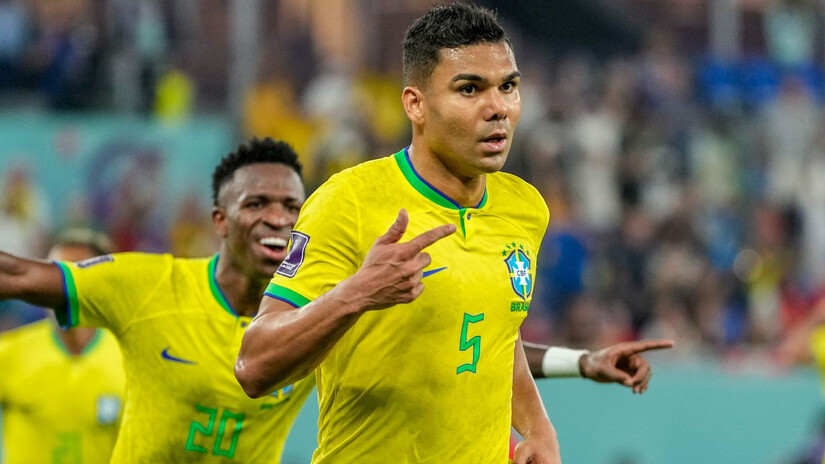
No country approaches a World Cup carrying more history than Brazil, a legacy defined by five titles, countless legends, and a football identity recognized in every corner of the globe. Yet history can rapidly become a burden when expectations remain permanently elevated, and Brazil has not won the World Cup since 2002. For most nations, a twenty-four-year drought would be inconvenient; for Brazil, it feels entirely existential. The weight of expectation is immense because Brazil does not merely participate in World Cups, but fundamentally believes it should define them. The country's relationship with the tournament is unlike anything else in football, as the trauma of 1950 shaped generations, the beauty of 1970 became mythology, the brilliance of 1982 became romantic tragedy, the triumph of 1994 restored belief, and the dominance of 2002 seemed to promise continued success. Instead came deep frustration, and then came 2014. The 7-1 defeat against Germany remains one of the most shocking results in football history, functioning not merely as a loss, but as a severe national trauma, and much of Brazil's football journey since then has involved processing that humiliation.
The appointment of Carlo Ancelotti represents one of the most significant decisions in modern Brazilian football history. For generations, Brazil largely looked inward when selecting national team leadership, meaning that turning to one of the most successful club managers in football history signals immense urgency and systemic change. Ancelotti inherits extraordinary talent, highlighted by Vinícius Júnior's evolution into one of the world's most dangerous attackers. The player pool remains immense, and the technical quality remains extraordinary. The question is whether Brazil can finally translate that talent into tournament efficiency, which has been Brazil's defining challenge for two decades. The country has repeatedly arrived at tournaments carrying world-class talent, yet it has repeatedly fallen short.
The answer to why they stumble may be cultural as much as tactical. Brazilian football has always celebrated beauty, creativity, freedom, and expression, whereas Ancelotti represents something entirely different: structure, balance, patience, and control. The true fault line beneath Brazil's campaign is whether those opposing philosophies can successfully coexist. Can Brazil remain recognizably Brazil while embracing a more pragmatic path to victory, and can discipline complement creativity rather than suppress it? World Cups inevitably produce difficult moments, and champions are often determined by how they respond to them. Brazil possesses enough raw talent to win the tournament, but whether it possesses enough patience may ultimately determine everything.
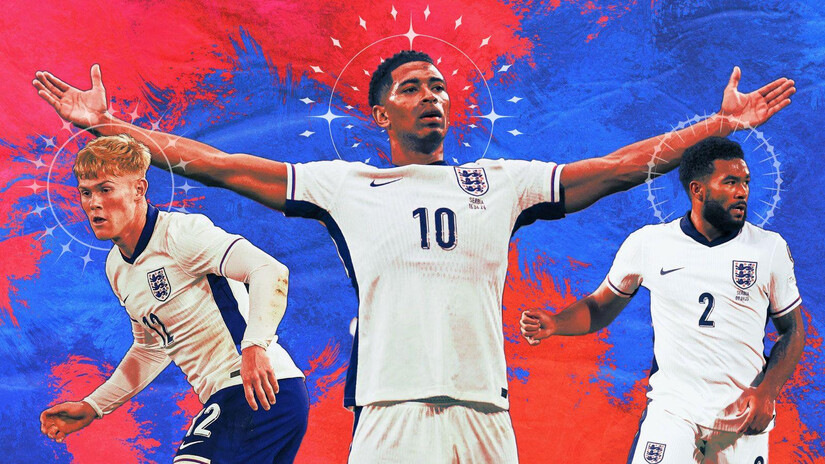
No contender enters World Cup 2026 carrying a heavier historical burden than England, as every tournament eventually circles back to the same year: 1966, the year England won its only World Cup. Nearly six decades later, that triumph remains both a source of pride and a source of frustration, meaning each generation inherits the expectation, each generation attempts to end the wait, and most ultimately fail. The relationship between England and the World Cup may be football's most fascinating psychological study, as England gave the modern game much of its structure, the Football Association helped codify the rules, English clubs became some of the most powerful institutions in the sport, and the Premier League evolved into football's most commercially successful domestic competition and global export. Yet international success has remained stubbornly elusive.
The failures are etched deeply into football memory, including the semifinal defeat against West Germany in 1990, the penalty heartbreak against Germany in Euro 1996, the so-called Golden Generation that never reached its competitive potential, the abrupt quarterfinal exits, and the penalty shootout collapses. It created a recurring sense that England possessed enough talent but lacked something far less tangible, leaving them appearing trapped by their own history for decades. Every tournament carried the weight of previous disappointments, every squad was measured against the ghosts of earlier failures, and every setback reinforced the fatalistic narrative.
What makes the current generation different is that it no longer appears intimidated by the burden. Much of that transformation began under Gareth Southgate, and regardless of how history ultimately evaluates his tenure, Southgate fundamentally changed England's relationship with tournament football. He normalized deep runs, encouraged emotional openness, and dismantled much of the fatalism that had attached itself to the national team, meaning England stopped approaching tournaments as a nation simply waiting for something to go wrong. That cultural shift may prove as important as any tactical adjustment. The current squad is arguably one of the strongest England has assembled in decades, and at its center stands Jude Bellingham, young enough to represent the future and mature enough to influence the present, emerging as one of world football's most complete players. Around him exists extraordinary depth, the attack is dynamic, the midfield is versatile, and the defense combines athleticism with experience. England's player pool is among the deepest in the tournament, yet the fault line remains squarely psychological. The challenge facing England is no longer whether it possesses enough talent, which it clearly does, but whether a nation that has spent sixty years discussing its failures can finally stop talking about them long enough to create a new story. World Cups often turn on belief, and England enters 2026 with more belief than it has possessed in generations, meaning the question is whether belief can survive pressure. Sooner or later, the tournament will place England in a high-stakes knockout match against another elite nation, and at that moment, talent and tactics matter, but composure matters more. England has spent decades searching for that composure, and World Cup 2026 may reveal whether it has finally found it.
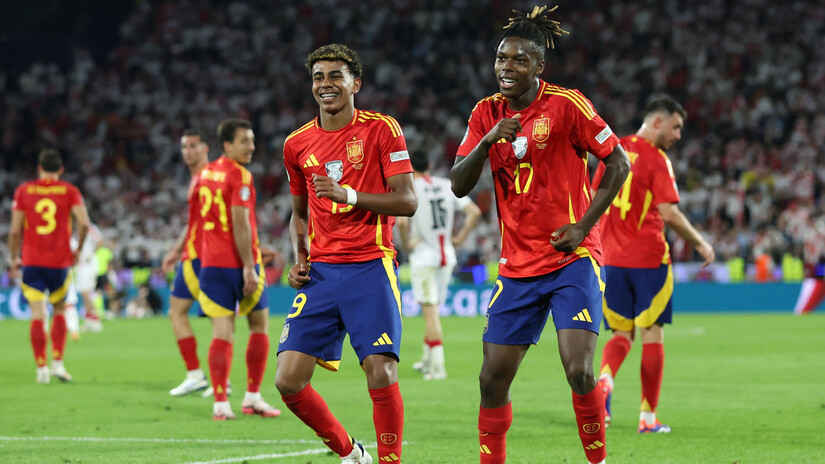
Few nations have changed football as profoundly as Spain. Between 2008 and 2012, Spain did far more than win tournaments; it completely transformed how the sport was played. The combination of absolute possession, positional intelligence, technical precision, and relentless control produced one of the greatest international teams football has ever seen, making names like Xavi, Iniesta, Busquets, Casillas, and Puyol legendary. The style became equally influential, as tiki-taka entered football's vocabulary and reshaped tactical thinking across the globe, ensuring that for a brief period, Spain appeared to possess the answer to every football question. Then football evolved, opponents adapted, and the dominance faded. The challenge facing Spain over the following decade was not simply replacing great players, but determining exactly how much of its identity should change, an effort that proved far more difficult. Several tournaments ended in disappointment, as Spain often controlled possession but struggled to convert control into goals, appearing caught between honoring its past and embracing football's future.
The current generation may finally have solved that dilemma. Spain remains entirely committed to technical excellence, meaning the ball still matters, control still matters, and possession still matters, but the modern Spanish team is significantly faster, more direct, more aggressive, and more athletic. No player symbolizes this transition more clearly than Lamine Yamal. Young, fearless, and extraordinarily gifted, Yamal represents a new generation that respects Spain's traditions without being constrained by them. The squad around him possesses significant depth and flexibility, meaning Spain remains one of the world's most technically refined teams. Its ability to dictate tempo remains exceptional, its movement remains sophisticated, and its collective understanding remains strong. Yet its fault line lies in identity itself. How much can Spain evolve before it ceases to be recognizably Spanish? That tension sits at the absolute center of the project, because too much change risks abandoning the principles that made Spain great, while too little change risks becoming entirely predictable. World Cup 2026 may provide the answer, because Spain possesses enough talent to win the tournament, but the question remains whether reinvention can become a championship formula.
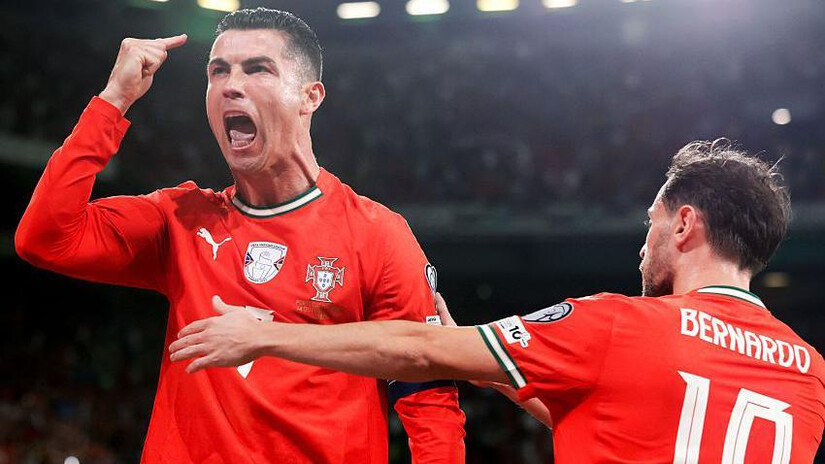
For much of modern football history, Portugal's story revolved around exceptional individuals. The nation consistently produced exceptional players, but what it struggled to produce was sustained collective depth. Eusébio defined one era and Cristiano Ronaldo defined another, and while both immensely elevated Portuguese football, neither fundamentally changed how Portugal was perceived globally. The nation remained respected, dangerous, and talented, but was rarely viewed as an outright favorite. That perception has completely changed. Modern Portugal is no longer dependent on a singular figure, as it possesses one of the deepest talent pools in international football, its academies have become among the most productive in Europe, and its technical quality rivals any nation in the tournament.
Portugal has quietly completed one of the most impressive developmental transformations in modern football history. The current squad reflects years of institutional success, creating an environment where multiple generations overlap and experience and youth coexist seamlessly. Tactical flexibility has become a major strength, allowing Portugal to play in completely different ways against different opponents, an adaptability that is highly valuable in tournament football. And yet questions remain, as Portugal often appears stronger on paper than in reality. The challenge is cohesion. Talent is abundant, but collective rhythm is far more difficult to manufacture. History repeatedly demonstrates that assembling great players does not automatically create great teams, meaning Portugal's fault line is whether depth can become chemistry, whether talent can become identity, and whether potential can become achievement. The country possesses the personnel and the opportunity is obvious; the challenge is proving that modern Portugal is genuinely more than the sum of its individual parts.
World Cups are rarely won by outsiders, but they are often shaped by them, as every tournament contains nations capable of exploiting mistakes made by favorites. World Cup 2026 appears particularly rich in dangerous challengers. Germany remains impossible to dismiss regardless of recent struggles, because while recent tournaments have been disappointing by German standards, history repeatedly demonstrates the danger of assuming Germany is finished. Few nations possess a stronger institutional understanding of tournament football, and few nations rebuild more effectively, meaning Germany's recent struggles may ultimately be remembered as a transition rather than a decline. The Netherlands continues to occupy a unique place in football history, as no major football nation has exerted greater influence relative to its trophy count. The Dutch permanently changed tactical thinking through Total Football, producing some of the sport's most influential coaches, players, and ideas, yet the World Cup remains the one prize that has consistently escaped them, an absence that continues to motivate Dutch football.
Uruguay remains one of football's great anomalies, as a nation of fewer than four million people continues competing effortlessly against countries many times its size. The explanation lies in culture, because Uruguay's football identity deeply values resilience, competitiveness, and emotional toughness, consistently producing teams that are difficult to defeat and highly comfortable in pressure-filled environments. Simultaneously, Morocco enters the tournament carrying the massive momentum of history, as its run to the semifinals in 2022 permanently altered perceptions globally by demonstrating that African football can compete at the absolute highest levels of the World Cup, leaving the challenge now as proving that success was sustainable rather than exceptional. Finally, Japan represents a different model entirely, as no nation outside Europe and South America has pursued football development with greater discipline or long-term planning. Japan's rise has been deliberate, systematic, and patient, and while its victories over Germany and Spain in Qatar announced its arrival, its challenge now is taking the next step. None of these nations may enter as favorites, but all possess the ability to disrupt the tournament, and World Cups are often defined by disruption. The favorites may command the headlines, but the challengers often shape the story.
The expansion to forty-eight teams represents the most significant structural change in modern World Cup history. For decades, the tournament followed a relatively predictable rhythm where elite nations qualified, group stages gradually narrowed the field, and the strongest squads generally emerged as the competition progressed. While surprises occurred, the format itself remained entirely familiar. World Cup 2026 introduces a completely different reality defined by more teams, more matches, more travel, more recovery demands, and far more opportunities for disruption.
The immediate effect will be felt in squad management. Depth has always mattered in tournament football, but in 2026, it may become the decisive factor. A tournament stretching across North America presents logistical challenges that previous World Cups never confronted, forcing teams to move between climates, time zones, altitudes, and regions separated by thousands of miles. Recovery protocols, sports science departments, and roster management strategies may prove nearly as important as on-pitch tactics.
This reality heavily benefits certain nations, where France immediately comes to mind given that no contender possesses greater depth. The French can absorb injuries, rotate lineups, and maintain quality throughout the roster, meaning that in a tournament where fatigue becomes a major variable, depth becomes an enormous advantage. Portugal may benefit as well, as its player pool is deeper than at any point in the country's history, and the ability to rotate quality players without dramatically reducing performance could become increasingly valuable as the tournament progresses. England also enters with significant depth, as the Premier League has helped create a generation of players accustomed to demanding schedules and intense competition, providing an ability to draw from a large pool of elite talent during a long tournament.
The impact on Argentina may be more complicated, because while the defending champions possess experience, chemistry, and tactical discipline, they also possess an aging core. Additional travel and recovery demands could place greater strain on veteran players, meaning Argentina's challenge may be balancing continuity with fresh legs. Brazil's relationship with the expanded format is equally fascinating, because while the squad possesses enormous talent and depth, the tournament's scale may place additional emphasis on organization and emotional management, as a longer competition creates more opportunities for momentum shifts, distractions, and unexpected complications.
The format also creates unique opportunities for emerging nations. Historically, many smaller football nations entered World Cups with little margin for error, as a difficult opening match could effectively determine an entire tournament. The expanded field changes those dynamics completely, because more teams create more pathways, more pathways create more opportunities, and more opportunities create more uncertainty. That uncertainty may be the defining characteristic of World Cup 2026, not because the favorites suddenly disappear, but because the road to the trophy becomes infinitely more complicated. The strongest teams will still possess advantages; the difference is that those advantages will be tested more frequently and under more varied conditions than ever before. The expanded World Cup rewards adaptability, and adaptability has become one of the most valuable qualities in modern football.
Every World Cup ultimately becomes a referendum on competing ideas about football. The players change, the coaches change, and the formations change, but the larger questions remain: how should a football nation be built, what creates sustainable success, and what matters most when the pressure becomes overwhelming? World Cup 2026 places six completely different answers before the world.
Argentina represents continuity, its identity rooted in tradition, emotional resilience, and a football culture that views adversity as an essential part of greatness, believing success is built through continuity of purpose and collective spirit. France represents developmental excellence, as no nation has produced elite talent more consistently during the last quarter-century, believing success is built through infrastructure, identification, and systematic development. Brazil represents talent and tradition, its football culture remaining one of the most influential in the sport's history, believing creativity, technical brilliance, and individual expression remain indispensable ingredients of greatness. England represents depth and ambition, having invested heavily in player development while benefiting from the world's most commercially successful league, believing sustained investment and elite talent pools eventually produce success. Spain represents identity and evolution, its challenge centered on preserving a football philosophy while adapting to a changing sport, believing a clear football identity can survive modernization. Finally, Portugal represents transformation and balance, its rise driven by institutional growth, academy development, and long-term planning, believing smaller nations can compete through strategic excellence.
Each contender embodies a different vision, each presents a different blueprint, and each offers a different answer to the same question. And that is why the tournament matters far beyond the trophy itself. The champion will receive the gold medal and the world will remember the celebrations, but the larger significance lies elsewhere. The tournament will reveal which football philosophy is best equipped for the modern era. Will continuity prevail, will development prevail, will talent prevail, will depth prevail, will identity prevail, or will balance prevail? The answers will unfold over seven matches and countless intense moments, an uncertainty that is part of what makes the World Cup completely unique. The tournament crowns a champion, but it also reveals something definitive about the future of the sport.
As World Cup 2026 approaches, the favorites remain familiar. Argentina seeks to defend a title and navigate life beyond the era that defined a generation, France seeks to prove that football's most impressive developmental machine can continue producing championships, and Brazil seeks to end a drought that feels increasingly uncomfortable for a nation accustomed to setting the global standard. Simultaneously, England seeks to transform decades of expectation into achievement, Spain seeks to prove that reinvention can successfully coexist with identity, and Portugal seeks to demonstrate that extraordinary depth can become extraordinary success. Each contender enters the tournament carrying legitimate reasons for confidence, yet each also enters carrying distinct vulnerabilities.
That duality has always defined the World Cup. The strongest teams arrive believing they can win, and the tournament exists to discover whether they can. History suggests that talent alone is completely insufficient; champions require resilience, adaptability, composure, timing, a measure of fortune, and an ability to survive moments when plans completely fail. The 2026 tournament promises to test all of those qualities. The expanded format introduces structural uncertainty, the challengers are stronger than they have ever been, the logistical demands are completely unprecedented, and the margin for error remains razor-thin.
Yet the central truth of the World Cup endures. Every four years, football gathers the strongest nations on earth and asks them the exact same question: who are you when everything is on the line? The answers are rarely simple, they are often surprising, and they are almost always unforgettable. The favorites are known and the fault lines are visible. What happens when those two realities collide will determine who stands atop world football when the tournament finally ends, and perhaps more importantly, it will reveal which vision of football is best prepared for the future.
MinneapoliMedia | Community. Culture. Civic Life.



Sunny, with a high of 82 and low of 53 degrees. Sunny in the morning, clear overnight.