73° and Overcast
Image
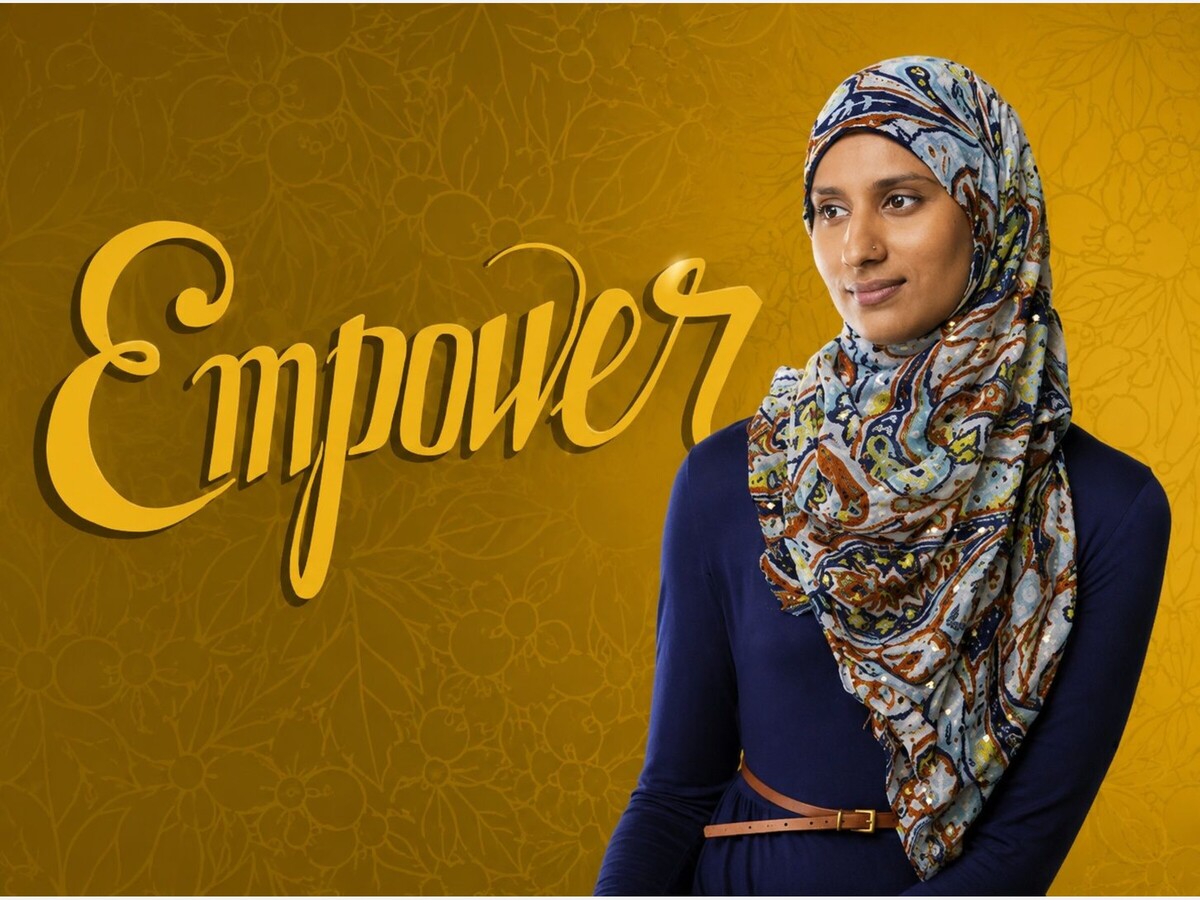



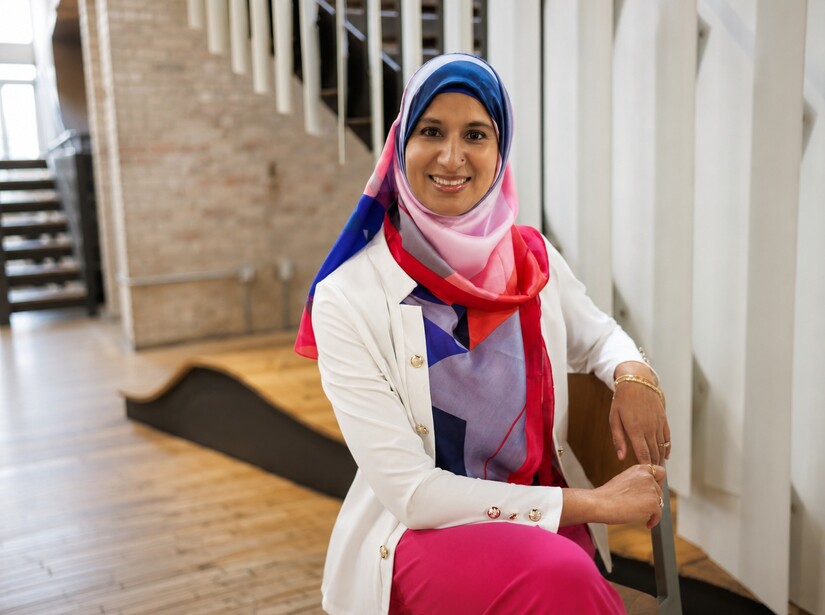
When Dr. Nusheen Ameenuddin sat down with MinneapoliMedia for The Power of Her, she spoke about leadership not through the lens of individual ambition, but in the language of collective responsibility, presence, and care. Midway through the conversation, a specific name surfaced with an immediate, grounded certainty: Nausheena Hussain.
It was a recommendation rooted in deep communal trust. Dr. Ameenuddin spoke of Hussain not as a distant executive, but as an architect of sanctuary, someone whose quiet infrastructure had shaped spaces where Muslim women could move through a hostile public square with dignity and purpose.
That introduction served as the gateway to a deeper exploration.
Hussain, now Dr. Nausheena Hussain, occupies a prominent place in Minnesota’s civic landscape. She is a social justice activist, nonprofit entrepreneur, philanthropic practitioner, and the principal of Nissa Consulting. To many, she is best known as the co-founder and executive director emerita of Reviving the Islamic Sisterhood for Empowerment, widely known as RISE. Yet official titles offer a sanitized version of a messy, courageous reality. Her true life’s work is better understood through the friction she endured, the cultural silence she broke, and the institutional spaces she chose to build from scratch when existing structures left women on the periphery.
When she joined the conversation, Hussain responded first with an innate humility, turning the recognition immediately outward.
"I do always believe that we should always be lifting each other up," Hussain said, her voice steady and deliberate. "I think that is how change can happen in our community."
This ethos provides a direct entrance into her operating philosophy. For Hussain, leadership is not a solitary climb or a proprietary asset; it is a relentless practice of transferring knowledge, sharing capital, and refusing to treat visibility as a private possession. Her career has been dictated by a stark, systemic question: What happens to a community when the people most affected by its trauma are barred from the rooms where decisions are made?
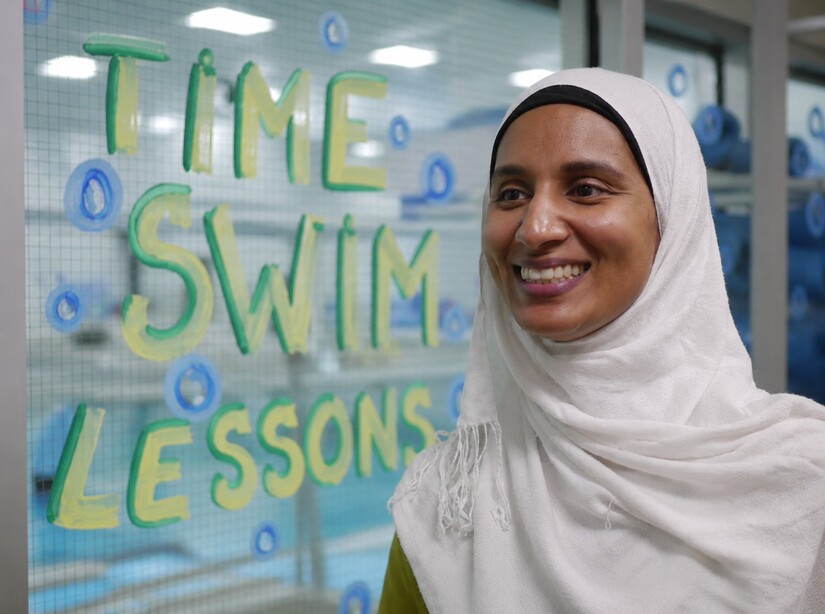
For Hussain, the weight of that question accumulated over decades.
Growing up as the child of immigrant parents in Minnesota, she navigated a fractured, dual existence. Inside the home, life was warm, defined by faith, culture, and the protective embrace of family. Outside, she stepped into a predominantly white, Christian environment where survival required a careful, exhausting assimilation.
"You tend to have almost like dual personalities," she recalled. "You have one personality at home and another personality when you are outside of the home because you want to fit in and blend in."
The absence of reflection was absolute. Hussain remembers the precise moment she was asked when she first saw an educator who shared her identity. The answer remains an indictment of the state's educational pipeline.
"I never saw a Muslim teacher unless I went to Sunday school," she said. "Until I got into a master’s degree program."
This prolonged absence acts as a quiet, psychological deterrent. It shapes the limits of a child's imagination long before career ambitions can form, sending a tacit message about who belongs at the front of the room.
"When you don’t see leadership that looks like you," Hussain said, "it sends this message that you can’t be a leader."
The corporate world offered no immediate relief. In her early professional career within marketing and consumer electronics, she looked around the cubicles and corporate boardrooms and found an echo of her childhood classrooms. In her first job, she met no other Muslims. In her second, a multi-thousand-employee corporation, she found only a handful. Compounding this isolation was the traditional immigrant pressure toward secure, recognized fields like medicine or engineering. Choosing marketing meant stepping into a space where her representation was dangerously thin.
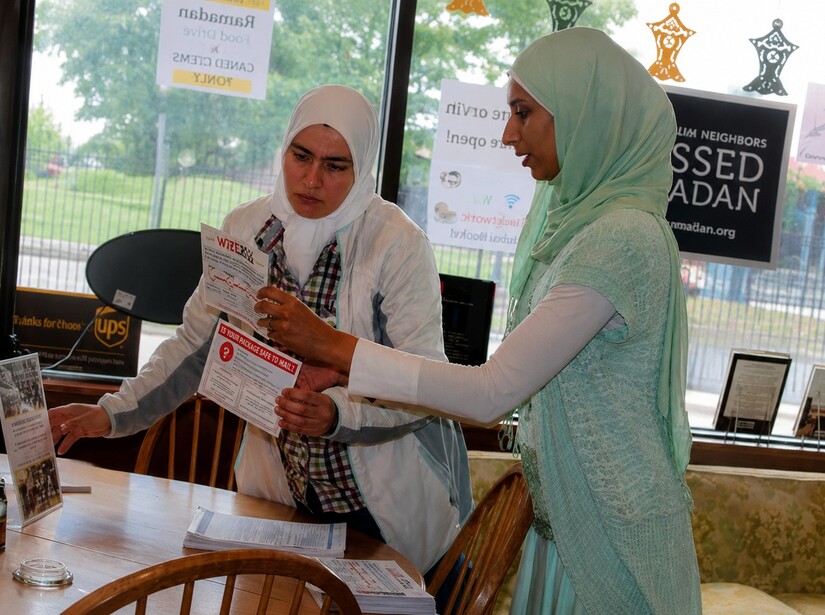
The catalyst for her shift from corporate execution to systemic activism arrived in the volatile post-9/11 landscape, sharpening intensely during the Obama administration as anti-Muslim rhetoric weaponized the public square. For Muslim women, this environment was uniquely hostile. Islamophobia was not just an intellectual debate; it manifested as a deeply physical, gendered vulnerability.
"When it is paired up with gender violence, it is a really dire environment for Muslim women," Hussain said.
Driven by a need to protect her community, Hussain pivoted to the nonprofit sector, taking a role at a local civil rights organization. She was not the public-facing attorney or the executive director. She was "the operations person," managing a fragile $50,000 budget, answering the phones, and tracking the intake logs.
It was in those intake logs that the true nature of the crisis became undeniable.
"Over 70 percent of those cases were women clients," Hussain noted. "Because women are so visibly Muslim."
Women were the ones targeted in supermarket aisles. Women were facing the trauma of having their hijabs pulled off in public transit, enduring verbal assaults on the street, and fighting quiet, systemic discrimination over workplace uniform accommodations. They were bearing the physical brunt of a toxic political climate.
Yet, whenever the organization called a press conference to denounce these violations, a stark disconnect occurred. The room would be filled with cameras, microphones, and the male elders of the community. Hussain would stand at the back.
"The room would be filled with all the men in the community," she recalled. "And me."
The very women who had survived the assaults were missing from the microphones. Cultural expectations and deeply entrenched patriarchy whispered that women should remain behind the scenes, protecting their privacy and leaving public advocacy to the men. Hussain watched this play out press conference after press conference, realizing that the issue was not just a lack of PR strategy, it was a systemic denial of power. The people living the trauma were being denied the right to define their own narrative.
To break this pattern, Hussain bypassed the traditional male leadership structures and convened a direct community circle for Muslim women.
"Why are we not seeing Muslim women in leadership?" She challenged the room. "Why are we not helping each other move up into that space?"
The response from one participant exposed the absolute lack of infrastructure: "I don’t even know where to go to connect with other Muslim women."
The local Islamic centers and masjids were failing to provide that space. Younger Muslim women, in particular, were stranded, trying to navigate the complex intersection of their faith and their American identity without a blueprint. Hussain rejected the idea that these identities were at war.
"It’s not," she insisted. "It’s actually more American than Americans themselves."
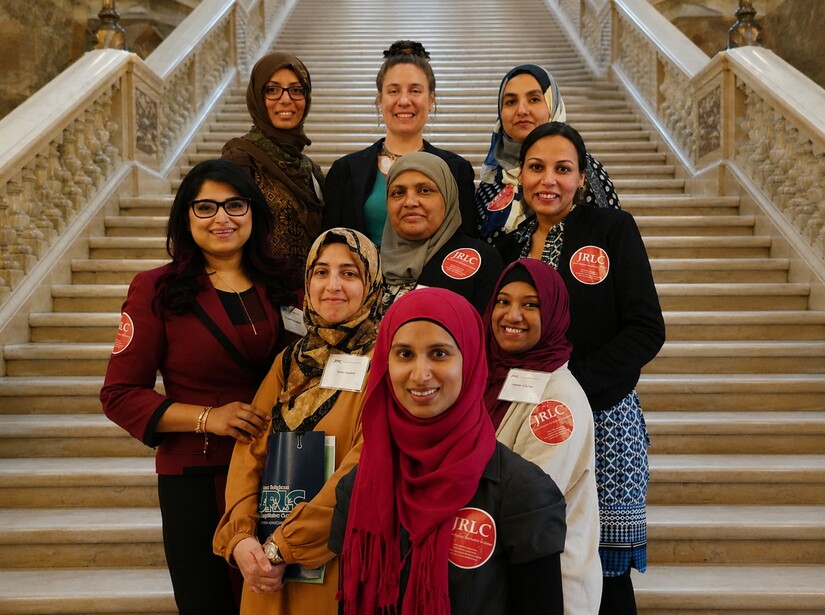
The turning point arrived in 2016. The political rhetoric was reaching a fever pitch, but local history was also being written as Ilhan Omar launched her historic campaign for the Minnesota Legislature. Sensing the urgency of the moment, Hussain gathered women together for an intensive session focused on political literacy and civic mobilization. She put Omar on a panel alongside a Muslim woman who had engineered a major senatorial campaign and another woman running for a local school board.
The visual impact of that panel was revolutionary for the women in the audience.
"How can I be what I cannot see?" Hussain said. "If I can’t see Muslim women that look like me in these spaces doing things, it is never going to be a possibility for myself."
Out of that room, RISE, Reviving the Islamic Sisterhood for Empowerment, was born. It was created as an uncompromising platform built by Muslim women, explicitly for Muslim women, designed to build narrative power and civic presence.
"We were like, we’re going to make our own platform," Hussain said. "We’re going to create a safe space. We’re going to invite people."
One of their first initiatives targeted the community's deep-seated fear of public media. Hussain brought in a Muslim woman television producer, a working reporter, and an independent blogger to demystify the newsroom.
"Everybody is scared of the media," Hussain observed. "Nobody wants to talk to a journalist. Everybody thinks they are going to twist our words."
But she refused to let fear dictate their public footprint. "You get to shape the narrative," she argued to her community. "If they don't talk to us, they are going to talk to somebody else, and somebody else is going to tell our story about us without us."
This philosophy crystallized into Muslim Sheroes of Minnesota, a multimedia project documenting the vibrant, everyday impact of Muslim women across the state. While the initial goal was to combat external Islamophobia, the most profound transformation occurred internally. Young girls saw women who looked like them celebrated as heroes. The women profiled experienced a profound shift in self-perception; the public validation acted as an accelerant.
"It made me realize I can’t stop doing this work," Hussain said of the subjects' reactions. "I gotta level up. I gotta keep going. I gotta do more. I gotta do better."
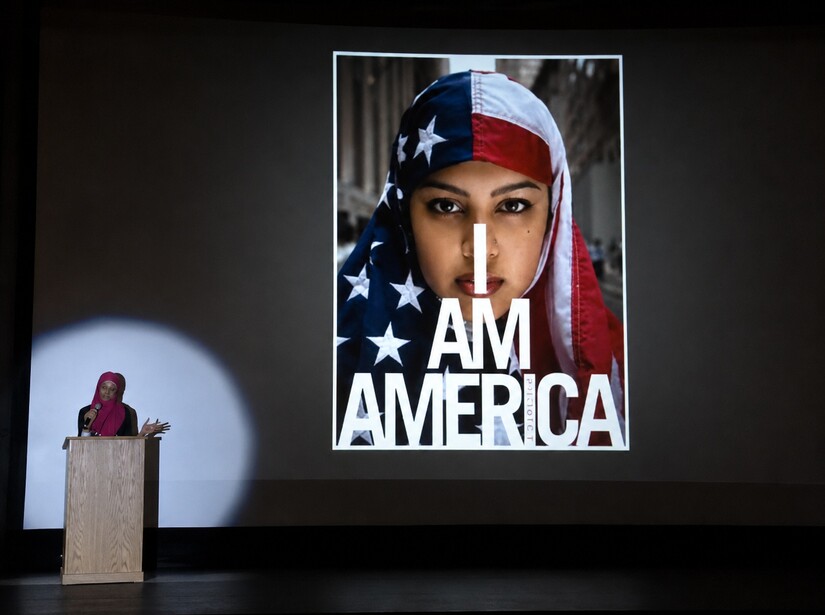
Growth, however, brought intense friction. Hussain had anticipated pushback from traditionalist male leaders who viewed a women-led organization as a threat to their authority. What she did not anticipate was the insidious, proxy nature of that resistance.
"They were using other women to challenge me," she revealed.
It was a painful lesson in the mechanics of systemic power: patriarchy is frequently enforced by the very people it subordinates, using proximity to power as a tool of division. Rather than engaging in public, counterproductive fights that would feed negative media tropes, Hussain adjusted her strategy. She focused on absolute operational transparency, building airtight compliance, filing meticulous 990s, and executing flawless annual audits. She transformed RISE from a grassroots collective into an unassailable professional institution.
As the organization’s budget scaled rapidly from $150,000 to $300,000, and ultimately crossed the $1 million threshold, Hussain confronted the shifting dynamics of capital.
"Money is power," she said. "And so, how do you build trust with that responsibility?"
At the same time, she carefully navigated the attention of the broader interfaith and progressive community. She recognized the constant threat of tokenization, the danger of being reduced to a convenient progressive trope of the "oppressed Muslim woman rescued by white liberalism." She refused to let RISE become an anti-men caricature. Instead, she anchored partnerships in concrete, shared legislation, collaborating with organizations like Protect Minnesota on gun violence prevention, the National Council of Jewish Women, and Asian Minnesotans Allied for Justice to build real, cross-cultural political capital.
This growing influence brought her into close working relationships with state leaders like Keith Ellison and the Lieutenant Governor. But Hussain remains unsentimental about political proximity. Access to powerful rooms is useless without a pipeline behind you.
This conviction is precisely what led to her most radical leadership decision: stepping away from the organization she built.
In a sector where founders frequently cling to executive director roles for decades, treating the institution as personal fiefdoms, Hussain chose a different legacy.
"If you are going to be in the business of creating the pipeline and teaching all of these people new skills, you have to be willing to step aside and let them lead," she said. "I can’t be the leader of the nonprofit forever. I don’t have all the ideas. I don’t have all the answers. I could be the one that is getting in the way."
Passing the baton was not an exit born of exhaustion; it was an act of profound structural validation. Watching RISE expand into new spaces under new leadership since her departure has proven her point: a healthy ecosystem survives its creator.
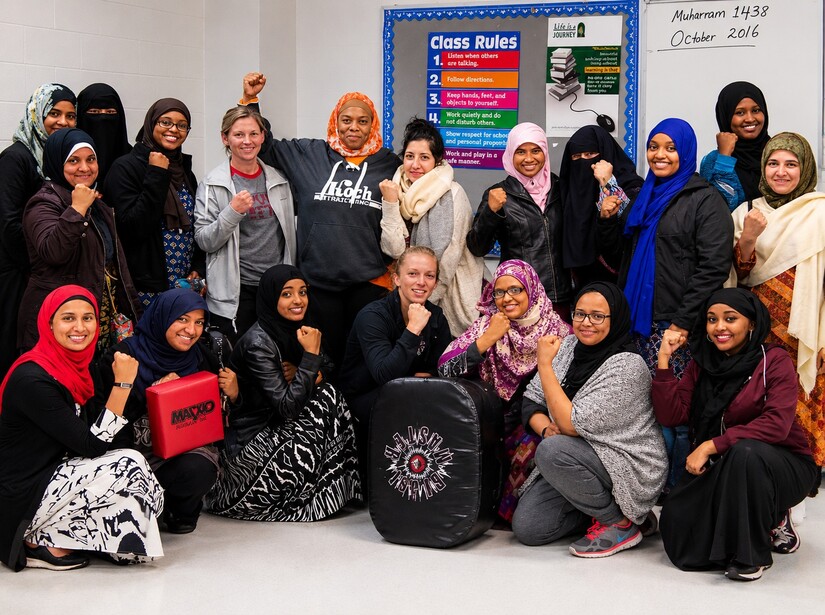
Today, Hussain has taken her critique of power directly into the world of philanthropy, a sector she views with deep historical skepticism.
"Philanthropy is so different because of how philanthropy started in the United States," she stated bluntly.
She notes that traditional American philanthropy is structurally tied to the extraction of wealth that systematically marginalized Black, brown, and Indigenous communities. Furthermore, the academic study of philanthropy routinely erases the historical giving practices of non-white cultures.
"When you study philanthropy, you’re not going to find much about you or me," she observed. "History is always written by the victor."
To democratize this space, Hussain champions community-centric models, pointing to institutions like the Headwaters Foundation for Justice and the Saint Paul & Minnesota Foundation as entities working to shift decision-making power back to local residents. To make this shift real, she urges marginalized communities to move past the role of passive grantees and actively occupy seats of governance.
"We need to be involved in these," she urged. "We need to be volunteering for them. We need to be on their boards. We need to be donors to their organizations. We need our nonprofits to apply for those grants. We need to be thought partners with them."
To simplify this entry point, Hussain utilizes the framework of the "Five Ts" of philanthropy: Time, Talent, Treasure, Testimony, and Ties.
|
TREASURE |
Financial capital and grants, which represents the traditional focus of the sector. |
|
TIME |
Direct service, from local caregiving to structured neighborhood mutual aid. |
|
TALENT |
Deploying professional skills, including legal counsel, accounting, and technology. |
|
TESTIMONY |
Using one's public voice to advocate for change and shift community narratives. |
|
TIES |
Transferring social capital, validation, trust, and deep structural connections. |
By expanding the definition of giving, she strips philanthropy of its elite insulation, reclaiming it as an everyday tool for community survival.
"If I tell my friends and family this is a great organization, this is a great cause, this is a great person, I’m taking my social capital and transferring it over to an organization that I trust," she explained. "All of us are philanthropists."
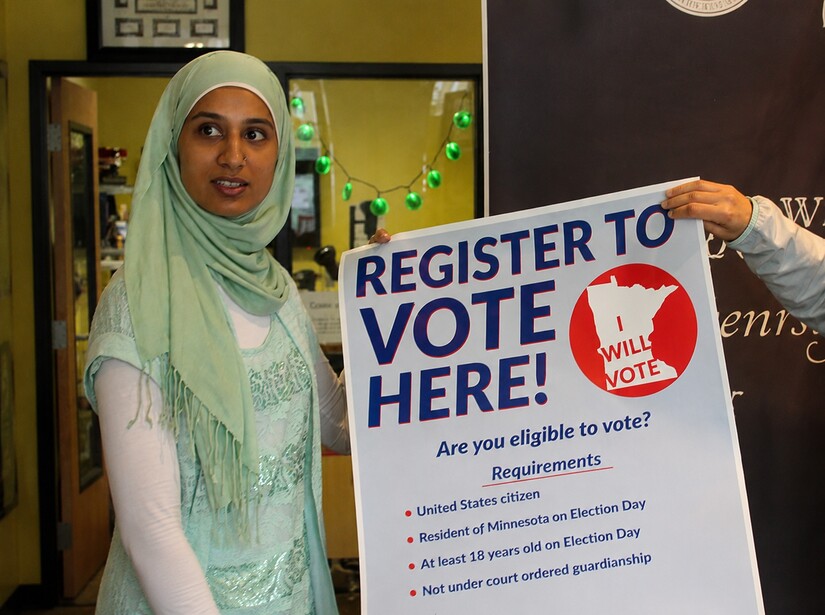
Yet, the public square remains a precarious place. Hussain is acutely aware that for a Muslim woman in a hijab, public visibility is a double-edged sword.
"Everybody wants recognition," she said. "What people don’t realize is that sometimes when you get recognized by the good people, you’re also recognized by the bad people."
With increased mainstream accolades comes a concurrent rise in targeted, online Islamophobic harassment. This reality requires a constant, rigorous centering of spiritual intent. For Hussain, the work must be decoupled from the pursuit of fame or tokenized box-checking.
"You have to really think about your own intentions," she said. "Why are you doing this work? If you are a Muslim, if you are a person of faith, you want to do this because it pleases God. And we do that by helping all of His creation. It has to be genuine and authentic."
This commitment to shifting the spotlight away from herself was on display throughout our interview. Even as she sat to record her own profile, Hussain was actively redirecting the historical record, insisting that MinneapoliMedia document the women working in the quietest corners of the state.
True to the tradition of The Power of Her, she put forward the names of those leading vital, underfunded movements: Valerie Shirley, who founded Minnesota Deaf Muslim to build language access, resources, and community dignity for Deaf Muslims after navigating her own son's profound hearing loss; Aisha, a brilliant young Deaf leader whose presence challenges the community's definitions of communication; the courageous founder of Niyyah Recovery, who is openly dismantling the heavy stigma surrounding substance abuse within Muslim families; and Kausar Hussain, who built Sukoon Healing of the Minds to provide culturally specific mental health care in the wake of shattering personal grief.
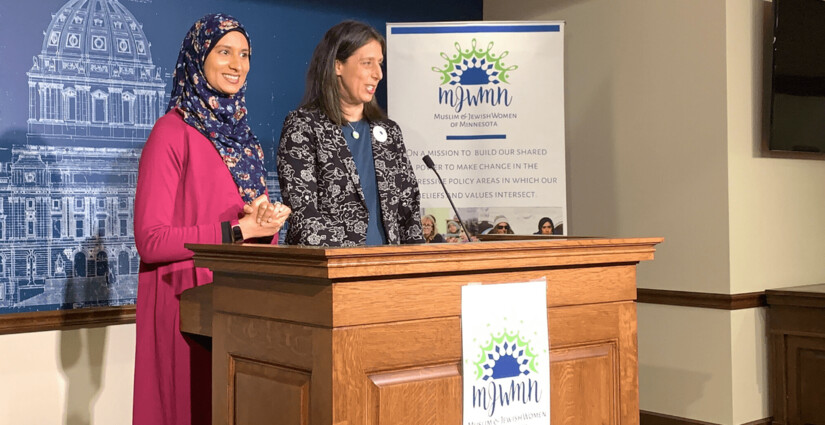
Near the conclusion of our conversation, the weight of personal loss entered the room. Hussain spoke softly of her father-in-law, who passed away recently after enduring years of physical suffering. In her faith tradition, his passing was not an end, but a transition into a peaceful, luminous beginning.
"He helped establish prayer in our homes," she said, her voice dropping to a quiet whisper.
The detail carried a profound thematic weight. It served as a reminder that public movements do not materialize out of thin air; they are forged in the quiet sanctity of the home, rooted in ancestral memory and the daily, unglamorous practice of inherited values.
When asked what ultimate success looks like for the systems she has spent her life altering, Hussain did not cite legislative victories or budgetary milestones. Instead, she offered an expansive, human vision.
"I would like to reimagine a world where all of us are actually happy, where we are joyful," she said.
She recalled an anecdote from an astronaut describing the view of Earth from orbit, a single, brilliant blue marble spinning in the dark, entirely devoid of the political lines and borders scrawled across human maps.
"I hope the future includes all of us," Hussain said. "A future that has love and joy and happiness and rest. That we’re not surviving. That we don’t have to constantly be resilient. That we are just thriving."
For Hussain, the shortest distance between two people will always be a story. It is the tool that erases distance, disarms fear, and forces the recognition of a shared humanity.
Her life follows a remarkably consistent architectural pattern. She looks for what is missing. She names the silence. She builds an unassailable room. She populates it with others. She passes the baton, steps into the wings, and points the spotlight at the next woman waiting in the dark.
That is why her story belongs in The Power of Her. Because true legacy is not determined by how long you hold the center of the stage. It is measured by how wide you build the space for others to stand there with you.
MinneapoliMedia | Community. Culture. Civic Life.



Sunny, with a high of 82 and low of 53 degrees. Sunny in the morning, clear overnight.