66° and Overcast
Image



The child was struggling to breathe.
It was not subtle. Not something that could be dismissed or watched over time. The kind of breathing that changes the air in a room. The kind that pulls a parent out of sleep and into fear.
By the time Dr. Nusheen Ameenuddin saw cases like this early in her career, she already understood what was at stake. Not in theory. Not in training modules. In real time. In bodies.
There are moments in medicine when decisions made far from the bedside arrive all at once in front of you. In a child’s lungs. In a parent’s face. In the silence that follows a question no one wants to ask out loud.
Could this have been prevented?
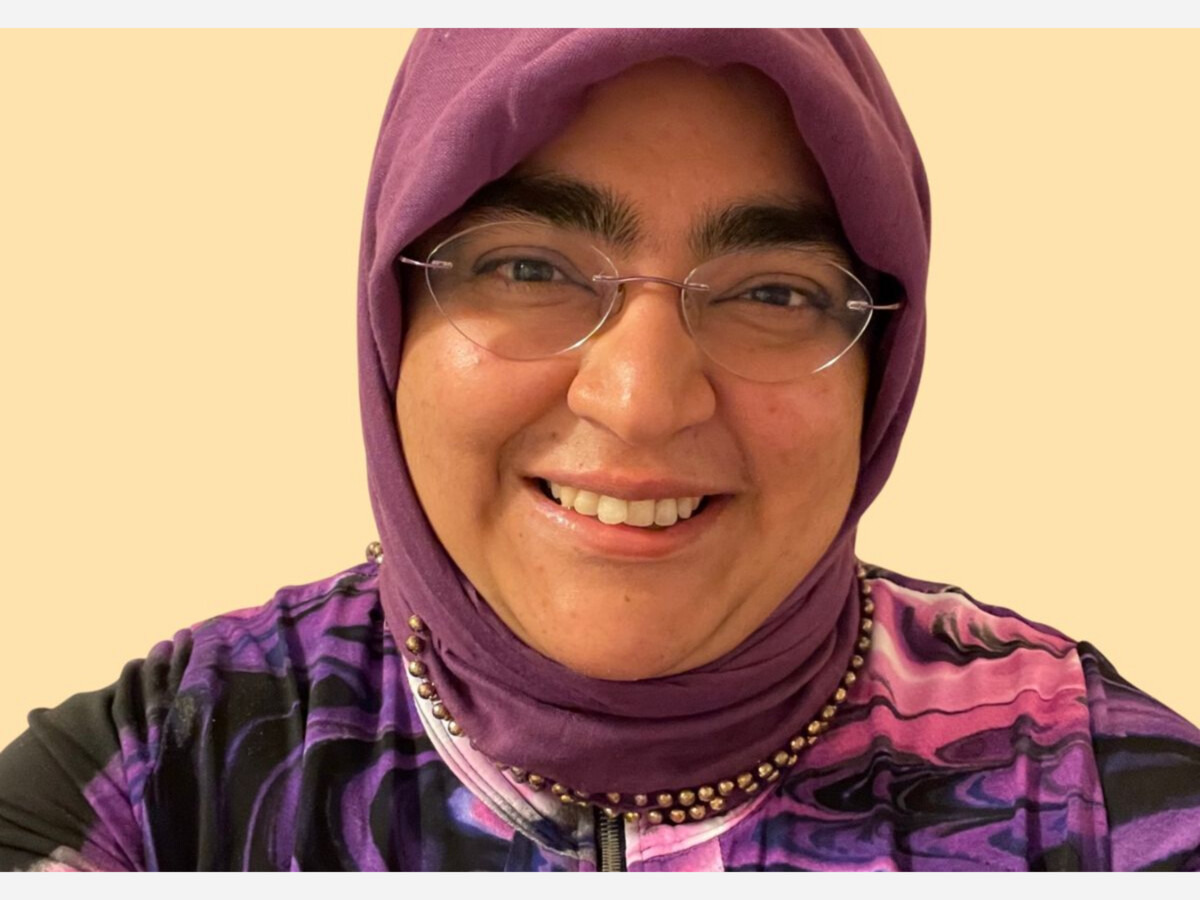
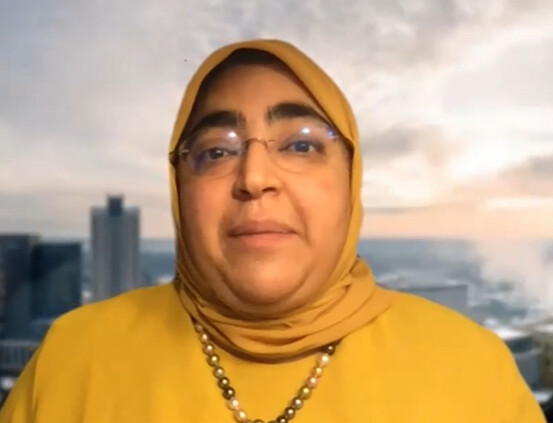
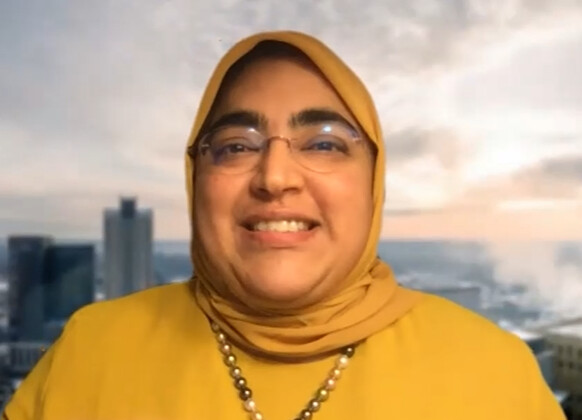
For Ameenuddin, a pediatrician based in Rochester, Minnesota, those moments have shaped not only how she practices medicine, but how she understands responsibility. Her work today sits at the intersection of clinical care, public trust, and the growing crisis of misinformation that is reshaping how families make decisions about health.
She does not describe her work in heroic terms. She describes it in obligations.
“My job,” she said, “is to make sure your child is safe and healthy and well.”
That sentence carries more weight than it appears to. Because increasingly, the work required to fulfill it is no longer confined to the exam room.
Long before she became a physician, before she learned the language of policy, systems, and advocacy, Ameenuddin understood something was wrong.
Her family had immigrated from India when she was a baby. The United States became home. But like many immigrant families building stability, there were years without health insurance. Years where access to care was not guaranteed. Years where decisions about whether to seek help were shaped by cost, uncertainty, and restraint.
Looking back, she recognizes symptoms in her own childhood that should have been treated. She likely had asthma. At the time, it was simply discomfort. Difficulty breathing after running. Something to push through.
What stayed with her was not only the physical experience, but the absence of access.
“It was an injustice,” she said, describing a realization that came before she had the words to explain it.
That instinct did not emerge in isolation. It was reinforced by the example of her grandfather, a physician in India who treated anyone who came to him, regardless of their ability to pay.
Many of his patients were poor. Many could not afford care. He treated them anyway.
“That is the social contract,” she said. “That is the way of caring for your community.”
The lesson was simple. Medicine was not a transaction. It was a responsibility.
She decided early that she would become a doctor. Not for status. Not for prestige. Because people needed care and too many could not reach it.
Years later, in exam rooms in Rochester and across Southeast Minnesota, that early understanding continues to shape how Ameenuddin shows up for her patients.
Many of them recognize something in her.
Teenage girls tell her they are the oldest child in an immigrant family. They describe responsibilities that extend beyond school. Translating for parents. Caring for siblings. Navigating expectations that exist across cultures.
“I understand,” she tells them.
That recognition is not incidental. It builds trust. It shortens distance. It creates space for honesty.
Ameenuddin speaks often about young people. Not with concern about what they lack, but with admiration for what they are becoming.
After more than two decades in practice, she describes the current generation as the most impressive she has seen. They are more willing to speak. More willing to question. More willing to include.
“They are not staying silent,” she said.
In a profession that often focuses on deficits, she sees capacity.
That perspective is not detached from her clinical work. It is part of it. Because understanding a child means understanding the world they are growing up in. And increasingly, that world is shaped by forces that do not originate in medicine.
There is a point in every physician’s career when the limits of individual care become impossible to ignore.
For Ameenuddin, that point came into focus in the years surrounding 2016.
She had already studied public health. She understood, academically, that systems shape outcomes. But the connection sharpened when policy decisions began visibly altering the lives of the families she served.
Insurance access shifted. Immigration policies tightened. Support systems thinned.
The effects were immediate.
Families struggled to access care. Parents were forced into impossible trade-offs. Children with complex medical needs required around-the-clock attention without the support structures that made that care sustainable.
Ameenuddin described parents spending nearly entire days at a child’s bedside while still being expected to work, sleep, and maintain a household.
“They can’t,” she said plainly.
In those moments, policy is no longer abstract. It is present in exhaustion. In missed care. In preventable decline.
That realization forced a decision.
Silence, she concluded, was not neutral.
“Everything is political,” she said. “Decisions made far away affect my patients on the ground.”
She began to speak more directly. To engage policy. To bring clinical reality into spaces where decisions are made at scale.
Because one patient at a time, while essential, is not enough when the system itself is creating barriers.
If policy defines access, trust defines whether care is accepted.
And that trust, Ameenuddin says, is under strain.
In recent years, she has watched something shift in her exam rooms. Families she has cared for over decades, families who trusted her during their most vulnerable moments, are now questioning or rejecting recommendations they once accepted without hesitation.
Vaccines are at the center of that shift.
The change is not subtle. It is abrupt.
Families who previously followed standard immunization schedules are now declining all vaccines. Some cite information they have encountered online. Others reference statements from national figures.
Even claims that have been thoroughly disproven, including the false link between vaccines and autism, have regained traction.
“It hurts,” she said.
Not only as a physician, but as someone who has built relationships over time.
Her response is not coercion. It is clarity.
“My job is not to force anyone,” she said. “My job is to give them the right information.”
Without that information, she believes, families are being asked to make decisions in the dark. And children are the ones who bear the consequences.
She has seen those consequences.
Children hospitalized. Children struggling to breathe. Children facing complications that could have been prevented.
In one case early in her career, she treated a patient too young to be vaccinated who developed meningitis so severe that a spinal tap revealed the extent of the infection in unmistakable terms.
She also recalled a patient whose family declined the COVID vaccine. The child became critically ill, went into cardiac arrest, and ultimately did not survive.
These are not statistics. They are moments. And they do not leave the people who witness them unchanged.
During Minnesota’s measles outbreak, Ameenuddin and her colleagues faced a different kind of challenge.
Vaccination rates in parts of the Somali Muslim community had dropped sharply over a decade. Not by accident. The community had been targeted by organized misinformation efforts that exploited fear and language barriers.
The response required more than issuing statements.
It required presence.
Physicians partnered with imams and interpreters. They entered mosques. They sat with their families. They answered questions in real time, in spaces where people felt comfortable asking them.
In those settings, the dynamic changed.
Instead of a brief clinical encounter, there was time. Instead of a single voice, there were trusted community figures alongside medical professionals. Instead of translation as an afterthought, it was central.
People asked questions they had been holding. They expressed fears that had been building. They listened.
Trust, Ameenuddin said, is not built through authority. It is built through relationships.
“You have to show that you care,” she said. “People don’t care how much you know until they know how much you care.”
That principle guided her approach.
“We are on the same side,” she tells parents. “We both want your child to be healthy.”
It is a simple statement. But in an environment shaped by distrust, it becomes essential.
Inside medicine itself, Ameenuddin has had to navigate a different kind of challenge.
As a visibly Muslim woman, she occupies a space where representation matters, but where scrutiny can be uneven.
Early in her career, she approached her work with the belief that effort and excellence would be enough. Over time, she came to recognize patterns that extended beyond individual performance.
Expectations were not always applied equally. Mistakes were not always interpreted the same way.
Those who fit established norms were often given room to recover. Those who did not were watched more closely.
“It’s very interesting,” she said, choosing her words carefully.
In leadership roles, she has had to name those differences. To ask questions that are uncomfortable in environments where fairness is assumed but not always examined.
That work carries risk. People who raise concerns about inequity are often labeled as difficult or disruptive.
She has continued anyway.
For younger physicians and trainees, especially those navigating similar dynamics, she tries to provide something she did not always have.
A place where they can speak honestly. A place where their experiences are understood.
That kind of support does not make headlines. But it changes trajectories.
In policy discussions, data is expected. Evidence is required.
Ameenuddin brings both. But she also brings something else.
Stories.
Not as embellishment, but as evidence of a different kind.
She can cite dozens of studies demonstrating the safety and effectiveness of vaccines. But she knows that what often stays with people is not the number. It is the image.
A child gasping for air. A parent hearing a change in breathing in the middle of the night. A family realizing too late that a decision was based on fear rather than fact.
Those moments do not replace data. They make its absence visible.
They remind policymakers and communities alike that behind every statistic is a person.
When asked what liberation looks like in her work, Ameenuddin did not hesitate.
It is not an abstract concept for her.
Liberation, she said, is access to accurate information.
It is the ability for families to make decisions based on truth rather than fear. It is the removal of barriers that prevent people from understanding what affects their health. It is the capacity to advocate, not only for oneself, but for others.
She extended that idea beyond health care.
Misinformation, she said, does not stop at medicine. It shapes how people understand the world. It influences how communities respond to injustice. It determines who is seen, who is heard, and whose suffering is acknowledged.
“We are all connected,” she said.
What happens in one place does not stay there.
For her, liberation means recognizing that connection and acting on it with clarity.
Ameenuddin is careful not to frame her work as complete.
There is more to be done than can be named in a single conversation.
Across Minnesota, she pointed out, there are women doing essential work that rarely receives attention. In cities outside the Twin Cities, in community organizations, in mutual aid networks, in spaces where resources are limited but commitment is not.
Much of that work is quiet. It is not always visible. But it is foundational.
When asked to name someone whose work deserves recognition, she pointed to Nausheena Hussain, a community leader focused on empowering women and advancing ethical philanthropy within Muslim communities.
It was a deliberate choice.
Recognition, like access, is unevenly distributed.
Part of leadership, in her view, is making sure others are seen.
By the end of the conversation, one thing is clear.
Ameenuddin does not see medicine as a contained profession. She sees it as a point of contact between systems and people, between information and decision, between trust and doubt.
Her work is to stand in that space and make it more navigable.
To make sure families are not left alone with questions that matter too much to answer incorrectly.
To make sure children are not the ones paying the price for failures in communication, policy, or trust.
To make sure care is not something people have to fight to understand.
That work is not finished.
It may never be.
But in exam rooms, in mosques, in conversations that stretch beyond their allotted time, she continues to do it.
And for the families who rely on that clarity, that consistency, and that refusal to step back from difficult truths, it is not abstract.
It is the difference between uncertainty and understanding.
Between fear and action.
Between harm and the possibility of something better.
At the close of the conversation, Dr. Nusheen Ameenuddin nominated Nausheena Hussain as a leader whose work in Minnesota deserves greater visibility, citing her commitment to empowering women and strengthening community through ethical and informed giving.
MinneapoliMedia | Community. Culture. Civic Life.


Patchy rain nearby, with a high of 66 and low of 53 degrees. Overcast in the morning, partly cloudy in the afternoon, clear in the evening, patchy rain nearby overnight.