66° and Overcast
Image
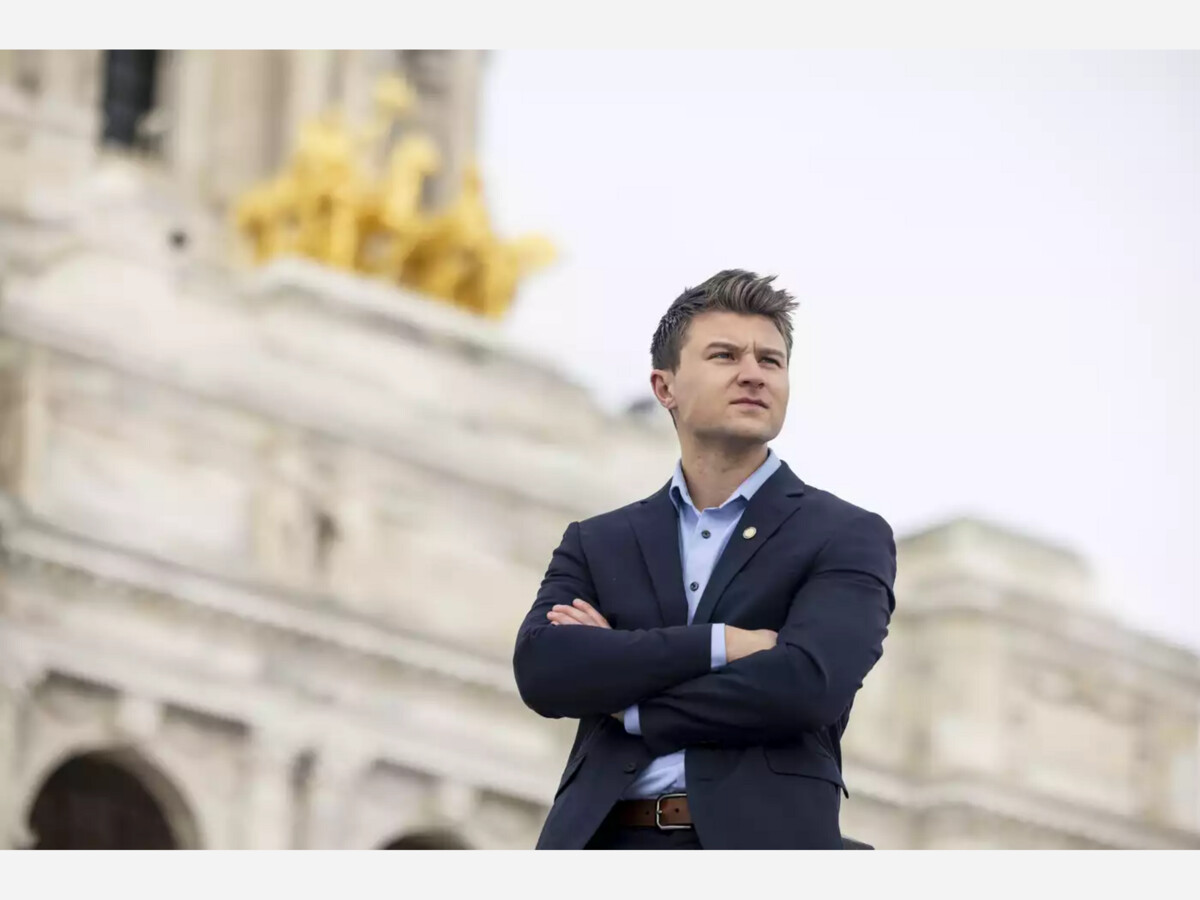
Rep. Elliott Engen outside of the Minnesota State Capitol in St. Paul. Photo credit - Kerem Yücel | MPR News 2023



The arrest unfolded in the early hours following a full day of legislative work at the State Capitol, placing the incident at the intersection of public responsibility, personal accountability, and an active statewide campaign.
According to the White Bear Lake Police Department, officers initiated a traffic stop at approximately 1:51 a.m. in White Bear Lake after observing Engen’s vehicle allegedly speeding, operating with a broken headlight, and displaying expired registration.
Upon interacting with Engen, officers developed suspicion of impairment and placed him under arrest.
He was transported to the Ramsey County Adult Detention Center, where he was booked on suspicion of fourth-degree driving while impaired. Under Minnesota law, a fourth-degree DWI is generally classified as a misdemeanor and typically applies in cases without aggravating factors such as prior offenses or the presence of a child in the vehicle.
Engen was later released. The case has been forwarded to the White Bear Lake city attorney’s office for review and potential formal charges.
Central to the case is a discrepancy between blood alcohol concentration readings reported by law enforcement and those provided by Engen’s legal counsel.
Police stated that a breath test administered at the station showed a BAC of 0.13, well above Minnesota’s legal limit of 0.08.
However, Engen’s attorney, Chris Madel, submitted documentation to media outlets indicating lower readings of 0.098 and 0.092.
While the figures differ, both sets of readings exceed the legal threshold for operating a motor vehicle in Minnesota. The variation may become a focal point in any legal proceedings, particularly in determining evidentiary weight and procedural accuracy.
The arrest came just hours after Engen participated in legislative proceedings at the Minnesota House.
On Thursday afternoon and evening, lawmakers debated a range of bills, including proposed restrictions on large-capacity ammunition magazines, an issue on which Engen spoke on the House floor. The session adjourned at approximately 9:15 p.m.
In the hours between adjournment and the traffic stop, a social media post from a former House staff photographer alleged that Engen had been seen consuming alcohol at Burger Moe's, a bar and restaurant near the Capitol, alongside fellow Republican lawmaker Walter Hudson. That claim has not been independently verified by law enforcement.
By 1:51 a.m., Engen had been pulled over and subsequently arrested, closing a timeline that spans less than five hours from legislative debate to detention.
In a brief public statement, Engen acknowledged the incident and expressed regret:
“To my family, colleagues and constituents, I am deeply sorry. I strive to be a man of great character, and my actions fell short last night. I will learn from this. I will do better.”
House Speaker Lisa Demuth issued a statement shortly after the arrest became public, describing the situation as deeply concerning:
“I am extremely disappointed to learn about Rep. Engen’s arrest. I will be working to gather information about the circumstances of his arrest and charges and will address this directly with Rep. Engen and consider further consequences as the legal process unfolds.”
Her statement signals the possibility of internal caucus or legislative consequences beyond the legal process.
The timing of the arrest carries heightened political implications. Engen is currently a candidate for Minnesota State Auditor, a statewide office responsible for auditing local governments and overseeing public financial accountability.
The incident introduces uncertainty into that campaign, particularly as it intersects with broader questions of judgment and public trust.
Adding complexity to the race, Engen’s opponent, Dan Wolgamott, also has a prior DWI conviction. Wolgamott pleaded guilty to a misdemeanor charge in 2023 after recording a BAC of 0.11.
The parallel histories create what political observers may view as a “campaign of contrasts,” where both candidates must address past conduct while seeking to present themselves as credible stewards of public accountability.
When asked about the future of Engen’s campaign, attorney Chris Madel indicated that no formal decision had been made, though he expressed hope that Engen would remain in the race, describing him as “a great candidate.”
Under Minnesota law, a fourth-degree DWI conviction can carry penalties that include fines, probation, and license restrictions. The absence of aggravating factors suggests the case will proceed as a misdemeanor, though final charging decisions rest with the White Bear Lake city attorney.
The discrepancy in BAC readings, along with any procedural details surrounding the stop and testing, may shape how the case develops in court.
Engen’s arrest adds to a small but notable pattern of DWI-related incidents involving Minnesota lawmakers across party lines in recent years. Each case has prompted renewed discussion about accountability, personal conduct, and the expectations placed on elected officials.
For Engen, the immediate future now unfolds on two parallel tracks: a legal process that will determine the outcome of the charge, and a political reality that may prove just as consequential.
As both processes move forward, the incident underscores a broader truth in public life: the margin between private decision-making and public consequence is often measured in hours.
MinneapoliMedia | Community. Culture. Civic Life.


Patchy rain nearby, with a high of 66 and low of 53 degrees. Overcast in the morning, partly cloudy in the afternoon, clear in the evening, patchy rain nearby overnight.