72° and Clear
Image



History is not a collection of static dates; it is the living architecture of the present. When we look at the acute crises facing Indigenous communities today, from the systemic erosion of public health to the heartbreaking realities of the Missing and Murdered Indigenous Women and Relatives (MMIW) emergency, we are looking at the direct consequences of historical policy choices. To understand the modern landscape of Indian Country, we must look beneath the surface of statistics and engage with the lived experiences of those actively steering the reclamation of their narrative.
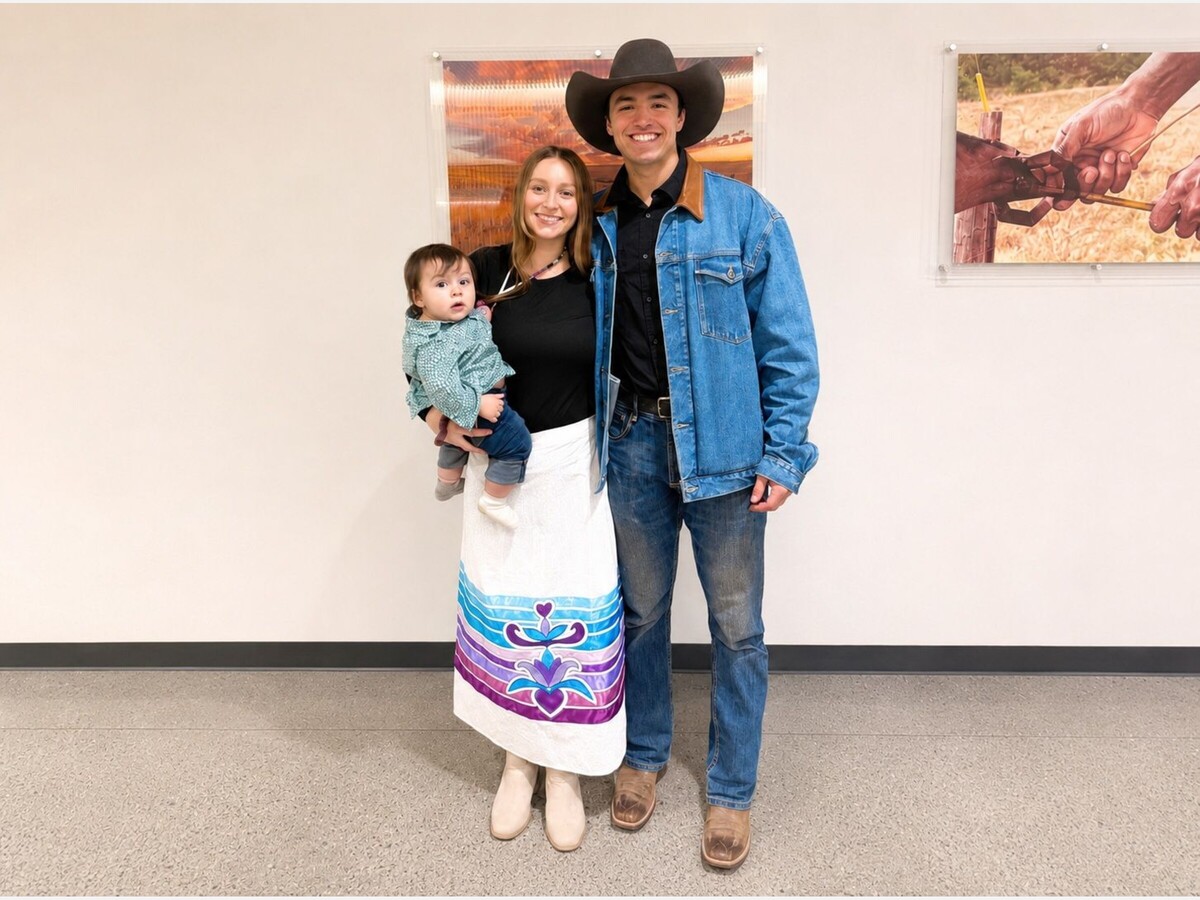
In this installment of Voices From Across America, MinneapoliMedia publisher Tom Akaolisa sits down with Devon Headdress, an enrolled member of the Mandan, Hidatsa, and Arikara (MHA) Nation, public health researcher, and ultra-runner. What unfolds is a staggering, raw, and deeply analytical conversation that bridges the hard sciences with ancestral wisdom. From the discipline instilled by his pioneering grandmother to a sobering, intimate account of family loss, Headdress challenges mainstream assumptions about wellness, service, and historical literacy. This is more than an interview; it is a masterclass in breaking generational trauma and a profound call for systemic coexistence that carries vital lessons for every American.
TOM AKAOLISA: Devon, welcome to Voices From Across America. One of the reasons we created this series is to preserve conversations with people whose stories help us better understand America and the communities that shape it.
I have been deeply looking forward to this conversation because your work sits precisely at the intersection of Indigenous health, history, education, storytelling, and advocacy. Through your research, public engagement, and growing digital platform, you are helping thousands of people better understand Indigenous communities while ensuring that Indigenous stories are told directly through Indigenous voices.
Today, we want to learn about your journey, the people who shaped you, the work you are doing, and the future you are helping to build. Thank you for joining us.
DEVON HEADDRESS: Thank you, Tom. I am very grateful to be here with you.
TOM AKAOLISA: Tell us about the real Devon. Who are the people, the places, and the foundational experiences that made you who you are today?
DEVON HEADDRESS: I am an enrolled member of the MHA Nation in western North Dakota. When I think about what shaped me, I have to look at a childhood defined by survival. I grew up in a broken home. My father wasn't really around, battling alcoholism. My mother had me when she was just 19 years old, and she struggled deeply with substance abuse. Her addiction eventually became so severe that by the time I was in high school, I had to move in with my late grandmother, Juanita Helfrey.
To understand why I am the way I am today, you really have to understand who she was.
My grandmother served as the Executive Director of North Dakota Indian Affairs for about 17 years. She worked under four different governors and was the first person to turn that position into a full-time role. After that, she became a minister; her faith was the bedrock of her life. Later, when she lived in Cleveland, she became actively involved with the American Indian Movement's efforts pushing the Cleveland Indians organization to retire their mascot and name.
A lot of this is information I only learned after she passed away in 2018. I moved in with her in 2015, and looking back, I often describe myself at that time as a wild horse that needed to be broken.
My grandmother understood routine. She understood discipline and responsibility. I had chores every day. I played basketball in high school and later in college, so the competitive work ethic and passion were already inside me. What she did was take that raw energy and channel it toward something that could benefit other people.
More than anything, she sparked my curiosity. She encouraged me to ask questions. That curiosity eventually led me toward Indigenous health and history.
One thing people often misunderstand is that they see Native communities struggling with addiction, domestic violence, or trauma, and they focus exclusively on the problem. They never ask what caused it. They don't ask what happened before the addiction, or what happened before the violence. In my work today, a big part of what I try to do is help people understand the root causes. That is the foundation behind everything I do.
TOM AKAOLISA: You come from an incredibly rich heritage that includes Nakoda, Dakota, Hidatsa, Mandan, and Ojibwe roots. How has that multi-layered identity shaped the way you see yourself and your place in the world?
DEVON HEADDRESS: Because of my last name, I always knew I was Native. Headdress is a very recognizable name. But growing up, there was so much chaos in my life that I didn't understand the gravity of my heritage. My focus was purely survival. I was a very parentified child, constantly trying to help make ends meet. I've spent years in therapy working through things from my childhood, unlearning behaviors that developed just from navigating that environment.
I honestly didn't start learning who I truly was until I was around 22 or 23 years old.
There is a quote from the late Joseph Marshall III, the Sicangu Lakota historian and author, that changed everything for me. He said, "In order to know who you are, you have to know where you come from." I remember reading that and thinking, Okay, I need to find out where I come from.
So I started digging into my ancestry. What I discovered completely shifted my identity. Tracing Native ancestry back into the 1700s is incredibly difficult because our histories were passed down orally rather than through written records. Yet, I found incredible legacies.
I learned that my great-grandfather served during World War II and fought at Okinawa and Hacksaw Ridge. People know Hacksaw Ridge because of the Hollywood film about Desmond Doss, but my great-grandfather was actually there on that ridge. I learned about Henry Headdress, who was known as the first rodeo bullfighter in Montana and a highly respected cowboy. I learned about Owl Headdress, who served as a Native scout.
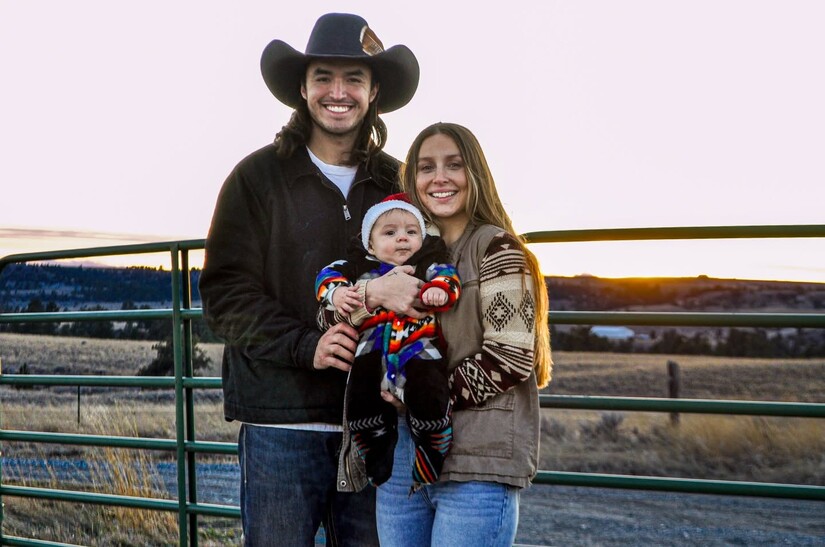
Suddenly, I was looking at generations of people who had served, sacrificed, and survived. I see five consecutive generations of military service to this country, but I also see people whose roots on this continent go back long before the United States was even an idea.
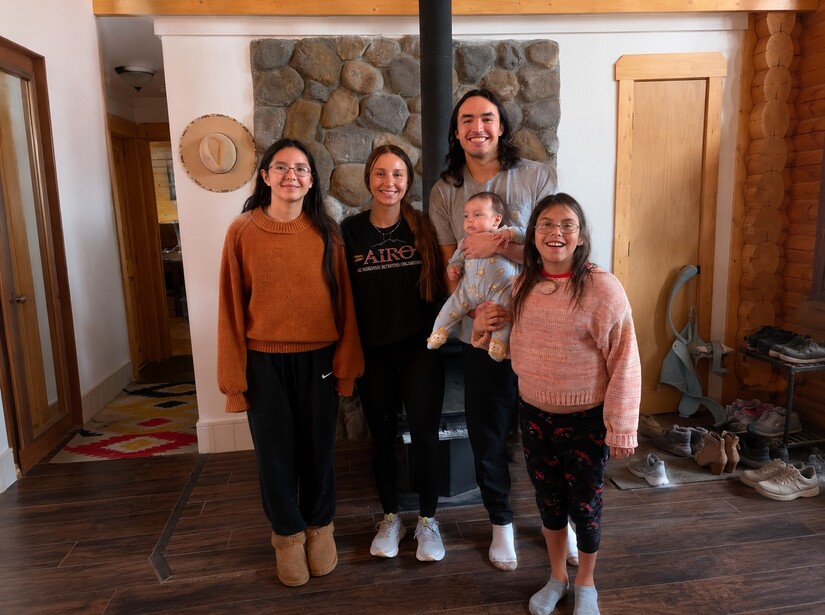
That history gives me pride, but it also gives me massive responsibility. Now that I have a son, I have the opportunity to pass that history directly to him. I can tell him exactly who his people are, that his family endured hardships, made sacrifices, and contributed to something larger than themselves. I want him to carry that truth with absolute pride.
TOM AKAOLISA: Growing up in New Town, North Dakota, what lessons from your family and your community continue to guide your compass today?
DEVON HEADDRESS: A lot of it anchors right back to my grandmother. She was old school. If something needed to be done, you did it right, and if it wasn't being done right, it probably wasn't being done her way.
From her, I learned work ethic, compassion, and empathy. Most importantly, she taught me never to judge people based on appearances or their current struggles. She showed me that when someone is struggling with addiction, anger, or destructive behavior, there is always something deeper hurting underneath the surface. She taught me to look beneath the surface and ask why people are hurting rather than simply reacting to their behavior.
One phrase has become central to my life: I want to become the person I needed when I was growing up. That mission influences how I approach public health, how I approach advocacy, and how I approach fatherhood. I want to be for other youth what I so desperately needed when I was younger.
TOM AKAOLISA: Your family's military service spans five generations. What does that heavy legacy mean to you, and how has it influenced your personal understanding of service and responsibility?
DEVON HEADDRESS: That is a vital question. Growing up, there is often a profound tension in Native communities when talking about the relationship between Native Nations and the United States. There is a long, deeply complicated history there. When you look at the Plains Indian Wars and the historical trauma that followed, there are understandably a lot of raw emotions.
As I researched my family history, I realized my family had lived on both sides of that history. I come primarily from Native ancestry, but I also have non-Native ancestry. Seeing five generations of military service forced me to ask one question over and over again: Why? Why did generation after generation choose to serve?
To understand myself, I had to understand their choices. I looked back at my great-great-grandfather, Owl Headdress. As far back as we can trace, he was one of the earliest members of our family connected to military service. During his era, Native people were facing unimaginable, systemic pressure. They were being told where they could live, what they could do, and whether their families would even survive. From what I have learned, he was essentially given a choice that no one should ever have to make: serve the military, or face the reality of your family going hungry. That is how the legacy started.
Then came his son. Then his son's son. Five generations.
As I reflected on that, I realized that each generation wanted to preserve something for the people who would come after them. They wanted their children to have opportunities they were denied. When I think about service now, I don't look at it strictly in military terms. I think about being of service to my family, my community, and using my digital platform responsibly. Whether it is LinkedIn, Instagram, or Facebook, I want to use my voice to bridge gaps rather than create division. Service is never about yourself; it is about creating something better for the people who come next.
TOM AKAOLISA: When you think about your ancestor Owl Headdress and the impossible choices Indigenous people faced simply to survive, what reflections weigh heaviest on your mind?
DEVON HEADDRESS: I spend a lot of time wondering what it must have felt like to live through that total collapse of a world. Imagine spending thirty or forty years living one way, understanding reality through one cultural lens, and then suddenly a completely different culture, language, and set of values arrives to displace it. You are left trying to figure out how your family survives inside a world that no longer makes sense to you.
I think about his uncertainty and the heartbreak of watching an entire way of life be systematically threatened. People often want history to be simple. They want clear heroes and clear villains. But history is rarely clean.
Owl Headdress eventually served as a scout, and part of that service involved participating in efforts connected to the pursuit of Sitting Bull, one of the most respected Lakota leaders in history. I think about that often, because my own ancestry includes Dakota and Lakota connections as well. These were not strangers; these were neighboring communities that had lived alongside one another for generations. Yet, circumstances forced people into making decisions under immense systemic pressure.
I feel pride in his survival and service, but I also feel deep empathy. History becomes much more human when we stop looking at people as historical symbols and start looking at them as individuals trying to navigate impossible circumstances with no good options available.
TOM AKAOLISA: You earned a degree in chemistry before pursuing public health. What first drew you to the hard sciences, and what ultimately redirected you toward Indigenous health advocacy?
DEVON HEADDRESS: That goes back to my family too. When I moved in with my grandmother, her son, my Uncle Jim, lived downstairs in the duplex. He was a biology teacher. By that point, my grandmother had already unlocked my curiosity, and I was the kid who constantly wanted to know how the world worked. My uncle was patient enough to answer all my questions.
When I got to college, I thought I had my future mapped out. I played basketball, loved sports, and wanted to become a physical therapist. But after spending time around physical therapists working with college athletes, I realized it wasn't my true path. Medicine interested me because I knew Native Americans were significantly underrepresented in healthcare. I wanted to challenge myself, so I chose biochemistry. I spent two years at Bismarck State College playing basketball before transferring to the University of North Dakota (UND).
Once I arrived at UND, my perspective expanded. I became deeply involved with the Indigenous community on campus, eventually serving as president of the UND Indigenous Association for two years. That experience was eye-opening. I was seeing firsthand how severely underrepresented Native people were in medicine, science, and higher education.
At the same time, biochemistry fascinated me because I am a very analytical person. I like understanding systems. Biochemistry allowed me to understand the human body at a cellular level, learning how biological systems interact, and how nutrition and physiology affect performance.
For six years, my absolute goal was medical school. Everything I did was working toward that objective. Then I took the MCAT, and I didn't do well.
Honestly, it triggered an identity crisis. I thought, I just spent six years preparing for this. Now what? But if a door closes, I am the type of person who immediately looks for another entry point. Around that same time, I was diving deep into my own healing journey and learning about historical trauma, policy decisions, and health disparities in Native communities.
I realized I could combine my passion for science with my passion for Indigenous history. That realization led me to pursue a master's degree in Indigenous Health. I recognized that helping Native communities wasn't just about clinical healthcare; it was about education, policy, and helping people understand how we arrived at these modern disparities. That pivot changed the entire direction of my life.
TOM AKAOLISA: You have spoken frequently about the unique challenges Indigenous students face in higher education. What structural hurdles remain, and what changes do you want to see for future generations of Native students?
DEVON HEADDRESS: People often don't understand the invisible weight many Native students carry with them when they step onto a college campus. Sometimes institutions look at a student who is struggling academically and assume they lack motivation or preparation. They don't understand what that student experienced before walking into the classroom.
As I mentioned, many Native students come from environments deeply impacted by unresolved, generational trauma. Historically, Native communities relied on collective responsibility; it took an entire community to raise a child. Today, our communities are trying to preserve those values while simultaneously dealing with the fallout of trauma that has never been addressed.
When trauma is left unresolved, it impacts everything: relationships, education, emotional regulation, and cognitive focus. Imagine a student sitting quietly at a desk, about to take a high-stakes chemistry exam. Everyone else just sees a quiet student. Nobody sees that earlier that morning, there was a crisis of addiction or domestic violence in their home. When that student sits down, they aren't thinking about the exam; they are wondering if the people they love back home are safe. They are carrying things that nobody else in the room can see.
That is why the most important thing educators and peers can do is create space for genuine connection. Support doesn't require you to have all the answers. It begins with something as simple as noticing someone is struggling, looking them in the eye, and asking, "Are you okay?" Community is everything in Native culture. Creating a true sense of belonging on campus can make a life-changing difference.
TOM AKAOLISA: When the broader public hears the phrase "Indigenous health," what do you wish they understood that is commonly overlooked?
DEVON HEADDRESS: I get that question constantly. One major lesson I learned during my time at UND is that language and context matter deeply. When I was president of the campus association, we explicitly changed the name from the "Indian Association" to the "Indigenous Association." It sparked immediate questions from students asking if they fit the definition based on their global roots.
It taught me that context is everything. When we use the word "Indigenous," we have to understand the specific land and history we are talking about. The context in Australia is different from Canada, which is different from the United States.
I always encourage people to be fearlessly curious. Sometimes people are terrified to ask questions because they are afraid of offending someone. But if you are asking respectfully and genuinely trying to learn, that is exactly where meaningful dialogue begins. Indigenous health is not a static concept; it starts with understanding the unique people, the community, and the historical context of the land you are standing on.
TOM AKAOLISA: In your research, what are the most pressing, acute health challenges facing Indigenous communities today?
DEVON HEADDRESS: Without question, the epidemic of chronic disease, specifically diabetes, hypertension, and heart disease. But again, as a researcher, I refuse to just look at the statistics; we have to look at the root causes.
Historically, when reservations were established and the treaty systems were enforced, Native communities experienced a sudden, catastrophic disruption to their traditional food systems. For generations, our ancestors relied on a highly active lifestyle and a nutrient-dense, natural diet. Suddenly, communities were forced to rely on government commodity foods, which were packed with refined sugars, white flour, and dairy.
Many Native people, including myself, are genetically lactose intolerant, yet our communities were flooded with milk, cheese, and processed foods that our bodies were never adapted to consume. Those dietary shifts occurred over generations, and the consequences are heavily reflected in modern health statistics.
The beautiful thing happening right now is that many Indigenous communities are actively working to reclaim food sovereignty. We are seeing the rise of community gardens, tribal buffalo programs, and intentional efforts to reconnect people with ancestral foods. Communities are asking what wellness looked like before these colonial systems disrupted our health.
That is something I am deeply passionate about. My wife and I have a long-term dream of operating our own buffalo ranch. For us, the buffalo isn't just livestock or food; it represents culture, history, spirituality, and a deep ecological connection to the land. Reclaiming our relationship with food and land is where true community healing begins.
TOM AKAOLISA: You beautifully connect physical health to culture, identity, and history. Why is it so vital to view wellness through this broader, holistic lens rather than the modern fitness trends we see online?
DEVON HEADDRESS: Wellness has become incredibly commercialized and superficial. People today think wellness means expensive ice baths, saunas, or whatever optimization trend is viral on social media this week. For me, wellness is much simpler: it is a functional way of life that enriches your longevity.
Historically, my ancestors were constantly in motion. Physical activity wasn't a separate box you checked at the gym for an hour; it was integrated into survival. It was hunting, gathering, hauling wood, carrying water, and building.
Today, people view exercise through a purely aesthetic lens. They want validation, six-pack abs, and a certain look for social media. That has never been my perspective. I don't train to look good; I train for physical sovereignty and quality of life. I exercise because I want to play with my children longer, be present for my wife, and stay healthy enough to support the people I love. If lifting weights or running long distances helps me achieve that, that is wellness. It should support the life you are trying to build, not become an obsessive identity.
TOM AKAOLISA: You have built a remarkable, highly engaged audience across social media platforms. When you first stepped into content creation, what was your original intent?
DEVON HEADDRESS: It is funny because I was just laughing with my wife about this. Originally, my plan was very basic: I thought I was just going to talk about exercise. I figured I would record myself lifting weights, share some training advice, and build a fitness page.
Then my life completely shifted when my son was born. People always talk about mothers going through a nesting phase, preparing the physical environment for the baby. What people rarely discuss is the psychological shift that happens to a father. For me, it was an overwhelming, primal drive that I needed to provide, not just financially, but meaning.
I remember holding my newborn son while he was sleeping on my chest. I was listening to a podcast where Coach K, the legendary Duke basketball coach, was talking about work ethic and finding a purpose that transcends your immediate sport. That conversation hit me hard. For years, I had made excuses about why I shouldn't start making videos. That day, looking at my son, I decided to stop overthinking. I pulled out my phone and recorded a video.
Looking back, it was terrible. The production quality was awful. But it was a start.
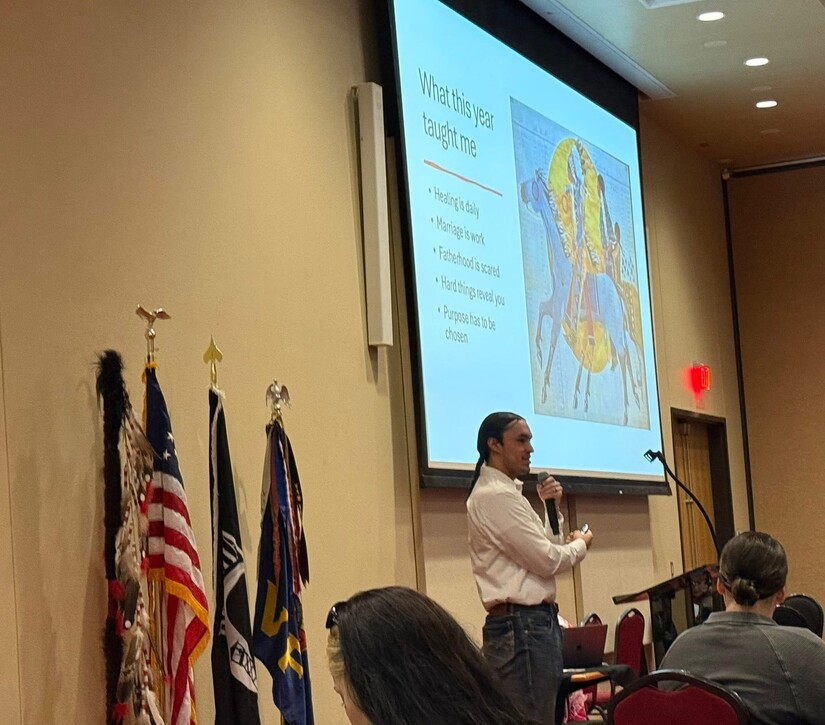
The first videos were simply about the lessons my grandmother taught me and how those disciplines could help others. Then, I began integrating Indigenous health and history. Suddenly, something incredible happened. People from all walks of life started responding. They were hungry to learn. They had never been exposed to these conversations in school. That is when I realized social media wasn't just a place to post; it was a powerful educational tool to build cultural understanding.
TOM AKAOLISA: At what specific point did you realize your message was breaking out of regional circles and reaching a massive, mainstream audience?
DEVON HEADDRESS: The first major shift happened on LinkedIn. In April 2025, I attended a conference where a presenter mentioned something that completely stunned me. They explained that Abraham Maslow actually developed parts of his famous "hierarchy of needs" after spending extended time interacting with and learning from the Blackfoot people. I had never been taught that.
I went home, did the research, and created a detailed post about it. The response was explosive. The post received around one hundred thousand views almost immediately. I had professionals, academics, Native, and non-Native people reaching out to converse.
Then it happened again on an even larger scale with a video I made about Sacagawea, discussing her true history and her foundational connection to the Hidatsa people. That video went completely viral, gaining over one million views and one hundred and fifty thousand likes. I remember showing the analytics to my wife, just sitting there in absolute disbelief.
What started as a small, personal project was suddenly educating people across the continent. It proved to me that the public is genuinely curious about Indigenous history when it is presented authentically. I am not creating content to get rich or follow a trend; I am speaking on things that directly impact my soul, and people intuitively respond to that honesty.
TOM AKAOLISA: You have noted that Indigenous history has too often been filtered and sanitized through an external lens. Why is it politically and culturally imperative for Indigenous people to tell their own stories?
DEVON HEADDRESS: For centuries, Indigenous people were portrayed exclusively through the perspective of the people who colonized them. Generations grew up on old Hollywood Westerns, John Wayne films, and a "Cowboys and Indians" narrative where Native people were written strictly as savages, threats, or dynamic caricatures. Later, the stereotype shifted to portraying Native people exclusively as gamblers or alcoholics existing solely in the past tense.
Those damaging images became the default blueprint for how mainstream America understood us. But those portrayals never came from us.
Indigenous storytelling matters because we aren't trying to rewrite history to erase others; we are providing the missing perspective to complete the American picture. I want to be clear: I am not anti-American. My family has served this country uniform for five generations. We love this land. What I am trying to do is provide the vital context that was intentionally left out of the textbooks. When Indigenous people tell Indigenous stories, we are speaking from lived experience, ancestral memory, and family truth. It is a perspective that deserves its rightful place in the narrative.
TOM AKAOLISA: Many of your most impactful essays focus heavily on history. Why do you believe a deep historical literacy remains so crucial for modern civic life?
DEVON HEADDRESS: I have an obsession with history, and not just my own. If someone from Ireland or Scotland wants to sit down and teach me their history, I am completely locked in. Understanding where people come from explains exactly how they arrived at their current condition.
There is a great line from the film The Holdovers where a student challenges a history teacher on why they should care about the past. The teacher responds with something profound: "We don't study history to understand the past. We study history to understand the present."
That is exactly my philosophy. History is not about memorizing static dates or names; it is the blueprint of current reality. If the public doesn't understand historical policy, then modern crises look like isolated failures. They see the negative outcome in a community, but they don't understand the centuries of structural decisions that engineered that outcome. History provides the missing diagnostic context.
TOM AKAOLISA: Recently, you shared a brilliant, sobering reflection on the Osage Reign of Terror. What systematic lessons from that specific history do you believe Americans still need to pay closer attention to?
DEVON HEADDRESS: A lot of the mainstream public was introduced to that dark chapter through Martin Scorsese's film Killers of the Flower Moon. While I appreciate that the film brought global attention to the tragedy, I wanted my audience to look past the surface.
Most viewers focused strictly on the sensationalism of the killers, the graphic crimes, and the evil of individual perpetrators. As a researcher, I wanted people to look at the architecture of the system. What legal structures made those crimes possible? What federal policies allowed that systemic exploitation to go unpunished for so long?
When you dig deeper, you learn about the horrific federal guardianship systems, where white citizens were legally assigned to control the wealth of Osage individuals because Native people were deemed "incompetent" to manage their own money. The Osage Nation became one of the wealthiest populations per capita in the world due to the oil discovered on their reservation, yet a legal framework was constructed to allow outside predators to systematically exploit and murder them for that wealth.
The Osage tragedy is not an isolated crime story; it is a masterclass in how federal policy, systemic power, and racial capitalism intersect to exploit human beings. We must understand those legal frameworks because versions of those power dynamics still exist in policy debates today.

TOM AKAOLISA: We continue to battle for awareness regarding the Missing and Murdered Indigenous Women and Relatives (MMIW) crisis. What is the biggest blind spot people outside of Indian Country have regarding this ongoing national emergency?
DEVON HEADDRESS: That is a deeply painful, multifaceted issue, and the only way I can truly honor it is by sharing my own heartbreak. My aunt was a victim of the MMIW crisis. Her name was Olivia Long Bear.
When I was in high school, I worked at our local golf course, and my aunt worked there as the bartender. I remember having to stay late some nights to help close down the facility. One evening, she looked at me and said, "Devon, it's okay. You can go home. You don't need to stay here until one in the morning." I asked her if she was completely sure. Part of me felt an intense, protective instinct because she was a woman closing a bar late at night where alcohol was involved. But I ultimately went home.
The next morning, I came to work and my heart sank. I learned that after she closed the bar, her ex-boyfriend had been waiting for her in the dark parking lot. When she walked out, he dragged her by her hair into his vehicle. I felt a crushing mountain of guilt. I understand logically now that it wasn't my fault, but at the time, I was consumed by the thought that if I had just stayed, I could have stopped it.
A year or so later, my aunt completely disappeared. The FBI, the Bureau of Indian Affairs, and local law enforcement all became involved. Massive community searches were conducted, but months went by with absolutely no answers.
About a year after her disappearance, a local resident was fishing near a dock close to home. They were utilizing modern sonar equipment on their boat and noticed a large, distinct object submerged deep beneath the water. Authorities were called to investigate. When they finally winched the object out of the water, it was my aunt's truck.
When they opened the vehicle, they found my aunt inside. She was still strapped into the passenger seat. She had been sitting at the bottom of that water the entire time, less than a mile from her home. The FBI and multiple jurisdictions had spent a year "investigating," and she was less than a mile away the whole time.
When people discuss MMIW, they look at charts and statistics. Statistics are necessary, but they can never communicate the agonizing reality of watching a family deteriorate from grief. Statistics don't tell you what it feels like to serve as a pallbearer for your aunt. Her funeral was the last funeral I have ever been able to attend; that was seven years ago, and the trauma altered me so deeply that I have not been able to step foot into a funeral home since.
The biggest blind spot for the public is that MMIW is continuously treated as a complex bureaucratic and jurisdictional puzzle rather than an urgent human rights crisis. When a Native woman disappears, agencies waste critical days arguing over sovereignty: Did it happen on tribal land or municipal land? Is the victim enrolled? Is the suspect Native or non-Native? Which agency holds prime authority?
While databases and agencies argue over paperwork, a family is left in agonizing limbo. A mother, a sister, a daughter is gone. Behind every single digit in the MMIW statistics is a human being and a devastated family that deserves immediate justice.
[Editorial Note: The MMIW crisis affects Indigenous women at rates up to 10 times the national average, frequently complicated by overlapping tribal, federal, and state legal jurisdictions.]
TOM AKAOLISA: I am profoundly sorry for your loss, Devon. Thank you for having the immense courage to share Olivia's story.
DEVON HEADDRESS: Thank you, Tom. It is heavy, but her story has to be known.
TOM AKAOLISA: Transitioning to your own physical endurance, you are an accomplished ultra-runner. What role has extreme physical endurance played in your personal architecture of healing?
DEVON HEADDRESS: Physical movement has always been my ultimate sanctuary. I grew up in an era right before smartphones dominated childhood; we spent all our time outside. My mother didn't have a reliable vehicle to drive me around, so if I wanted to get to the gym to play basketball, I had to run there. I would run four or five miles to the courts, play intense basketball for three hours, and run five miles back home. To me, that wasn't training; it was just how I navigated life.
Basketball became my emotional outlet to process stress and anger that I didn't have the language to understand as a child. I idolized Kobe Bryant, chasing that legendary "Mamba Mentality" of relentless discipline.
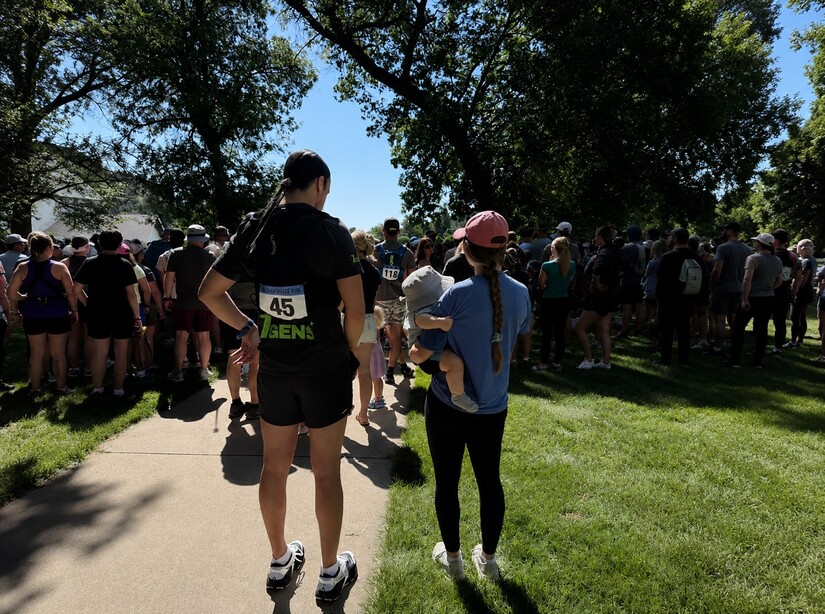
When my college basketball career ended, I hit a wall. My entire identity had been anchored to the sport, and suddenly it was gone. My wife, Harley, was an incredible Division I cross-country and track athlete at South Dakota State University. Watching her, I decided I wanted to challenge myself with running, but my mind immediately jumped to the extreme: ultra-marathons.
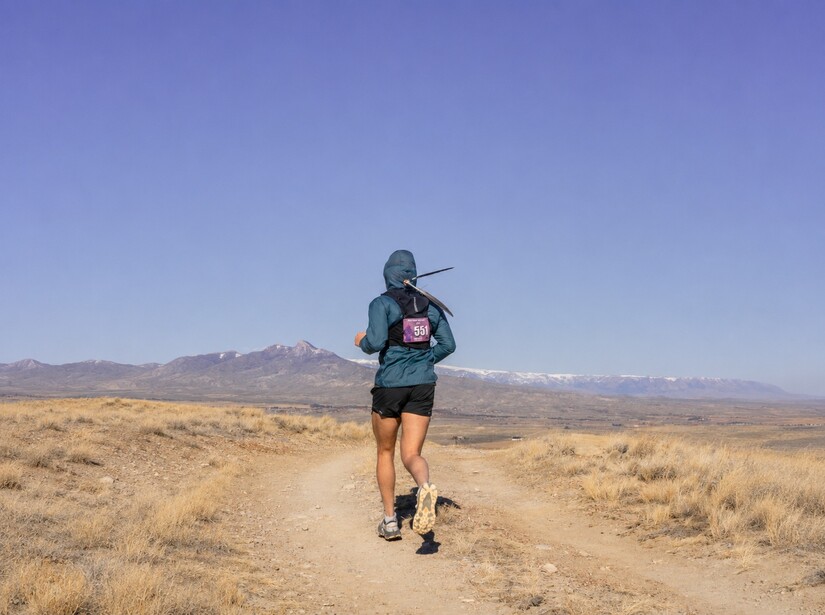
I told her I was signing up for a 31-mile trail race through the mountains. She looked at me like I had lost my mind because at that point, I was barely running two miles a day. But I am wired to run directly toward discomfort. I like pursuing goals that seem completely unrealistic because even if I fail, I discover exactly what I am made of in the crucible of the attempt.
I showed up to that first ultra-marathon with a massive, athletic ego. I thought my basketball conditioning would carry me through. I was entirely wrong. I threw out my hip just ten miles into the race, meaning I had twenty-one miles left to traverse through the isolated, grizzly bear territory of western Montana.
That race stripped away every ounce of my ego and armor. When you are physically exhausted and in pain miles deep into nature, you can no longer lie to yourself. You can't suppress your demons. Everything came rushing to the surface: my childhood trauma, my financial anxieties, my fears of failing as a father and a husband. Crossing that finish line felt like an absolute vision quest.
A month later, I ran a 50-miler. A few months after that, a 62-miler. Right now, I am actively training for a grueling 100-mile race in the Black Hills of South Dakota. People think it is madness, and maybe it is. But growing up, I experienced an immense amount of suffering that was forced upon me. Today, through ultra-running, I choose my own suffering. I choose the challenge, I choose the discomfort, and through that intentional endurance, I choose my own growth.
TOM AKAOLISA: Through your venture, Bright Hawk Fitness, you advocate for health strictly through an Indigenous framework. What does a genuinely healthy, liberated Indigenous community look like through your lens?
DEVON HEADDRESS: It looks like the reclamation of true, ancestral balance. We look at wellness through four interconnected quadrants: mental, emotional, physical, and spiritual health. They are a delicate ecosystem; if you neglect one quadrant, the entire structure eventually collapses.
Historically, our ancestors developed all four of these areas naturally through daily communal life. Reclaiming that balance means moving away from Western, hyper-individualistic definitions of health. A healthy Indigenous community is one where we heal collectively, restoring our deep relationship with our culture, our food systems, and each other.
TOM AKAOLISA: As a husband and a father, how has parenthood fundamentally shifted your perspective on legacy and generational responsibility?
DEVON HEADDRESS: Becoming a father completely re-engineered my soul. When I looked at my son for the first time, my understanding of legacy shifted instantly. I had to look inward and ask myself what wounds were still bleeding inside me that could accidentally hurt him.
I grew up in an environment surrounded by domestic instability and substance abuse. That chaos naturally distorts how you view relationships and manage your emotions. When my son was born, I made a sacred vow that he would never inherit those generational wounds.
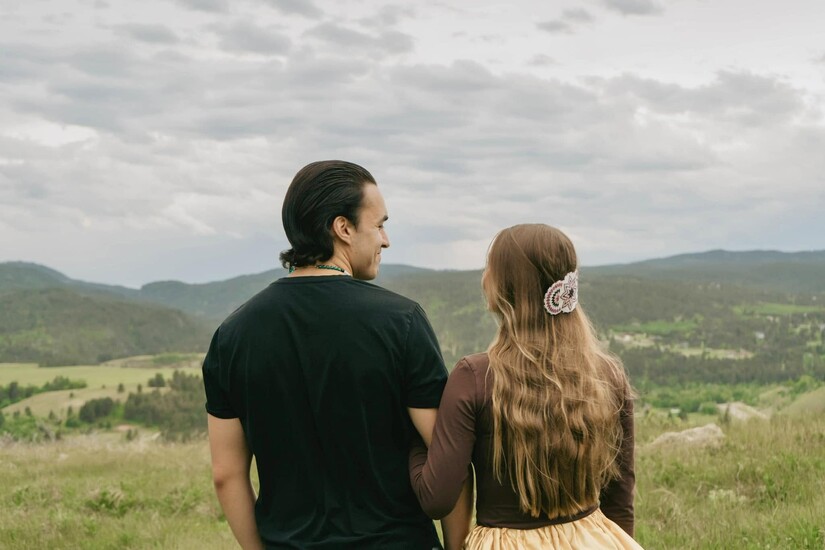
Most people view legacy through a material lens, thinking about passing down houses, wealth, or land. While those things matter, the most valuable legacy I can leave behind is emotional freedom. I want future generations of my family to look back at our lineage and say that our family carried cycles of trauma for centuries, until Devon and Harley stood up and decided to break the chain. I want them to know we chose intentional healing so our children could run free. If my life is remembered solely for that victory, I will consider my time on this earth an absolute success.
TOM AKAOLISA: When you look out at the rising generation of Indigenous youth, what gives you the greatest sense of hope for the future?
DEVON HEADDRESS: The unapologetic pride I see in their eyes. I see a fierce generation of young Native people who refuse to hide who they are. They are aggressively reconnecting with their traditional languages, dancing in ceremony, and entering spaces of higher education and media with their heads held high.
Historically, there were brutal eras of boarding schools and forced assimilation where our people were beaten for speaking their languages or acknowledging their identity. Today, our youth are reclaiming that stolen ground with digital sophistication and cultural honor. When a young person knows exactly where they come from, they become unshakeable. They are building a future without sacrificing their roots, and that is a beautiful thing to witness.
TOM AKAOLISA: Devon, if the American public could walk away from this conversation retaining just one core truth about Indigenous communities and our shared history, what would you want that lesson to be?
DEVON HEADDRESS: I want people to realize that when Indigenous communities advocate for systemic change, we are never advocating strictly for ourselves.
When the mainstream media hears phrases like "Land Back" or watches Indigenous peoples put their bodies on the line to protest environmental destruction, protect water systems, or demand climate justice, outsiders often assume these are selfish, insular tribal battles. That is a fundamental misunderstanding of our worldview.
Traditionally, Indigenous peoples view themselves not as owners of the earth, but as humble caretakers of it. We have a sacred, reciprocal responsibility to the waterways, the soil, the animals, and the generations yet unborn. When an Indigenous community successfully protects an ecosystem or heals a healthcare system, it benefits every single human being breathing on this continent, regardless of their background. At our core, our advocacy is rooted in coexistence, sustainability, and relational responsibility. We are trying to protect the future for everyone.
TOM AKAOLISA: Devon, your words carry an incredible weight of truth and medicine. Thank you for sharing your story with Voices From Across America. This has been an extraordinary conversation, and I hope you will honor us by returning to this platform in the future, as I feel we have only scratched the surface.
DEVON HEADDRESS: It would be an absolute honor, Tom. Thank you for creating an authentic space for these stories to be told. I will come back anytime.
MinneapoliMedia | Community. Culture. Civic Life.


Sunny, with a high of 86 and low of 63 degrees. Patchy rain nearby for the morning, partly cloudy for the afternoon, clear for the evening,