72° and Clear
Image




The field of contenders for the 2026 FIFA World Cup continued to narrow Thursday as the Round of 32 entered its sixth day, producing another compelling illustration of how championship ambitions can be realized through vastly different methods. Spain advanced through technical superiority and overwhelming control, Portugal survived one of the tournament's most dramatic finishes through stoppage-time resilience, and Switzerland quietly reinforced its growing reputation as one of the competition's most disciplined tactical sides.
Unlike the emotional chaos that defined Day 21, when England, Belgium, and the United States all required dramatic recoveries to preserve their campaigns, Day 22 unfolded across three distinct tactical narratives. Spain authored perhaps its most complete ninety-minute performance of the tournament, dismantling Austria through relentless possession and clinical finishing. Portugal navigated a wildly volatile encounter against Croatia that featured a historic Cristiano Ronaldo milestone, a dramatic stoppage-time winner, and a controversial VAR decision that preserved the Seleção's place in the Round of 16. Switzerland, meanwhile, delivered another display of calculated efficiency, striking early against Algeria before professionally managing the remainder of the evening without surrendering control.
Collectively, the results reinforced one of the defining themes of the expanded 48-team World Cup. The tournament has rewarded nations capable of adapting their identities to the unique demands of knockout football. Spain continues to trust its positional discipline. Portugal repeatedly demonstrates its capacity to survive emotional turbulence. Switzerland remains content allowing tactical organization rather than spectacular flair to dictate results. Each philosophy carried another nation one step closer to football's greatest prize. As the knockout bracket grows increasingly unforgiving, technical quality alone has become insufficient. Teams advancing into July are pairing talent with patience, defensive structure with clinical finishing, and emotional maturity with tactical flexibility.
|
Match |
Score |
Venue |
Status |
|
Spain vs. Austria |
3 – 0 |
SoFi Stadium, Inglewood, CA |
Spain advances |
|
Portugal vs. Croatia |
2 – 1 |
BMO Field, Toronto, ON |
Portugal advances |
|
Switzerland vs. Algeria |
2 – 0 |
BC Place, Vancouver, BC |
Switzerland advances |
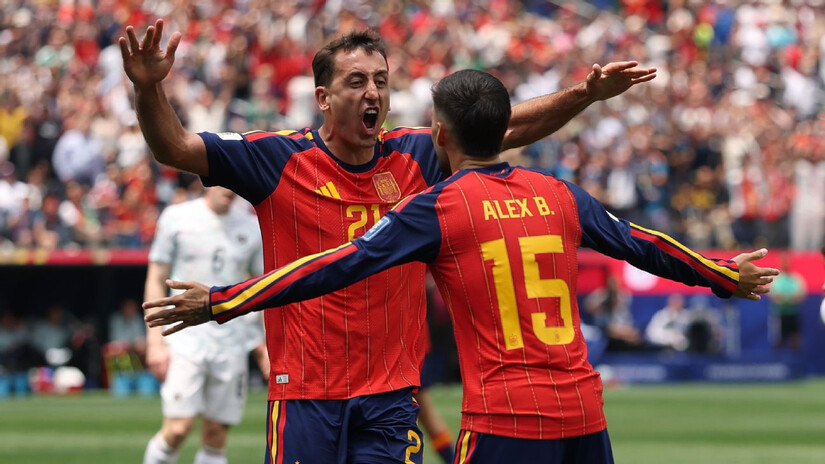
If Spain entered the knockout stage carrying lingering questions regarding its ability to convert territorial dominance into decisive victories, those doubts largely disappeared beneath the Southern California sunshine. Facing an Austrian side that had exceeded expectations by surviving one of the tournament's most competitive groups, Luis de la Fuente's squad produced its most polished performance of the World Cup, overwhelming Austria through technical precision, patient circulation, and devastating efficiency in front of goal.
From the opening whistle inside SoFi Stadium, Spain established complete command of the match's rhythm. Austria attempted to recreate the aggressive pressing identity that had carried Ralf Rangnick's side through the group phase, stepping high into midfield and challenging Spain's defenders to play quickly through congested passing lanes. Yet unlike several earlier opponents, Spain refused to be hurried.
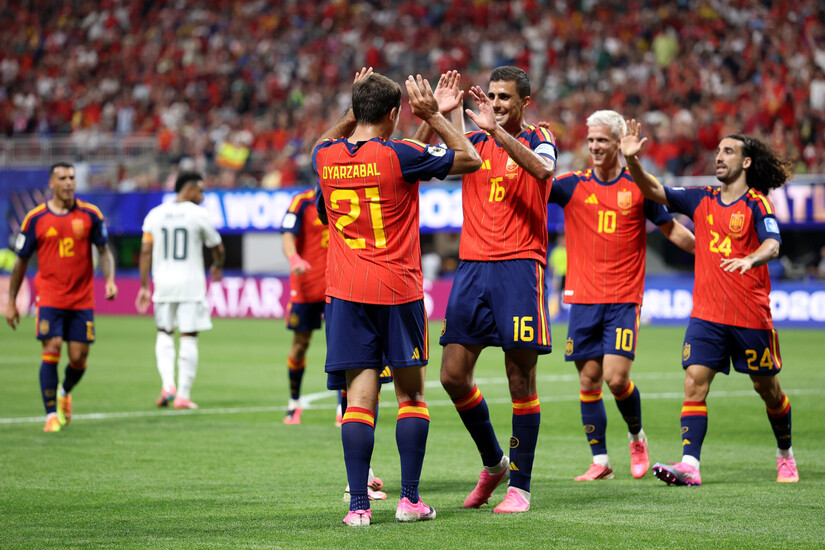
Rodri immediately assumed control of central midfield. Operating as the tournament's quintessential deep-lying playmaker, he dictated possession with remarkable composure, repeatedly switching the point of attack and forcing Austria's midfield to chase rather than dictate the match. Alongside him, Fabián Ruiz and Pedri continuously rotated positions, creating numerical superiority across virtually every sector of the middle third.
Austria defended with admirable commitment during the opening half hour. Their compact defensive shape denied Spain immediate access to dangerous central spaces, compelling the Europeans to circulate possession patiently while probing for weaknesses. Goalkeeper Alexander Schlager was called into action several times, confidently collecting dangerous crosses and organizing a defensive line that initially resisted Spain's mounting territorial pressure.
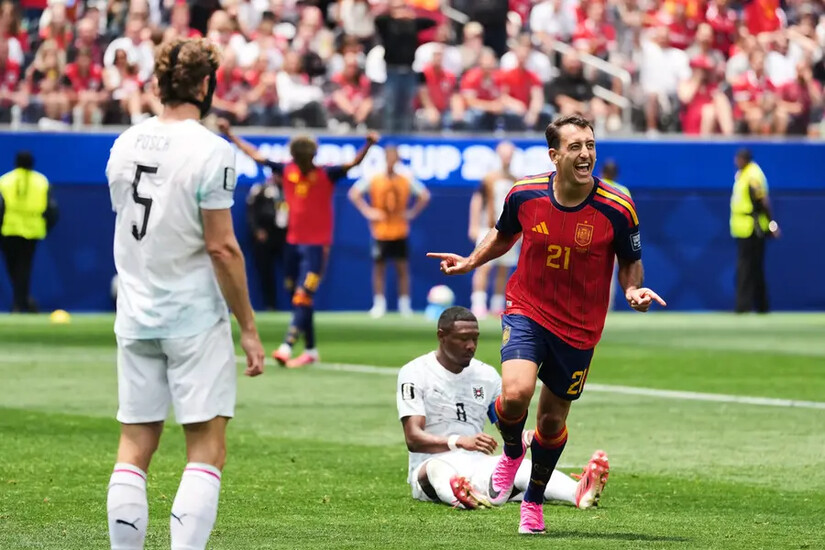
The breakthrough finally arrived in the 36th minute. After another prolonged Spanish possession sequence stretched Austria's defensive block horizontally, a perfectly weighted forward pass found Mikel Oyarzabal slipping quietly between the center backs. Rather than rushing his finish, the Spanish forward allowed the ball to roll naturally across his body before calmly guiding a precise right-footed strike beyond Schlager and into the far corner.
The goal perfectly encapsulated Spain's philosophy. There was no unnecessary urgency, no speculative long-range effort, and no dependence upon individual improvisation. Instead, Spain patiently manipulated Austria's defensive structure until a high-quality opportunity naturally emerged.
Austria attempted to respond before halftime by increasing the intensity of its pressing. Marcel Sabitzer pushed higher alongside Christoph Baumgartner in an effort to disrupt Spain's buildup closer to goal, while Rangnick encouraged his fullbacks to advance further into attacking positions whenever possession changed hands. Yet every Austrian adjustment appeared anticipated. Spain calmly recycled possession whenever pressure intensified, forcing Austria into increasingly exhausting defensive rotations that gradually sapped both physical energy and mental concentration.
The second half opened with Austria seeking greater attacking urgency. Instead, Spain struck almost immediately. In the 48th minute, Marc Cucurella advanced aggressively down the left flank before releasing Álex Baena into space near the byline. Baena delayed just long enough to draw Austria's defenders toward him before delivering a perfectly measured cross toward the penalty spot. Arriving unmarked was Pedro Porro, who rose confidently above his marker and directed a powerful downward header beyond Schlager to double Spain's advantage.
At 2-0, the tactical contest effectively ended. Austria now faced the unenviable task of abandoning defensive caution against one of the tournament's finest possession teams. Spain welcomed the invitation. With additional space opening between Austria's midfield and defensive lines, Pedri and Fabián Ruiz increasingly dictated play through quick one-touch combinations. Every Austrian attempt to recover possession was met by an immediate Spanish counterpress, preventing meaningful transitions before they could fully develop.
The final goal arrived late but felt inevitable. In the 82nd minute, Cucurella provided another attacking spark, delivering an intelligent pass into Oyarzabal's path as Austria's defensive organization continued deteriorating under sustained pressure. Oyarzabal displayed the same composure that characterized his opening goal, taking a single settling touch before calmly finishing beyond Schlager to complete his brace and extend Spain's advantage to 3-0.
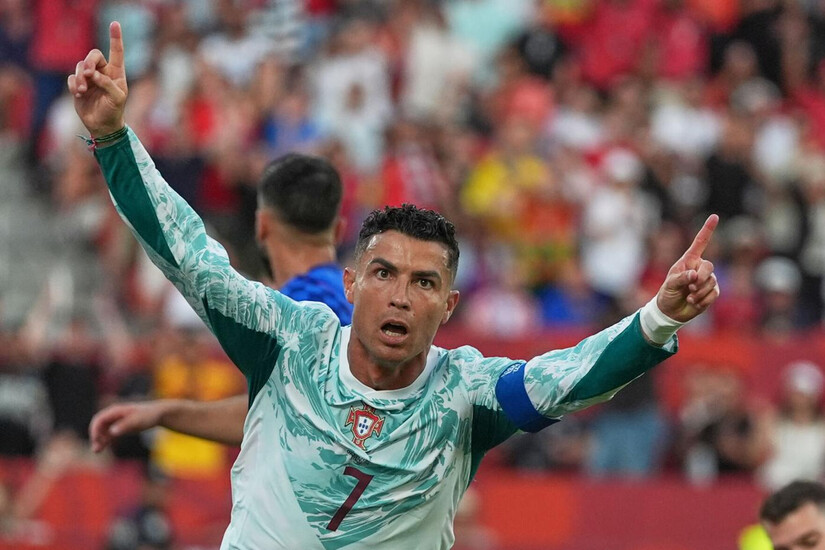
If Spain's advancement represented the day's most methodical performance, Portugal's passage into the Round of 16 was its emotional opposite. For more than ninety minutes at BMO Field in Toronto, Portugal and Croatia authored one of the finest tactical battles of the knockout stage, a contest defined by fluctuating momentum, veteran leadership, controversial officiating decisions, and a breathtaking sequence of stoppage-time drama that ultimately required Video Assistant Referee intervention before either nation could celebrate.
Few Round of 32 fixtures carried greater emotional weight. Croatia entered the evening seeking one more memorable chapter for perhaps the greatest generation in its football history. Led once again by Luka Modrić, Zlatko Dalić's side hoped to extend one final deep World Cup run for a core group that has carried Croatia to remarkable heights over the past decade. Portugal arrived carrying different expectations. With Cristiano Ronaldo making what is widely expected to be the final World Cup appearance of his legendary career, Roberto Martínez's squad understood that every match could represent the final international chapter for one of football's greatest players.
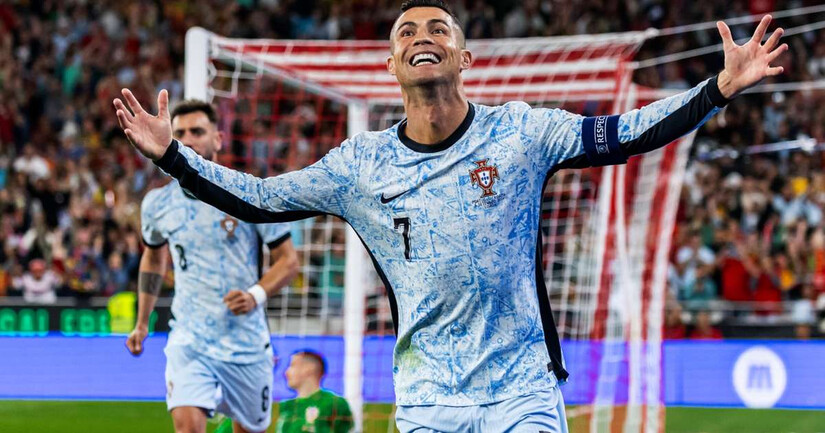
The opening forty-five minutes reflected that gravity. Neither manager allowed unnecessary risks. Croatia defended with remarkable compactness, keeping Portugal's creative midfield trio of Bruno Fernandes, Bernardo Silva, and Vitinha operating largely outside dangerous central channels. Portugal responded by denying Croatia opportunities to attack through Modrić's passing range, compressing space around the veteran playmaker whenever possession entered midfield.
Croatia finally broke the deadlock shortly after halftime. In the 53rd minute, Modrić orchestrated another flowing Croatian attack, patiently switching play before releasing the ball into space along the right flank. A low cross skipped dangerously through Portugal's defensive line, where Ivan Perišić arrived perfectly to strike a composed first-time finish beyond Diogo Costa. Croatia's supporters erupted. For the first time all evening, Portugal faced genuine elimination.
Martínez responded immediately. Recognizing Croatia's confidence growing, Portugal increased its attacking numbers, asking João Cancelo and Nuno Mendes to push considerably higher while Bruno Fernandes began operating almost alongside Ronaldo between Croatia's center backs. The tactical adjustment steadily shifted momentum. Croatia continued defending bravely but found themselves retreating deeper with each passing minute.
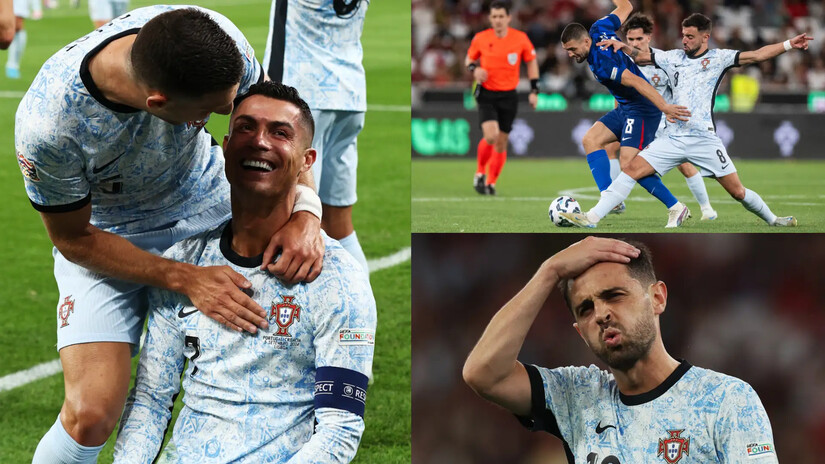
Portugal's equalizer finally arrived in the 68th minute. Renato Veiga surged aggressively into the Croatian penalty area before drawing contact from Nikola Vlašić. Referee Jesús Valenzuela pointed immediately toward the penalty spot, and the responsibility belonged completely to Cristiano Ronaldo. With more than forty thousand spectators holding their breath, the Portuguese captain calmly approached the ball before driving an emphatic penalty into the bottom corner. The goal carried historic significance: remarkably, despite his extraordinary international career, it represented Ronaldo's first-ever goal in the knockout rounds of a FIFA World Cup.
As regulation entered its closing stages, Martínez made perhaps the night's defining managerial decision. Recognizing Ronaldo's enormous physical workload and anticipating the possibility of extra time, he substituted Gonçalo Ramos into the attack in the 81st minute. The decision ultimately transformed the match.
Deep into stoppage time, Portugal launched one final sustained attack. Rafael Leão, who had tormented Croatia's defense throughout the second half with relentless pace down the left wing, delivered an inviting cross toward the center of the penalty area. Charging between Croatia's defenders came Ramos, who elevated brilliantly before directing a powerful header beyond Dominik Livaković in the 94th minute, completing Portugal's dramatic comeback.
Yet the drama had only begun. Croatia refused to surrender. Throwing every available player forward during an extraordinary block of stoppage time, Dalić's side generated one final chaotic attack inside Portugal's penalty area. Following a frantic goalmouth scramble, the ball ricocheted into Portugal's net, appearing to deliver one last miraculous equalizer.
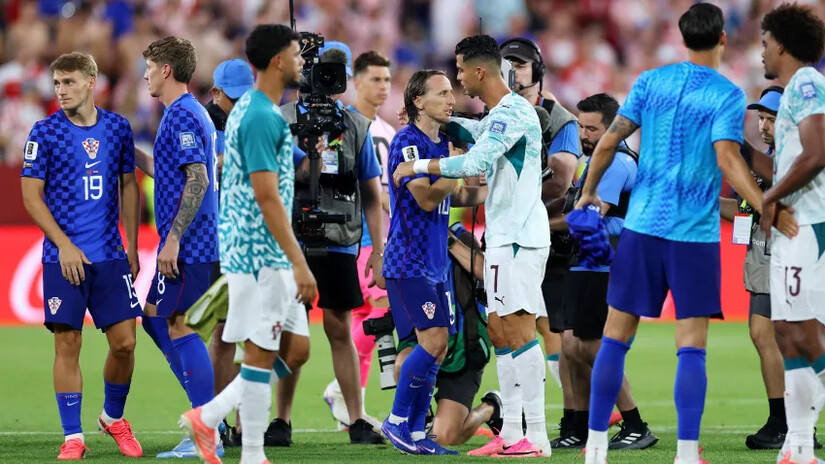
Croatian players sprinted toward the corner flag, while Portugal's defenders stood frozen. Then came the familiar signal from the VAR room. After several agonizing minutes reviewing the sequence, officials determined that Joško Gvardiol had occupied an offside position during the buildup. The goal was officially disallowed, and Portugal survived a monumental scare to advance.
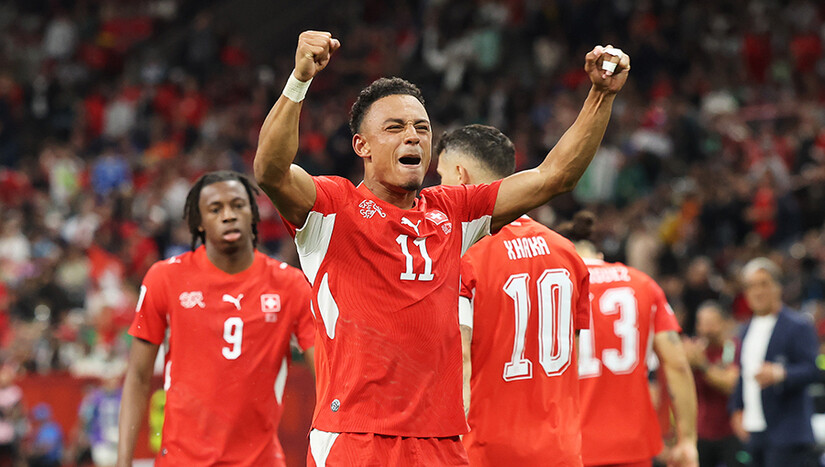
While Portugal and Croatia captivated global audiences with dramatic late heroics, Switzerland quietly continued assembling one of the tournament's most understated yet increasingly impressive campaigns. Inside Vancouver's BC Place, Murat Yakin's squad required neither extraordinary individual brilliance nor last-minute rescues to eliminate Algeria. Instead, the Swiss advanced through qualities that have steadily become their defining identity throughout the competition: tactical discipline, defensive organization, intelligent transitions, and clinical finishing.
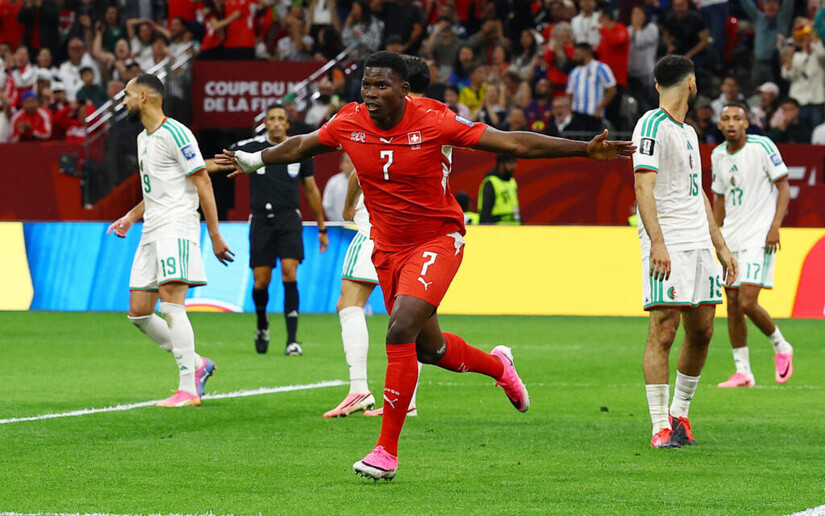
Algeria entered the match carrying considerable confidence. After surviving one of the tournament's most chaotic group-stage finales, Vladimir Petković's side believed its attacking speed, led by Riyad Mahrez and Farès Chaïbi, could expose Switzerland's back line. Instead, the Swiss immediately imposed their preferred rhythm.
The opening breakthrough arrived after only ten minutes. Young midfielder Johan Manzambi demonstrated exceptional vision, threading a perfectly weighted through ball beyond Algeria's advancing defensive line. Breel Embolo timed his run flawlessly, meeting the pass in full stride before calmly guiding his finish beyond goalkeeper Luca Zidane to give Switzerland an early advantage.
The goal immediately altered the tactical landscape, as Algeria could no longer remain patient. Petković encouraged his midfield to advance higher, hoping to pressure Switzerland's buildup before the Swiss could comfortably organize possession. Yakin welcomed the invitation. Switzerland remained compact defensively, patiently absorbing Algerian possession before launching swift counterattacks through Dan Ndoye and Rubén Vargas.
Despite enjoying greater possession after falling behind, Algeria struggled to generate clear scoring opportunities. Granit Xhaka controlled midfield with characteristic composure, repeatedly interrupting Algeria's attacking rhythm through intelligent positioning rather than reckless challenges.
If Algeria still believed halftime might provide an opportunity for tactical recovery, those hopes disappeared almost immediately after play resumed. Just fifty seconds into the second half, Switzerland delivered the definitive knockout blow. A rapid transition caught Algeria's defensive line completely unprepared. Dan Ndoye accelerated into space before calmly finishing beyond Zidane, doubling Switzerland's advantage.
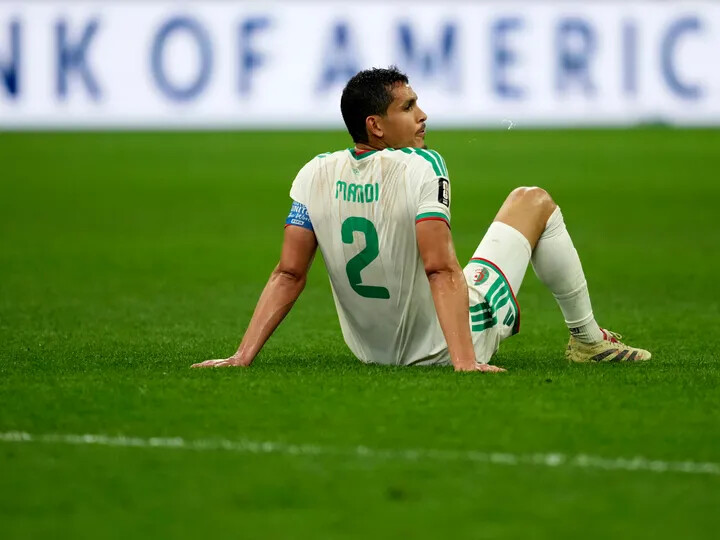
At 2-0, the match effectively belonged to Switzerland. Algeria attempted multiple attacking substitutions, introducing fresh legs while removing experienced veterans, including Mahrez, in hopes of generating momentum. The changes produced greater urgency but few genuine scoring chances. Switzerland's defensive organization remained outstanding: Manuel Akanji marshaled the back line with remarkable composure, while goalkeeper Gregor Kobel rarely faced sustained danger despite Algeria's increasing territorial pressure to wrap up an absolute, professional clean sheet.
As the Round of 32 moved closer to completion, Day 22 reinforced several strategic realities that have increasingly defined the tournament:
The sorting phases of the bracket are nearly complete. With Spain, Portugal, and Switzerland advancing their structural matrices into the Round of 16, expectations have hardened completely. Theoretical projections are permanently retired, leaving tactical maturity and clinical execution as the solitary boundaries separating history from heartbreak.
MinneapoliMedia | Community. Culture. Civic Life.



Sunny, with a high of 86 and low of 63 degrees. Patchy rain nearby for the morning, partly cloudy for the afternoon, clear for the evening,