Image
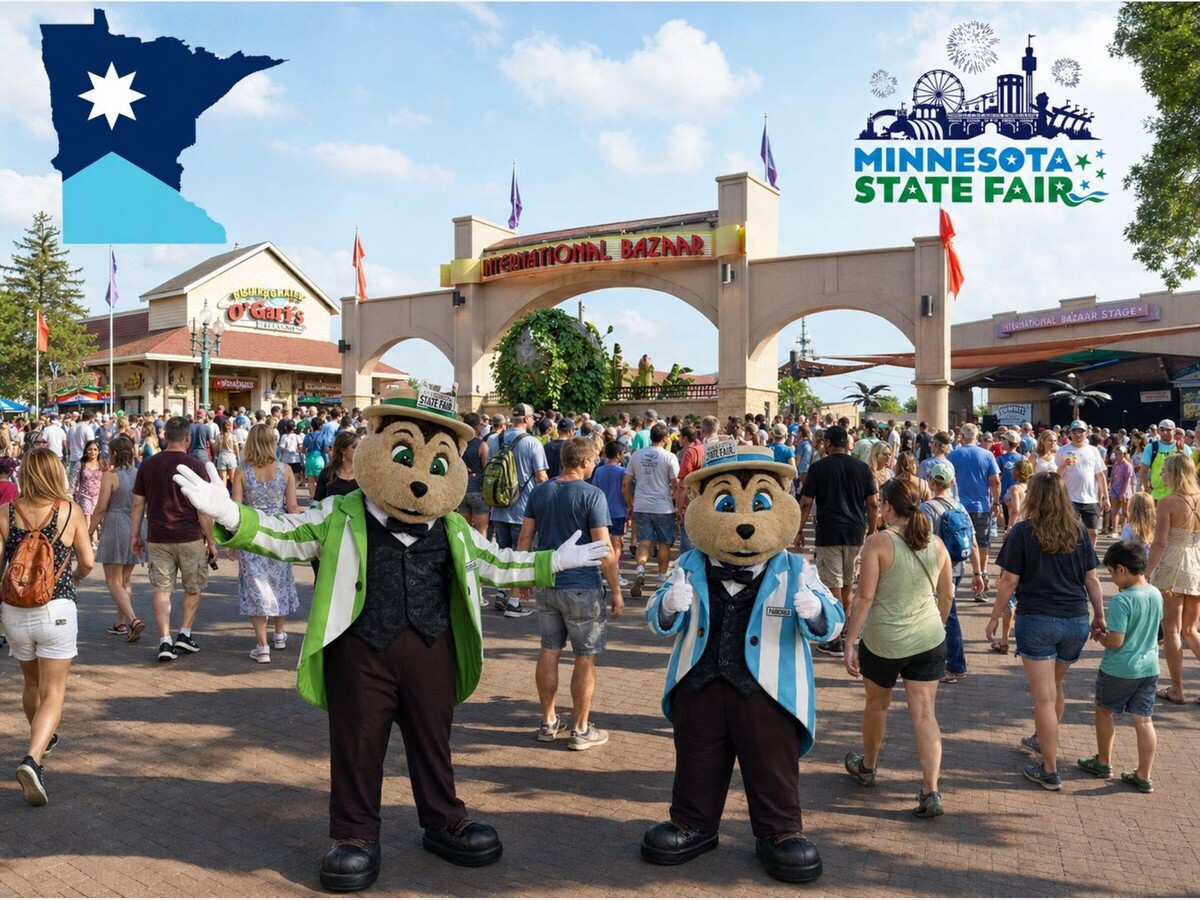



MINNEAPOLIS, MN (September 9, 2026). The Minnesota State Fair ended its 2026 run with 1,923,325 visitors, the seventh-highest attendance in its history.
That result should settle any question about whether the fair remains relevant. Nearly one-third of Minnesota’s population passed through the gates during 12 days. Families returned to familiar exhibits. Young people presented livestock and 4-H projects. Minnesotans submitted baked goods, photographs, vegetables, needlework and a record crop-art collection. Vendors introduced new foods, musicians filled the Grandstand, and agricultural organizations used the state’s largest annual gathering to explain how food is raised and how rural communities are changing.
The final attendance was slightly lower than in 2025, marking the first year-over-year decline since 2021. That decline should be kept in proportion. A fair that welcomed more than 1.9 million people during a 12-day period did not experience a public rejection. Attendance remained historically strong, and the fair opened with two daily records before drawing more than 217,000 people on its second Saturday.
The more useful lesson is found inside the daily totals.
Opening Thursday drew 155,185 visitors, followed by 204,065 on the first Friday. Attendance declined during the middle of the run, falling to 112,836 on Tuesday and 107,159 on the second Thursday before rising sharply during the final weekend. Labor Day attendance reached 159,101.
Those swings matter because total attendance does not describe the experience of attending the fair. A visitor navigating a record crowd encounters a different institution from one arriving on a quieter weekday. On the busiest days, walkways tighten, food lines spill into pedestrian routes, buses and entrances face concentrated demand, and people with wheelchairs, strollers or limited endurance have fewer comfortable ways to move. During slower periods, the same grounds can feel more accessible, less hurried and more hospitable.
Minnesota should not treat every lower-attendance day as a failure or every record as an uncomplicated victory. The fair’s purpose is not to place the greatest possible number of bodies inside the gates at every hour. Its responsibility is to provide a safe, accessible and recognizably Minnesotan experience while protecting the agricultural, educational and creative work that gives the institution its public value.
The 2026 fair demonstrated that this mission remains strong. It also showed where fair leaders should concentrate their attention before the crowds return in 2027.
Transit and Regional Infrastructure
One of the clearest successes occurred before many visitors reached the grounds. Minnesota Valley Transit Authority reported nearly 155,000 preliminary rides connected to the fair, an increase from 2025 and a new record. SouthWest Transit recorded 120,158 rides, also setting a record. Those figures show that many fairgoers will use regional transit when service is direct, understandable and frequent.
That demand should guide future investment. Driving to Falcon Heights and searching for parking should not be the default expectation for hundreds of thousands of households. The fair, transit agencies and local governments should expand park-and-ride service, examine underserved parts of the metropolitan region and provide timely information about bus frequency, lot capacity and service interruptions. Safe bicycle access and staffed bicycle parking should continue to grow as well.
Reducing dependence on private vehicles does not require abolishing on-site parking. People with disabilities, livestock exhibitors, vendors, employees, families carrying specialized equipment and visitors arriving from places without reasonable transit options may need to drive. The appropriate goal is a transportation system with enough alternatives that driving becomes a choice rather than a practical necessity for most visitors.
Fair officials should collect more detailed transportation information and make it public. Ridership totals are useful, but planning also requires knowing when queues formed, which lots filled first, where buses lost time in traffic and which communities had insufficient service. Transportation success should be measured not only by how many passengers boarded but also by how reliably and safely they reached the fairgrounds and returned home.
Capital Investments and Real-Time Accessibility
The fairgrounds themselves also showed the value of deliberate capital investment. The Lee & Rose Warner Coliseum reopened after an approximately $24 million renovation, the first major modernization of the 75-year-old building. The project preserved a recognizable agricultural landmark while improving building systems and accessibility. It formed part of a much larger set of fairgrounds improvements totaling about $67 million.
That distinction is important. The Coliseum did not cost $67 million, as some accounts and online summaries have suggested. Publication-safe discussion of public-facing institutions requires keeping the cost of one project separate from a broader capital program.
The renovation nevertheless provides a sound model. Minnesota does not have to choose between preserving the fair’s history and making its buildings usable for current generations. Historic character cannot excuse inaccessible entrances, inadequate ventilation, poor circulation or obsolete systems. Modernization should protect the purpose and identity of a building while removing barriers that previous generations tolerated or overlooked.
The continuing work on the 4-H Building should follow that principle. Young exhibitors and their families spend long hours in fair buildings during some of the hottest days of the year. Renovations should prioritize ventilation, accessible routes, restrooms, crowd flow and spaces that allow participants to prepare and present their work safely. These are not decorative improvements. They determine who can participate and how long people can remain in the building.
The same standard should be applied throughout the fairgrounds. Shade, seating, drinking-water access and clean restrooms are essential infrastructure at an event serving children, older adults and people with varying health and mobility needs. Hot weather can turn an inconvenient lack of seating into a medical concern. A crowded path can become an accessibility barrier even when it technically meets minimum requirements.
Fair leaders should conduct accessibility reviews during peak attendance rather than only when the grounds are empty. A ramp that works during an inspection may become unusable when a food line crosses it. An accessible restroom provides limited value if the approach is blocked. A bench cannot serve someone who needs it if informal queues occupy the surrounding space.
Managing Crowd Flow and Vendor Infrastructure
The most visible operational problem remains congestion around popular vendors and attractions. Long lines are partly a sign of success, and waiting for a highly sought-after food has become part of the fair experience for some visitors. The situation changes when a queue blocks a major walkway, obscures another business, interferes with emergency access or leaves customers uncertain about where the line begins.
The answer is not to order every popular vendor to add fryers or enlarge its booth. Food production is limited by electrical capacity, fire regulations, staffing, preparation time and the physical dimensions of each site. Adding equipment without examining those constraints could create greater safety and circulation problems.
The fair should instead use evidence to manage queues. Officials can identify recurring pedestrian conflicts, establish marked waiting areas, improve signs, publish approximate wait times and test advance or remote ordering where it is practical. Vendor placement and attraction scheduling should be reviewed with the full grounds in mind. A popular new feature can help distribute visitors, but officials should confirm that effect with foot-traffic information before presenting it as a planning success.
The 230-foot America Wheel and the Science Museum of Minnesota’s Ultimate Dinosaurs exhibit gave visitors additional reasons to travel toward the North End. That was a sensible use of programming. Future planning should determine whether those attractions measurably relieved pressure elsewhere, how nearby vendors were affected and whether the benefits continued throughout the fair or were concentrated during certain hours.
The fair should resist the temptation to solve its uneven attendance by pursuing maximum crowds on every weekday. Strategic midweek programming and promotions may help distribute attendance, but quieter days serve a legitimate public purpose. Families with small children, older adults, people with sensory sensitivities and visitors who cannot comfortably tolerate a crowd of 200,000 may deliberately select those dates.
A better objective is predictability and balance. Fairgoers should have enough information to choose the experience that fits them. Attendance forecasts, transportation conditions and expected high-demand periods could be communicated more effectively through the fair’s website, app, entrances and transit partners. Organizers should use promotions to prevent damaging extremes, not to eliminate every comparatively quiet afternoon.
Cultural Identity, Affordability, and Payment Equity
Food remains one of the fair’s strongest attractions and one of its most visible expressions of cultural change. The annual introduction of new dishes generates substantial interest, supports entrepreneurship and gives cooks an opportunity to translate Minnesota’s changing culinary identity into a form that millions of visitors can encounter.
The success of offerings rooted in Hmong and other immigrant food traditions shows that expanding cultural representation does not weaken the fair’s identity. It strengthens the institution by allowing more Minnesotans to recognize themselves within it. New offerings should complement, rather than displace, the agricultural exhibits, community competitions and longstanding foods that connect generations.
Fair officials should be cautious about allowing online popularity to determine which vendors receive attention or opportunity. Viral foods can draw enormous lines, but social-media reach is not the same as culinary quality, operational reliability or public value. Vendor selection should continue to consider originality, capacity, affordability, geographic and cultural representation, and the overall balance of the grounds.
Affordability belongs more prominently in the fair’s planning. Admission, transportation, food, rides and entertainment can make a family visit expensive before the day is over. The fair cannot control every vendor price, but it can require clear pricing, preserve water access, support discount programs and encourage reasonably priced portions alongside premium offerings. A public tradition becomes less representative when participation increasingly depends on discretionary income.
Payment practices also need modernization without excluding people. Requiring every vendor to abandon cash would be a mistake. Some visitors do not have credit cards or digital wallets. Electronic systems can fail, vendors pay processing fees, and consumers may have legitimate privacy concerns. Cash remains an important form of access.
At the same time, visitors should not reach the front of a long line before learning that a booth accepts only one method of payment. Vendors should prominently display prices and accepted payment methods where customers enter the queue. The fair should encourage commercial operators to accept both cash and at least one electronic option when technically feasible. It should also review ATM locations, availability and fees.
The objective should be to eliminate payment confusion, not cash.
That distinction illustrates a broader lesson from 2026. Improvement requires precision. It is easy to demand an end to cars, cash, lines or lower-attendance days. Each demand sounds decisive until it reaches the people who depend on the option being removed. A stronger institution reduces unnecessary barriers while preserving reasonable choices.
Grandstand Diversification, Competitions, and Labor
The Grandstand season deserves the same disciplined analysis. Large audiences attended several performances, including sold-out shows, while other events drew more modest crowds. Attendance alone does not reveal whether a concert succeeded financially. Ticket prices, artist guarantees, production costs, sponsorships, concessions and venue configuration all affect the result.
Fair officials should not judge the entertainment program solely by whether every night reaches capacity. The Grandstand should provide a balanced lineup capable of serving different generations, communities and musical interests. Free or lower-cost programming can carry public value even when it does not generate the largest gross revenue. Minnesota artists should continue to have a meaningful place on the schedule, particularly when unexpected cancellations require a replacement.
The fair’s competitions offer a different and perhaps more important measure of vitality. The crop-art exhibition reached a record 594 pieces in 2026. Agricultural, baking and creative entries demonstrated that people still invest time well before opening day to become part of the fair itself.
That participation should be protected from being overwhelmed by the commercial spectacle surrounding it. Crop art, livestock, 4-H, education and individual competitions are not quaint background material placed between food stands. They are central to why Minnesota operates a state fair rather than a generic entertainment festival.
The fair should make participation data as prominent as attendance data. It should report trends in youth involvement, agricultural entries, first-time exhibitors and representation from different parts of Minnesota. If participation declines in a county or demographic group, fair leaders should investigate the cost, transportation, scheduling or awareness barriers responsible.
The people operating the fair also need to remain visible after the gates close. A 12-day event of this size depends on permanent employees, seasonal workers, transit operators, concession crews, cleaners, maintenance workers, public-safety personnel, medical teams, exhibitors and volunteers. Their working conditions affect the experience every visitor receives.
The fair should gather and publish aggregated information about staffing shortages, injuries, safety concerns and employee feedback. Vendors and contractors should be expected to follow wage, scheduling and workplace-safety laws. Minnesota should not celebrate the labor behind the fair each Labor Day while treating that workforce as an invisible operational expense.
Institutional Governance and the Case for Annual Reporting
Communication on the final day also deserves review. The 2026 fair closed at 8 p.m., with final admission earlier in the evening. Those hours were announced, so it would be inaccurate to state as fact that fairgoers broadly were caught unaware. The change still should be evaluated. Officials should determine whether visitors understood the schedule, whether transit service aligned with closing, how vendors and workers were affected and whether the earlier closing improved safety and operations.
That inquiry points to the most important reform the fair should adopt: a comprehensive public report after each season.
The report should include daily and hourly attendance, transit performance, parking demand, accessibility complaints, emergency and medical responses, heat-related incidents, competition participation, waste diversion, employee feedback and the operational performance of major capital projects. Commercially sensitive vendor information can be aggregated. Security details that could create vulnerabilities should remain protected. The public can still receive enough information to understand what worked, what failed and what will change.
The Minnesota State Fair is governed by the Minnesota State Agricultural Society and operates with an unusual degree of institutional independence. That structure has helped preserve continuity and allowed leaders to plan beyond a single election cycle. Independence, however, should be accompanied by transparency, particularly when an institution affects transportation, public safety, agriculture, tourism and economic activity across the state.
The fair should eliminate preventable barriers rather than familiar options. It should eliminate queues that block accessible routes, confusing payment disclosures, avoidable transit uncertainty, inadequate shade and poor communication. It should reduce unnecessary dependence on automobiles while retaining access for people who need to drive. It should expand electronic payment without excluding cash users. It should distribute crowds without treating quieter days as evidence of failure.
Most importantly, it should reject the idea that continuous attendance growth is the only proof of institutional health.
Conclusion
The 2026 Minnesota State Fair succeeded because people came, but also because people entered competitions, raised animals, operated buses, prepared food, restored buildings, cleaned the grounds, performed on stages and shared parts of Minnesota that other residents do not encounter in their daily lives.
The slight decline from 2025 does not demand alarm. The record-breaking days do demand preparation. Both results should encourage fair leaders to examine how a historically popular institution can remain comfortable, affordable and open to the full public it claims to bring together.
Minnesota does not need a fair that becomes larger at any cost. It needs a fair capable of handling its popularity without sacrificing its agricultural mission, its workers or the visitors least able to push through congestion and expense.
The 2026 fair proved that the Great Minnesota Get-Together remains one of the state’s strongest civic institutions. The work before 2027 is to make sure its success is experienced not only at the attendance counter, but at the bus stop, inside the exhibition hall, along the crowded walkway and by every Minnesotan who still expects the fair to belong to them.

Local stories matter. Subscribe free to MinneapoliMedia and receive independent news, community reporting and important updates from Minneapolis, the North Metro and communities across Minnesota.
SUBSCRIBE FREE: https://minneapolimedia.town.news/subscribe
MinneapoliMedia | Community. Culture. Civic Life



Overcast, with a high of 58 and low of 48 degrees. Overcast during the morning, patchy rain nearby during the afternoon and evening, light drizzle overnight.