42° and Clear



Image
ANOKA, MN — On a winter evening in downtown Anoka, a stage more often reserved for theater and music will instead hold stories that rarely receive a spotlight. Stories of loss and survival. Of addiction and recovery. Of families, neighbors, and futures altered by opioids.
On Tuesday, February 3, 2026, the Anoka County Sheriff's Office, in partnership with the Anoka County Opioid Solutions Initiative (ACOSI), will host the first public screening of Faces of Hope, a locally produced documentary that places human voices at the center of one of Minnesota’s most urgent public health crises.
The free community event will be held at the Lyric Arts Main Street Stage, located at 420 E. Main Street. Doors open at 6:00 p.m., with the film beginning at 6:30 p.m., followed by a panel discussion at 7:00 p.m.

Faces of Hope runs approximately 23 minutes, but its impact extends far beyond its runtime. The documentary features unvarnished, deeply personal accounts from Anoka County residents whose lives have been shaped by substance use disorder. Among them is Amy Jones, who shares the story of her son, Chance Lundgren, who died from a fentanyl overdose at just 19 years old.
By centering families and individuals rather than statistics alone, the film seeks to dismantle stigma and replace abstraction with empathy. It is a deliberate choice by county leaders to acknowledge that the opioid crisis is not only a matter of enforcement or treatment, but of humanity.
“This is about faces,” organizers say. “About names. About people who mattered, and still matter.”
The premiere comes at a critical moment for Anoka County. In recent years, the county has recorded some of the highest overdose death rates in Minnesota, averaging more than 100 fatalities annually. In the most recent reporting periods, fentanyl was involved in virtually all overdose deaths, reflecting a nationwide shift toward increasingly potent synthetic opioids.
Faces of Hope is part of a broader, long-term response funded in part by the national opioid settlement, through which Anoka County is set to receive approximately $18 million over 18 years from pharmaceutical manufacturers and distributors. County officials have emphasized that these funds are being directed toward prevention, treatment access, harm reduction, and public education.
The documentary represents the public-facing side of that strategy: an effort to ensure that policy decisions remain grounded in lived experience.
The evening is structured as both a film premiere and a community resource forum. From 6:00 to 6:30 p.m., attendees will be invited to visit resource tables in the theater lobby, including:
Free naloxone (Narcan) kits will also be available, along with information on overdose prevention and training. Naloxone is a life-saving medication capable of reversing opioid overdoses when administered quickly.
Attendees will be eligible for prize drawings, including Anoka County Parks passes and gift cards, reinforcing the county’s emphasis on engagement rather than obligation.
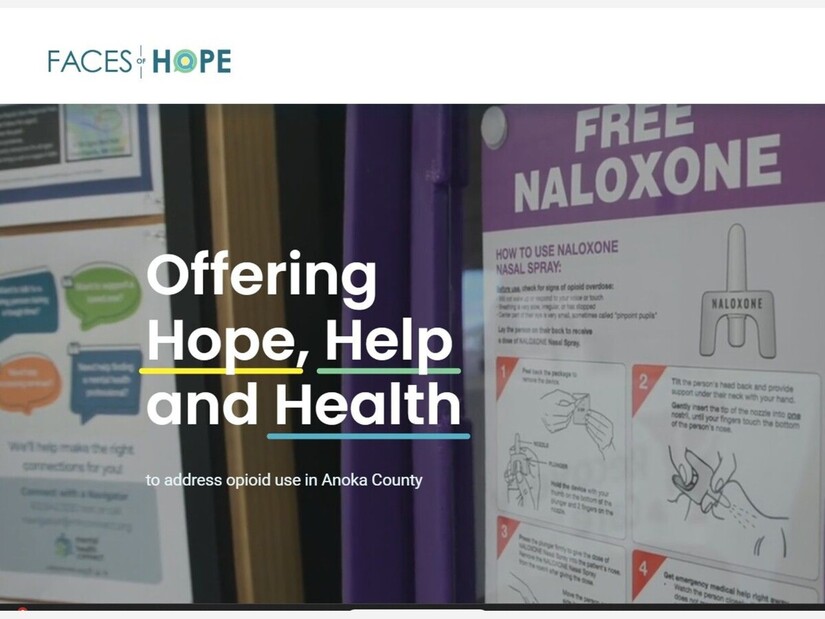
For residents unable to attend in person, the county has launched FacesOfHopeAnoka.org, a digital hub where individual story segments can be viewed online. The site also provides a directory of local treatment providers, harm-reduction tools, and connections to county and community supports, ensuring that the project remains accessible long after the screening ends.
Organizers describe Faces of Hope not as a solution, but as an opening. An invitation to listen. To confront discomfort. To recognize that the opioid crisis is not happening somewhere else, or to someone else.
As the flyer for the event puts it simply: “Your presence truly matters.”
For Anoka County, the message behind the film is equally clear. Hope does not begin with silence. It begins when a community chooses to look directly at itself, and decides to respond together.



Moderate or heavy snow showers, with a high of 35 and low of 30 degrees. Don't forget your umbrella! Light freezing rain in the morning, overcast for the afternoon, moderate snow overnight.