Image



At a time when rising grocery prices, housing costs, and inflation continue to pressure household budgets across Ramsey and Hennepin counties, a coalition of churches and nonprofit partners is strengthening one of the region’s most enduring safety nets: community-based food distribution.
From Frogtown to the East Side of St. Paul, from South Minneapolis to Burnsville, multiple sites now provide staggered weekly access to groceries and prepared meals, ensuring residents can find support across several days of the week.
This network is not new. But demand remains elevated across Minnesota’s food shelf system, according to regional hunger-relief organizations such as Second Harvest Heartland, which supplies many local distribution partners. The result is a renewed emphasis on reliability, dignity, and low-barrier access.
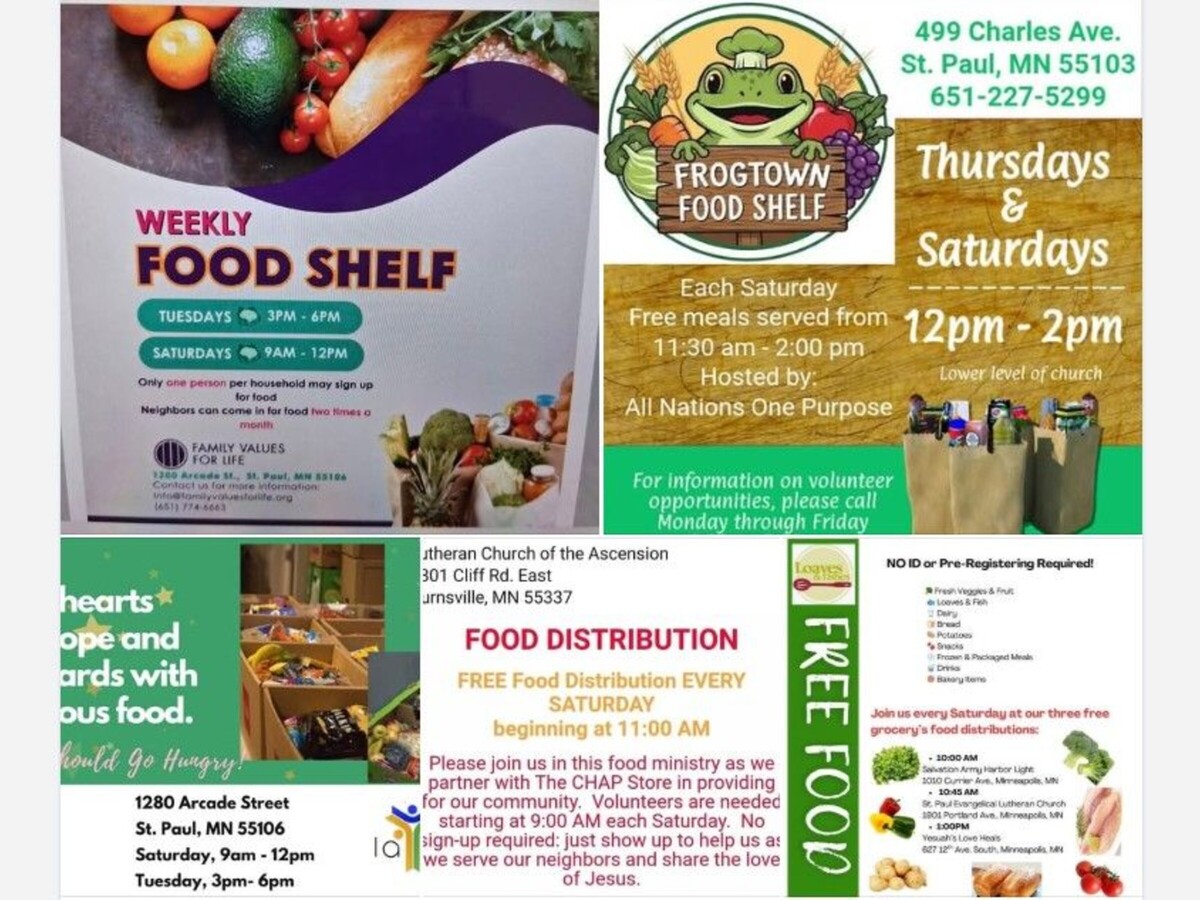
At All Nations Church, 499 Charles Avenue in St. Paul, the Frogtown Food Shelf operates on Thursdays and Saturdays from 12:00 p.m. to 2:00 p.m. in the church’s lower level.
No identification is required. No pre-registration is necessary.
On Saturdays, free community meals are served from 11:30 a.m. to 2:00 p.m., hosted in partnership with All Nations One Purpose. Organizers describe the model as intentionally accessible, designed to ensure immediate assistance without procedural hurdles.
A representative for the site emphasizes that the goal is simple: create a welcoming, low-stress environment where neighbors can select food with dignity rather than navigate paperwork.
Volunteer inquiries are accepted during weekday hours at 651-227-5299.
On St. Paul’s East Side, Family Values For Life, located at 1280 Arcade Street, provides:
Households may access services up to two times per month, with one representative per household signing up during distribution.
The Arcade corridor, which serves a diverse and multi-generational population, has long relied on faith-based and volunteer-led food access efforts. Programs here often focus on distributing fresh produce alongside pantry staples, reinforcing nutritional quality in addition to caloric support.
In Burnsville, the CHAP Store, operating out of the Lutheran Church of the Ascension at 1801 Cliff Road East, hosts a free food distribution every Saturday beginning at 11:00 a.m.
Volunteers are invited to assist with setup beginning at 9:00 a.m. No sign-up is required for recipients.
The distribution reflects a broader suburban reality: food insecurity is not confined to urban cores. Rising rents and transportation costs have extended pressure into Dakota County communities as well.
In Minneapolis, multiple organizations supplement grocery distribution with prepared meals:
Several of these meal programs operate in partnership with Loaves & Fishes and other regional food relief organizations that prioritize prepared meals served without income verification or documentation requirements.
One hallmark of these sites is their commitment to what organizers call “dignity-first services.” Many do not require identification. Some do not require proof of residency. Several allow client-choice selection, enabling visitors to choose foods that align with cultural preferences, dietary restrictions, or family size.
This approach reflects lessons learned during the COVID-19 pandemic, when emergency food access models shifted rapidly to reduce friction and increase speed of service.
The strategy has endured.
Taken together, these locations create a staggered access calendar:
For households balancing multiple jobs, childcare obligations, or inconsistent transportation, predictability can be as essential as supply.
The durability of this network depends heavily on volunteers and donations.
Most locations accept financial contributions and non-perishable food donations during operating hours. Saturday distributions, in particular, rely on community volunteers to sort, package, and distribute goods.
Organizers across sites emphasize that while the scale of need remains significant, community response has been steady.
In an era of economic volatility, these church basements and fellowship halls function as more than charitable spaces. They operate as civic infrastructure, woven into the daily rhythm of neighborhoods across the Twin Cities.
For many families, they represent not emergency charity, but dependable continuity.
And in the quiet choreography of volunteers unloading produce crates and arranging bread racks before the doors open, one reality remains constant: the work continues, week after week, neighbor by neighbor.



Sunny, with a high of 74 and low of 49 degrees. Sunny in the morning, clear in the afternoon and evening, smoky haze overnight.