42° and Clear
Image
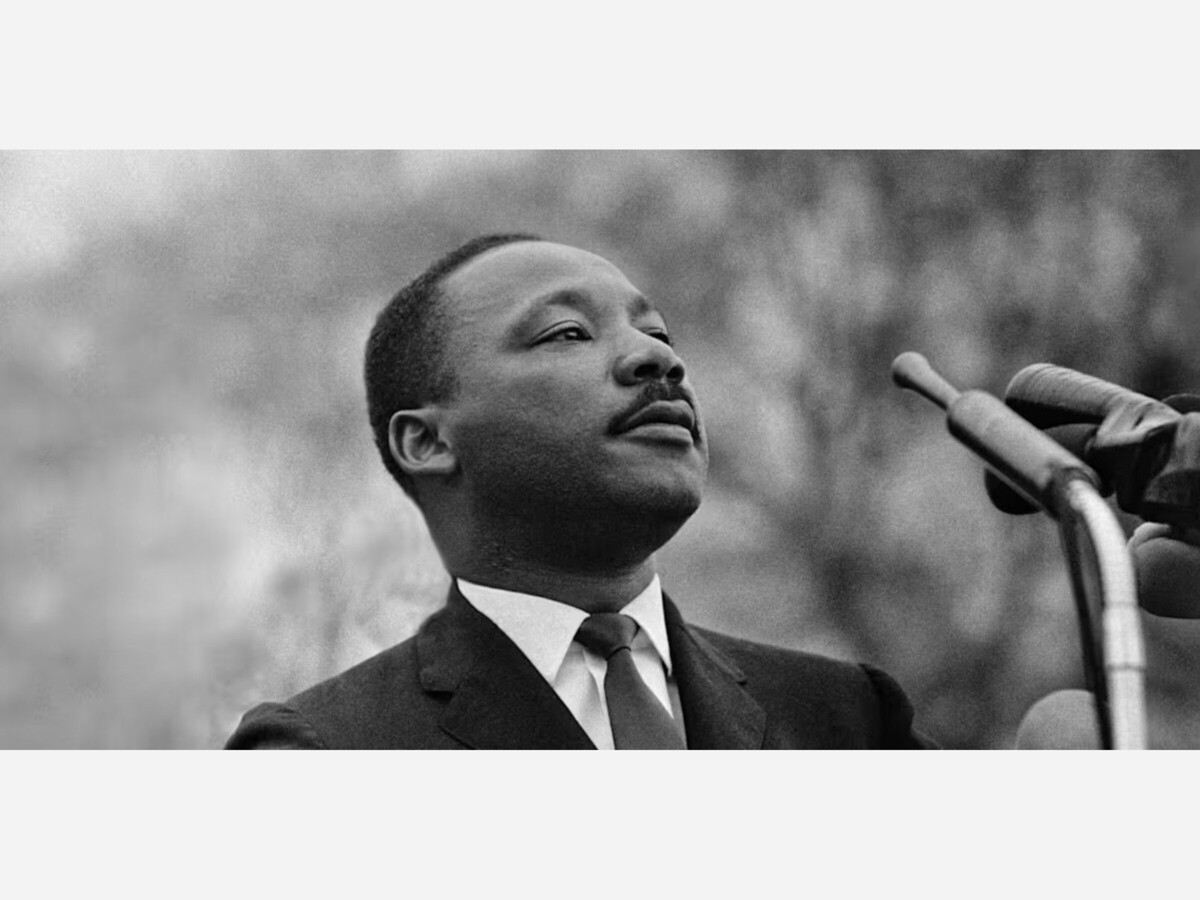



On the anniversary of Martin Luther King Jr.’s birthday, remembrance does not live only in monuments, quotations, or federal holidays. It lives in voices. It lives in memory, struggle, courage, and in the quiet choices people make every day about how to treat one another.
In 2026, amid national uncertainty, political tension, and renewed debates about justice, freedom, and belonging, MinneapoliMedia invited friends, community leaders, young people, and everyday residents to reflect on Dr. King’s teachings. What emerged was not a single narrative, but a collective testimony. Together, these voices form a collage of conscience that feels strikingly present-tense.
This is not history as nostalgia. This is history as inheritance.
For Zach, 17, Dr. King’s legacy begins where it began for so many Americans: with “I Have a Dream.” But his reflection does not stop at the speech’s familiarity.
He understands the address as a response to an urgent moral crisis, delivered at a moment when segregation was not an abstract concept, but a lived system shaping every aspect of daily life. In his words, Dr. King spoke because segregation was rampant at the time, shaping where people could live, learn, and move.
What is striking is not just Zach’s grasp of history, but his clarity about the present. He does not treat oppression as something sealed in textbooks. “There is so much going on where people are being oppressed,” he says plainly. “Dr. King preached against oppression and it is still going.”
Zach does not speak with resignation. He speaks with resolve. He rejects oppression outright and names his own responsibility to oppose it. When asked what Dr. King would ask of the next generation, Zach answers without hesitation: to stand up for one another, to speak for the voiceless, and to do better than those who came before.
In a time when young people are often dismissed as disengaged, Zach offers a quiet rebuttal. The dream has not skipped a generation. It has found a new language.

Another voice enters with warmth, reflection, and a deep sense of humanity.
For Mari Harris, Dr. King’s teachings are inseparable from nonviolence, but not the kind of nonviolence often misunderstood as passivity. She is careful to clarify that nonviolence, as Dr. King preached it, was never about accepting mistreatment. It was about refusing to surrender one’s dignity or moral authority to violence.
She reflects on Dr. King’s “Mountaintop” speech not as metaphor alone, but as lived wisdom. From the mountaintop, she says, you see far and wide, but you also see close-up differently. Perspective changes everything.
Mari speaks openly about Dr. King as a human being. One who needed rest. One who had doubts. One who relied on community and collaborators. This acknowledgment does not diminish his legacy; it grounds it. Leadership, in her telling, is not about perfection, but persistence.
She recalls seeing courage and service in everyday acts: neighbors helping neighbors, people shopping for those afraid to go out, community members standing watch, offering protection simply by showing up. These are not grand gestures. They are quiet ones. And yet, they echo Dr. King’s belief that moral action is often local and relational.
Looking ahead, Mari believes Dr. King would urge organization, training, and collective alignment. Movements do not sustain themselves on emotion alone. They require discipline, preparation, and unity. Rosa Parks, she reminds us, was trained. Change was intentional.
When asked to sum up Dr. King’s legacy in a sentence, Mari offers words that feel both old and urgent: Keep your eye on the prize. She then sings softly, invoking a hymn associated with Dr. King’s spirit, reminding us that a life committed to helping others is never lived in vain.
For Latonya Reeves, Dr. King’s teachings collide directly with the present moment.
Her reflections are rooted in what she sees unfolding in Minneapolis and across Minnesota: communities under strain, neighbors fearful, constitutional principles tested. In this context, Dr. King’s insistence on nonviolence feels less like an ideal and more like a discipline.
Latonya speaks about peace not as avoidance, but as strategy. How does a community resist injustice without escalating harm? How does it remain firm without becoming destructive? These are not theoretical questions for her. They are immediate.
She names courage not only in protest, but in truth-telling. Courage, she says, is also the willingness to admit when systems fail, even when doing so is politically uncomfortable. Accountability, in her view, is not betrayal. It is integrity.
Looking to the future, Latonya believes Dr. King would challenge people to listen more deeply, to bring all voices to the table, and to resist the temptation to dismiss one another. Polarization, she warns, has robbed society of conversation. Dr. King’s answer would not be silence, but dialogue grounded in respect.
Her vision is not naïve. It is disciplined. Advocate loudly, she says, but do not shout. Fight with joy. Leave room for dignity.
Luther Ranheim offers a reflection shaped by witness.
For him, Dr. King’s call to nonviolent resistance feels personal, immediate, and embodied. He speaks candidly about privilege and responsibility, acknowledging that some bodies can take risks that others cannot. To remain passive in that knowledge, he suggests, is itself a moral choice.
He recounts a moment after church when he noticed neighbors standing outside a nearby congregation, wearing vests, quietly keeping watch. They were there to protect worshipers. Not as an organization. Not as an announcement. Just as neighbors.
The image moved him to tears. The cold. The silence. The solidarity.
This, Luther suggests, is what Dr. King meant. Collective good over individual comfort. Presence over performance. Love enacted without fanfare.
When asked what Dr. King would challenge the next generation to do, Luther does not soften his answer. He believes younger generations are often taught to prioritize comfort and self-interest. Dr. King, he says, would insist on something harder: sacrifice for the collective, and a renewed commitment to nonviolent resistance.
Taken together, these voices do not offer a single conclusion. They offer a shared insistence: Dr. Martin Luther King Jr.’s teachings are not complete. They are unfinished work.
In 2026, his legacy is not confined to a holiday or a soundbite. It is carried by a teenager who refuses oppression, by a woman who understands leadership as human and communal, by a public servant demanding accountability, and by neighbors standing watch in the cold.
The dream endures not because it was spoken once, but because it is still being answered.
And the question remains, as urgent now as it was then:
What will we do with it?



Moderate or heavy snow showers, with a high of 35 and low of 30 degrees. Don't forget your umbrella! Light freezing rain in the morning, overcast for the afternoon, moderate snow overnight.