39° and Sunny
Image
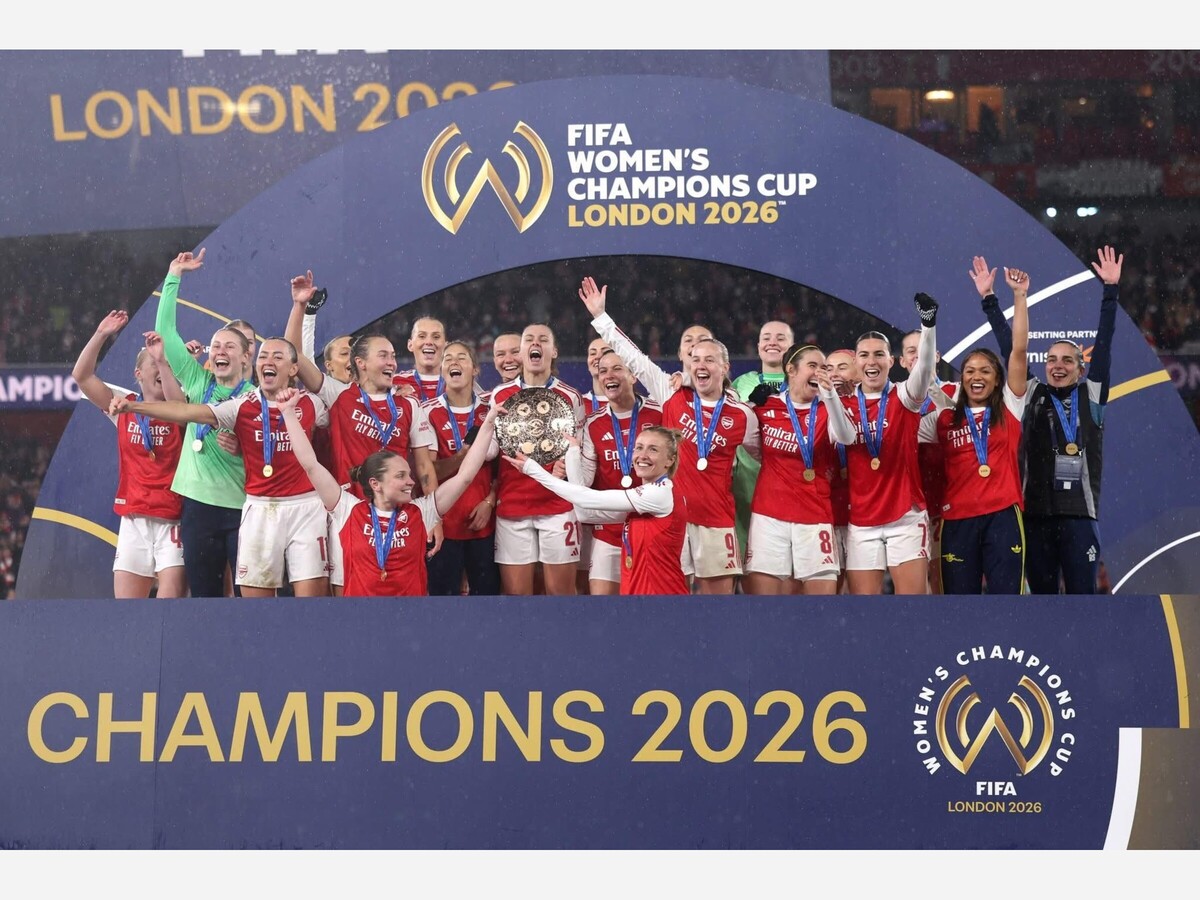



The night Arsenal defeated SC Corinthians 3–2 after extra time was not simply the conclusion of a tournament. It was the culmination of a long institutional hesitation finally giving way to action, and a reminder that women have been playing the game football claims to celebrate even as its men’s version increasingly forgets what that game is.
The inaugural FIFA Women’s Champions Cup, staged in early 2026, arrived months after FIFA rolled out a revamped and expanded men’s Club World Cup. That sequencing matters. It speaks to an old truth in global football governance: women’s competitions are rarely imagined first, rarely resourced first, and almost never trusted to lead. They arrive after proof has been demanded, after patience has been exhausted, after excellence has been normalized and still discounted.
And yet, when FIFA finally acted, what followed was not a developmental exercise. It was a fully formed global competition that exposed a quiet reality the sport has avoided naming.
Women’s club football is not catching up.
It is carrying the game forward.
The idea of an intercontinental women’s club championship is not new. It has existed in conversations, proposals, and white papers for more than a decade, always deferred by familiar justifications: calendar congestion, financial risk, broadcast uncertainty. Meanwhile, the men’s game expanded relentlessly, its global competitions multiplying even as their meaning diluted.
By the time FIFA launched the Women’s Champions Cup, the justification for delay had collapsed. Domestic leagues had professionalized. Continental competitions had stabilized. Stadiums were filling. Viewership was not hypothetical. The only remaining obstacle was institutional inertia.
The tournament’s structure was simple and telling: champions from all six confederations, narrowed to a final four, staged on a single global stage. No apology, no hedging. The prize money was equally telling. Arsenal’s $2.3 million payout was not symbolic generosity; it was a recalibration of what FIFA is now willing to place on women’s football in hard currency.
That recalibration did not emerge from benevolence. It emerged because the sport left FIFA with no credible alternative.
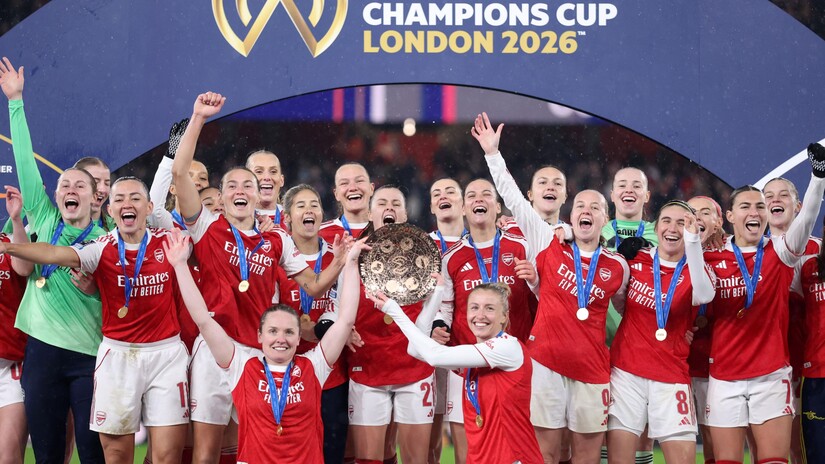
If the tournament’s existence marked institutional progress, the final itself justified that progress on footballing terms alone.
Arsenal versus Corinthians was not a mismatch masked by ceremony. It was a clash of philosophies, tempos, and histories. Arsenal arrived with European structure, pressing patterns refined by repetition and depth. Corinthians arrived with South American resilience, technical calm, and a collective intelligence forged in continental dominance rather than financial excess.
The match unfolded without theatrical inflation. Goals were earned, not sold. Contact was absorbed, not advertised. When Olivia Smith scored early for Arsenal, the game did not tilt. When Gabi Zanotti equalized, it did not fracture. When Arsenal regained the lead, Corinthians did not unravel. When a stoppage-time penalty forced extra time, the match did not descend into farce.
This was football played without indulgence.
Extra time revealed the defining difference. As bodies tired, the game did not become cynical. It became honest. Space mattered. Decision-making mattered. When Frida Maanum drove forward and Caitlin Foord finished the decisive goal, it felt inevitable not because Arsenal were entitled to win, but because the match demanded a conclusion earned in motion, not manipulation.
This is the women’s game at its current peak: direct, relentless, emotionally legible, and resistant to artifice.
It is impossible to watch this final without confronting an uncomfortable contrast.
Men’s elite football, bloated by money and overexposure, increasingly rewards simulation, time-wasting, performative injury, and tactical cynicism designed less to win matches than to provoke officiating outcomes. Entire phases of play are now devoted to convincing referees rather than beating opponents.
The women’s game, by contrast, remains governed by consequence. You stay down because you are hurt, not because you are acting. You commit a foul because you are late, not because you are calculating suspension math. You celebrate because the goal matters, not because the brand demands it.
This is not moral superiority. It is structural reality. When players are not yet insulated by generational wealth, they play as if the game still decides something essential.
That rawness is not a weakness to be polished away. It is football’s original condition.
Arsenal lifting the trophy mattered because it confirmed that European clubs could meet global pressure without collapsing into entitlement. Corinthians’ performance mattered because it reaffirmed South America’s place as an equal contributor to the women’s game’s future. Gotham FC’s third-place finish mattered because North America is no longer a closed circuit. AS FAR’s presence mattered because Africa is not waiting its turn.
But the deeper signal lay elsewhere.
FIFA organized this tournament because it had reached the point where not organizing it would have been indefensible. Football forced the institution’s hand. That is the correct order of history.
There is one remaining gap that cannot be bridged by trophies or rhetoric.
Compensation.
As long as women who play with this level of intensity, honesty, and excellence are paid a fraction of what men receive for increasingly performative football, the sport remains in moral arrears. The argument is no longer about sustainability or growth. It is about value alignment.
When women begin commanding the same financial gravity as their male counterparts, not because of novelty but because of quality, FIFA will not be doing women a favor. It will be settling a debt.
Only then will football be able to say it has caught up with the game women have been playing all along.
Arsenal’s victory will sit in the record books as the first of its kind. But its deeper significance lies in what it clarified.
The football is ready.
The audience is ready.
The global structure is finally moving.
What remains is the courage to finish the work.
When women are paid what their football is worth, not what tradition permits, this tournament will be remembered not as an experiment, but as the moment the sport finally aligned its values with its best version of itself.
That reckoning is no longer theoretical.
It is overdue.



Overcast, with a high of 50 and low of 31 degrees. Sunny during the morning, overcast for the afternoon, partly cloudy for the evening, clear overnight.