36° and Overcast
Image




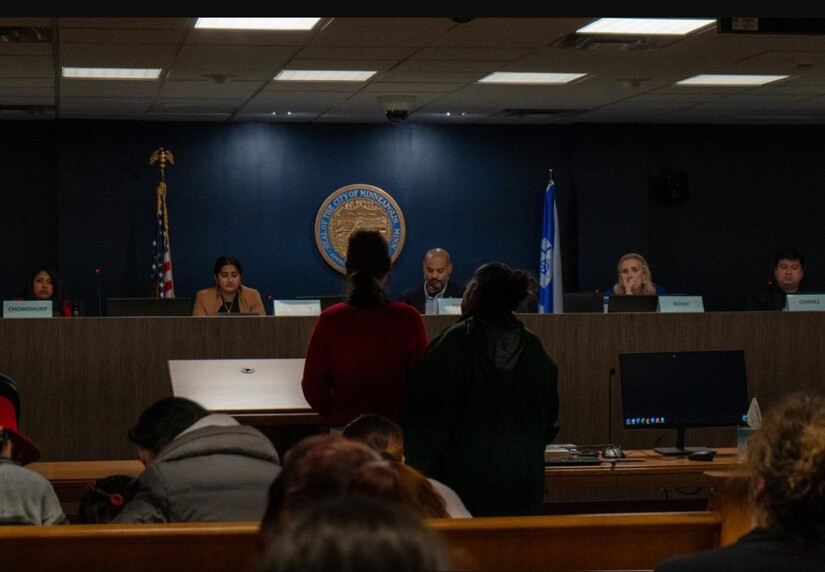
On Thursday, February 5, 2026, the Minneapolis City Council voted 9–4 to allocate $1 million in emergency rental assistance to help residents facing eviction in the wake of Operation Metro Surge, a sweeping federal immigration enforcement operation that has reshaped daily life across the Twin Cities.
City leaders described the measure as an urgent, if insufficient, attempt to stabilize households destabilized by fear, detention, and sudden loss of income. The funds will be transferred to Hennepin County and administered through its existing eviction-prevention infrastructure.
“This is not an abstract policy,” Council Member Aisha Chughtai said during deliberations. “I spoke to a mom who is disabled. Her husband is in detention. She has suddenly become a single parent and is behind on rent. Every story is tragic. It is heartbreaking.”
Operation Metro Surge began in December 2025 and has involved the deployment of an estimated 2,000 to 3,000 federal agents across Minneapolis and St. Paul. While federal officials have described the operation as a public safety initiative, its effects have been most acutely felt in working-class and immigrant neighborhoods.
Community organizations and city officials report that thousands of residents have effectively gone into hiding, too fearful to commute to work, shop for groceries, or take children to school. The resulting income disruption has pushed many households to the brink of eviction during the coldest months of the year.
In January 2026, the State of Minnesota, joined by Minneapolis and St. Paul, filed a federal lawsuit seeking to halt the operation, alleging constitutional violations and arguing that the surge amounted to political retaliation. The enforcement effort has also been marked by tragedy. In separate January incidents, two civilians, Renee Macklin Good and Alex Pretti, were fatally shot by federal agents, intensifying public scrutiny and outrage.
The $1 million allocation emerged only after a contentious debate that laid bare the city’s fiscal and moral fault lines.
Council members considered multiple funding sources:
For some members, the decision raised alarms about Minneapolis’ financial stability. Council Member Elizabeth Shaffer warned that the city was already facing scrutiny from bond rating agencies, noting that more than $5 million in overtime costs, largely tied to increased policing demands during the federal operation, had accrued in the opening weeks of 2026.
Others argued that the humanitarian crisis outweighed fiscal caution. Council President Elliott Payne said the city was confronting a breakdown in community trust and economic participation that could not be addressed by waiting for perfect conditions.
City officials emphasized that the $1 million is a stopgap, not a solution. The funding is expected to assist approximately 250 families, a fraction of those believed to be at risk.
Under the plan:
Even before Operation Metro Surge, county officials reported a backlog of roughly $50 million in unmet rental assistance needs. Advocates say the enforcement operation has only widened that gap.
Concerns about accountability also surfaced. Council Member Pearll Warren questioned whether, in a state still grappling with revelations of large-scale fraud in public programs, safeguards would be sufficient. Council Member Jason Chavez pushed back forcefully.
“It is not fraudulent to want to prevent the eviction of our neighbors,” Chavez said. “It is not fraudulent to support neighbors with rental assistance.”
The vote comes amid broader calls for state-level intervention. Both the Minneapolis and St. Paul city councils have urged Governor Tim Walz to enact a temporary statewide eviction moratorium, warning of a potential surge in homelessness if enforcement-driven income losses continue. As of this week, no moratorium has been issued.
At the municipal level, resistance has taken other forms. In St. Paul, Mayor Kaohly Her recently signed an ordinance barring federal immigration agents from using city-owned property for staging or operations, a move supporters say reasserts local control while critics argue it invites further conflict with federal authorities.
Minneapolis officials have been candid about the limits of the action they approved. The $1 million allocation will not undo the fear that has hollowed out neighborhoods, nor will it replace the wages lost to detention or disappearance from the workforce. It is, instead, an attempt to slow the unraveling.
In a winter defined by uncertainty, the council’s vote stands as a declaration that eviction prevention is not merely a housing issue, but a matter of civic stability. Whether it proves enough to hold families in place, even temporarily, remains an open and urgent question.


Patchy rain nearby, with a high of 43 and low of 31 degrees. Don't forget your umbrella! Overcast during the morning, clear for the afternoon and evening, patchy rain nearby overnight.