Image
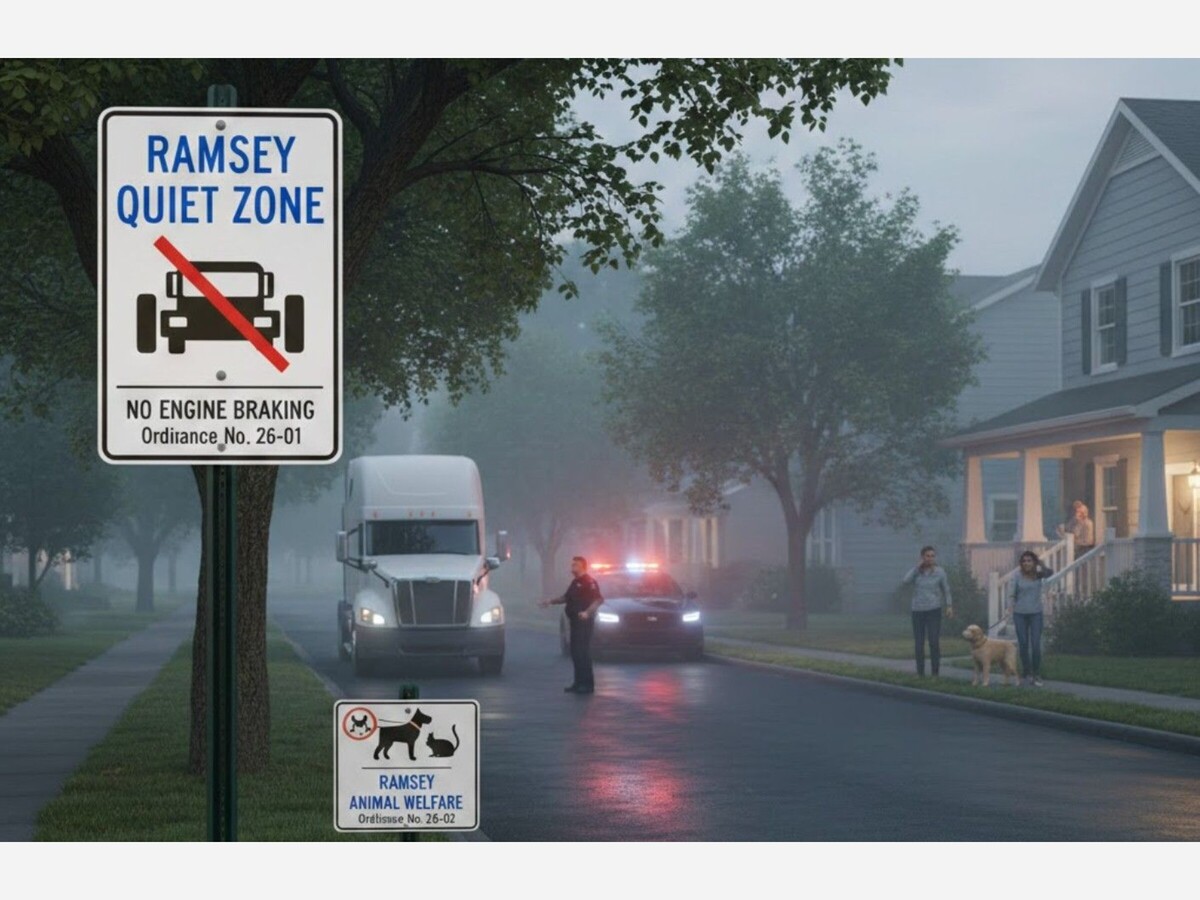



At its January 27, 2026 meeting, the Ramsey City Council unanimously approved the introduction of two ordinances that together mark one of the city’s more consequential quality of life code updates in recent years. The actions advance a comprehensive overhaul of Ramsey’s animal regulations and a targeted amendment to the city’s nuisance code aimed at curbing disruptive engine brake noise in residential areas.
While neither ordinance has been formally adopted yet, the unanimous vote to introduce them signals a clear policy direction: tighter, clearer standards around public nuisance enforcement and a more structured, modern framework for animal ownership and welfare within city limits.
The first measure, Ordinance No. 26-01, proposes an amendment to Section 30-5 of the city’s nuisance code to explicitly address noise generated by engine-retarding brake systems, commonly referred to as “jake braking.”
City staff brought the amendment forward following multiple resident complaints in 2025 related to repeated loud braking noise in certain traffic corridors. Engine-retarding brakes, most often used on diesel-powered commercial trucks, can produce sharp, rapid-fire sounds that carry long distances, particularly during overnight and early morning hours.
According to city materials, existing state law and local ordinances already regulate vehicle noise broadly. However, staff recommended a more explicit prohibition to remove ambiguity and make enforcement clearer when engine braking becomes a persistent nuisance.
The proposed language would specifically prohibit the use of unmuffled engine-retarding brake systems in circumstances where they create a nuisance noise, particularly in residential or mixed-use areas where conventional braking is sufficient.
City officials emphasized that the ordinance is not intended to compromise roadway safety. Engine braking remains a critical safety tool on steep grades or in emergency conditions. The focus, instead, is on discretionary use in areas where repeated noise has disrupted nearby neighborhoods.
As part of implementation, the city indicated it may install “No Engine Braking” or “Quiet Zone” signage in affected areas. Such signage provides advance notice to commercial drivers and supports fair enforcement before citations are issued.
The ordinance is scheduled to return for a second reading on February 10, 2026, at which point the council will consider formal adoption.
The second and broader action, Ordinance No. 26-02, introduces a repeal and replacement of the city’s Animal Code, reorganizing and modernizing regulations that govern pet ownership, animal control, and public safety.
City staff described the proposal as a response to years of resident questions, enforcement challenges, and evolving best practices in animal welfare and municipal regulation.
Among the core goals of the rewrite is improved clarity. The updated code reorganizes provisions so residents can more easily understand what is permitted and what is not, without needing to interpret dense legal language.
Key components of the proposed animal code include:
Licensing and identification
The ordinance streamlines pet licensing requirements and underscores the role of current rabies vaccinations and microchipping. These measures are intended to improve public health protections and significantly increase the likelihood that lost animals are returned to their owners.
Limits based on property type and size
The update clarifies how many domestic animals may be kept on a property without a special permit, with distinctions tied more directly to lot size and zoning. City officials said this change is designed to prevent informal or “hobby” kennel operations in high-density residential neighborhoods while remaining fair to typical pet owners.
Nuisance animals and running at large
Stronger and more precise language addresses persistent barking, animals running at large, and other common complaints that can strain neighbor relations. The emphasis remains on owner responsibility and early intervention before issues escalate.
Dangerous and potentially dangerous dogs
The revised code refines definitions and procedures related to dogs deemed “potentially dangerous” or “dangerous.” By clarifying thresholds and processes, the city aims to ensure more consistent handling of repeated aggression or bite incidents, while preserving due process for owners.
Private kennel licensing
The ordinance simplifies and clarifies licensing requirements for private kennels, aligning them more closely with actual scale and impact rather than one-size-fits-all rules.
Because both ordinances were introduced rather than adopted, they now move through the standard municipal legislative process.
Residents interested in the precise language and tracked changes can review the January 27 agenda packet, including redlined drafts, through the city’s public meeting portal.
Taken together, the two ordinances reflect a city responding to everyday realities. Noise that interrupts sleep. Pets that bring joy but also require responsibility. Rules that, if unclear, can frustrate residents and complicate enforcement.
The engine brake amendment is narrow but pointed, rooted in specific complaints and aimed at restoring quiet in affected neighborhoods. The animal code rewrite is broader and more structural, updating decades-old language to better reflect modern expectations around animal welfare, public health, and neighborhood coexistence.
For Ramsey residents, the unanimous introduction vote suggests these updates are likely to advance. The next few weeks will determine how the final language lands, and how the city balances enforcement with education as the ordinances move toward adoption.


Sunny, with a high of 72 and low of 41 degrees. Fog for the morning, sunny in the afternoon, clear in the evening,