45° and Patchy rain nearby
Image




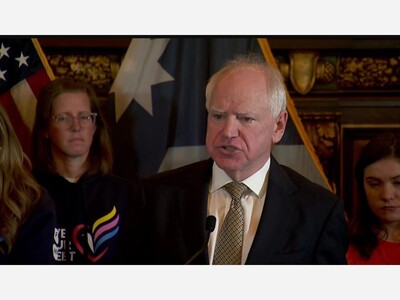
At the center of those efforts is Steve Simon, the state’s chief elections officer, who says Minnesota’s election infrastructure is built with multiple safeguards intended to ensure ballots are cast freely and counted accurately.
“Minnesotans should know that our system is resilient and that Minnesota’s laws ensure that Minnesota voters will be able to cast their ballot freely and their vote will be counted accurately,” Simon said in remarks addressing ongoing concerns about election security.
The comments come as lawmakers and election administrators prepare for what is expected to be a closely watched election cycle. In addition to federal contests, voters will choose candidates for state legislative offices and other local positions on November 3, 2026, part of a broader national election year that has renewed attention on the integrity of voting systems across the United States.
In Minnesota, the response has been both legislative and administrative: strengthening criminal protections for voters while continuing to reinforce the technical and procedural safeguards that govern how ballots are cast and counted.

Members of the Minnesota Senate Elections Committee have been reviewing legislation aimed at strengthening penalties for voter intimidation and election interference.
The proposals, sometimes described by lawmakers as part of a broader “voter protection” framework, seek to reinforce existing state statutes that prohibit attempts to disrupt or manipulate the democratic process.
Among the provisions being discussed:
Stronger penalties for intimidation
The legislation would increase criminal consequences for individuals who use force, threats, or coercion to prevent someone from voting or to influence how a voter casts a ballot. Minnesota law already criminalizes such conduct, but lawmakers are considering additional enforcement tools to deter interference.
Protection for election officials and voting infrastructure
Proposals also address obstruction of election officials and tampering with voting equipment, ballot boxes, or election materials. Election administrators have testified that clear legal consequences are necessary to protect the workers who run polling places and process ballots.
Crackdowns on deceptive election practices
Another focus involves misinformation that attempts to mislead voters about the time, place, or manner of voting. As artificial intelligence tools and digitally manipulated media become more sophisticated, policymakers are examining how existing laws apply to deceptive practices such as fabricated messages about polling locations or election dates.
State officials say these measures reflect a broader recognition that threats to elections can be both physical and digital.
Beyond legislative action, Minnesota relies on a layered election security model often described by Simon and election administrators as a “defense in depth” strategy.
The system combines technology safeguards, physical ballot verification, and post-election audits designed to detect and prevent irregularities.
Several of those protections are built directly into how Minnesota conducts elections.
Paper ballots and physical records
Minnesota voters cast paper ballots, either by hand-marking them or through ballot-marking devices used for accessibility. These paper ballots serve as the official record of each vote and provide the basis for recounts and audits if questions arise.
Post-election audits
After every statewide general election, counties perform a manual audit of ballots from randomly selected precincts. Election workers compare the physical ballots with the electronic tabulation results to verify that the vote totals match.
Voting machines not connected to the internet
Tabulation equipment used in Minnesota polling places is not connected to the internet during voting or vote counting. Security experts say this air-gapped structure significantly reduces the risk of remote cyber intrusion.
Pre-election testing of voting equipment
Before each election, local election officials conduct public accuracy tests to demonstrate that voting machines correctly record and tabulate ballots. These tests are open to observation and are designed to ensure equipment functions properly before polls open.
Together, these safeguards form a verification chain that election administrators say protects the system from both technological and procedural failures.
Election security in Minnesota also involves coordination across multiple levels of government.
The Secretary of State’s office works with the Cybersecurity and Infrastructure Security Agency and Minnesota IT Services to monitor potential cybersecurity threats and strengthen election infrastructure.
These partnerships include cybersecurity assessments, information sharing about emerging threats, and training for local election administrators. Election judges and county officials receive guidance on identifying phishing attempts, social engineering tactics, and other methods that could target election offices.
Federal authorities have increasingly described election infrastructure as part of the nation’s critical infrastructure network, meaning federal agencies now routinely coordinate with states to protect voting systems from cyber threats.
Minnesota’s focus on election security is closely tied to the state’s long-standing reputation for civic participation. For decades, Minnesota has consistently recorded among the highest voter turnout rates in the nation, a distinction often attributed to policies such as same-day voter registration and extensive early voting opportunities.
Maintaining that trust, election officials say, requires constant vigilance.
“Security and access are not competing priorities,” Simon has said in previous public remarks. “Minnesota’s system is designed to achieve both.”
As the 2026 election cycle approaches, lawmakers, election officials, and local administrators are continuing preparations aimed at ensuring that the state’s tradition of high participation is matched by a voting system capable of withstanding modern threats.
For Simon and other officials, the goal is straightforward: to ensure that every eligible Minnesotan can vote without interference and that every ballot cast is counted exactly as intended.
MinneapoliMedia
Community. Culture. Civic Life.


Moderate rain, with a high of 65 and low of 37 degrees. Sunny in the morning, patchy rain nearby during the afternoon, sunny in the evening, clear overnight.