55° and Patchy rain nearby
Image
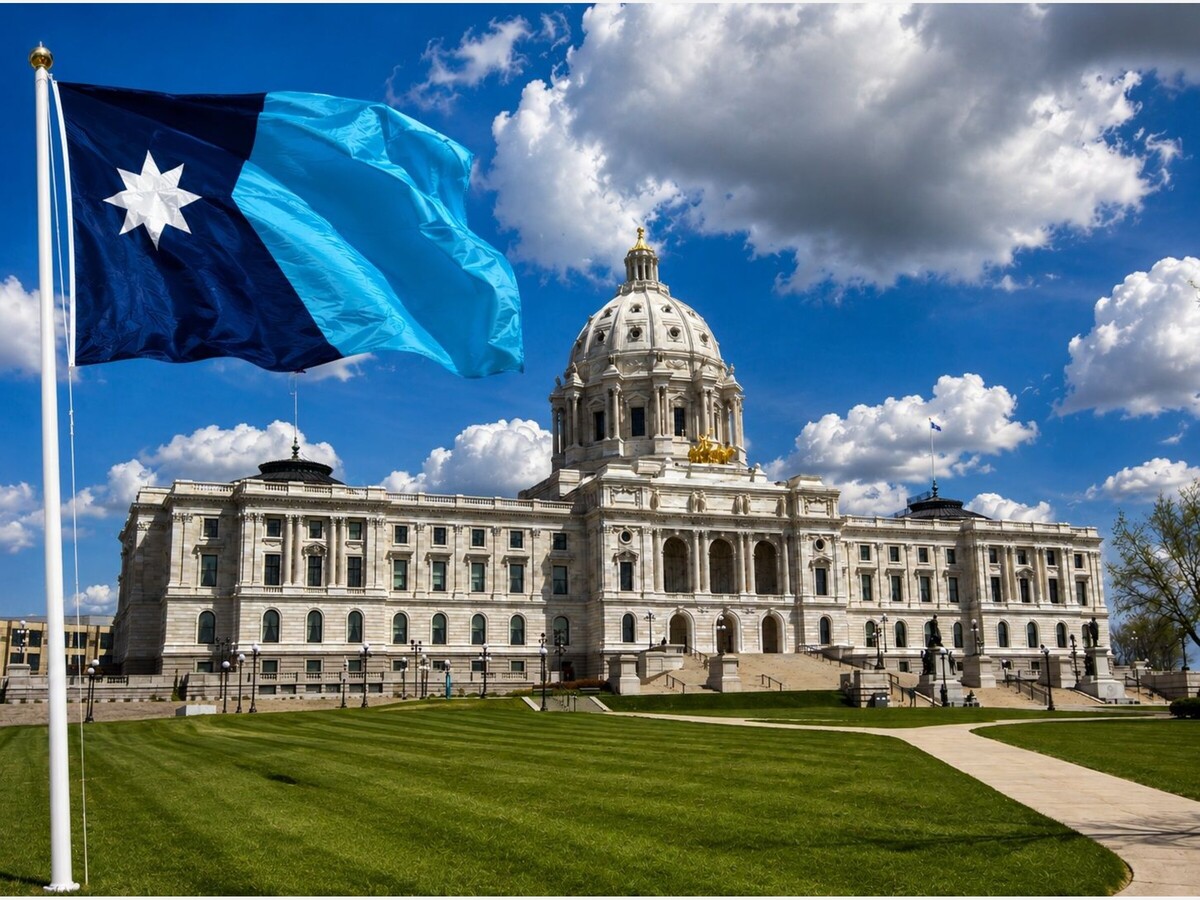



The bonding agreement, reached during the final days of the 2026 legislative session, forms a central component of a broader supplemental budget deal negotiated between the governor, House leaders, and Senate leadership amid mounting pressure to complete major unfinished fiscal priorities before constitutional adjournment.
For Sandy Pappas, the longtime St. Paul Democrat and chair of the Senate Capital Investment Committee, the legislation carries significance far beyond infrastructure financing.
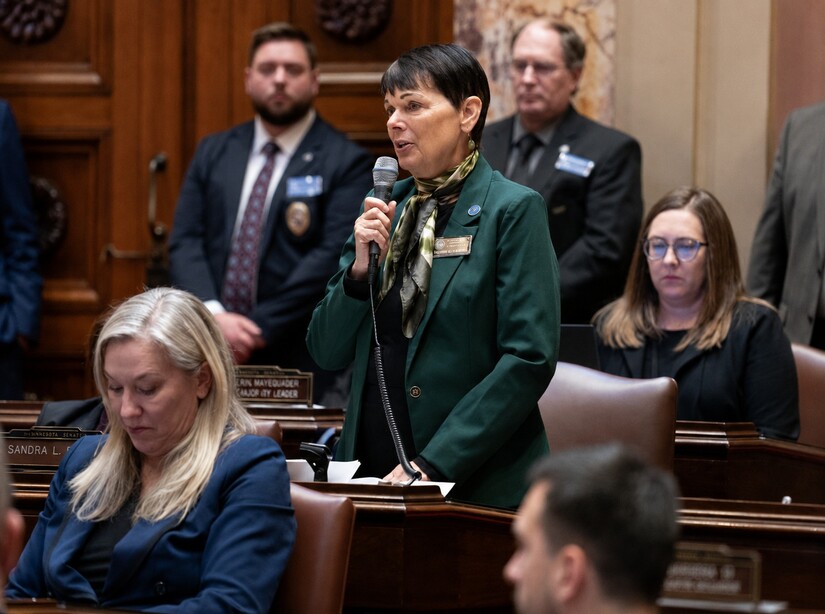
“This bill is made more meaningful to me because it is the last of my career,” Pappas said in a statement released following the agreement. “Going into this session, I was determined to build a bonding deal that represents Minnesota’s values and takes full advantage of our AAA bond rating. This bill does.”
Pappas, who was first elected to the Minnesota House of Representatives in 1984 before winning election to the Senate in 1990, is concluding a legislative career spanning more than four decades at the Capitol. Over that time, she became one of the Legislature’s most prominent voices on infrastructure investment, women’s economic policy, education, and state finance.
In addition to serving as Senate President and chairing major committees, Pappas helped lead passage of several landmark measures during her tenure, including the Minnesota Dream Act and the Women’s Economic Security Act, legislation widely viewed as among the most consequential policy achievements of modern DFL governance.
The newly announced bonding package would become the third major capital investment bill overseen by Pappas within the last four years, bringing the total infrastructure investment advanced under her leadership during that period to approximately $4.5 billion.
Bonding bills occupy a unique role within the Minnesota government because they authorize the state to borrow money through the sale of general obligation bonds, allowing long-term infrastructure projects to be financed over time. Under the Minnesota Constitution, such legislation requires a three-fifths supermajority vote in both legislative chambers, forcing bipartisan cooperation even during periods of political division.
Legislative leaders said the 2026 agreement is designed to address urgent infrastructure demands across both metropolitan and rural Minnesota, including transportation repairs, wastewater infrastructure, public safety facilities, flood mitigation, higher education asset preservation, and local economic development projects.
“From farmers transporting their crops on rural highways and college kids trying to study under leaky roofs, to small towns yearning to grow but held back by their water treatment capacity, this substantial bill will make a dent in project needs across the state,” Pappas said.
Among the most prominent projects highlighted in the agreement is approximately $40 million directed toward renovations at the historic Roy Wilkins Auditorium in downtown St. Paul.
The nearly century-old civic venue has long served as a statewide gathering site for high school basketball tournaments, graduations, conventions, concerts, dance competitions, roller derby events, and community programming. Proposed improvements include upgrades to HVAC systems, electrical infrastructure, accessibility features, and deferred structural maintenance.
“As a St. Paulite, I am happy to see funds for the 100-year-old Roy Wilkins Auditorium and thank the Governor for his commitment to our historic treasure,” Pappas said. “Roy Wilkins serves the whole state.”
The broader package also includes funding connected to higher education asset preservation and replacement projects, commonly referred to at the Capitol as HEAPR funding, which supports repairs to aging infrastructure throughout the University of Minnesota and Minnesota State systems.
State officials have increasingly warned in recent years that deferred maintenance backlogs at public colleges and universities have grown into the billions of dollars, affecting roofs, mechanical systems, utility infrastructure, and classroom facilities statewide.
Additional funding within the bonding agreement is expected to support rural transportation corridors, water treatment expansion projects for growing communities, and local public works infrastructure facing mounting age and capacity challenges.
Water infrastructure funding has become an especially urgent concern across Minnesota as local governments confront increasing costs tied to wastewater treatment modernization, drinking water compliance standards, and lead service line replacement efforts.
Earlier this month, Pappas publicly expressed concern about the possibility that lawmakers might fail to pass a bonding package before adjournment, warning that delays could jeopardize critical statewide infrastructure projects.
“I’m a really nervous Nelly about the whole thing,” Pappas said during a Capitol press conference focused on infrastructure funding negotiations. “It’s really important to all of Minnesota that we get this infrastructure bill passed.”
Legislative requests submitted for the 2026 bonding cycle reportedly exceeded $7 billion statewide, far beyond the state’s practical borrowing capacity and forcing lawmakers into difficult negotiations over project priorities.
Minnesota’s continued AAA bond rating, among the highest credit ratings available to state governments, remains a central factor in the Legislature’s infrastructure financing strategy because it allows the state to borrow at comparatively favorable interest rates.
“This bill represents Minnesota’s values and takes full advantage of our AAA bond rating,” Pappas said.
The bonding package also arrives as part of a broader supplemental budget agreement that includes approximately $250 million in vehicle tab fee relief, roughly $125 million in property tax relief, and emergency financial support for hospitals including Hennepin Healthcare and other regional medical providers facing fiscal strain tied to uncompensated care and operating pressures.
The final legislative votes are expected in the coming days before the Legislature’s scheduled adjournment deadline on May 18.
If approved, the agreement would close the 2026 session with one of its largest bipartisan accomplishments while simultaneously cementing the final major legislative legacy project of one of Minnesota’s longest-serving lawmakers.
For Pappas, whose political career has stretched across multiple governors, economic recessions, partisan shifts, and generational transformations at the Capitol, the bonding agreement represents both a final infrastructure package and a closing statement about the role the government can still play in long-term public investment.
“As my final session comes to a close,” Pappas said, “I look forward to voting yes on this bill.”
MinneapoliMedia | Community. Culture. Civic Life.



Overcast, with a high of 67 and low of 50 degrees. Clear in the morning, overcast for the afternoon, clear during the evening, overcast overnight.