68° and Clear
Image
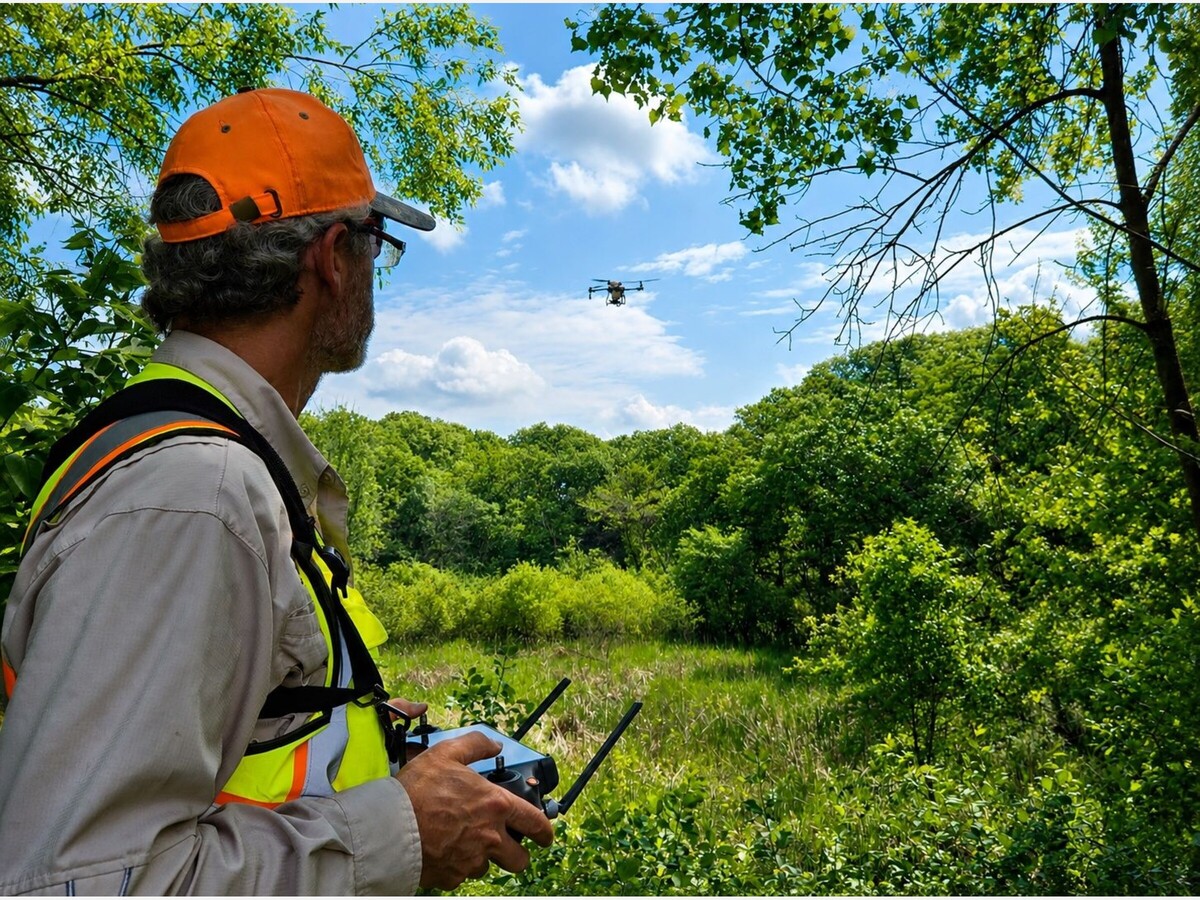



This year, the Metropolitan Mosquito Control District (MMCD) has expanded the use of drone technology across all seven counties it serves, integrating unmanned aerial systems into its 2026 mosquito-control operations as part of a broader effort to identify and treat mosquito breeding sites before larvae develop into biting adults.
The initiative represents one of the most visible examples of emerging technology being deployed in support of a longstanding public health mission.
According to MMCD, drones are now being used throughout Anoka, Carver, Dakota, Hennepin, Ramsey, Scott, and Washington counties to apply targeted larval-control treatments in areas that are difficult to reach using conventional methods.
For residents, the sight may be unfamiliar.
For mosquito-control specialists, it is becoming an increasingly important part of the region's seasonal response to one of Minnesota's most persistent summertime challenges.
Stopping Mosquitoes Before They Fly
Mosquito control often brings to mind helicopters or truck-mounted spraying operations.
In reality, much of MMCD's work focuses on a much earlier stage of the insect's life cycle.
Rather than waiting for adult mosquitoes to emerge, the district's primary strategy centers on larval control, targeting mosquitoes while they are still developing in standing water.
Public health experts have long viewed larval control as one of the most effective methods for reducing mosquito populations because it interrupts the life cycle before mosquitoes become capable of biting humans or transmitting disease.
That preventative approach forms the foundation of MMCD's Integrated Pest Management program, a science-based framework that combines surveillance, habitat monitoring, biological controls, larval treatments, and targeted interventions to manage mosquito populations while minimizing unnecessary environmental impacts.
The district announced the beginning of its 2026 field season in April, with treatment activities continuing throughout the spring and summer based on rainfall patterns, flooding conditions, surveillance data, and mosquito development cycles.
Why Drones Matter
For decades, mosquito control operations have relied on a combination of field technicians, helicopters, trucks, and specialized equipment to access mosquito breeding habitats.
Yet many of the region's most productive mosquito sites present logistical challenges.
Some wetlands are too small to justify helicopter deployment. Others are heavily vegetated, isolated, environmentally sensitive, or difficult for field staff to access safely on foot.
These locations created a persistent operational gap between large-scale aerial treatment and ground-based field work.
Drones are increasingly helping fill that gap.
MMCD officials say the aircraft are particularly effective for treating mid-sized wetlands, temporary floodwater habitats, and breeding pools that are too restrictive for helicopters but difficult or hazardous for technicians to reach directly.
The drones operate at altitudes generally ranging between 150 and 200 feet above targeted treatment areas and are programmed to follow precise flight paths designed to maximize treatment accuracy while minimizing disturbance to surrounding neighborhoods.
Officials say the technology has improved operational efficiency while reducing the physical risks associated with navigating difficult terrain, standing water, dense vegetation, and remote wetland environments.
In many locations, a drone can safely complete a treatment mission in a fraction of the time previously required for manual access.
A Different Kind of Mosquito Control
Unlike aerial spraying programs that target adult mosquitoes, MMCD's drone operations focus on larval habitats.
The aircraft carry specialized hopper systems that distribute dry granular larvicides directly into mosquito breeding areas.
According to MMCD, the products used in larval-control operations are designed specifically to target mosquito larvae before they mature.
Many mosquito-control programs throughout the United States utilize biological larvicides derived from naturally occurring soil bacteria, including Bacillus thuringiensis israelensis (Bti) and Bacillus sphaericus, both of which have been extensively evaluated by federal and state regulatory agencies.
The U.S. Environmental Protection Agency and public health authorities have long recognized these biological controls as important mosquito-management tools because of their targeted mode of action and limited impact on non-target species when applied according to label requirements.
MMCD states that materials used within its larval-control program are selected to address mosquito development while maintaining safety standards established through federal and state regulatory review.
A Public Health Mission
The Metropolitan Mosquito Control District was established by the Minnesota Legislature in 1958 and serves approximately three million residents throughout the seven-county metropolitan area.
While many residents primarily associate mosquito control with summer comfort, the agency's mission is rooted in public health.
Mosquitoes are capable of transmitting diseases that affect both humans and animals. In Minnesota, the most significant mosquito-borne disease remains West Nile virus, which is monitored annually by the Minnesota Department of Health.
Although mosquito populations fluctuate significantly from year to year depending on rainfall, temperature, and habitat conditions, public health officials consistently emphasize the importance of proactive surveillance and early intervention.
The goal is not simply to reduce nuisance mosquitoes but to manage mosquito populations before they create broader public health concerns.
Transparency and Community Awareness
Because mosquito development is heavily influenced by weather conditions, MMCD's drone operations remain highly dynamic.
Flight schedules are adjusted regularly based on surveillance findings, rainfall events, water levels, and environmental conditions.
To improve transparency, the district publishes weekly updates identifying communities where drone operations are planned.
Residents can view city-by-city drone activity schedules through MMCD's public tracking portal, which is updated throughout the treatment season.
The district also maintains public information channels for residents seeking additional information about mosquito-control activities near their homes.
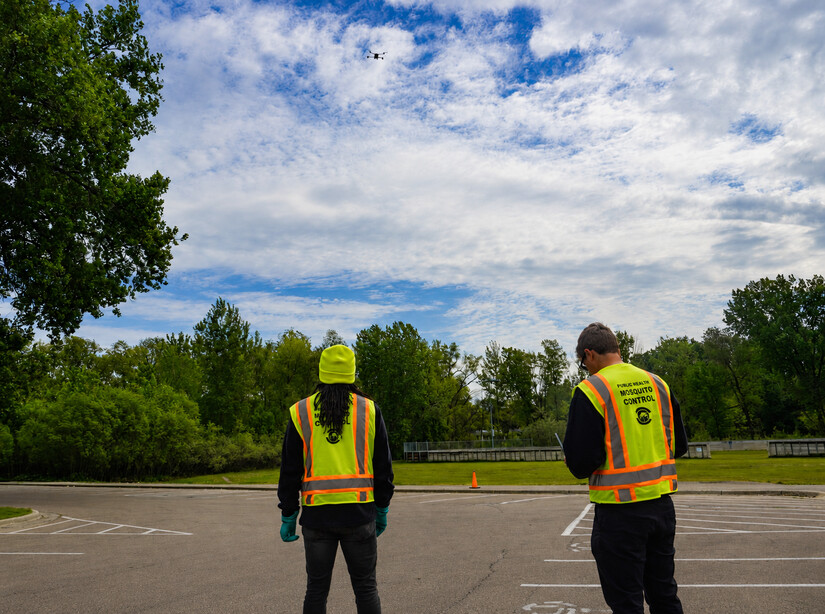
In the field, MMCD employees are identifiable by bright yellow safety vests marked "Public Health Mosquito Control." Technicians may occasionally access private property when monitoring standing water, conducting mosquito surveillance, or evaluating known breeding habitats as part of the district's authorized public health activities.
The Future of Mosquito Control
As technology continues reshaping public-sector operations, mosquito control is proving no exception.
What once required significant manpower, specialized vehicles, or helicopter access can increasingly be accomplished through precise, data-driven drone deployments.
For residents, the aircraft may be little more than a brief sight above a wetland or drainage area.
For public health officials, however, they represent an increasingly valuable tool in a larger strategy aimed at solving a problem before most people ever experience it.
By locating mosquito populations at their earliest stage and treating breeding habitats before adult mosquitoes emerge, officials hope to reduce both nuisance populations and disease risks across the metropolitan region.
In that sense, the drones are not merely flying over wetlands.
They are operating on the front lines of one of Minnesota's longest-running public health initiatives.
Residents can monitor weekly drone activity schedules and operational updates through the Metropolitan Mosquito Control District's public information portal.
FOR MORE INFORMATION
Metropolitan Mosquito Control District
Phone: 651-645-9149
Email: mmcdmosq@mmcd.org
Weekly Drone Activity Updates:
https://mmcd.org/drone-activity/
Sources: Metropolitan Mosquito Control District; Minnesota Department of Health; U.S. Environmental Protection Agency; MMCD 2026 operational updates and public information materials.
MinneapoliMedia | Community. Culture. Civic Life.



Sunny, with a high of 94 and low of 67 degrees. Sunny during the morning, clear overnight.