67° and Cloudy
Image



For the first time since the high-stakes semifinal round commenced, the stadiums fell completely silent Thursday as the 2026 FIFA World Cup entered the first of two scheduled operational rest days before its final weekend. No match was logged, no roster secured advancement, and no nation suffered bracket elimination. Yet Day 36 carried monumental competitive and institutional significance as Spain and defending world champion Argentina initiated closed tactical preparations for Sunday’s championship match, while France and England attempted to recover physically and emotionally before meeting in Saturday’s third-place bronze-medal playoff.
The semifinal phase completed the tournament’s absolute, final macro-separation. Spain advanced via a controlled, systematic 2-0 victory over France in Arlington, while Argentina erased a second-half deficit against England to claim a dramatic 2-1 triumph in Atlanta. The results established an iconic final pairing between two of international soccer's most decorated programs, while concurrently sending the defeated semifinalists toward a consolation fixture neither camp had hoped to contest.
The expanded tournament that launched with forty-eight national selections and an unprecedented 104 scheduled matches now features only two competitive dates remaining on the ledger. France and England will meet Saturday at Miami Stadium in Florida, with both attempting to close out a punishing month by capturing a bronze medal. Spain and Argentina will follow Sunday at New York New Jersey Stadium in East Rutherford, bringing the largest edition of the global competition to its ultimate historical conclusion. Day 36 operated as a vital intersection of physical rehabilitation, statistical tracking, media transitions, and complex administrative handoffs as host cities entered full championship configuration.
|
Stage |
Matchup |
Calendar Date |
Venue |
Kickoff (ET) |
|
Third-Place Playoff |
France vs. England |
Saturday, July 18, 2026 |
Miami Stadium, Miami Gardens, FL |
3:00 PM |
|
FIFA World Cup Final |
Spain vs. Argentina |
Sunday, July 19, 2026 |
New York New Jersey Stadium, East Rutherford, NJ |
3:00 PM |
The morning after a World Cup semifinal produces two radically distinct types of athletic recovery blocks. Spain and Argentina awoke with the immediate psychological reward of knowing their programs remain alive for the ultimate prize. Internal operations centered upon controlling raw excitement, restoring structural tissue readiness, and preventing the extreme emotional significance of the Final from fracturing established training routines.
Conversely, France and England faced a grueling psychological redirection. Both had entered the final four believing the World Cup Trophy sat within real operational reach. Less than seventy-two hours after those competitive paths dissolved, the coaching staffs were tasked with generating baseline focus for the bronze-medal match.
The physical recovery program across the four remaining facilities remained deliberately restricted to non-impact tracking. Personnel who had absorbed heavy semifinal minute allocations focused entirely on advanced hydration, soft-tissue physiotherapy, pool mobility work, stationary cycling, and low-impact movement matrices. Unused substitutes carried out sharper, high-velocity field training to maintain absolute match fitness should tactical squad rotation materialize during the weekend matches.

For the French and English desks, the third-place fixture presents a complex selection dilemma. Managers must accurately calculate how many regular starting elevens possess the emotional and physical capacity to return immediately to high-level match play. The bronze-medal game frequently provides a clean structural window to rotate younger prospects, reserve components, and squad members who logged minor minutes during the main tournament phase. Both management teams confirmed they are evaluating substantial rotation to combat absolute cardiovascular exhaustion.
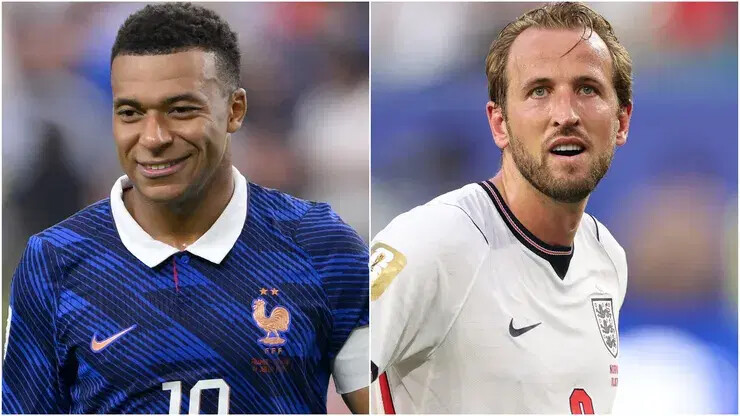
Saturday’s meeting with England is widely expected to mark the definitive conclusion of Didier Deschamps’ historic fourteen-year tenure as France manager. Under his tactical leadership, Les Bleus captured the 2018 World Cup title, reached the 2022 Final in Lusail, and advanced to a third consecutive semifinal block in 2026. While Tuesday's 2-0 defeat in Arlington prevented Deschamps from concluding his legendary run with an active championship opportunity, the third-place playoff offers a high-profile final match to seal one of the most successful managerial epochs in modern international football.
France’s immediate tactical hurdle involves separating severe tournament disappointment from match preparation. The semifinal exposed structural spacing flaws that Spain's flawless positional block systematically exploited. France struggled to isolate Kylian Mbappé in vertical grass, failed to engineer quick short-passing combinations through central zones, and spent much of the night circulating possession harmlessly outside the penalty area.
England will present a completely different defensive geometry. Thomas Tuchel's squad is less likely to monopolize central possession metrics and will likely manifest a greater willingness to engage France in an open, transitional contest. That tactical shift could finally create the vacated deep corridors Mbappé and Ousmane Dembélé require to attack fullbacks directly. The match also carries immense individual weight, serving as an additional competitive target for Mbappé’s pursuit of the Golden Boot. The French captain enters the final weekend tied with Lionel Messi, and because France takes the pitch twenty-four hours before the Final, Mbappé will receive the initial opportunity to set the definitive target line.
England’s recovery process carried the immense psychological burden of another deep international campaign collapsing minutes short of the ultimate prize. Tuchel’s selection had displayed elite tournament resilience throughout the single-elimination phase, surviving high-altitude tests against Mexico and an extra-time duel against Norway before taking a second-half lead against Argentina in Atlanta. Yet the semifinal dissolved in a flash as the defending world champions executed an 80th-minute front-line overload to deliver a 2-1 comeback blow.
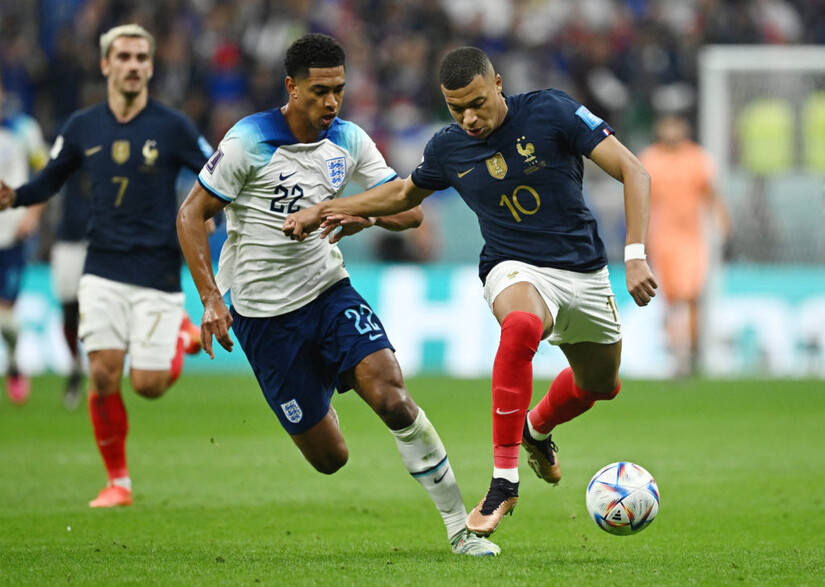
The third-place playoff offers the Three Lions a clean opportunity to secure the program's highest men's World Cup finish on foreign soil since capturing the title in 1966. While the bronze medal cannot erase the strategic sting of the Atlanta collapse, it provides a tangible, high-floor validation for a summer campaign where Jude Bellingham reestablished his global stature and England verified its capacity to consistently navigate deep into the tournament bracket.
Tuchel must balance historical prestige against player exhaustion. Harry Kane and Bellingham remain mathematically linked to individual award tracks, but several younger developmental prospects are pushing for meaningful minutes against world-class opposition. Third-place matches traditionally transform into high-scoring, aesthetically open contests because neither manager implements the ultra-conservative defensive anxieties associated with championship elimination, providing excellent freedom for attacking football.
Spain entered Day 36 operating with the most uncompromised, pristine tactical identity of the global summer. Luis de la Fuente’s team has relied flawlessly upon short-passing midfield control, highly coordinated front-line counter-pressing, and exceptional horizontal defensive spacing. Spain’s clinical semifinal victory over France produced its sixth tournament clean sheet, establishing an absolute modern World Cup record and launching La Roja into a Final against an Argentina side that has repeatedly survived bracket collapse through sheer emotional durability.
The tactical blueprint required for Sunday differs fundamentally from the structural plan deployed against France. While France targeted direct vertical space for isolated wingers, Argentina generates lethal overloads through Messi’s positional freedom between the defensive and midfield lines, Julián Álvarez’s rapid lateral movement, and late central runs from Mac Allister and Enzo Fernández.
Spain must systematically prevent Messi from collecting the ball in the central half-spaces without allowing their entire backline geometry to become distorted or dragged out of position. Rodri will once again operate as the definitive positional anchor. His primary function requires him to manage Spain’s passing tempo, dictate the location of the mid-block press, and physically protect the center backs when fullbacks advance down the touchlines to exploit wide isolation avenues.
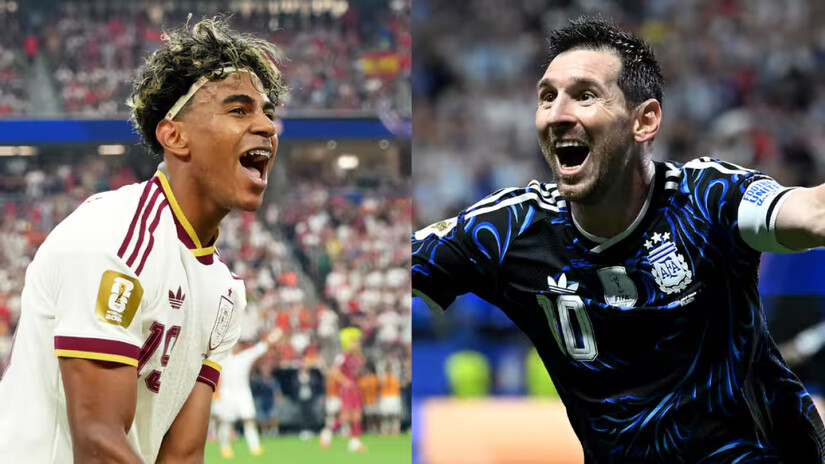
Argentina enters the World Cup Final carrying a fundamentally distinct narrative of survival. The defending world champions have rarely displayed effortless, uninterrupted technical superiority during the tournament phase. Instead, Scaloni's camp survived a dramatic multi-goal deficit against Egypt, required an exhaustive extra-time frame to break down Switzerland's low block, and executed a late 85th-minute rescue mission against England in the semifinals.
What the Albiceleste have occasionally lacked in absolute territorial dominance, they have comprehensively replaced with unmatched psychological resilience. Scaloni’s core veterans refuse to panic when facing immediate bracket elimination, demonstrating a deep emotional composure that remains unbothered by trailing positions, extended low-block resistance, or late injury duress.
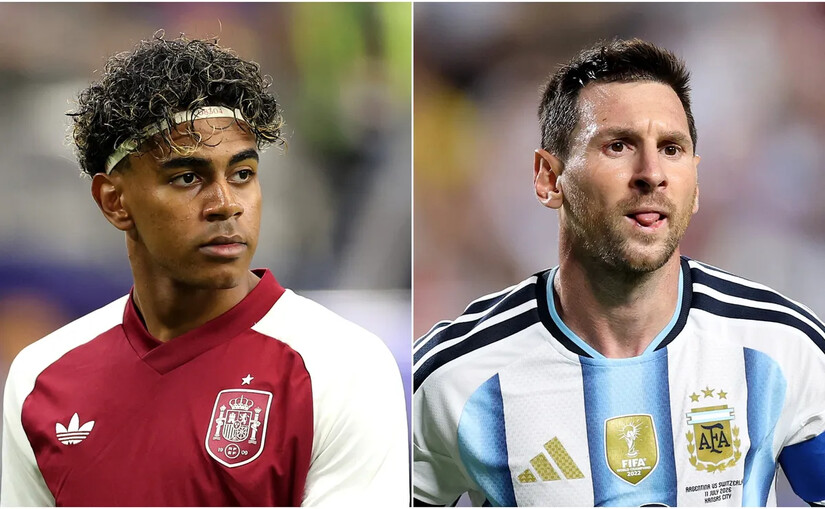
This exact characteristic will operate as a vital asset against Spain's possession structure. Argentina cannot assume they will dictate midfield metrics; they must prepare to execute deep spatial containment for lengthy periods, preserve structural focus, and strike selectively via quick vertical transitions linking Messi, Álvarez, and Lautaro Martínez. The high-stakes match presents the distinct possibility of Argentina becoming the initial program since Brazil in 1962 to successfully retain the men’s World Cup title, while Spain chases its second global star to mirror their 2010 milestone.
The final weekend launches with the tournament's premium individual scoring award entirely unresolved:
|
Player |
Nation |
Goals |
Assists |
Current Bracket Status |
|
Lionel Messi |
Argentina |
8 |
3 |
Advanced to World Cup Final |
|
Kylian Mbappé |
France |
8 |
1 |
Seeded in Third-Place Playoff |
|
Harry Kane |
England |
6 |
0 |
Seeded in Third-Place Playoff |
|
Jude Bellingham |
England |
6 |
0 |
Seeded in Third-Place Playoff |
Under official FIFA tiebreaking regulations, if two or more players complete the tournament level on total goals, the Golden Boot is awarded to the individual with the higher volume of documented assists. If a tie remains, the award is determined by the lower metric of minutes played on the pitch. Because Mbappé takes the field Saturday, a singular goal puts immense operational pressure on Messi ahead of Sunday's final block.
The ultimate match inside New York New Jersey Stadium will exert complete authority over the remaining individual awards. Messi remains the primary candidate for the Golden Ball based on his goals, key assists, and creative leadership during Argentina's title defense. Rodri presents Spain’s strongest institutional claim, as his unmatched spatial manipulation and ability to dictate match tempo have operated as the absolute foundation of La Roja's flawless run.
Spain keeper Unai Simón enters the final stretch as the definitive frontrunner for the Golden Glove after commanding a backline that has conceded a microscopic single goal all summer. Conversely, Argentina's Emiliano Martínez remains a massive strategic alternative due to his historic track record in high-stress elimination frames and his lethal psychological value should the Final drift into a penalty shootout.
The global profile of the Final increased significantly Thursday as the White House formally confirmed that President Donald Trump will attend Sunday’s championship match. FIFA President Gianni Infantino verified that Trump will join him on the presentation stage during the post-match ceremony to distribute the World Cup Trophy, continuing the long-standing international tradition of heads of state participating in major global sports presentations. The announcement introduces an immense security and logistical matrix, requiring federal agencies and local transportation authorities to coordinate presidential movement without fracturing team aviation logs or supporter access.
Concurrently, FIFA finalized its entertainment scheduling for Sunday, mapping out the competition’s first-ever dedicated halftime performance showcase. Curated in direct partnership with Global Citizen, the musical production features a star-studded lineup including Madonna, Shakira, BTS, Justin Bieber, Burna Boy, and Gustavo Dudamel conducting the PS22 Chorus. The entertainment package is structurally linked to the Global Citizen Education Fund to expand international children's sports programs, positioning the broadcast as a massive global cultural event that extends well beyond the 90-minute soccer match.
The baseline characteristics of the first official rest day clarified several critical realities moving into the final weekend:
The final operational pause draws to a rapid conclusion as media compounds and stadium facilities lock into full championship alignment. By Sunday evening, the multi-layered 48-team tournament layout will contract down to a single global champion, archiving a historic summer of international soccer.
MinneapoliMedia | Community. Culture. Civic Life.


Overcast, with a high of 86 and low of 67 degrees. Moderate rain for the morning, overcast in the afternoon,