Image




The conflict centers on funding originally approved by the Minnesota Legislature in 2023 for repair and reconstruction work associated with the Rum River Dam in Anoka. During the 2025 legislative process, however, lawmakers redirected the money to support two separate projects in the City of Anoka: a pedestrian bridge over Highway 169 and a planned riverfront whitewater recreation and park development project.
Anoka County subsequently filed suit seeking to block the transfer of the funds, arguing that the money was originally appropriated to address deteriorating public infrastructure tied to the Rum River Dam system and should not be redirected toward recreational development projects.
According to court filings submitted this week, text messages exchanged between Rep. Stephenson and Anoka Mayor Erik Skogquist included Stephenson characterizing the funding diversion as “revenge for the jail fuckery,” language county officials argue demonstrates retaliatory political intent connected to a separate long-running dispute over the proposed Anoka County jail expansion project.
The lawsuit names the Minnesota Department of Transportation as the defendant because MnDOT would administer the transfer of funds authorized under the legislation. The county argues the reallocation violates constitutional protections governing local appropriations and improperly redirects county transportation-related revenue without county approval.
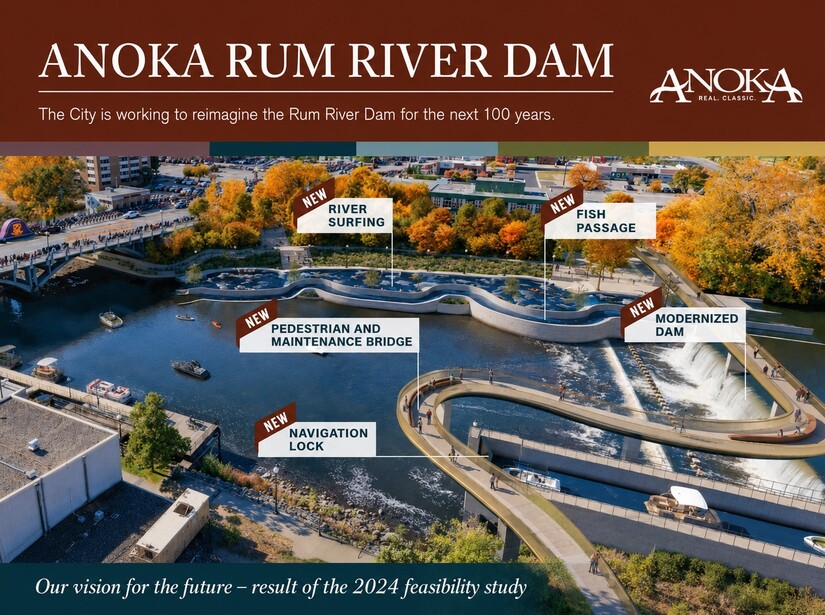
County officials contend the Rum River Dam represents critical infrastructure requiring urgent attention. In court filings, the county describes the structure as significantly deteriorated and argues that failure of the dam could create serious flooding, environmental, and public safety consequences affecting downstream communities and ecosystems.
The county further argues that the bridge and whitewater recreation projects do not meet the same level of public necessity as dam rehabilitation and instead represent economic development and recreational initiatives favored by city officials.
The proposed redevelopment project in downtown Anoka includes plans for a pedestrian crossing over Highway 169, expanded river access features, park improvements, and eventually a whitewater recreation attraction intended for kayaking, surfing, tubing, and paddle sports. Public discussions surrounding the broader project have projected future costs reaching tens of millions of dollars over multiple phases.
Court filings submitted by Anoka County sharply criticize the proposal, describing portions of the redevelopment concept as unnecessary from the county’s perspective. County officials argue the county has no operational need for an additional pedestrian crossing in the area and maintain that the Legislature improperly intervened in a localized political dispute.
The controversy has unfolded alongside longstanding tensions between county officials, the City of Anoka, and state leaders regarding the county jail project.
The Minnesota Department of Corrections previously ordered Anoka County to reduce jail overcrowding and address safety deficiencies within the existing jail facility. County leaders have pursued plans for expansion and redevelopment, while disputes emerged involving land acquisition, downtown development priorities, infrastructure impacts, and financing questions tied to the proposed jail project.
County attorneys now argue the newly disclosed text messages strengthen claims that the legislative funding shift was not solely based on infrastructure priorities or budget negotiations, but instead was influenced by frustrations surrounding the jail conflict.
Stephenson has publicly defended the legislative action, arguing that the projects received legislative review and support through the normal appropriations process. Supporters of the redevelopment initiative have argued the projects would generate economic activity, improve riverfront accessibility, and expand recreational opportunities within downtown Anoka.
Critics, however, argue that public safety infrastructure funding should not be redirected toward recreational or quality-of-life projects while unresolved structural concerns surrounding the dam remain.
The legal dispute now raises broader constitutional and legislative questions regarding the authority of the Legislature to amend prior appropriations after funds have already been designated for specific local infrastructure purposes.
Attorneys for Anoka County are seeking injunctive relief to prevent the transfer of the funds while the lawsuit proceeds. The court will ultimately determine whether the Legislature acted within its authority in redirecting the appropriation or whether the county possesses enforceable rights tied to the original 2023 funding authorization.
The case adds another layer to an increasingly contentious political and legal struggle in Anoka County involving infrastructure policy, local governance, state legislative authority, and competing visions for public investment priorities in the region.
MinneapoliMedia | Community. Culture. Civic Life.


Sunny, with a high of 86 and low of 49 degrees. Sunny in the morning, clear overnight.