73° and Overcast
Image
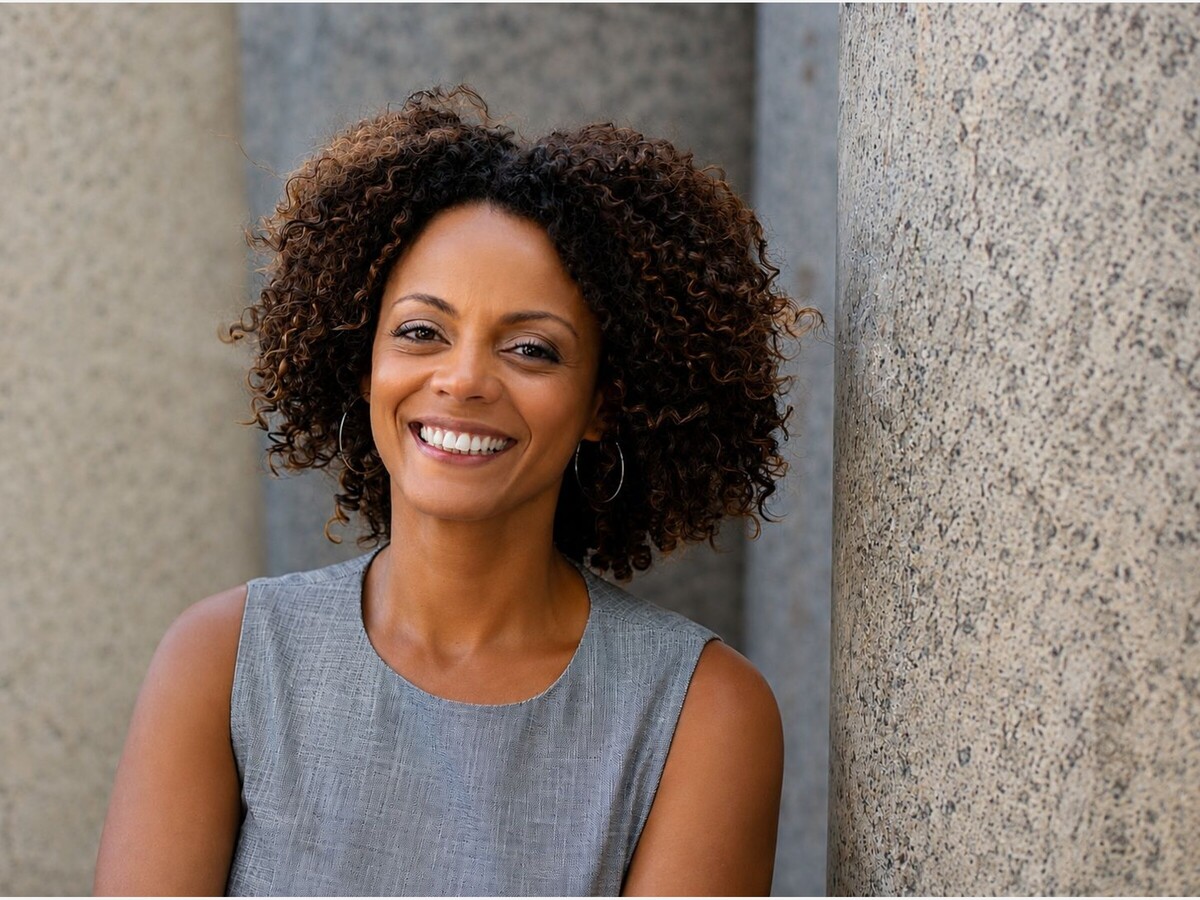



Before our formal interview began, Damaris Melo-Gyasi wanted to clarify one detail.
“Do you record these videos for later broadcasting, or is it just for you?” she asked.
I assured her the recording was for my internal notes, and that I would explicitly seek her permission before any future broadcast.
“Perfect,” she said, smiling. “Because I was like, my background is bad and my dog is here.”
The moment was brief, but it captured the essence of Melo-Gyasi. Even in a professional landscape often defined by curated personas, she arrives entirely as herself: direct, warm, practical, and unguarded.
When I greeted her with a casual “Obrigado,” she laughed and gently corrected my Portuguese pronunciation before teaching me a proper hello: “Oi.”
The exchange opened into a memory from my own life. I shared a story about living in Japan, where I used to kick a soccer ball around by myself until a couple of Brazilian friends, Cesar and Sergio, invited me into their circle and taught me the finer points of the game. That sense of being welcomed into an existing space became an unexpectedly fitting prologue for our conversation.
For Melo-Gyasi, buildings are never merely physical structures. They function as invitations, boundaries, systems, protections, exclusions, and, when executed with deep intentionality, profound acts of honor.
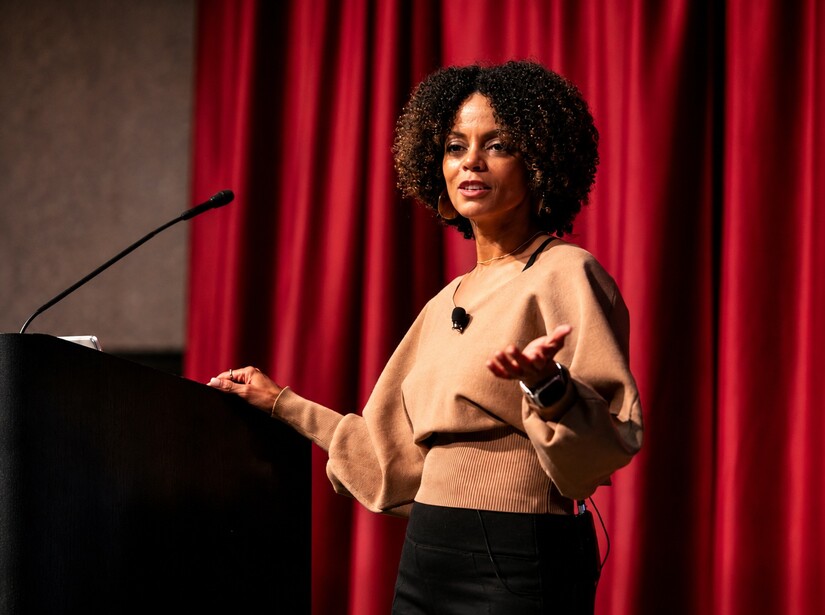
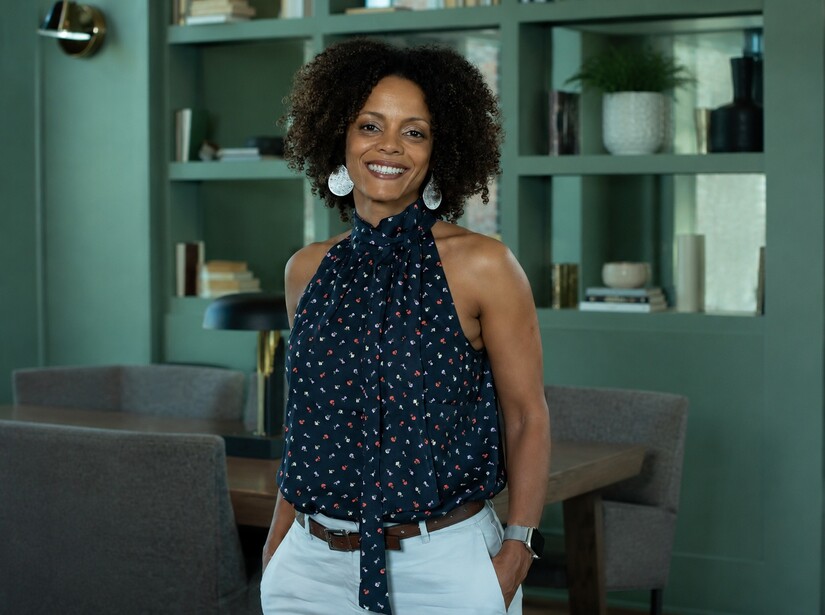
Melo-Gyasi, founder and principal architect of Design by Melo, originally joined MinneapoliMedia for The Power of Her, a series exploring the leadership and lived experiences of women building legacy in Minnesota. This second conversation, however, was carved out specifically for Builders of Minnesota, focusing on her community-centered design philosophy and the tangible civic impact of her firm's projects, such as Opportunity Crossing.
“Welcome back to Builders of Minnesota,” I told her.
“Thank you,” she said. “Thank you again.”
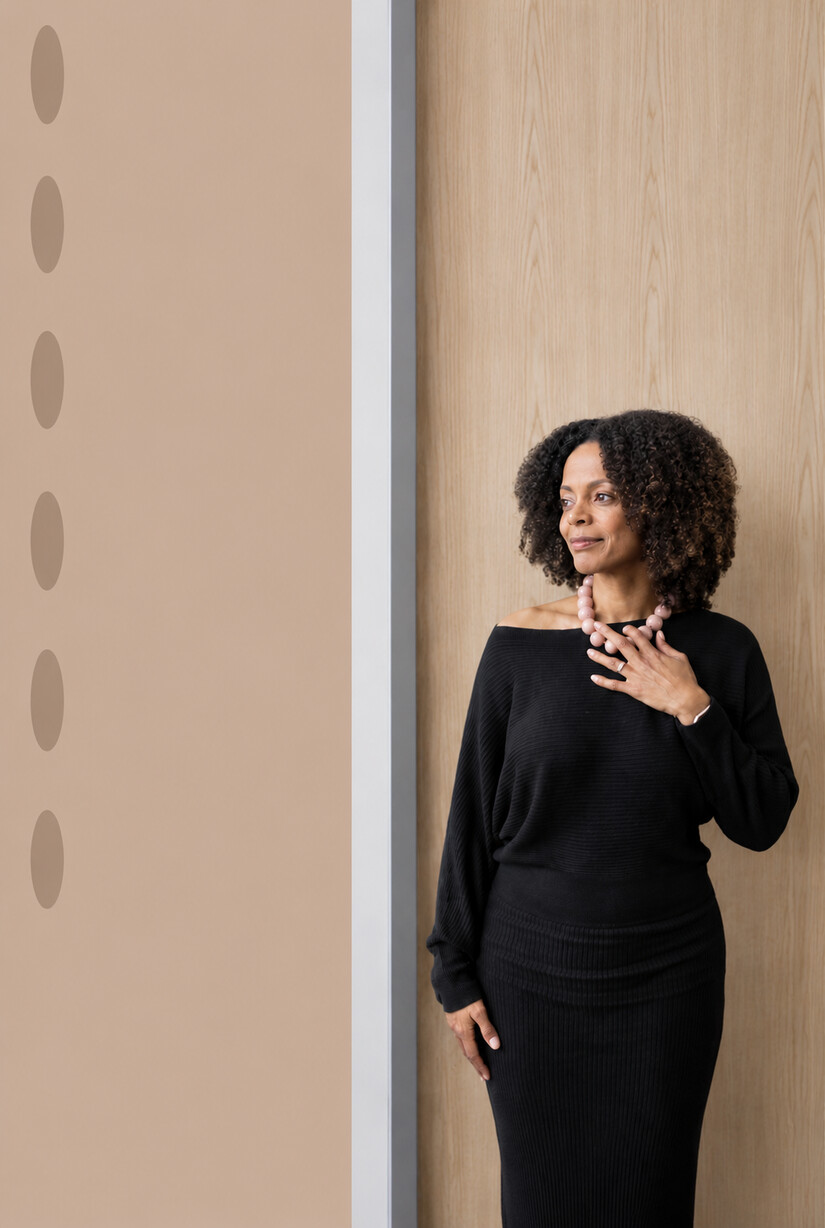
When you think about your work today, how do you personally define what it means to be a builder in Minnesota?
“I think a builder anywhere is someone who is shaping the built environment,” Melo-Gyasi said. “Whether you are designing or building, especially if you are designing, architects and landscape architects have a big role. The engineer, of course, is there. But I think architecture and landscape architecture are the surfaces that touch people. If I’m walking in a park, where there is green, what is not green, where there is hardscape or landscape, all of that interaction plays a role in how we feel and how we interact with space.”
In her view, the built environment begins speaking to people long before they step through a doorway, carrying an inherent agenda that is rarely neutral.
“Even if you think you are just doing something simple, like, ‘I’m just designing a building,’ your building is going to carry an agenda,” she noted. “Whether you are thinking about it or not, if you are not intentional about it, it might very well carry a bad agenda. I think it is our responsibility to be intentional and carry a good agenda and deliver a good message.”
While some architectural agendas are overtly defensive, such as the protective landscaping she once helped design for a military education facility in Little Falls, Minnesota, everyday civic architecture sends more subtle signals.
“If you design a space that is hidden in the corner, dark, and then there is another one that is nice and visible and nicely lit, you are telling people, ‘Come here, not there,’” she explained. “And sometimes you are telling these people, ‘No, you go there. You cannot come here.’ You are telling some people they can enjoy the nice, glamorous space, and others that they have to stay over there in the corner, behind the wall, with no natural light. All of those messages, we receive them. Sometimes designers do not believe or realize they are delivering a message. Some users also do not understand they are receiving the message. But it is there. We are absorbing it. We are reading it.”
For those unaware of this spatial friction, the psychological impact can be quietly damaging.
“If you are unaware of all this architectural force, all this social architecture, you might absorb that,” she warned. “And you might think and believe that you do not deserve that, that you are not worthy, that you do not know how to use beautiful.”
This dynamic frequently manifests in the institutional assumptions surrounding affordable housing. Melo-Gyasi recalled an instance where observers pointed to dents on a newly installed elevator mural as proof that low-income residents failed to respect beautiful environments.
“I said, wait a minute. People are moving in. The carts are hitting the walls,” she countered. “I lived in a luxury building. They had those padded blankets all over the elevator walls and the front elevator. Not affordable housing, mind you. Luxury living. Because the moving carts are hard to maneuver, you will damage the wall. If you know there are going to be thirty families moving in one week with carts, you should not put a painted mural on that wall without protecting it. For you to believe that the only reason those walls are broken or dented is because poor people are moving in, that is one of those assumptions people have about poor people: they don’t know how to take care of beautiful things. No, they won’t break it. It has to be understood by us so we can do it right.”


You have said that buildings should not simply house people, but should honor them. What does that idea mean to you in practical terms as an architect?
“I’ll give you a very practical example,” Melo-Gyasi said. “No gray area.”
She pointed directly to standard affordable housing floor plans, where financial pressures to maximize units per floor often result in deeply compromised living conditions.
“When people are doing affordable housing, very often they try to deepen the floor plates,” she explained. “Then there are more bedrooms in the unit, but one or two of those bedrooms are not on an exterior wall, which means they don’t have windows. The first time I saw a floor plan like that, I was like, what? This has no window. I assumed the building code would not allow it. I also assumed the funders for affordable housing would not allow it. The building code allows it. The funders’ design guidelines allow it.”
For Melo-Gyasi, this layout represents a fundamental compromise of human dignity, one that would never be tolerated in market-rate developments.
“Yes, you make 50 percent AMI [Area Median Income]. You make 30 percent AMI. You need housing,” she said. “But I am not going to pack you in a corner with a bedroom without a window. I will not design for those developers. Would you do this for your market-rate housing? They deserve better. When you tell me you can put a poor person in a three-bedroom unit where only one bedroom has windows and the other ones don’t, and the funders allow it, I don’t understand that.”
The distinction is particularly vital given the lifestyle realities of the residents.
“You and I, if we had a bedroom without a window, we might be okay because we can go outside and hang out on a patio,” she noted. “We can go meet a friend, have some overpriced salad, and relax. The people we are designing for, they have two or three jobs. They come home. Home is everything they have for rest. They don’t have any other respite. Their homes need to honor them.”
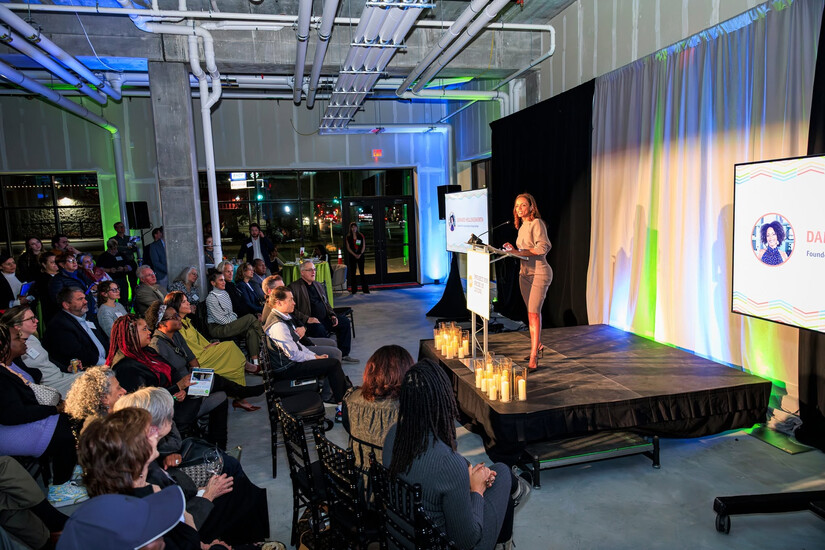
You often speak about designing with community, not for community. What does that process actually look like when a project begins?
“Very messy,” Melo-Gyasi said bluntly. “Very stressful. Difficult.”
Managing dozens of competing priorities, financial boundaries, and strong opinions turns the design process into an exercise in deep listening and constant iteration.
“We have all these conversations, and they are not in line,” she said. “It is messy. Then we have to come back, translate, understand, and confirm: this is what I understood. There is going to be 80 percent right and 20 percent wrong, and you fix it. By the time you fix it, everybody is happy enough. But nobody is 100 percent happy. There is no 100 percent correct design with the community. Nobody is going to agree with everything.”
Embracing community-driven architecture requires letting go of the pristine, unchallenged singular vision.
“When you are committing to design with community, you have to understand you are committing to do less than perfect in that sense,” she observed. “But it is still better than only two people being happy and everybody else being unhappy. It is better to have 80 percent of something good than 100 percent of something bad. It would be easy for me to say, ‘You are the developer, let’s talk, and you tell me what you want.’ I can design for one person. Easy. When I am with the community, it is never going to be that. Not until people see their spaces and they feel like, yes, I do miss having that chandelier, but I love it. It became something great. Greater than one person’s vision, because it is communal. My team gets stressed. I get stressed. Everybody gets stressed. But I think it is worth it.”
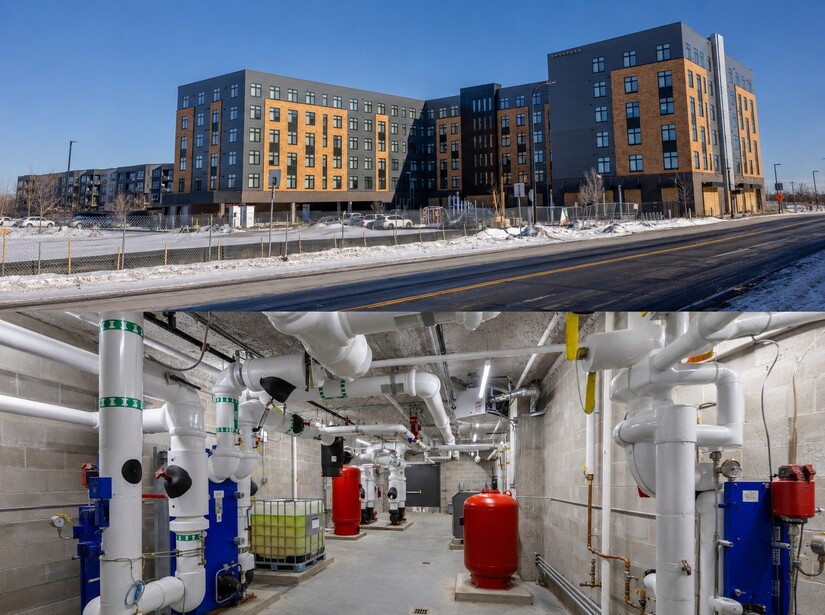
Opportunity Crossing has become a landmark project for your firm. Beyond the structural milestone, what did that development represent to you?
“Oh, it is a cornerstone for me,” Melo-Gyasi said. “There was a before Opportunity Crossing and an after Opportunity Crossing. We were very small, just me and one contractor. Once we got that project, we became visible. Everybody started talking about it. It made my business better and stronger. It legitimized me, not only as an architect and community architect, but it legalized my firm. That building is a beauty to many. It is a home to many and a love letter to many. It was thought about, the closet size, all of that stuff. To me, it was life-changing.”
During the community engagement process for that project, what specific insights from residents shifted your perspective?
“One of the things that stood out for me most was mothers mostly talking about safety,” she recalled.
When pushed to define what physical features would make them feel secure, the mothers repeatedly bypassed architectural solutions entirely.
“When was the last time you felt like your children were safe?” Melo-Gyasi asked them.
“It was never a building,” she realized. “It was always about an environment, or the people in the environment. As architects, we are the gods, right? We create what you need. But what they needed, what they valued most, was something for their children that a building cannot provide. It is the people inhabiting it, the people managing it, the people using the space. If they are hostile, if they are policing, if they are not inviting and comforting to your children, I don’t care how beautiful those four walls are. I can design the most beautiful building, but if the developers, the managers, are not thinking about people and children, my whole talent can go to waste. The right partnership is so important.”
Can you walk me through a specific moment where community feedback directly altered the structural programming of a development?
“Yes,” Melo-Gyasi said, pointing back to the commercial strategy for Opportunity Crossing. While the ground floor was initially slated for standard commercial rentals, local residents fundamentally challenged the premise of the conversation.
“When we were talking to the community toward the end of the engagement, a lot of questions were being asked,” she said. “Affordable housing is a very temporary fix for a very big problem. If you are providing a home for a family that makes $35,000 a year, affordable housing is a temporary building. The problem is income. There is only so much you can do about affordability for homes if you are making $35,000 a year. You have to be introduced to a program that helps you grow, which is what PPL [Project for Pride in Living] does well. But the community pushed further: ‘Why are we never talking about ownership?’”
Because institutional municipal funding mechanisms for affordable condo development are incredibly limited, the design team had to find an alternative avenue for wealth creation.
“We completely changed the design program to make sure that the corner had Wells Fargo, community space, and then all commercial condos for local entrepreneurs,” she explained. “They got support to buy their own condos. That was 100 percent from the community. The commercial condos to be owned by entrepreneurs of color in the neighborhood, and public art, were two things that happened only because of community engagement.”
Navigating the inevitable budget constraints that follow such complex community demands requires an explicit hierarchy of values. When rising costs forced the project to cut features, Melo-Gyasi and development partner PPL chose to preserve communal utility over luxury amenities.
“We lost amenities. We lost the rooftop fire pit that we had designed,” she said. “But we refused to lose the park or the community room. Having that park with the playground so parents can see their kids from the windows, having that community room where they can gather and have birthday parties, those things were higher in the hierarchy than the rooftop. The rooftop is less important for the quality of life than the park and the community room. You have to give something up; let’s give up the right thing. PPL did that. They went after more funding. They had many sources in their project. Most people have maybe ten sources max. They had many because they said, ‘I am not going to take anything out. I am going to go after more money instead.’ It is very hard. It is not easy to navigate that.”
At what point did you begin viewing architecture as a broader socioeconomic ecosystem rather than a collection of individual buildings?
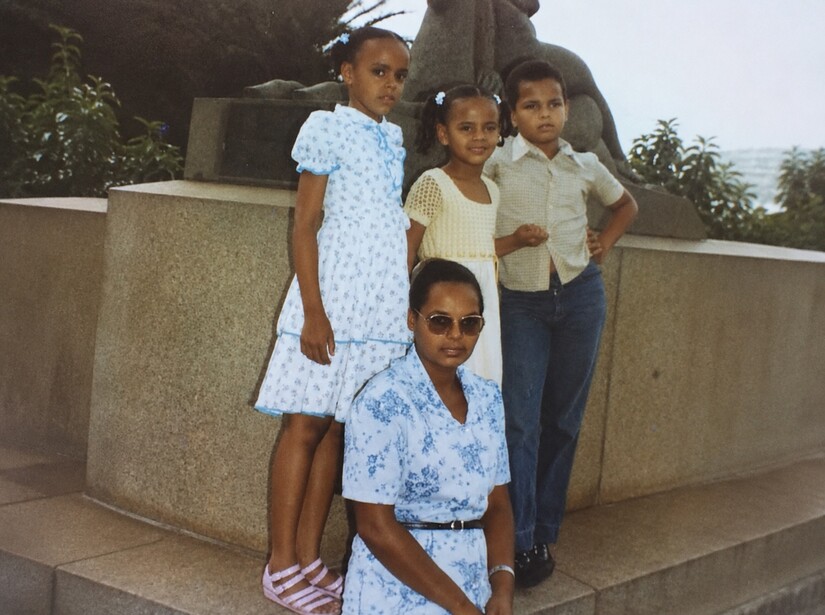
“It was early,” Melo-Gyasi said, tracing the realization back to a college history professor lecturing on classical civilizations. “That is when I had my moment. I thought, wow, this is huge. The way cities are designed defines access, lack of access, safety, and the absence of safety. Even though it may look like the result of something random, people were being taught to be what they were. This architectural thing, this visual design thing, is a big job. It is an amazing tool of life-changing or quality-of-life providing. But it is only serving very few. And the thing that bothered me the most is that it often serves the ones that have already been served, and continues to not serve, or to do a disservice to folks who have always been on the other end of it.”
This imbalance created an internal vocational crisis during her early career.
“The first job is in a big company that does rich buildings for rich people,” she noted. It wasn't until she heard a sermon on vocation that she resolved to realign her practice. “Your calling is the thing that you do even if nobody pays you. How can my calling serve them only and not them? It was not until I worked at Thor and later started my own business that I accepted, okay, this is my calling because I can serve here, but I can also serve there. And that is what I try to do.”
How do the concepts of visibility and representation practically dictate your methods when engaging with highly distinct demographics?
“It depends on who you are designing for,” Melo-Gyasi said, emphasizing that cultural competence requires humility and an awareness of one's own limitations. When designing youth centers in Minneapolis, St. Paul, and Brooklyn Park, she quickly realized her positionality as an adult professional created a barrier.
“They look at me as a Black woman in power. They kind of shrink. They are not used to it,” she explained. “I need them to be talkative. I need them to share. I need them to joke around. I was too formal for them. So we partner with youth leaders; they are right there doing the work with them, so they know them. I would sit in the corner, and they would be joking with the counselor and making fun of each other. That is what I needed. I needed to be in that comfort so I could understand what they needed and what their vision was. The first thing to do when I want to deliver ownership and representation is to know how to access that information. I might not be the best person for it. I am Black just like they are, but that does not mean we are vibing.”
Conversely, she found immediate alignment when interviewing mothers or working with local faith leaders. For communities outside her immediate lived experience, structural functionality must be deliberately cross-referenced with daily operational realities. She cited her work with Minnesota's Somali and Muslim communities as an example.
“When we are designing for communities, including Somali communities, you have to be aware that they need a foot-washing station,” she said. “They pray, and they need to have the ability to wash their feet. If I don’t do my foot-washing station, what is going to happen? They are going to wash their feet. They are going to use the counter, and the counter might be trashed. So instead of saying, ‘I don’t design for Muslims, you figure it out,’ how about we all talk operations? What spaces would be better for their practice? If I have a wellness room, and the bathroom is next to it, it should not be in the bathroom itself, because that is not honoring their practice. A pre-entry space to the bathroom might provide a clean, respectful, functional location. It is not that hard. It depends on how you, the developer, the building manager, are open or not to differences, and to people who live life differently.”
What structural shifts do you hope to see within the architectural profession to foster this level of inclusivity?
“I wish there was more access than we have now, especially for designers who have a diverse background,” Melo-Gyasi said. “The way I design, the way I think about work, is because of the way I grew up. Most architects in this country are white, middle-class kids. They don’t know any better, I would say. They design the same way it has been designed for centuries because they do not know anything outside of it. The vast majority of architects are very monolithic. It is very red-brick, rich grandpa. It is very elite. It is very expensive to become an architect. Our profession doesn’t pay well enough right away, or ever. I wish we had a profession that was more welcoming to diverse communities, so that the voices of designers, planners, architects, CEOs of firms, have a sense of real life, or at least a comprehensive understanding of what really needs to be designed for, versus their little, limited, bougie, perfect, privileged life.”
When you look at the body of work you are establishing across the region, what do you want your architectural legacy to stand for?

“Quality design, no matter for what or for whom,” she stated. “I feel like buildings cannot be monolithic. They cannot be one size fits all. I cannot repeat that product here and there. I don’t want people to say, ‘Oh, it must be Damaris’s building because it has that thing.’ No. I want it to be a building that clearly reflects the people I talked to. The building should reflect what those people told me about the building designed for them. I don’t want us to have a brand like, ‘Oh, that looks like us.’ I want it to be unique to them and very personal to them, but not to me.”
When asked about other practitioners driving meaningful, community-collaborative work across the state, she pointed to firms and organizations like 4RM+ULA, Juxtaposition Arts, TEN x TEN, LSE Architects, CommonBond, Beacon, and One Roof. “Those are folks who are really working with the community, not just to support the community, but with the community,” she noted.
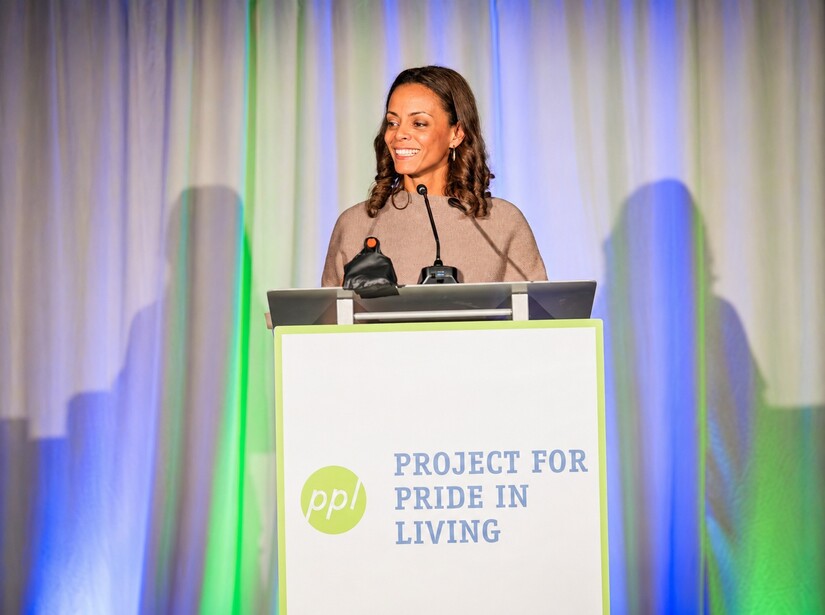
As our conversation drew to a close, I thanked Melo-Gyasi and congratulated her on her newly published book, promising to reconvene for a dedicated feature in our Community Interview Series. When I asked where I could pick up a copy locally in Minneapolis, she pointed me toward a celebrated neighborhood institution.
“You know Black Garnet Books?” she asked.
“Yes,” I said.
“They have it there as well,” she said. “You can buy it on Amazon, but I would rather you buy it there so they can support local businesses.”
Then, she delivered the detail that brought our entire dialogue into sharp focus.
“By the way, I designed Black Garnet Books,” she added. “So when you go there to get the book, you are going to be buying a book by me in a space designed by me. So there will be a double me.”
It was a flawless punctuation mark to an exchange centered on the reality that spaces always hold stories. The interview ended precisely as it had begun: warm, unpretentious, and driven by the conviction that architecture is never merely an arrangement of walls, windows, and capital.
It is a declaration of who is welcomed, who is valued, and who is granted the fundamental dignity of knowing a space was built with them entirely in mind. Across Minnesota, that vision is no longer just a philosophy; it is actively being built.
MinneapoliMedia | Community. Culture. Civic Life.



Sunny, with a high of 82 and low of 53 degrees. Sunny in the morning, clear overnight.