72° and Clear
Image




June 17, 2026
The initial chapter of the largest FIFA World Cup in history concluded Wednesday with a fitting reminder of why the tournament remains the most unpredictable event in international sport. Seven days after the Mexican national team initiated this multi continental event at the Estadio Azteca, the final four teams waiting to start their campaigns took the field as Groups K and L entered the competitive grid. By the conclusion of the evening's final fixtures, every one of the tournament's 48 nations had completed at least one full match, bringing the opening round of World Cup 2026 to its functional end.
The final block of first round fixtures delivered a comprehensive cross section of the tactical trends that have come to define this opening week. There was upset, redemption, late drama, and confirmation. Portugal became the latest heavyweight to discover that reputation alone guarantees nothing at a World Cup. England opened its campaign with one of the strongest attacking performances of the tournament thus far. Ghana required a stoppage time breakthrough to overcome Panama, while Colombia survived a spirited challenge from World Cup debutants Uzbekistan before closing the evening atop Group K.
If the opening sequence of this tournament has revealed anything, it is that the expanded format has not diminished competitiveness. If anything, it has amplified it. Historical pedigree and baseline reputations offer zero security on the pitch. Multiple traditional powers have already surrendered valuable points to highly organized underdogs, confirming that the technical and structural gap between football's established global hierarchy and emerging confederation selections has narrowed significantly. Yet Day 7 also reinforced an alternative reality: when elite operations discover their internal mechanical rhythm, they retain the sheer athletic capability to completely dictate terms.
|
Team |
Played |
Won |
Drawn |
Lost |
GF |
GA |
GD |
Points |
|
Colombia |
1 |
1 |
0 |
0 |
3 |
1 |
+2 |
3 |
|
Portugal |
1 |
0 |
1 |
0 |
1 |
1 |
0 |
1 |
|
DR Congo |
1 |
0 |
1 |
0 |
1 |
1 |
0 |
1 |
|
Uzbekistan |
1 |
0 |
0 |
1 |
1 |
3 |
-2 |
0 |
|
Team |
Played |
Won |
Drawn |
Lost |
GF |
GA |
GD |
Points |
|
England |
1 |
1 |
0 |
0 |
4 |
2 |
+2 |
3 |
|
Ghana |
1 |
1 |
0 |
0 |
1 |
0 |
+1 |
3 |
|
Panama |
1 |
0 |
0 |
1 |
0 |
1 |
-1 |
0 |
|
Croatia |
1 |
0 |
0 |
1 |
2 |
4 |
-2 |
0 |
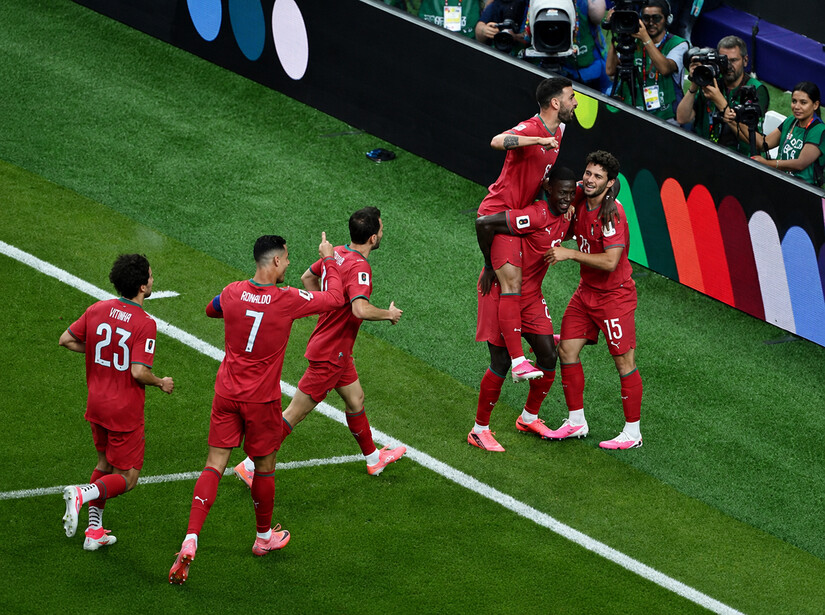
The day began in Houston with what many expected to be a routine victory for Portugal. Instead, it produced one of the biggest surprises of the tournament's opening round. Portugal entered the match carrying substantial expectations. Led by Cristiano Ronaldo, appearing in a record sixth FIFA World Cup, Portugal arrived with legitimate aspirations of competing for the championship. Against a DR Congo side making its first World Cup appearance in decades, many observers anticipated a comfortable afternoon for Roberto Martínez's squad.
Initially, the script appeared to be unfolding exactly as expected. Only six minutes had elapsed when Pedro Neto delivered a dangerous ball into the Congolese penalty area. João Neves timed his movement perfectly and finished confidently with a powerful bullet header into the corner, giving Portugal an early 1-0 advantage. The early breakthrough reinforced the sense that Portugal would completely control proceedings, and for much of the opening half, they did. Portugal possessed the ball for an astonishing 79 percent of the first half, completing over 300 passes before the interval.
Vitinha dictated the tempo in midfield while Bruno Fernandes searched for opportunities between the lines. Nuno Mendes consistently pushed forward from the left flank, creating additional pressure on the Congolese defense. Yet for all their territorial superiority, Portugal failed to create separation. Ronaldo found himself completely isolated by the Congolese central pairing of Chancel Mbemba and Axel Tuanzebe, logging only 29 touches over the full 90 minutes and failing to convert two massive opportunities inside the penalty box from point blank range.
As the first half progressed, DR Congo grew increasingly comfortable. Deployed in a deeply compact 5-3-2 low block by manager Sébastien Desabre, they choked out the interior lines and began finding moments to advance the ball with confidence. Midfielder Edo Kayembe provided stability in possession, while forward Yoane Wissa became increasingly dangerous whenever opportunities emerged on the counterattack. Then came the moment that changed the match. Deep into first half stoppage time, Arthur Masuaku delivered a superb cross to the back post. Wissa rose above Portugal's defense and powered a header into the net in the fifth minute of added time.
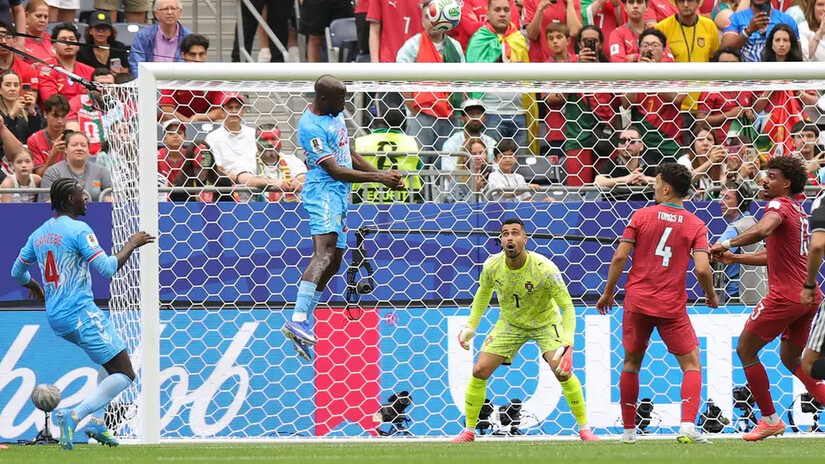
The equalizer stunned the Portuguese supporters and transformed the complexion of the contest. The second half became a tense, highly emotional test of patience and execution. Portugal pushed forward relentlessly, and João Cancelo thought he had restored the lead with a spectacular bicycle kick in the 55th minute, but a definitive offside review via VAR promptly chalked the goal off. DR Congo nearly claimed an outright winner when Cédric Bakambu smashed a low drive against the post.
By the closing stages, Portugal's urgency became evident in its discipline, as several late yellow cards reflected a growing sense of desperation. When the final whistle sounded, the result felt less like a draw and more like a victory for DR Congo, representing a landmark milestone and immediately complicating the outlook in Group K.
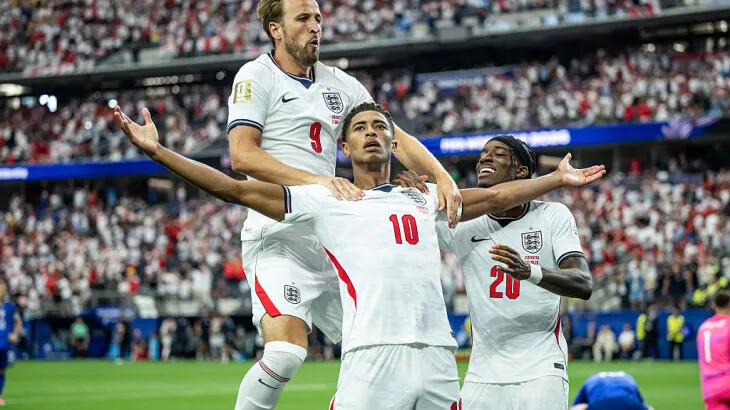
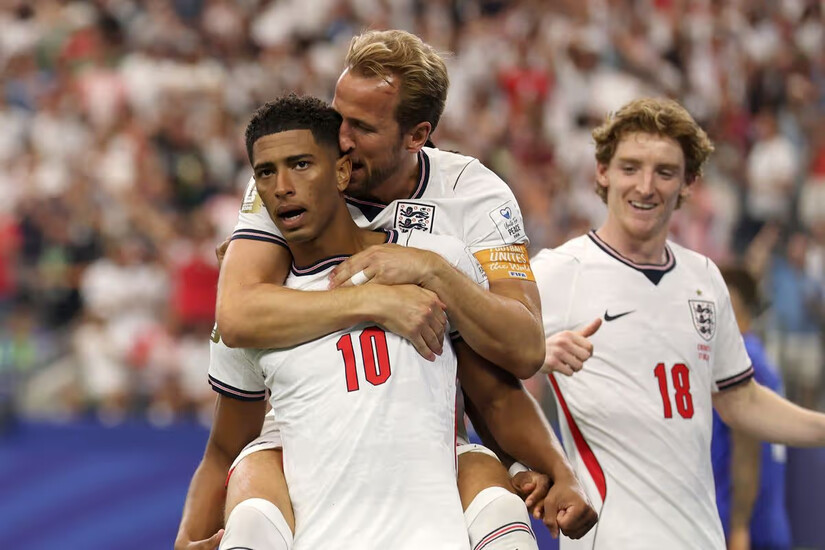
If Portugal stumbled under expectation, England embraced it. The day's second match brought together two nations whose recent World Cup histories remain closely intertwined. England and Croatia last met on football's biggest stage in the semifinal of the 2018 World Cup, a match Croatia won to reach the final. Wednesday's encounter at Dallas Stadium in Arlington offered England an opportunity to begin a new chapter, and the Three Lions seized it.
What followed was one of the tournament's most entertaining matches, delivered as an absolute masterclass in high tempo attacking execution. Thomas Tuchel deployed an aggressive 4-2-3-1 matrix that immediately sought to bypass Croatia's legendary midfield trio of Luka Modrić, Mateo Kovačić, and Marcelo Brozović. The pace of Bukayo Saka, the creativity of Jude Bellingham, and the movement of Phil Foden repeatedly stretched Croatia's defensive structure.
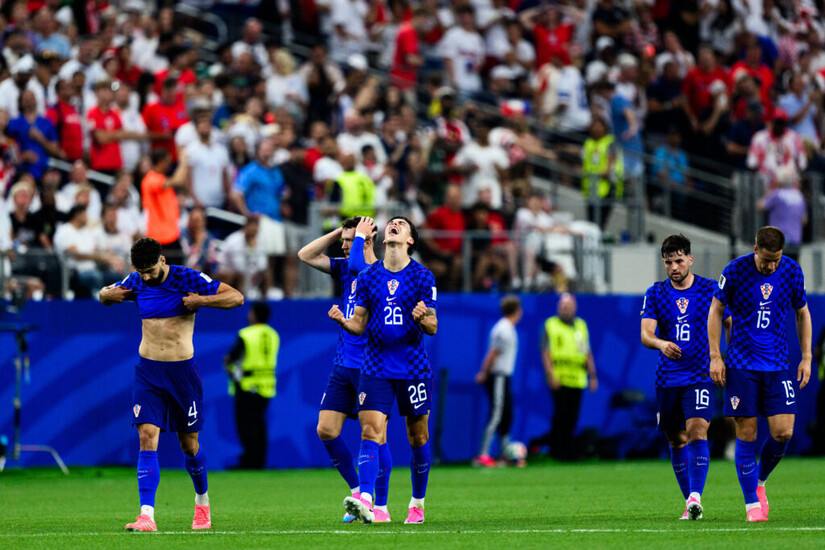
The technical breakthrough arrived in the 12th minute when Bellingham drew an interior foul inside the box. Captain Harry Kane stepped to the spot, converting the penalty kick past Dominik Livaković to make it 1-0. Croatia responded with classic technical composure, matching England pass for pass and finding a stunning equalizer in the 36th minute when young playmaker Martin Baturina drove a spectacular effort past Jordan Pickford. The Three Lions reclaimed the advantage in the 42nd minute when Kane showcased brilliant movement to convert his second goal of the half, but Croatia struck back again deep into injury time as Petar Musa scored a volley at 45+5 minutes to leave the match tied 2-2 at the interval.
The second half belonged entirely to England's superior athletic capacity. Right from the whistle, Jude Bellingham took control of the central channel, scoring an incredible goal in the 47th minute to make it 3-2. England's rapid transitions completely exposed Croatia's aging defensive line. Kane produced a true captain's performance, moving level with Gary Lineker as England's all time leading World Cup goalscorer.
Tuhel managed his squad depth flawlessly, introducing Bukayo Saka and Marcus Rashford in the 71st minute to sustain the high intensity press. The strategic maneuvers paid absolute dividends in the 85th minute: Saka cut inside from the right flank, slipping a beautiful pass to Rashford, who calmly bypassed Livaković to seal the comprehensive 4-2 victory. Croatia fought bravely until the final whistle, but England's relentless physical transitions established them as one of the premier contenders of the tournament's opening week.
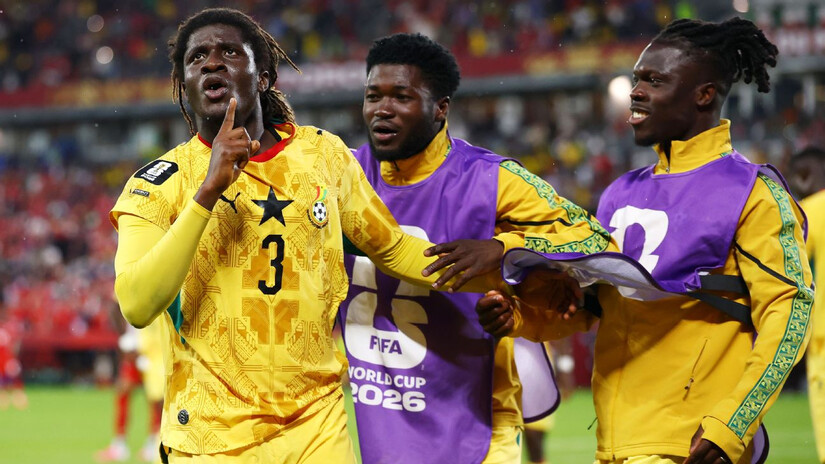
As impressive as England's victory was, the most dramatic finish of the day arrived later in Toronto. Ghana and Panama entered their Group L encounter seeking an opening result that could dramatically influence qualification hopes. What followed was a physical, tactical battle at BMO Field that appeared destined to finish scoreless.
Panama arrived with a clear plan under their defensive structure: defend compactly, limit horizontal space, and force Ghana into difficult choices through tight corridors. For long stretches of the first and second half, the strategy worked with high efficiency. The Panamanians remained highly organized and disciplined, frustrating Ghana's attackers and preventing clean interior service into the penalty area. The contest frequently unfolded as a grueling midfield war of attrition, where challenges became increasingly physical and possession changed hands frequently.
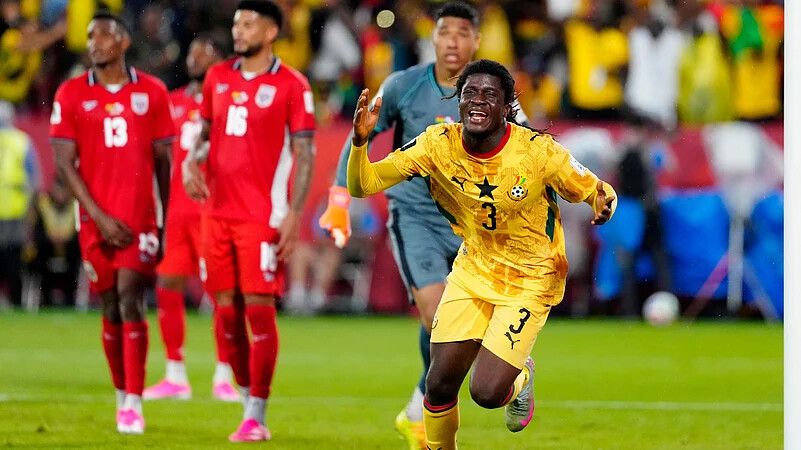
Ghana generated several promising moments after halftime. Jonas Adjetey nearly broke the deadlock with a powerful header, only for Panama goalkeeper Orlando Mosquera to produce an outstanding save. The stop preserved the stalemate and reinforced Panama's growing belief that a valuable point was within reach. As the match entered its final minutes, Panama increasingly focused on preserving the draw, dropping their defensive line deeper and concentrating on disrupting Ghana's rhythm. Every clearance and stoppage became valuable.
For nearly ninety five minutes, the strategy worked. Then came the decisive moment. In the fifth minute of stoppage time, Otto Addo's late tactical substitutions altered the absolute trajectory of the match. Injecting vertical pace into the half spaces, the Black Stars unpicked Panama's exhausted defensive ring. Caleb Yirenkyi found himself in space and delivered a composed finish that sent Ghanaian supporters into absolute celebration. The late blow transformed a shared point into three crucial points for Ghana, moving them level with England atop Group L.
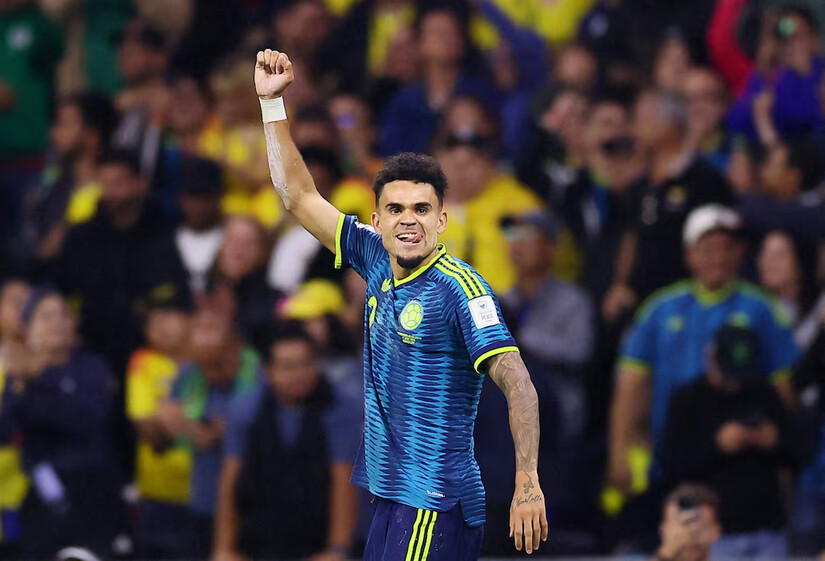
The final match of Day 7 carried the additional significance of introducing Uzbekistan to the World Cup stage. Making its tournament debut at the historic Estadio Azteca, Uzbekistan entered against a Colombian side widely viewed as one of South America's strongest, most balanced teams. Directed by Fabio Cannavaro, the newcomers showed little sign of intimidation, executing an aggressive mid block press that successfully avoided the nervous start that often affects tournament debutants.
Colombia, operating under Néstor Lorenzo, remained patient within a rigid 4-2-3-1 setup engineered to exhaust Uzbekistan's lateral shifting capacity. The South Americans gradually assumed full command of the half spaces, using short combination pass sequences to pin the debutants deep inside their own defensive third. The quantitative data from Sofascore highlighted this supremacy, with Colombia ultimately recording 61 percent possession and outshooting their opposition 15 to 8.
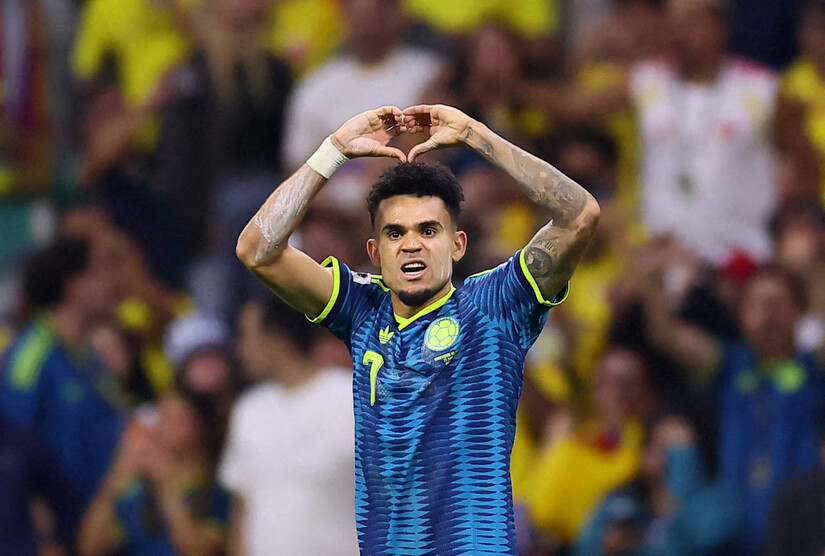
Colombia eventually found the structural breakthrough shortly before halftime. In the 40th minute, Jefferson Lerma executed a perfectly weighted vertical ball over the central defenders, targeting an overlapping diagonal run from right back Daniel Muñoz. Muñoz timed his interior entry perfectly, smashing a sensational one touch volley past goalkeeper Utkir Yusupov to secure a deserved lead.

Yet Uzbekistan's response after the break became one of the defining moments of the day. Their offensive lines advanced with higher intensity, hitting the woodwork twice. In the 60th minute, Eldor Shomurodov launched a powerful drive that goalkeeper Camilo Vargas failed to parry cleanly, allowing Abbosbek Fayzullaev to react quickest and head home the rebound, registering Uzbekistan's first ever World Cup goal and sparking celebrations throughout the stadium.
Colombia responded like an experienced tournament side, increasing their attacking intensity to deny uncertainty any room to develop. Just five minutes after the equalizer, in the 65th minute, Gustavo Puerta intercepted a loose throw in near the halfway line, initiating a rapid transitional counter attack. Puerta carried the ball vertically before squaring a pass to Luis Díaz on the edge of the area. Díaz cut inside with trademark precision, unleashing a powerful finish into the far corner to restore Colombia's lead and simultaneously register his first World Cup goal.
The strike shifted momentum permanently. Uzbekistan continued to compete bravely, but Colombia's superior depth gradually became evident as spaces opened behind the defense. Deep into stoppage time, at 90+9 minutes, Jáminton Campaz exploited one of those openings and scored Colombia's third goal, sealing a 3-1 victory and first place in Group K.
With Wednesday's matches complete, every nation participating in World Cup 2026 has now played its opening fixture. This milestone provides sports desks with their first true structural look at the international landscape, separating tactical reality from pre tournament projection. Several established powers have looked every bit like contenders. Argentina, France, England, Germany, and Colombia all opened with convincing victories driven by their attacking stars. Harry Kane's brace placed him alongside England's greatest World Cup scorers, while Luis Díaz delivered a decisive moment when Colombia required it most.
Concurrently, the architectural objective of the 48 team expansion has been completely validated by the performance of the emerging nations. The opening week has shown that highly disciplined low defensive ring structures, combined with modern sports science and rapid transitional pace, can nullify wide technical gaps. Emerging nations such as DR Congo, Cape Verde, Uzbekistan, Jordan, and New Zealand have demonstrated that qualification alone is no longer the ceiling of their ambitions. Cape Verde's historic clean sheet against Spain, DR Congo's defiance against Portugal, New Zealand's dramatic stand against Iran, and Bosnia's point against Canada all serve notice that historical reputations offer zero insulation on the world stage.
Most importantly, the opening week has established genuine uncertainty throughout the competition. Some contenders have strengthened their credentials, while others have exposed vulnerabilities. None have secured anything beyond a promising start. The first 48 matches are complete, and every team has now introduced itself to the world. Beginning tomorrow, the tournament shifts into a high stakes phase where tactical errors become immediately fatal. For the opening round victors, the upcoming schedule represents an immediate opportunity to secure mathematical passage to the knockout stages. For the heavyweights who stumbled, the next 90 minutes will transform into an exhausting, high pressure battle for absolute survival. The introductory phase is officially over, the race for the knockout rounds has officially begun.
MinneapoliMedia | Community. Culture. Civic Life.



Sunny, with a high of 95 and low of 70 degrees. Sunny during the morning, partly cloudy during the afternoon and evening, clear overnight.