72° and Clear
Image




Eight days into the largest FIFA World Cup ever staged, the tournament produced its first confirmed knockout round qualifier. It also delivered the most dominant performance by a host nation thus far, a dramatic comeback that kept qualification hopes alive, and a stark reminder that discipline determines outcomes at the highest level of international football.
Thursday's four matches carried considerably more weight than the opening round encounters that preceded them. The introductions were officially over, every team had played once, and the consequences of victory and defeat were becoming increasingly visible in the group tables. By the end of the night, Mexico became the first nation to mathematically secure passage into the Round of 32. Canada produced the largest victory of the tournament, earning the first men's World Cup win in Canadian history. Switzerland transformed Group B with an emphatic victory over Bosnia and Herzegovina, while South Africa rescued a vital point against Czechia in Atlanta.
The day also reinforced several tactical themes that have emerged throughout the first week of World Cup 2026. Defensive mistakes continue to be punished immediately, red cards remain devastating in a tournament setting, home support has become a genuine competitive advantage, and momentum is beginning to dictate terms. The tournament has entered a different phase. The pressure is no longer theoretical, it is now reflected directly in the standings.
|
Team |
Played |
Won |
Drawn |
Lost |
GF |
GA |
GD |
Points |
|
Mexico |
2 |
2 |
0 |
0 |
3 |
0 |
+3 |
6 |
|
South Korea |
2 |
1 |
0 |
1 |
2 |
2 |
0 |
3 |
|
Czechia |
2 |
0 |
1 |
1 |
2 |
3 |
-1 |
1 |
|
South Africa |
2 |
0 |
1 |
1 |
1 |
3 |
-2 |
1 |
|
Team |
Played |
Won |
Drawn |
Lost |
GF |
GA |
GD |
Points |
|
Canada |
2 |
1 |
1 |
0 |
7 |
1 |
+6 |
4 |
|
Switzerland |
2 |
1 |
1 |
0 |
5 |
2 |
+3 |
4 |
|
Bosnia and Herzegovina |
2 |
0 |
1 |
1 |
2 |
5 |
-3 |
1 |
|
Qatar |
2 |
0 |
1 |
1 |
1 |
7 |
-6 |
1 |
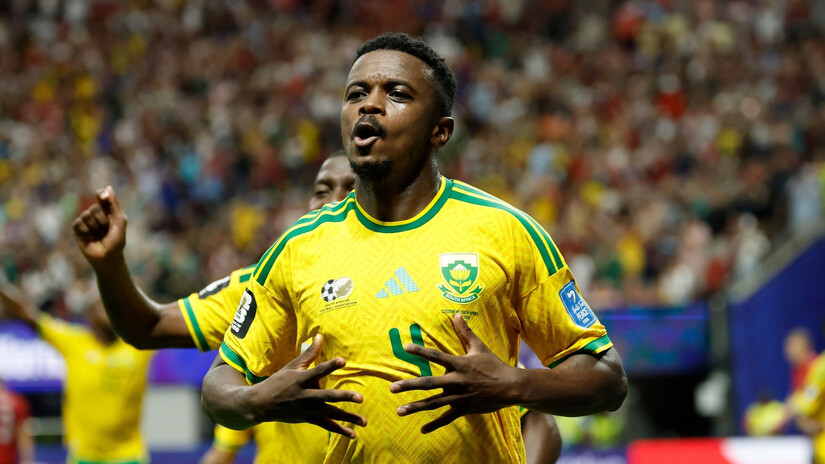
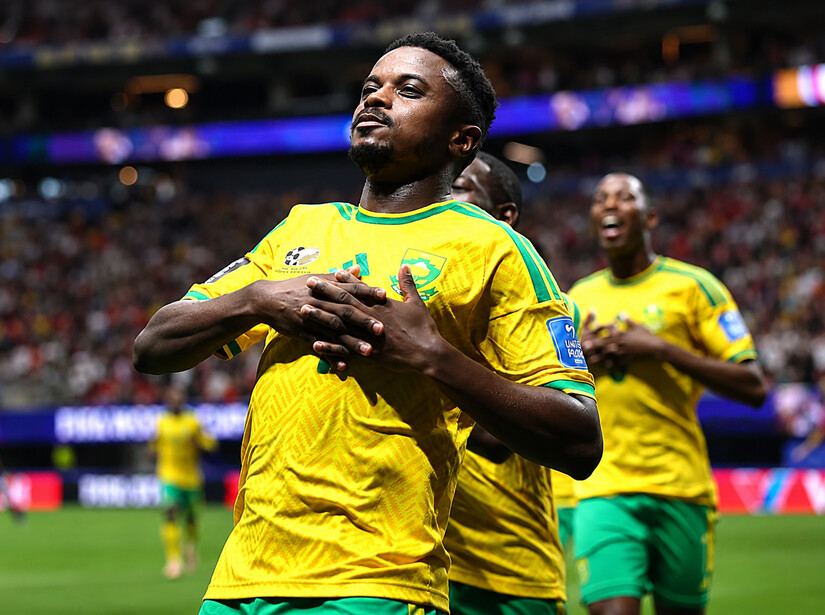
The matchday sequence commenced in Atlanta, where Czechia and South Africa entered the afternoon facing identical high stakes scenarios. Both nations had opened Group A with defeats, both desperately needed points, and both understood that a second consecutive loss would place their qualification hopes in serious jeopardy.
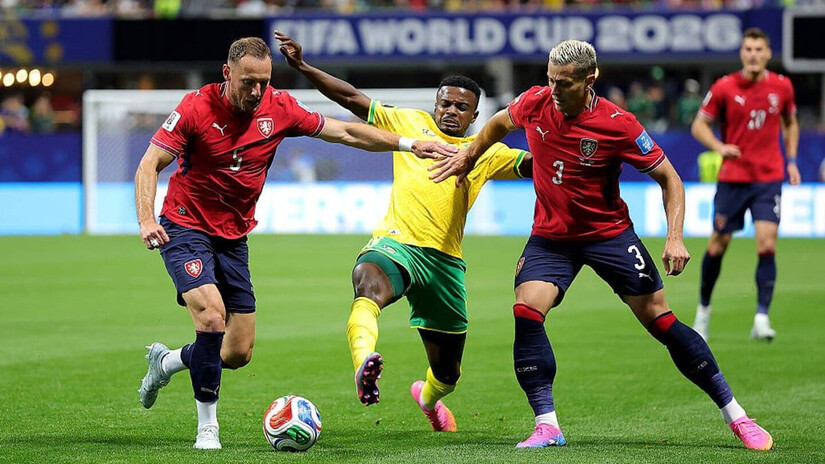
Czechia appeared to comprehend the structural urgency immediately. Just six minutes after kickoff, fullback Vladimír Coufal launched one of the long, direct throw ins that have become a defining tactical mechanism of Czech football. The high trajectory delivery created immediate spatial confusion inside the South African penalty area. The ball bounced dangerously in the six yard box before Alexandr Sojka redirected it toward Michal Sadílek, who calmly converted a low finish to give Czechia an early lead. The goal represented the fastest score of the tournament to that point, validating Czechia's direct, physical approach.
For a sustained period, the structural plan operated with high efficiency. South Africa struggled to create meaningful opportunities against Ivan Hašek's rigid mid block ring, while Czechia remained organized and disciplined. The match increasingly appeared headed toward a narrow but valuable Czech victory.
Then the tactical complexion of the game shifted. Rather than continuing to press forward and exploit transitions, Czechia gradually retreated into a deep defensive shell. The possession numbers shifted rapidly, and the European side's territorial advantage completely disappeared. South Africa began spending longer stretches in the attacking half, recycling second balls with higher efficiency.
Yet despite the growing pressure, an absolute breakthrough seemed unlikely. South Africa failed to register a single shot on target until the 74th minute, highlighting both Czechia's interior organization and South Africa's deep creative struggles in the final third. The equalizer ultimately arrived not through creative brilliance, but through a costly mechanical error. With seven minutes remaining in regulation time, substitute Pavel Šulc handled the ball inside his own penalty area during an aerial duel. The refereeing decision left no room for debate.
Teboho Mokoena stepped forward to take the penalty kick, converting confidently by sending goalkeeper Matěj Kovář in the wrong direction and leveling the score at 1-1. The final result felt dramatically different depending on perspective. For South Africa, it represented a vital tournament lifeline. For Czechia, it felt like two massive points lost. The tactical retreat invited unnecessary pressure, leaving Group A remarkably competitive heading into the final round of fixtures.
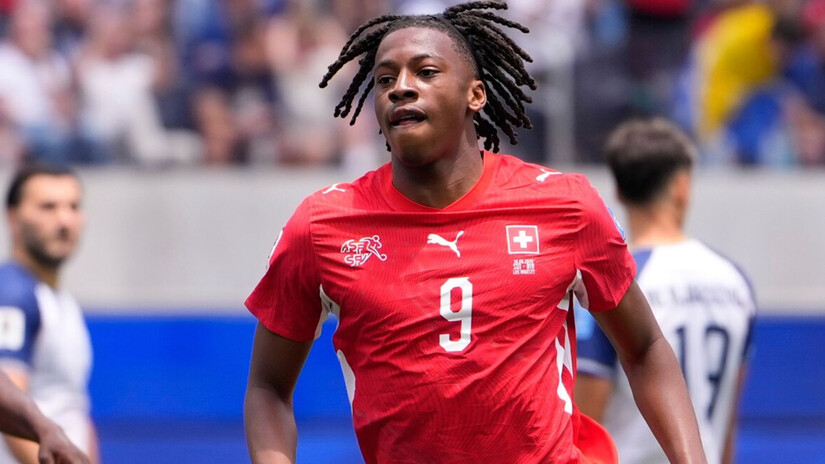
The afternoon program shifted to Los Angeles, where Switzerland and Bosnia and Herzegovina carried opposing emotional states onto the pitch. The Swiss were searching for their first maximum points after being held by Qatar on Matchday One, while Bosnia arrived still chasing a baseline result. For much of the opening phase, the contest appeared relatively balanced as both sides traded possession in the central channel.
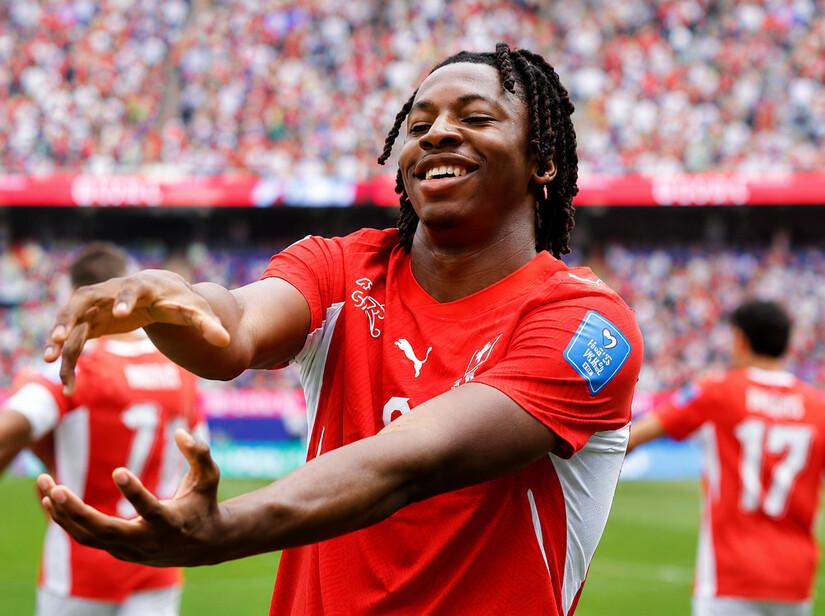
Switzerland claimed the technical breakthrough when Johan Manzambi found space on the edge of the area, driving a powerful finish into the back of the net to immediately energize the Swiss attack. Bosnia initially appeared entirely capable of responding, utilizing Haris Hajradinović to pull strings in midfield.
Then structural discipline intervened. A straight red card reduced Bosnia to ten men, fundamentally altering the competitive balance of the entire match. Switzerland remained exceptionally patient under Murat Yakin. Rather than forcing direct attacks into a crowded central block, the Swiss methodically stretched the pitch horizontally, using wide overloads to gradually exploit the vacant space.
Breel Embolo became increasingly influential in the half spaces, while Ruben Vargas consistently found dangerous positions behind the tracking defensive line. Switzerland's wingbacks pushed higher up the flanks as Bosnia struggled to maintain any defensive shape under severe numeric strain. The tactical pressure eventually became overwhelming.
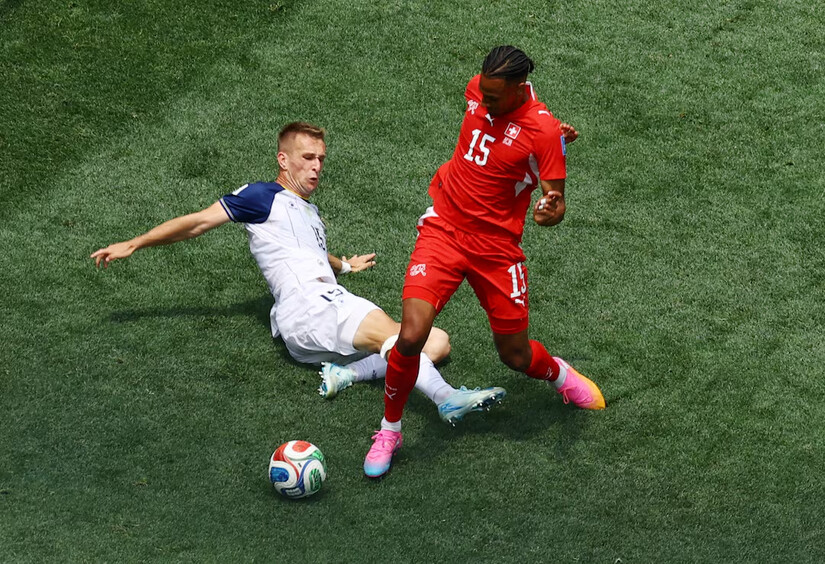
What had been a competitive contest transformed into a one sided exhibition. Goals arrived in quick succession as the Swiss repeatedly exposed a tiring Bosnian low block. Though Bosnia managed a solitary consolidation strike against the run of play, the structural outcome had long since been decided. The final 4-1 scoreline reflected intelligent game management, elevating Switzerland into a highly favorable position within Group B while leaving Bosnia facing a narrow path toward advancement.
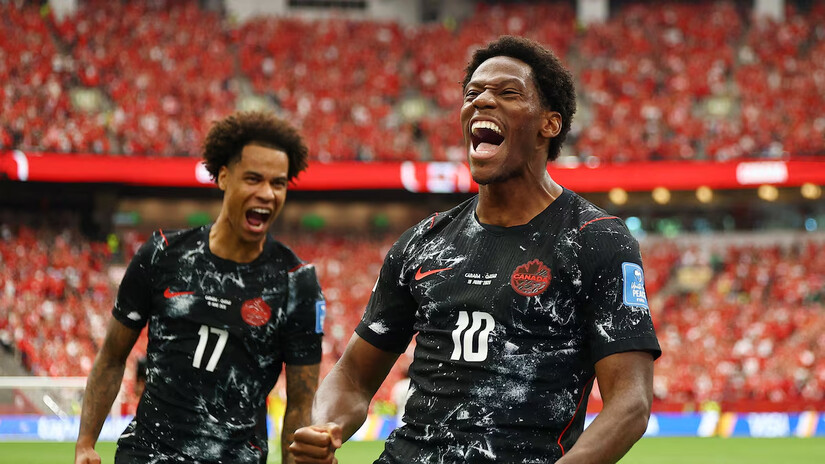
The defining story of Day 8 unfolded at BC Place in Vancouver. Canada entered its second Group B match carrying momentum after earning the first men's World Cup point in national history. By the end of the evening, that confidence had evolved into a historic milestone. What unfolded was not merely a victory, it was the most dominant performance by any host nation thus far in World Cup 2026.
From the opening whistle, Canada imposed itself physically, tactically, and emotionally. Jesse Marsch's aggressive, high pressure system immediately disrupted Qatar's ability to build from the back. Every attempted transition was contested, and every loose ball became a Canadian opportunity. The breakthrough arrived in the 16th minute when Cyle Larin reacted quickest to a rebound inside the box, burying the opening goal to send the stadium into pandemonium. The lead doubled thirteen minutes later in the 29th minute, when Jonathan David unleashed a spectacular volley that left goalkeeper Mahmoud Abunada completely helpless.
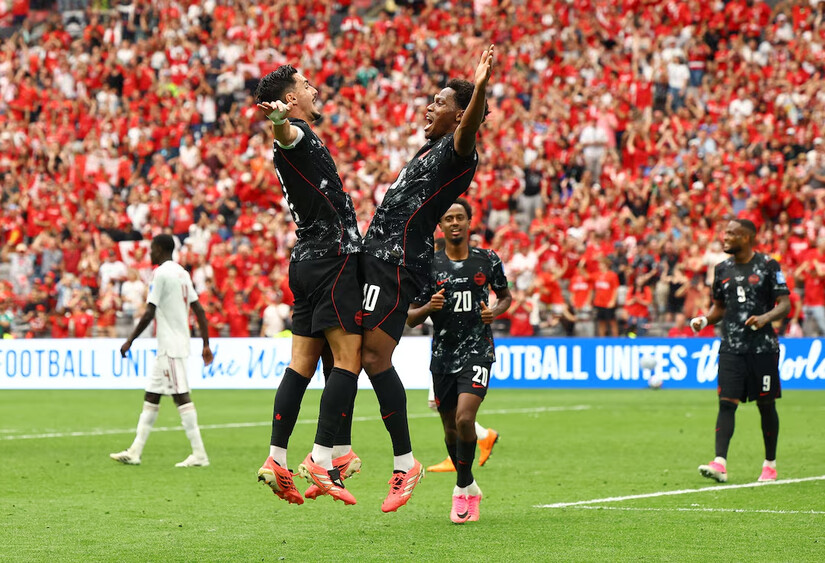
Then the match unraveled entirely for Qatar. In the 33rd minute, left back Homam Ahmed received a straight red card after bringing down Tajon Buchanan during a dangerous vertical counter attack. Reduced to ten men, Qatar struggled simply to survive. Just before the halftime interval, David scored again to make it 3-0, effectively deciding the outcome.
The second half only deepened Canada's total dominance. Another straight red card, this time brandished to Assim Madibo, reduced Qatar to nine players and eliminated any realistic possibility of a tactical response. Nathan Saliba added a magnificent free kick into the top corner, and an own goal from Mohamed Manai increased the margin further. Deep into stoppage time, Jonathan David completed the first World Cup hat trick ever recorded by a Canadian men's player, finalizing a staggering 6-0 scoreline.
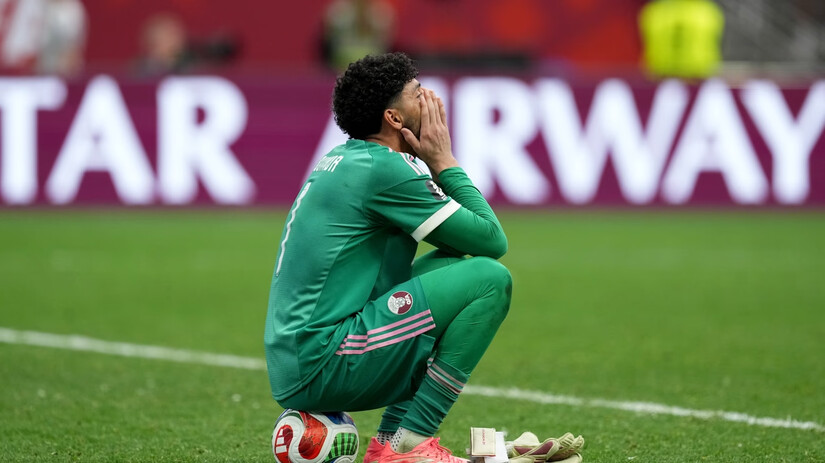
The statistical profile was remarkable: Canada outshot Qatar 32 to 2, recording 97 touches inside the opposing penalty area. Yet amid the celebration came a sobering development for the host nation. Midfielder Ismaël Koné suffered what was later diagnosed as a tournament ending leg injury. His absence could significantly alter Canada's tactical outlook moving forward. For one evening, however, the focus remained on history, as Canada delivered one of the most dominant performances ever produced by a CONCACAF nation on football's biggest stage.
The final match of the Day 8 schedule carried the highest immediate stakes. Mexico and South Korea entered the Estadio Akron in Guadalajara knowing a victory would place them in a commanding position at the summit of Group A. The match itself proved tense, physical, and remarkably disciplined, contrasting with the high scoring fixtures earlier in the day.
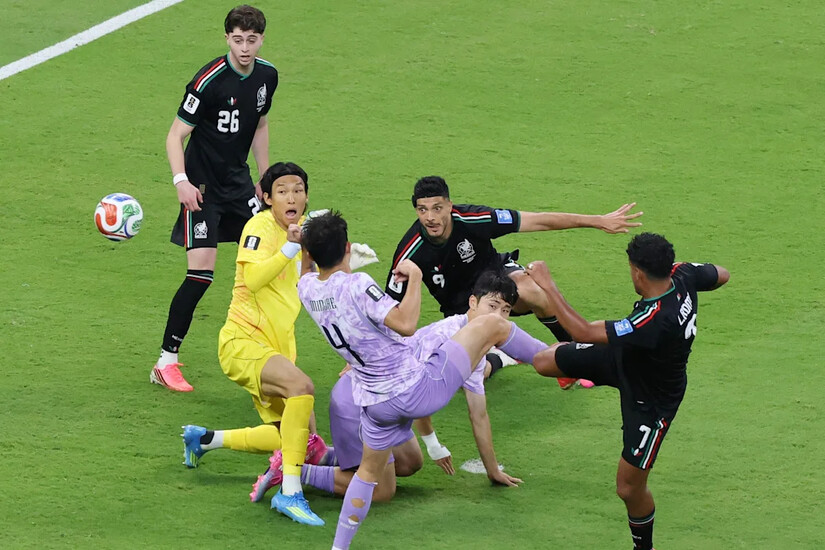
South Korea frustrated Mexico throughout the first half. Their defensive positioning remained excellent, passing lanes disappeared quickly under a coordinated mid block press, and neither side generated many clear opportunities inside the eighteen yard box. The crucial breakthrough eventually came through a defensive misfortune five minutes into the second half. South Korean goalkeeper Kim Seung-gyu attempted to claim a looping cross but collided heavily with his own defender, Lee Ki-hyuk. The ball spilled loose directly into the path of Luis Romo, who slotted his finish into the empty net to give Mexico a 1-0 lead.
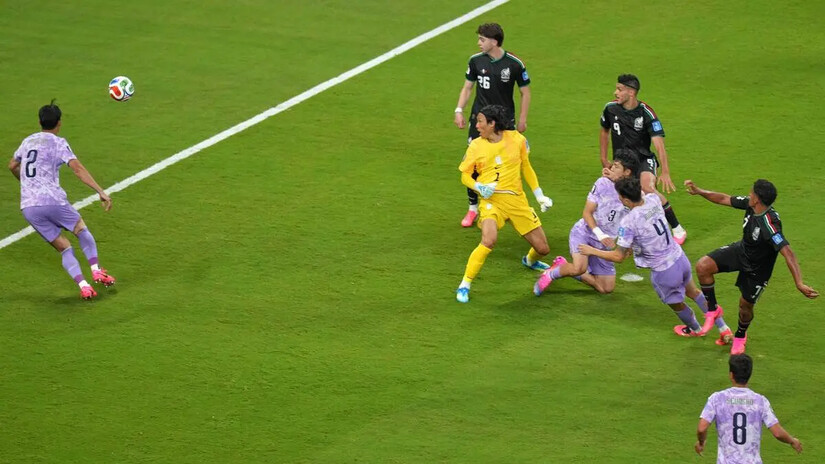
From that moment forward, the contest transformed into an elite defensive test. South Korea increasingly committed numbers forward, shifting into an aggressive attacking shape. Mexico, operating under Javier Aguirre, focused on preserving their advantage, dropping into a compact low block.
The decisive figure became goalkeeper Raúl Rangel. As the match entered its final minutes, South Korea launched wave after wave of intense pressure. Forward Cho Gue-sung nearly equalized with a powerful header from a crossing delivery, but Rangel produced a phenomenal reflex save. The rebound fell dangerously in the six yard box, but Rangel recovered instantly to smother the follow up. The double save preserved Mexico's lead and ultimately secured the victory.
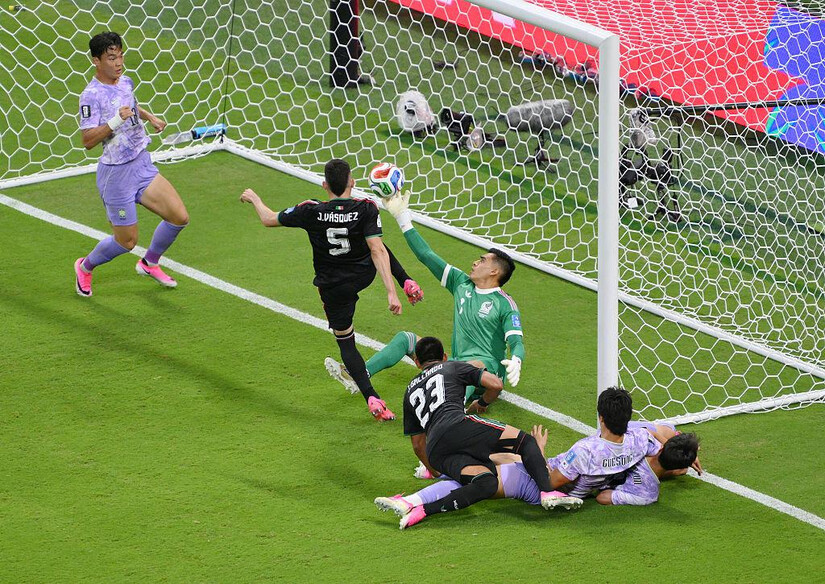
When the final whistle sounded, the structural significance became immediately clear: Mexico became the first nation to mathematically secure advancement to the Round of 32. Eight days into the tournament, El Tri had become the standard against which every other contender would now be measured. While the road to the knockout rounds remains long for most nations, Mexico's destination is already guaranteed.
Several definitive conclusions emerged as the events of Day 8 concluded:
As the schedule shifts toward the conclusion of Matchday Two, the group outlines are hardening rapidly. For Mexico, the focus shifts to rotational management, while for Canada and Switzerland, a high stakes race for absolute supremacy in Group B has officially commenced.
MinneapoliMedia | Community. Culture. Civic Life.



Sunny, with a high of 95 and low of 70 degrees. Sunny during the morning, partly cloudy during the afternoon and evening, clear overnight.