Image
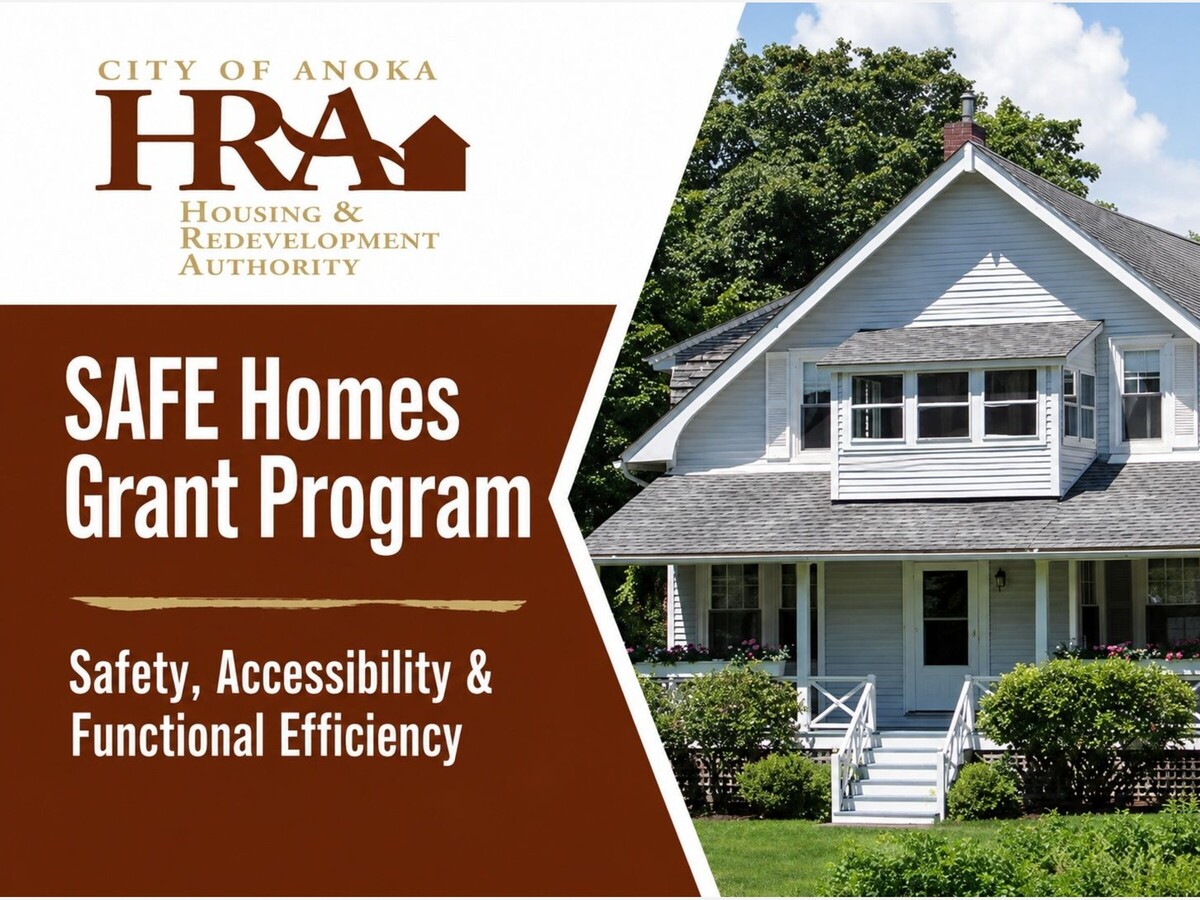



ANOKA, MN (July 12, 2026) Income-qualified homeowners in Anoka can now apply for grants ranging from $5,000 to $30,000 to repair unsafe housing conditions, make homes more accessible, and reduce energy costs.
The City of Anoka has opened applications for its new SAFE Homes Grant Program. SAFE stands for Safety, Accessibility and Functional Efficiency.
Unlike a loan or deferred financing program, grant money awarded through SAFE Homes does not have to be repaid. Funding is limited, however, and the city will review eligible applications on a first-come, first-served basis until the available money has been exhausted.
The program is intended to help homeowners remain safe and independent in their homes while addressing repairs that may otherwise be financially out of reach. The city has identified older residents, people with disabilities, aging properties, households with urgent safety concerns, and homeowners carrying high energy costs as priority populations.
Applicants must own the home and use it as their primary residence. Rental properties, vacation homes, and investment properties are not eligible.
Household income must be below 80 percent of the area median income established by the U.S. Department of Housing and Urban Development.
The current income limits published by the city are:
Homeowners must also remain current on their property taxes.
Meeting the basic qualifications does not guarantee an award. The proposed work must fall within the program’s eligible categories, and funding must still be available when the application is reviewed.
SAFE Homes grants may be used for repairs needed to restore or preserve a home’s habitability.
Eligible projects may include repairing or replacing a roof when it is leaking or structurally compromised, correcting electrical or plumbing problems, repairing water-service issues, replacing unsafe heating and cooling systems, and resolving mold, moisture, or ventilation concerns.
Structural repairs may qualify when they are necessary to remove a safety hazard. Lead-based paint reduction may also be eligible when applicable.
These categories are especially consequential for people living in older homes. A failing roof, unsafe wiring, leaking plumbing, or broken heating system can quickly become a health emergency while also increasing the risk of more expensive damage.
The program may support modifications that allow residents to remain in their homes despite changes in age, mobility, or physical ability.
Eligible accessibility improvements include wheelchair ramps, exterior access changes, stair lifts, platform lifts, widened doors, grab bars, roll-in showers, accessible-height toilets, and other modifications that support aging in place.
For older residents and people with disabilities, relatively targeted improvements can determine whether a home remains usable. A bathroom that cannot accommodate a mobility device, stairs without a safe alternative, or an inaccessible entrance may force a resident to depend on others or consider leaving an otherwise stable home.
The program gives Anoka another tool for addressing those barriers before they result in displacement.
SAFE Homes may also fund improvements intended to reduce energy consumption and household utility expenses.
Qualifying work can include attic, wall, or crawlspace insulation; air sealing; high-efficiency heating and cooling systems; efficient water heaters or heat pumps; and replacement windows or doors.
The city identifies energy-burdened households as a priority. These are households spending a disproportionate share of their income on utilities.
Energy improvements can reduce monthly expenses, but they can also improve indoor comfort and safety. Poor insulation, failing mechanical systems, and drafty windows can be especially serious during Minnesota winters and periods of extreme summer heat.
SAFE Homes is not intended to finance luxury renovations, cosmetic improvements, or routine property maintenance.
Ineligible projects include granite countertops, flooring replaced solely for appearance, landscaping, sheds, fences, and exterior structures unrelated to safety.
Additions and expansions are generally ineligible unless they are directly connected to accessibility or safety needs.
Work that begins before the city approves the application will not qualify. Homeowners should not hire a contractor or start construction with the expectation of receiving reimbursement later.
City staff retain authority to determine whether a proposed improvement meets the program’s requirements.
Applications are available through the City of Anoka SAFE Homes Grant Program.
Because funding is distributed on a first-come, first-served basis, eligible homeowners should review the program requirements and apply promptly.
Questions may be directed to Anoka Housing and Redevelopment Authority Executive Director Darin Berger at 763-576-2724.
MinneapoliMedia | Community. Culture. Civic Life.



Sunny, with a high of 85 and low of 49 degrees. Sunny for the morning, overcast for the afternoon and evening, clear overnight.