63° and Clear
Image




The quarterfinal stage of the 2026 FIFA World Cup reached its definitive conclusion Saturday with two matches that demanded the full physical and psychological measure of every player involved. Neither England nor defending champion Argentina secured a place in the final four through comfortable superiority. Both were forced into extra time, both encountered prolonged resistance from opponents unwilling to surrender their historic campaigns, and both ultimately depended upon elite individual execution after ninety minutes failed to separate the surviving contenders.
In Miami Gardens, England overcame an inspired Norway side through two goals from Jude Bellingham, including the decisive strike during the opening minutes of extra time. Andreas Schjelderup had placed Norway ahead during the first half, but Bellingham restored parity before the interval and later punished a rebound to send England into its first World Cup semifinal since 2018. The victory ended Norway’s remarkable run only six days after Erling Haaland and his teammates had eliminated five-time champion Brazil.
Hours later in Kansas City, Argentina survived an equally demanding quarterfinal against Switzerland. Alexis Mac Allister gave the reigning champions an early advantage, but Dan Ndoye equalized during the second half before Breel Embolo’s dismissal reduced the Swiss to ten players. Switzerland defended with extraordinary discipline deep into extra time, only for Julián Álvarez to finally break the deadlock in the 112th minute. Lautaro Martínez added the insurance goal during the final moments of the extended contest, completing a 3-1 victory and securing an England-Argentina semifinal in Atlanta.
The results finalized a semifinal field containing four former world champions. France will meet Spain in the first semifinal, while England and Argentina will contest the second. The expanded tournament began with forty-eight nations spread across three host countries. Thirty-one tournament days later, only four remain.
|
Match |
Score |
Venue |
Status |
|
Norway vs. England |
1–2 after extra time |
Hard Rock Stadium, Miami Gardens, FL |
England advances |
|
Argentina vs. Switzerland |
1–3 after extra time |
Kansas City Stadium, Kansas City, MO |
Argentina advances |
England 2, Norway 1 After Extra Time: Bellingham Delivers Twice as the Three Lions Survive Miami Trial
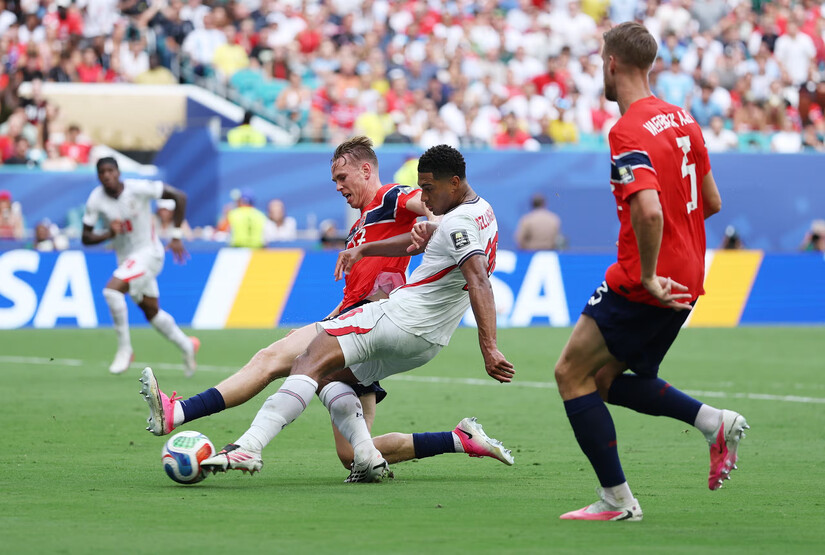
England entered Hard Rock Stadium carrying the expectations of a traditional international power. Norway arrived carrying something more dangerous: complete belief.
Ståle Solbakken’s side had already changed the internal perception of Norwegian football through a tournament run built upon defensive organization, midfield patience, and the match-winning presence of Erling Haaland. The Round of 16 victory over Brazil demonstrated that Norway possessed more than a dangerous striker. It showed that the Scandinavian side could withstand prolonged pressure, survive emotionally volatile moments, and punish even the most accomplished opponents whenever they surrendered space.
Thomas Tuchel therefore approached the quarterfinal with appropriate caution. England had survived a difficult knockout match against DR Congo and an extraordinary five-goal contest against Mexico, but neither performance had produced complete tactical assurance. Against Norway, England again encountered an opponent capable of disrupting rhythm and forcing the Three Lions into uncomfortable areas.
The match began beneath intense South Florida heat, with temperatures reportedly reaching approximately 92 degrees Fahrenheit. Both sides attempted to conserve energy without surrendering territory, producing an opening phase characterized by careful passing, compact defensive spacing, and limited attacking risk.
England attempted to establish possession through Declan Rice and Jude Bellingham, while Norway compressed the central corridors and encouraged play toward the flanks. Haaland remained the reference point for Norwegian transitions, drawing the attention of England’s center backs and creating secondary space for Schjelderup and the advancing midfield runners.
The tactical balance remained intact until the 36th minute.
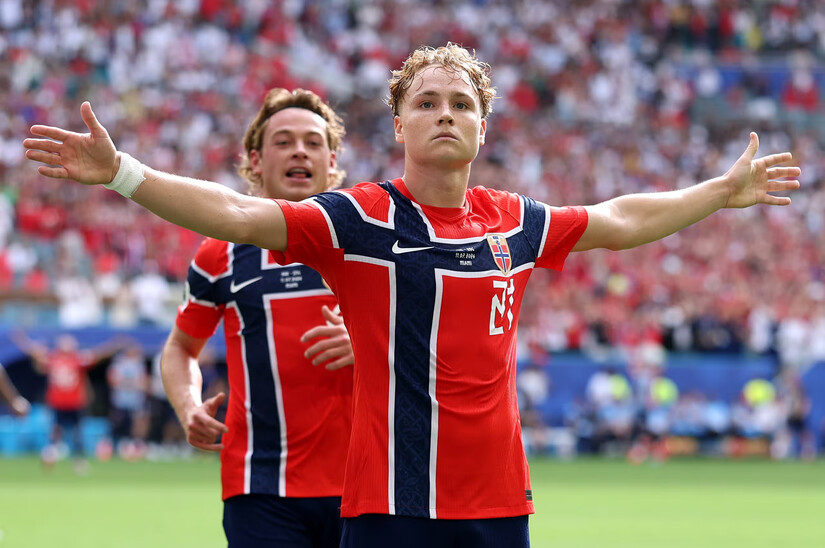
Norway worked possession into an advanced position before Schjelderup released an unusual floating effort from the left side. The ball carried beyond England’s defensive line, curved away from Jordan Pickford, and dropped inside the far side of the goal. Norway led 1-0, and England found itself confronting another knockout deficit.
The goal rewarded Norway’s willingness to attack without abandoning defensive discipline. England responded by increasing the speed of its ball circulation, but the Three Lions struggled to construct clean opportunities through the middle. Harry Kane frequently dropped away from the penalty area seeking involvement, while Bellingham attempted to advance from deeper positions.
Norway’s defensive organization appeared capable of carrying the lead into halftime.
Then came one of the tournament’s most unusual sequences.
During first-half stoppage time, England launched another attack after a long passage of play that prompted immediate Norwegian protests. Players and coaches believed the ball might have made contact with an overhead camera cable during the buildup. Under the Laws of the Game, confirmed contact with outside equipment could have required play to stop and restart with a dropped ball.
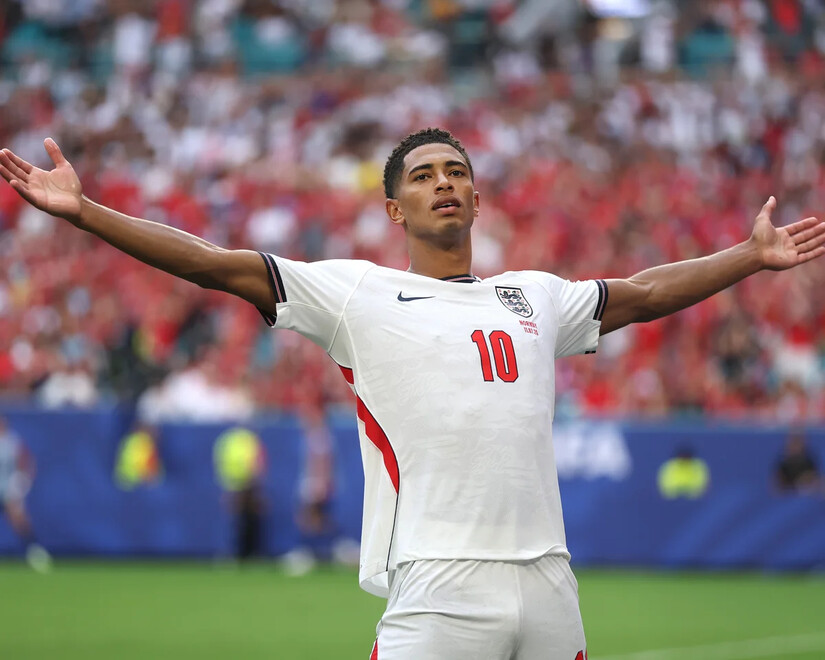
The attacking sequence continued, however, and Bellingham converted England’s equalizer. FIFA later stated that data from the connected ball’s internal sensor detected no contact or aerial deviation caused by the camera system, allowing the goal to stand.
The decision sent the teams into halftime level at 1-1.
For England, the goal provided more than parity. It restored emotional control after a first half in which Norway had repeatedly frustrated the Three Lions’ preferred attacking structure. For Norway, the equalizer created a difficult psychological reset after coming within moments of protecting the lead through the interval.
The second half developed into a prolonged tactical stalemate.
England controlled greater stretches of possession but continued struggling to break Norway’s disciplined defensive block. Bellingham operated aggressively between the lines, attempting to connect midfield with Kane, while Bukayo Saka and England’s wide attackers searched for isolated duels against Norway’s fullbacks.
Norway remained dangerous whenever Haaland received direct service. His strength forced England to defend conservatively, preventing the center backs from stepping too aggressively into midfield. Even without scoring, Haaland shaped the geography of the contest by demanding constant defensive attention.
Neither side produced a decisive second-half breakthrough.
The match moved into extra time, carrying the accumulated physical strain of a high-temperature quarterfinal into another thirty-minute block.
Norway appeared to strike first during the additional period, but the potential goal was disallowed after Haaland was judged to have committed a foul during the buildup. The decision preserved the 1-1 score and shifted momentum toward England.
The decisive sequence followed almost immediately.
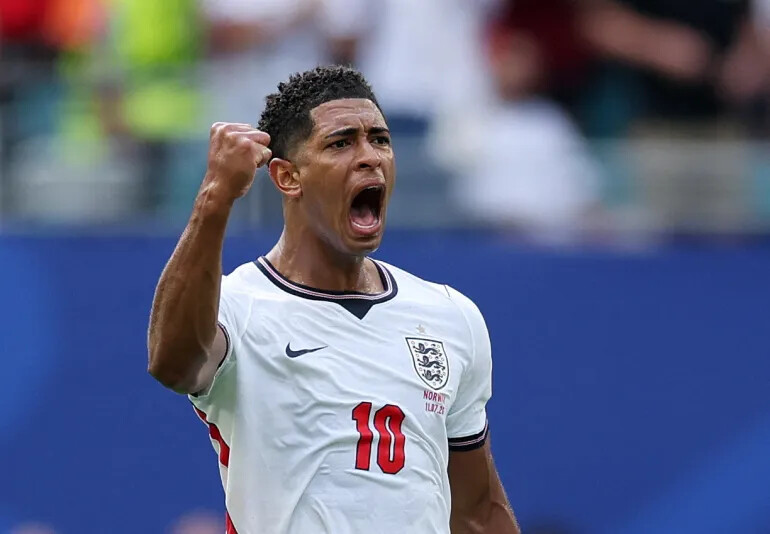
England forced another save from Norwegian goalkeeper Ørjan Nyland, but the rebound remained alive inside the penalty area. Bellingham reacted faster than the surrounding defenders, reached the loose ball, and converted the opportunity to give England a 2-1 lead in the 93rd minute.
The goal represented Bellingham’s second of the match and sixth of the tournament, moving him level with England captain Harry Kane. His two-goal performance carried the Three Lions through a night when their collective execution frequently fell below the standard expected of a semifinalist.
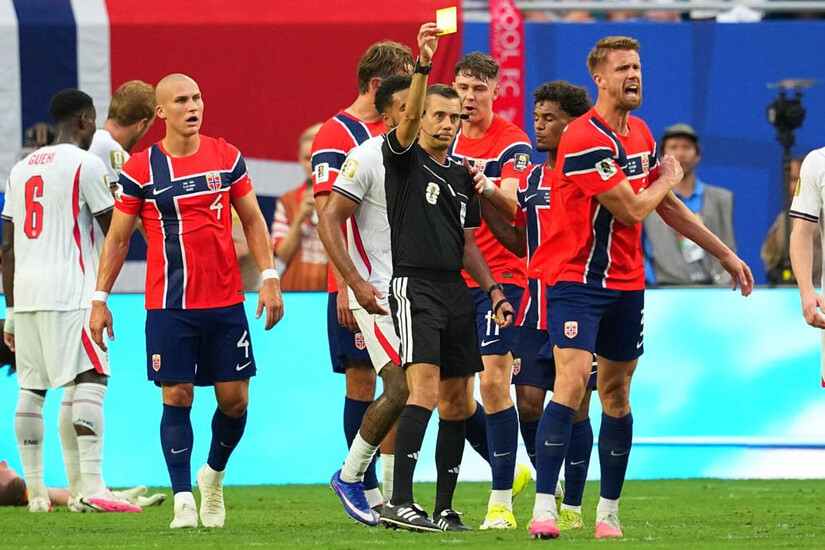
Norway continued pushing forward, but the physical burden of the tournament and the demands of extra time became increasingly visible. Solbakken’s decision to remove Haaland during the closing stages generated immediate discussion, particularly because Norway remained only one goal from extending the match to penalties.
England managed the final minutes through disciplined possession and determined defensive clearances. Pickford commanded his penalty area, while Rice and the English back line repeatedly disrupted Norway’s attempts to create one final opening.
The final whistle confirmed England’s passage into the semifinals.
Tuchel did not disguise his dissatisfaction with portions of the performance, acknowledging that England had lacked precision and had been fortunate to survive certain moments. Yet knockout football rarely rewards perfection alone. England advanced because it absorbed adversity, remained composed after falling behind, and possessed a player capable of deciding the match when the opportunity arrived.
Norway departed after the greatest World Cup campaign in the program’s modern history. Haaland, Schjelderup, Martin Ødegaard, Nyland, and their teammates had eliminated Brazil, reached the final eight for the first time, and competed evenly with England across more than ninety minutes.
Their elimination does not diminish the scale of their achievement.
England advances to Atlanta.
Argentina awaits.
Argentina 3, Switzerland 1 After Extra Time: Álvarez Breaks the Deadlock as the Champions Exploit the Man Advantage
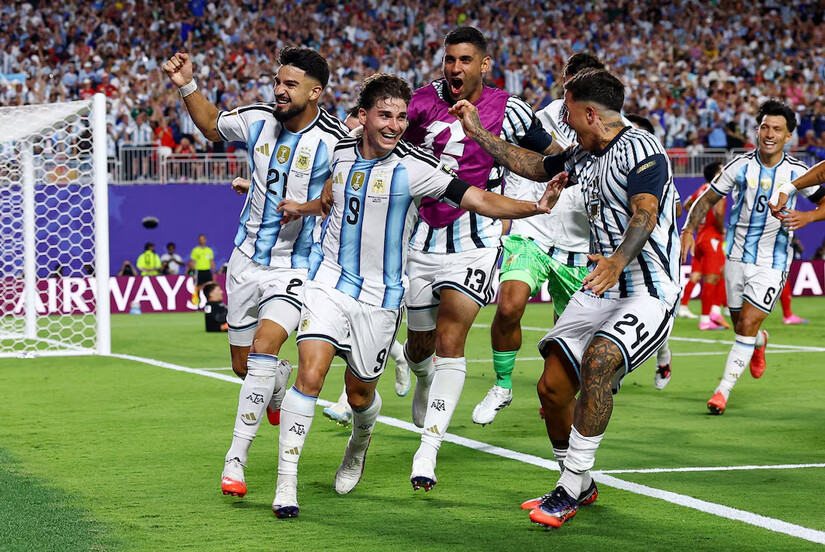
The final quarterfinal of the tournament brought together two sides carrying radically different championship identities.
Argentina entered Kansas City as the defending world champion, supported by a deep roster of experienced tournament performers and led again by Lionel Messi. Switzerland arrived without the same historical weight but with one of the competition’s most disciplined defensive structures. Murat Yakin’s side had survived Colombia through a penalty shootout and had not lost a match in regulation throughout the tournament.
For more than one hundred minutes, Switzerland demonstrated precisely why it had advanced so far.
Argentina began aggressively, attempting to establish the match in Swiss territory before the defensive lines could settle. Messi drifted into central areas, while Mac Allister and Enzo Fernández pushed forward to overload the midfield around Granit Xhaka.
The opening goal arrived in the 10th minute.
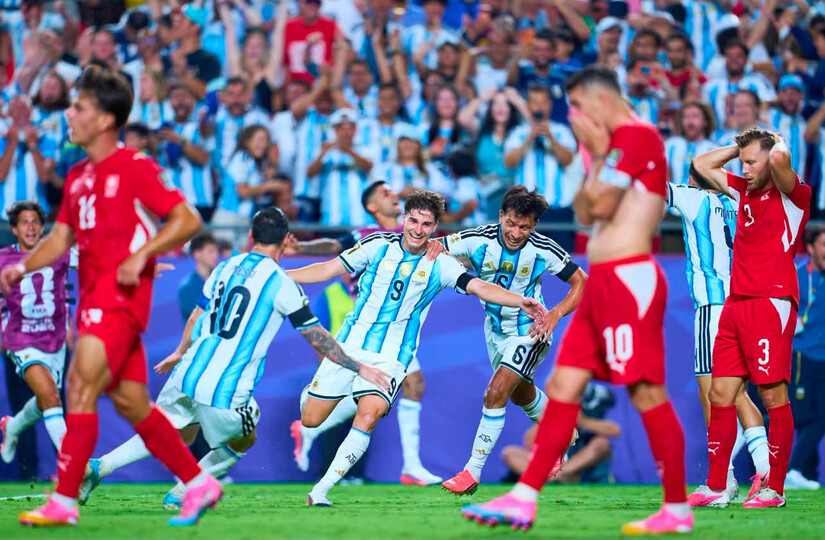
Argentina earned a corner, and Messi delivered the ball into the penalty area. Mac Allister timed his movement effectively, found room between the Swiss markers, and headed the reigning champions into an early 1-0 lead.
The early breakthrough appeared to position Argentina for another controlled knockout performance.
Switzerland refused to cooperate.
Rather than abandoning its structure, the Swiss continued defending in compact lines while gradually growing more confident in possession. Xhaka provided composure at the center of midfield, allowing the team to escape Argentina’s pressure through short passing rather than speculative clearances.
Argentina controlled several stretches of the first half, but the Swiss defensive organization limited the quality of the opportunities created. Manuel Akanji and the back line tracked Álvarez carefully, while Gregor Kobel remained alert behind them.
Switzerland’s patience produced its reward in the 67th minute.
Dan Ndoye attacked the space created during a Swiss transition and completed the move with the equalizing goal, bringing the match level at 1-1 and placing Argentina under sustained pressure for the first time.
The competitive balance changed again only five minutes later.
Breel Embolo became involved in an incident that was initially judged as a foul involving Argentine midfielder Leandro Paredes. Following an officiating review concerning the identity and disciplinary outcome, Embolo received a second yellow card and was dismissed. The ruling generated significant controversy and drew strong criticism from Switzerland’s coaching staff.
Reduced to ten men, Switzerland immediately reorganized.
Yakin withdrew his attacking lines and established a compact defensive shell designed to deny Argentina direct access through the center. Xhaka dropped closer to the back line, while the remaining midfielders narrowed the spaces around the penalty area.
Argentina controlled possession but initially struggled to exploit the numerical advantage.
Messi attempted to unlock the block through disguised passes and changes of direction. Mac Allister continued advancing from midfield. The fullbacks pushed high to widen the Swiss defensive structure.
Switzerland absorbed the pressure.
Kobel made key interventions, and Akanji repeatedly organized emergency clearances as regulation ended with the score still tied at 1-1.
Extra time became an examination of Swiss endurance and Argentine patience.
The champions moved the ball from side to side, attempting to force the ten-man defensive ring into one rotation too many. Switzerland defended with extraordinary concentration, but the physical demands accumulated with every passing minute.
The breakthrough arrived in the 112th minute.
Julián Álvarez collected possession from distance, shifted inward, and produced the kind of individual strike that defeats even an organized low block. His curling effort traveled beyond Kobel and into the far side of the net, finally giving Argentina a 2-1 lead.
The goal broke more than the deadlock.
It ended Switzerland’s ability to defend exclusively for penalties. The Swiss were forced to advance, creating transition space for an Argentine attack that had spent most of extra time operating against a crowded penalty area.
The final goal arrived in stoppage time at the end of the additional period.
Thiago Almada drove forward during a rapid counterattack and forced Kobel into another save. Lautaro Martínez reacted to the rebound and converted from close range, completing the 3-1 victory.
Messi did not score, ending his record-setting run of consecutive World Cup matches with a goal, but he remained influential through his passing and his assist on Mac Allister’s opener. Argentina advanced without requiring its captain to produce the decisive finish, an encouraging indication of the attacking options available to Scaloni entering the semifinals.
Switzerland departed after another tournament defined by collective organization, emotional control, and defensive intelligence. Even after Embolo’s dismissal, the Swiss carried the defending champions deep into extra time and stood only minutes from forcing a penalty shootout.
Argentina, however, possessed one additional attacking solution.
Álvarez found it.
The champions continue.
Technical Notebook and Tactical Pillars
Day 31 completed the quarterfinal stage while reinforcing several principles that have shaped the knockout rounds.
Elite Midfielders Decide Matches Beyond Traditional Roles: Bellingham and Mac Allister did far more than circulate possession. Their attacking movement placed them inside the penalty area at decisive moments, while Bellingham’s finishing directly carried England into the semifinals.
Numerical Superiority Requires Patience: Argentina played against ten men from the 72nd minute but needed until the 112th to create the winning goal. Switzerland demonstrated that disciplined spacing can temporarily neutralize a numerical disadvantage, even against the defending champions.
Tournament Survival Rarely Requires Perfection: England’s performance contained technical errors, disputed moments, and extended periods of frustration. The Three Lions advanced because they remained emotionally stable enough to capitalize when Norway surrendered two recoverable chances.
Goalkeepers Continue Shaping the Knockout Bracket: Nyland and Kobel both extended their nations’ hopes with critical saves. Neither ultimately advanced, but their performances forced England and Argentina to find extraordinary solutions rather than routine finishes.
Squad Depth Becomes More Important with Every Round: Extra time exposed the physical toll of the expanded tournament. England and Argentina possessed enough quality on the field and bench to maintain attacking pressure after ninety minutes, a decisive advantage at the quarterfinal level.
The Semifinal Field Is Set
Four nations remain.
France will face Spain in the opening semifinal, bringing together two of the tournament’s most complete technical teams. France carries the direct attacking power of Kylian Mbappé and Ousmane Dembélé. Spain arrives with unmatched possession control, positional discipline, and another series of late knockout interventions from Mikel Merino.
England will meet Argentina in Atlanta.
The second semifinal brings together the defending world champion and an England side attempting to reach its first World Cup Final since winning the tournament in 1966. It also places Bellingham, Kane, Messi, Álvarez, and Lautaro Martínez on the same elimination-stage platform.
Every remaining nation has already survived at least one moment when its tournament appeared vulnerable.
France endured Morocco’s defensive resistance.
Spain required another late winner against Belgium.
England survived Norway after extra time.
Argentina needed a man advantage and an Álvarez masterpiece to defeat Switzerland.
The margin separating these four teams is no longer measurable through reputation, historical record, or possession statistics.
Execution will decide the finalists.
Two victories remain between each survivor and the World Cup Trophy.
MinneapoliMedia | Community. Culture. Civic Life.



Sunny, with a high of 87 and low of 59 degrees. Sunny for the morning, clear for the afternoon and evening,