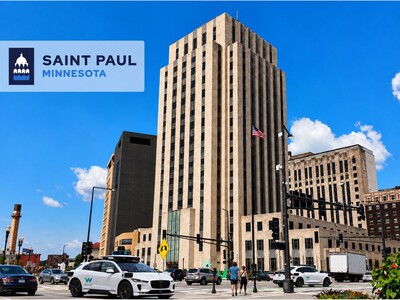
43° and Overcast
Image
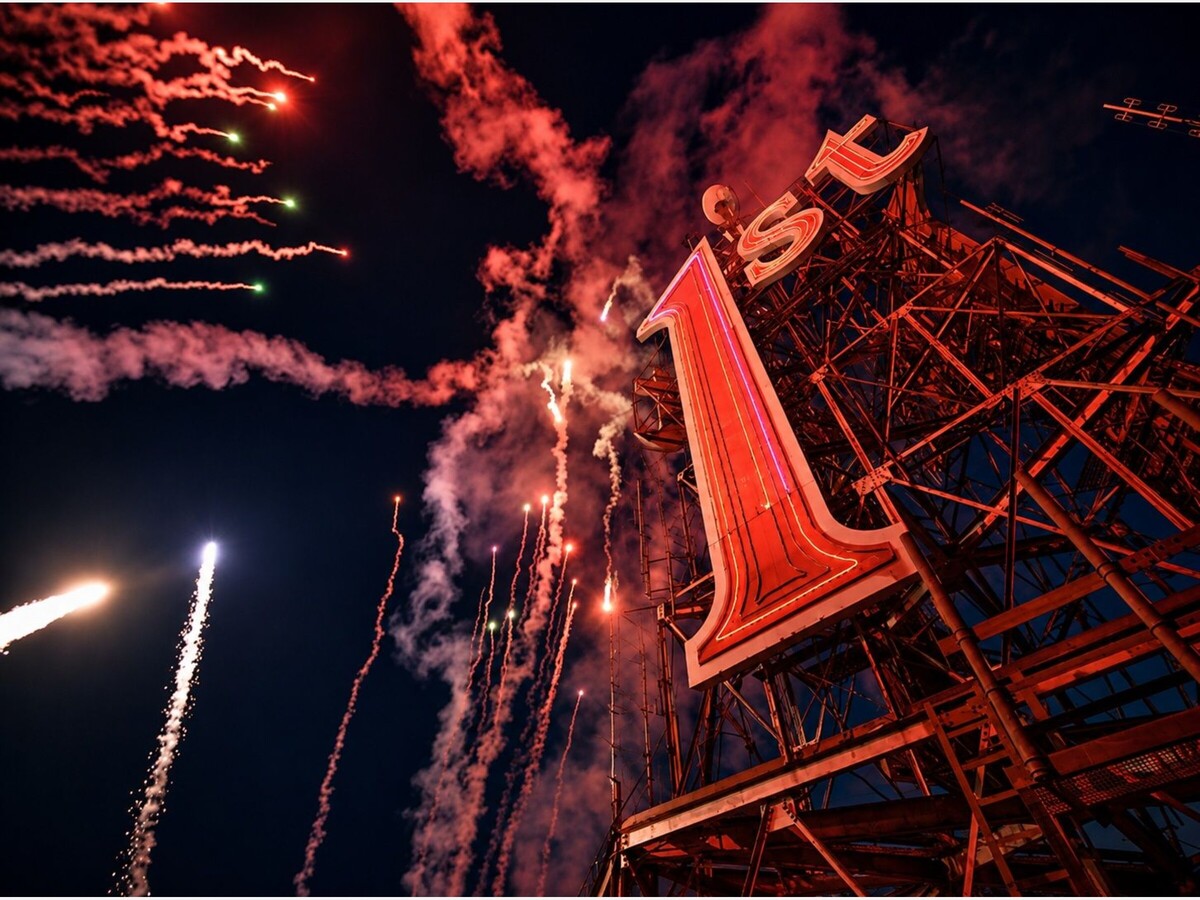



ST. PAUL, MN (August 9, 2026) At 8:58 Thursday night, Patrick “DJ Boom” Walker was doing what any great DJ does when a crowd is waiting on a countdown: he kept the energy high.
Families, local visitors, and city staff had gathered at Kellogg Mall Park along the Mississippi River, watching the downtown skyline. Walker, booked to host and provide the evening's soundtrack, reminded the crowd that only a minute remained before the big reveal.
Then, shortly after 9:00 p.m. on August 6, one of St. Paul’s most recognizable landmarks lit up the night once more.
High above the city, the enormous red “1st” atop the First National Bank Building at 332 Minnesota Street is illuminated. Fireworks burst overhead, cheers rose from the park, and a historic piece of St. Paul was restored to how generations had known it.
Officially, it was a lighting ceremony. Standing in Kellogg Mall Park, however, it was clear organizers intended for the moment to signify a broader turning point.
It was about a building and a sign, but it was equally about whether downtown St. Paul, after years of office vacancies, commercial distress, post-pandemic shifts, and public uncertainty, could give people compelling reasons to return.
MinneapoliMedia attended the celebration at Walker's invitation and spoke with city staff on the ground about both the relighting and the revitalization efforts taking shape downtown.
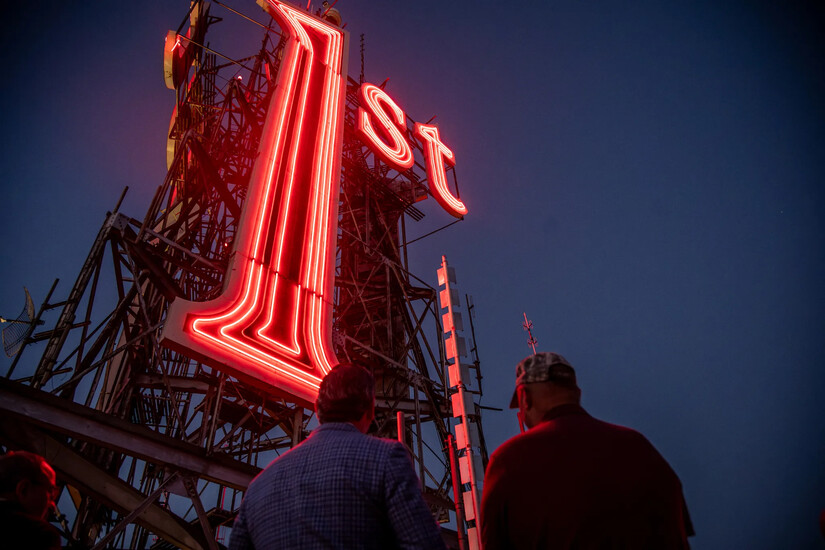
The First National Bank Building has shaped the St. Paul skyline for nearly a century. Completed in 1931, the 32-story Art Deco tower became a defining feature of the city center and stood as St. Paul’s tallest building for decades. While its architecture alone holds historic significance, what was built above the roof transformed it into a visual signature.
A massive steel tower rises roughly 100 feet above the roof, supporting the 50-foot, three-sided red “1st” sign. Over the decades, the glowing beacon became much more than advertising for a bank whose name eventually faded through corporate mergers.
It became a visual anchor. A compass. A symbol of home.
Drivers approaching downtown could spot it miles away, residents navigated by it, and pilots reported seeing its glow from extreme distances.
When it went dark, people noticed.
The sign was doused for years during the energy crises of the 1970s and early 1980s before returning. Decades later, severe winter weather damaged its aging neon infrastructure, forcing another shutdown in 2016. A $500,000 restoration replaced the neon with modern LEDs designed to preserve the original red glow, bringing it back online that November.
In subsequent years, however, the display grew increasingly unreliable, with missing sections and frequent outages until it became dark entirely. By 2024, the dark tower atop First National felt symbolic of the commercial challenges unfolding below it.
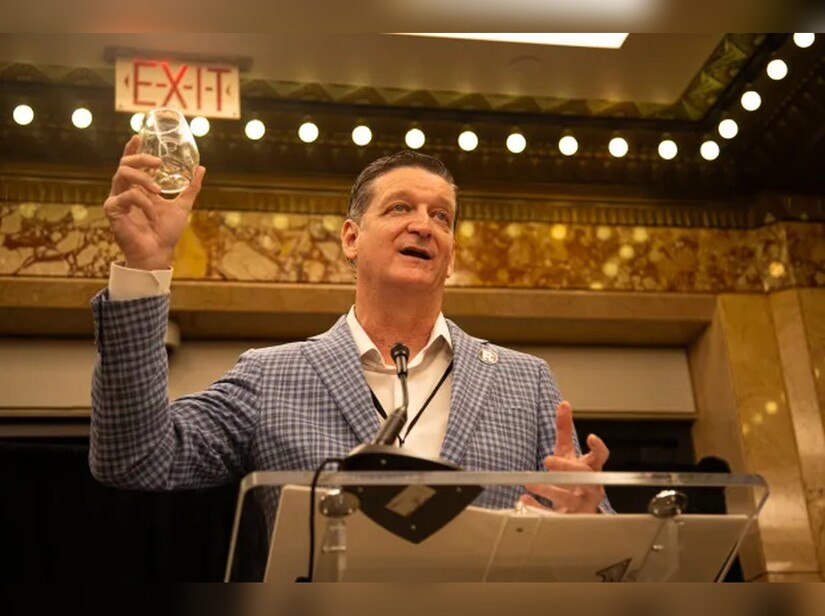 St. Paul's 1st National Bank Bldg Owner, Jamie Rand, a Florida-based investor
Like much of the nation's downtown commercial real estate, the First National Bank Building faced severe pressures following the pandemic, including high office vacancies, declining valuations, and shifting work patterns.
In May, Florida investor Jamie Rand purchased the 660,000-square-foot property through his Downtown Revival Trust for $3.8 million, a dramatic drop from the $37.25 million it fetched in 2015. The purchase price reflected both a reset in downtown office values and the significant deferred maintenance required inside.
Rand noted that millions of dollars are needed for elevators, escalators, and mechanical systems, committing to at least $7 million in total improvements.
One project, however, was prioritized immediately: Turn the “1st” back on.
Fixing the sign offered something an elevator or mechanical upgrade couldn't: immediate, public visual progress that the entire city could see.
Thursday’s event unfolded in two connected spaces. Inside the First National Bank Building, officials, project partners, and guests gathered for the ceremonial switch-on. Outside, the public assembled at Kellogg Mall Park for a community "Glow Up Party."
As the countdown ended, all three sides of the red "1st" flashed bright against the night sky, punctuated by fireworks overhead.
"This sign hasn't worked the way it's supposed to in years," Saint Paul Parks and Recreation staff member Courtney Morris told MinneapoliMedia shortly after the illumination. "With new investment in the building, the owners repaired it, and tonight was about adding it back to the skyline."
Morris clarified that Thursday was meant to be a one-time celebration rather than an annual event. "Hopefully, it keeps working and we don’t have to do this again," she added with a laugh.
Beyond the main sign, exterior architectural lighting on the building was also repaired. Future plans call for expanded color capabilities, allowing the landmark to adjust lighting for holidays and major civic events while maintaining its signature red identity.
At street level, Downtown Revival Trust has begun tackling long-overdue upkeep, including deep window cleaning, sidewalk pressure-washing, and parking garage restriping. The trust, which also acquired the historic Great Northern Building at 180 E. Fifth Street earlier this year, envisions converting portions of First National into residential units, reviving skyway commercial spaces, and renewing office leasing.
The broader story unfolded in Kellogg Mall Park. The four-acre park overlooks the Mississippi River, offering views toward Harriet and Raspberry Islands. Despite its location, city officials have worked to counter past perceptions that the park lacked activity or felt unsafe.
In response, the city has steadily increased programming across downtown parks, introducing food trucks, lawn games, yoga, live music, and community gatherings.
A city staff leader named Mario reflected on the atmosphere during the event:
"It’s great to see families out in this park. We're actively working to shift old perceptions and let people know this is a vibrant space for everyone. We're investing heavily back into it."
When MinneapoliMedia raised the importance of maintaining this momentum beyond a single evening, staff confirmed that fall and winter programming is already in development to keep downtown active year-round.
For DJ Boom, keeping the crowd engaged was about celebrating the city itself. Between tracks, he frequently shouted out "Beautiful St. Paul," creating an upbeat, inclusive atmosphere where families danced and neighbors reconnected.
The evening highlighted a key component of urban revitalization: clear community communication. Ensuring residents know these events are happening relies heavily on local media, community radio, neighborhood organizations, and digital platforms working together to invite people back into shared public spaces.
An illuminated sign alone cannot solve structural urban challenges. Office vacancies remain, commercial properties require long-term capital, and street-level businesses need consistent foot traffic.
However, visual symbols hold value when backed by tangible investment:
The red "1st" served as a compass for St. Paul for nearly a century. As the city navigates its next era, the landmark overhead is officially glowing again. The real work continues on the streets below.

Local stories matter. Subscribe free to MinneapoliMedia and receive independent news, community reporting and important updates from Minneapolis, the North Metro and communities across Minnesota.
SUBSCRIBE FREE: https://minneapolimedia.town.news/subscribe
MinneapoliMedia | Community. Culture. Civic Life


Sunny, with a high of 52 and low of 41 degrees. Overcast in the morning, sunny in the afternoon, clear in the evening, overcast overnight.