47° and Light drizzle
Image
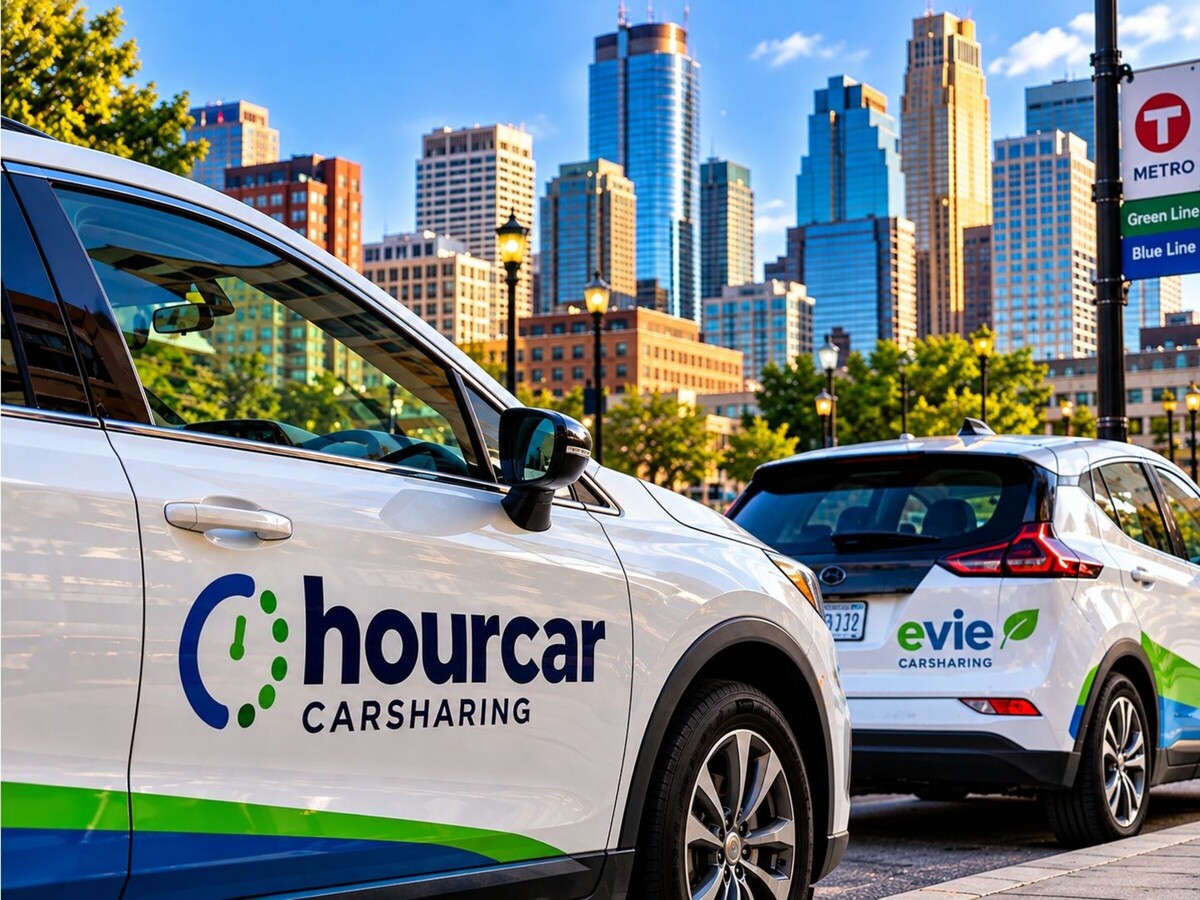



MINNEAPOLIS, MN (October 16, 2026). HOURCAR and Evie Carshare reached their scheduled noon shutdown deadline Thursday, bringing an end to a nonprofit transportation operation that has served Twin Cities residents since 2005 and leaving thousands of members searching for alternatives to vehicle ownership.
The closure proceeded despite a public campaign demanding emergency financial assistance, including an October 13 rally at Minneapolis Government Plaza that brought together riders, employees, transportation advocates and elected officials.
The demonstration failed to produce a committed rescue package before the deadline. Nevertheless, the campaign has opened a broader discussion about whether car-sharing should be funded as part of the Twin Cities regional transportation system rather than left dependent on a nonprofit organization's ability to secure grants and charitable support.
The immediate financial shortfall was approximately $625,000, according to HOURCAR's board of directors. That amount represented the remaining gap after months of fundraising, cost reductions and negotiations with government and philanthropic partners.
The nonprofit had originally identified a funding problem of approximately $1.1 million.
Its shutdown affects more than 4,000 active members, many of whom used shared vehicles to reach workplaces, grocery stores, medical appointments and other destinations that cannot always be accessed conveniently through public transit.
The October 13 demonstration was organized as an emergency appeal to elected officials and public agencies.
Supporters gathered Tuesday evening to argue that HOURCAR and Evie had become essential transportation services for people who could not afford, did not need or did not want to own a private automobile.
The rally included employees and residents who described the consequences of losing access to shared vehicles.
Among the organizers was Noah Velick, a HOURCAR employee who told CBS Minnesota that the service was personally important to him.
Riders also explained how the closure would affect ordinary responsibilities.
Minneapolis resident Susan Van Pelt, who receives Social Security disability benefits, told CBS Minnesota that vehicle ownership was financially beyond her reach and that she depended on car-sharing for shopping and medical appointments.
Another resident, Eliza Meyer, described the difficulty of arranging medical visits and transporting her pet without access to the service.
Their accounts illustrated an important distinction between car-sharing and transportation services that provide only scheduled routes or point-to-point rides.
For some residents, access to a vehicle for several hours makes it possible to complete multiple errands, transport groceries, carry equipment or reach destinations poorly served by transit.
The rally placed those experiences before public officials, but it did not secure the immediate funding necessary to keep the nonprofit operating.
Minneapolis City Council Member Soren Stevenson attended the rally and acknowledged that the city's budget outlook made emergency assistance difficult.
State Sen. Scott Dibble also expressed support for preserving car-sharing.
State Rep. Katie Jones outlined a possible legislative approach that would allow the Metropolitan Council to administer and fund a car-sharing program.
Jones indicated that she intended to introduce legislation during the next legislative session.
Dibble said he would support such a proposal.
Those statements are politically significant because they move the discussion beyond whether a single nonprofit can raise emergency donations.
They raise the possibility of treating car-sharing as a regional transportation responsibility, with financing and administration distributed across public agencies.
No such legislative arrangement had been enacted by the October 15 shutdown deadline.
The nonprofit's October 11 explanation provides a more detailed account of its financial difficulties than the initial shutdown announcement.
According to the board, the organization began experiencing substantial pressure in 2025 as vehicle insurance premiums and maintenance costs increased.
At the same time, federal grants included in its financial planning were canceled, reduced or delayed.
One affected grant was intended to help develop a more sustainable funding model.
The board said it responded by increasing prices, eliminating staff positions, reducing expenses and seeking additional support from public agencies and private foundations.
The McKnight Foundation, Xcel Energy and the 3M Foundation were among organizations whose contributions helped extend operations.
In June, HOURCAR convened representatives from city and county governments, transit agencies and other organizations to discuss a funding gap then estimated at $1.1 million.
Subsequent assistance reduced the immediate shortfall to approximately $625,000.
But the remaining amount could not be secured.
The board also disclosed that two significant funding proposals failed to receive support shortly before the closure announcement.
That development appears to have been decisive.
After consulting legal counsel, directors concluded that continuing operations without adequate resources could compromise their responsibilities to employees, creditors and other stakeholders.
The board voted to wind down the organization.
One question raised by the closure is why HOURCAR did not simply increase membership or rental prices enough to cover its expenses.
The board says it evaluated that option repeatedly.
According to its October 11 statement, previous price increases had sometimes reduced vehicle usage sufficiently to lower overall revenue.
The organization also considered reducing its service area.
But shrinking the network would have conflicted with its transportation equity commitments and potentially with requirements associated with public grants and partnerships.
That created a difficult operating problem.
The nonprofit was expected to provide affordable access across communities, including places where demand might not generate enough revenue to cover every cost.
At the same time, it faced expenses that continued rising regardless of whether members could afford higher prices.
The financial difficulty therefore involved more than an isolated accounting shortfall.
It raised questions about whether a transportation service with public accessibility goals could remain sustainable through user fees and intermittent outside support.
Minneapolis and Saint Paul were not entirely absent from the effort to preserve the service.
According to the Minnesota Star Tribune, Minneapolis provided approximately $300,000 in additional support during 2026, while Saint Paul contributed approximately $176,000.
Together, those contributions amounted to about $476,000.
The assistance helped reduce the shortfall but did not eliminate it.
Saint Paul City Council President Rebecca Noecker has questioned whether it is appropriate for one city to bear such a substantial share of the financial responsibility for a transportation network serving the broader metropolitan area.
The issue is especially relevant because HOURCAR's data indicates that many users live in Minneapolis and that most trips begin and end there.
A regional financing arrangement could distribute costs among jurisdictions benefiting from the service.
But determining that distribution would require agreement on funding responsibilities, operating standards and oversight.
One of the most important developments involves the vehicles themselves.
The Evie fleet consists of 167 Chevrolet Bolt electric vehicles leased by the City of Saint Paul, with financial participation from Minneapolis.
As the shutdown approached, Saint Paul assigned fire cadets to collect the vehicles from streets throughout the service area.
The cars are being moved into storage on city-owned property.
That arrangement means the vehicles are not simply disappearing into the assets of a dissolved nonprofit.
Their public-sector leasing arrangement creates a potential opportunity for future use.
However, the continued existence of the fleet does not automatically mean another organization can resume operations.
A replacement operator would need an appropriate agreement, insurance coverage, fleet management capacity, maintenance arrangements, customer support and a financially sustainable operating model.
Those requirements help explain why preserving the cars and restoring the service are separate tasks.
The closure also affects the relationship between Evie Carshare and the EV Spot charging network.
Although HOURCAR operated Evie vehicles, the EV Spot charging infrastructure is owned and operated by Minneapolis and Saint Paul.
The cities have confirmed that public charging will continue.
Drivers who own electric vehicles will therefore retain access to the public chargers, even though the Evie shared vehicles will no longer be available through HOURCAR.
Saint Paul officials have also discussed efforts to negotiate more favorable electricity rates for charging operations.
Maintaining the charging network preserves an investment that could support future transportation programs.
But it does not solve the immediate loss of access for residents who relied on shared vehicles because they did not own cars.
The shutdown has consequences for the people who operated the service.
HOURCAR President and CEO Amanda LaGrange told the Minnesota Star Tribune that the nonprofit's 21 employees were being laid off as the organization dissolved.
Their work included responsibilities associated with operating and maintaining the shared fleet, assisting members and managing the service.
The closure therefore represents both a transportation disruption and a loss of local employment.
The board has said it must preserve enough resources to carry out an orderly wind-down.
That responsibility includes addressing the organization's obligations while bringing operations to an end.
Jones' proposed legislation would explore a different institutional home for car-sharing.
The Metropolitan Council already has a regional transportation role, making it a potential subject of discussion about long-term administration.
However, no legislation has yet been enacted transferring HOURCAR or Evie responsibilities to the council.
The proposal would need to address which public agency would oversee operations, how the program would be funded, whether an outside operator would be contracted and what accountability standards would apply.
It would also need to determine whether the existing vehicles and charging network could be incorporated into a revived service.
These questions cannot be resolved through emergency funding alone.
HOURCAR's official notice established noon Thursday, October 15, as the final service deadline.
Reservations scheduled beyond the shutdown date are canceled.
Members who recently paid the annual account verification fee may request a refund through the organization's published form.
The organization says that members who do not request that refund will have their payments treated as charitable contributions.
The public EV Spot charging network will remain available.
Members seeking other transportation arrangements can consult the transit resource guide published by HOURCAR, which identifies alternatives to its car-sharing services.
The organization has not announced a confirmed date for restarting operations.
The shutdown exposes a gap in the way transportation is financed and organized across the Twin Cities.
Public transit provides essential mobility, but fixed routes and schedules cannot serve every travel need.
Private vehicle ownership offers flexibility but imposes substantial costs involving purchase, insurance, fuel, maintenance and parking.
Car-sharing has operated between those two models.
It allowed residents to access a vehicle when necessary without assuming the full financial burden of ownership.
According to HOURCAR's board, the organization estimated that its services helped regional residents avoid more than $23 million in transportation costs during 2025.
That figure is the organization's own estimate and should not be treated as an independently audited public benefit calculation.
Still, the accounts of members who attended the October 13 rally demonstrate that the service filled practical transportation needs.
The immediate campaign to secure $625,000 did not prevent the scheduled shutdown.
The longer-term campaign now concerns whether the region can establish a funding and operating structure capable of sustaining shared transportation without repeatedly confronting the same financial emergency.
For thousands of members, that discussion has begun too late to prevent an immediate disruption.
For Minneapolis, Saint Paul and regional policymakers, it presents a question that remains unresolved: whether car-sharing should be regarded primarily as a nonprofit service dependent on fundraising or as part of the transportation infrastructure that local governments have a responsibility to plan and support.
Official Resources and Member Assistance
HOURCAR shutdown announcement: https://hourcar.org/news/sunset
HOURCAR board explanation: https://hourcar.org/news/2026-10-11-answering-questions
HOURCAR transportation resource guide: https://hourcar.org/news/
HOURCAR telephone: 612-343-2277
HOURCAR email: info@hourcar.org

Local stories matter. Subscribe free to MinneapoliMedia and receive independent news, community reporting and important updates from Minneapolis, the North Metro and communities across Minnesota.
SUBSCRIBE FREE: https://minneapolimedia.town.news/subscribe
MinneapoliMedia | Community. Culture. Civic Life


Overcast, with a high of 50 and low of 43 degrees. Overcast during the morning, light rain in the afternoon, overcast in the evening,