58° and Sunny
MINNEAPOLIMEDIA NEWS | Saint Paul Moves Toward Driverless Vehicle Safeguards With New Study of Jobs, Safety, Accessibility and Data Privacy



The City Council's October 14 action advances a framework for examining autonomous transportation before commercial services expand, with workers, disability advocates and emergency responders expected to help shape recommendations.
SAINT PAUL, MN (October 15, 2026). Saint Paul has taken a significant step toward developing local policies for autonomous vehicles, with the City Council backing a study of how driverless transportation could affect employment, public safety, accessibility, emergency response and the privacy of residents.
The action follows the introduction of Resolution RES 26-1733, sponsored by Council President Rebecca Noecker and titled “Autonomous Vehicle Labor and Community Protections.”
The resolution recognizes that commercial driverless services could soon operate in Saint Paul while the city lacks a comprehensive local framework for addressing their effects.
Unlike Minneapolis, where council members have debated a requirement for human safety monitors in driverless rideshare vehicles, Saint Paul is choosing to examine the consequences before deciding which restrictions might be appropriate.
FOX 9 and CBS Minnesota reported that the council approved the study on October 14. The city's online legislative record reviewed for this report continued to display the resolution as agenda-ready without a final action entry, a discrepancy that should be reconciled against the official meeting record.
What the Resolution Actually Addresses
The resolution identifies three broad areas of policy concern: worker protections, public safety and accountability, and vehicle data.
Within those categories are several practical questions that affect residents well beyond the technology industry.
The city intends to examine the consequences for professional drivers whose livelihoods depend on transporting passengers.
It also identifies concerns about how autonomous vehicles operate during winter weather, respond to emergencies and interact with pedestrians, cyclists, transit vehicles and other road users.
The resolution recognizes that driverless vehicles collect substantial information through cameras, sensors and other equipment.
That creates questions about who may access the information, how long it is retained and whether data collected on public streets can be shared with third parties.
These issues distinguish the Saint Paul action from a general expression of support or opposition to driverless technology.
The city is seeking a basis for future policy decisions involving specific risks and public responsibilities.
The Employment Question
One of the most consequential concerns involves transportation workers.
Rideshare and professional driving provide income for thousands of people in the Twin Cities, including immigrant workers and workers of color.
Commercial robotaxi operations could change the economics of that work by allowing companies to provide rides without paying a driver for each trip.
The resolution calls for consideration of labor standards, worker protections and workforce transition strategies.
Those terms encompass different possible responses.
Labor standards could address conditions for workers who remain employed in transportation services.
Workforce transition strategies could examine training and other assistance for workers whose jobs are displaced.
The resolution does not establish a compensation program, guarantee replacement employment or specify how any transition assistance would be financed.
Those questions remain subjects for further study.
Council Member HwaJeong Kim emphasized the importance of protecting workers and their families during the October 14 discussion, according to CBS Minnesota.
Her comments placed employment security at the center of the city's deliberations.
Minnesota Winters Present a Distinct Challenge
Autonomous vehicle systems must operate in conditions that vary substantially by location.
Minnesota's winter weather creates challenges involving snow-covered pavement, reduced visibility, ice, road salt, temporary lane changes and obstructed markings.
These conditions are not unique to Minnesota, but they are frequent enough to warrant particular attention from local policymakers.
The Saint Paul resolution specifically identifies winter weather as a safety consideration.
That means the city should examine what evidence companies can provide about vehicle performance in adverse conditions and how services respond when operating conditions deteriorate.
The resolution does not establish that any particular company's vehicles are unsafe in winter.
Rather, it identifies an issue requiring evaluation before policymakers decide what safeguards may be necessary.
Emergency Response and Street Operations
Driverless vehicles also raise questions about how emergency responders interact with cars that have no human driver.
Police officers and firefighters may need vehicles to move away from an emergency scene, follow temporary directions or clear access for ambulances.
Autonomous systems must also respond appropriately to road closures, construction, traffic control and unexpected hazards.
Saint Paul's study is expected to examine emergency response and broader public safety concerns.
This is particularly relevant in a city with dense neighborhoods, major institutions, public transit corridors and streets shared by pedestrians, cyclists and motorists.
The question is not only whether a driverless vehicle can follow ordinary traffic rules.
It is how the system behaves when circumstances require unusual decisions or immediate cooperation with emergency personnel.
Accessibility and Disability Rights
The resolution identifies accessibility as another area requiring attention.
Autonomous vehicles may offer transportation opportunities for some residents who cannot drive.
But a service can be technically driverless without being accessible to everyone.
Wheelchair users, people with visual impairments and residents who need assistance entering or exiting vehicles may encounter barriers if services are not designed around their needs.
The proposed study is expected to include input from disability advocates.
That participation could help determine whether future recommendations address vehicle design, service availability, passenger assistance and other practical accessibility requirements.
The city has not announced a final accessibility standard.
Cameras, Sensors and Data Retention
Driverless vehicles rely on extensive information about their surroundings.
Their equipment can record road conditions, other vehicles, pedestrians, buildings and activity along public streets.
The Saint Paul resolution explicitly raises questions about the collection, storage, retention, use, sharing and disclosure of that information.
These are separate issues.
A company may need certain data to operate its vehicles safely, but that does not automatically answer how long information should be retained or under what circumstances it should be shared.
The study could help the city identify appropriate transparency and accountability expectations.
Any eventual requirements would need to be evaluated against applicable privacy laws and the limits of municipal authority.
Who Will Conduct the Study?
Reporting ahead of the October 14 vote identified Saint Paul's Planning Commission as the body expected to spearhead the study.
The process is expected to include transportation workers, labor organizations, disability advocates, public safety representatives and other stakeholders.
That participation matters because the effects of autonomous vehicles are unlikely to be distributed equally.
A passenger seeking convenient transportation may evaluate the technology differently from a professional driver concerned about employment.
An emergency responder may focus on operational safety, while a disability advocate may examine whether the service can accommodate passengers who need assistance.
A comprehensive study must consider those different experiences rather than relying exclusively on the claims of technology companies.
How Long Will It Take?
No binding completion deadline was identified in the reporting reviewed.
Noecker told CBS Minnesota that a full study could require at least six months and possibly as long as a year.
That was an estimate, not a formal deadline.
A dedicated study budget was also not independently verified.
Those are important limitations because the value of the process will depend partly on whether city staff have sufficient time, expertise and resources to complete it.
The Minneapolis Comparison
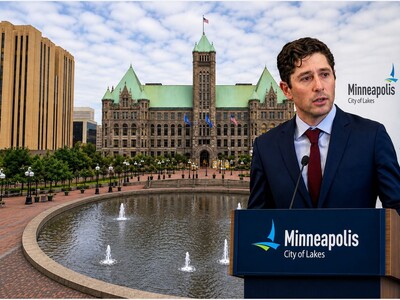
Minneapolis has pursued a more immediate regulatory approach.
Its council approved a proposal requiring human safety monitors in autonomous rideshare vehicles, but Mayor Jacob Frey vetoed the ordinance.
A council override requires nine votes.
Saint Paul has not adopted an equivalent requirement.
Noecker has indicated that human safety monitors could be considered but that she does not want to determine the study's conclusions in advance.
The distinction is significant.
Minneapolis has been debating a specific operating requirement. Saint Paul is attempting to establish the policy questions and evidence that should guide its eventual decisions.
What Happens Next
The next steps should clarify the study's leadership, public participation process, schedule and reporting requirements.
Residents should also watch for recommendations explaining which safeguards Saint Paul can legally adopt and how those measures would be enforced.
The October 14 action does not prohibit autonomous vehicles, approve a particular operator or establish a final set of local regulations.
It begins a process intended to determine what protections may be needed.
For Saint Paul, the central question is whether the city can prepare for emerging transportation technology without leaving workers, passengers and other road users to absorb risks that policymakers could have anticipated.
Official Resources
Saint Paul Resolution RES 26-1733: https://stpaul.legistar.com/LegislationDetail.aspx?GUID=3D3DBF56-FA72-420E-944F-F774FECA956A&ID=8281539
Saint Paul City Council: https://www.stpaul.gov/department/city-council

STAY CONNECTED TO MINNEAPOLIMEDIA
Local stories matter. Subscribe free to MinneapoliMedia and receive independent news, community reporting and important updates from Minneapolis, the North Metro and communities across Minnesota.
SUBSCRIBE FREE: https://minneapolimedia.town.news/subscribe
MinneapoliMedia | Community. Culture. Civic Life