57° and Light rain
Image
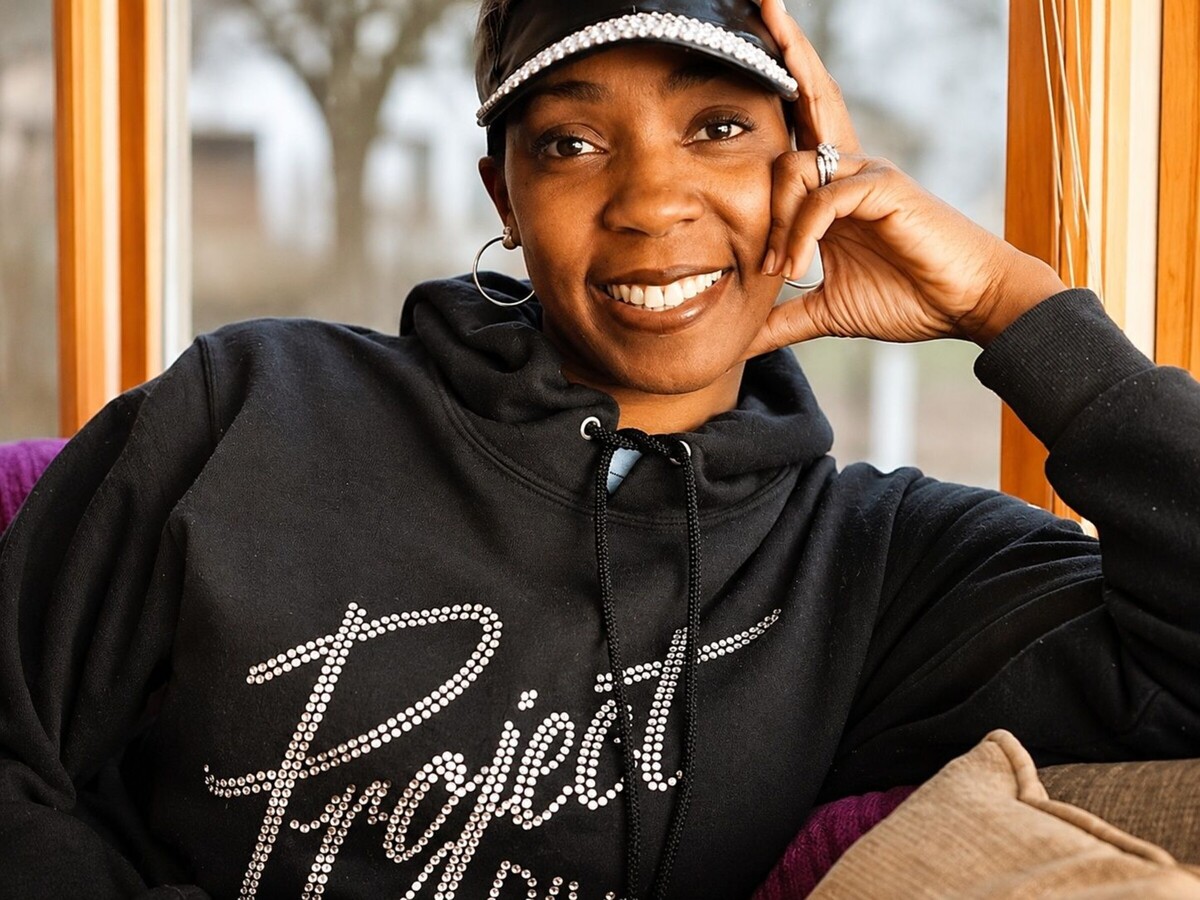



By Tom Akaolisa | Editor, MinneapoliMedia
MINNEAPOLIS, MN (November 2, 2026).
Some people enter community service because they recognize a problem. Others begin because they recognize something missing from their own lives, something they wish had been available when they were younger, when the questions were many and the answers were few.
Neda Renee Kellogg has spent nearly two decades turning that recognition into a sustained commitment to teen girls.
As founder and executive director of Project DIVA International, Kellogg has helped create an organization that challenges conventional assumptions about how young people should be prepared for adulthood. Her work extends beyond academic achievement, career aspirations, and the familiar advice that young people should work hard and make good decisions. She has focused on what it takes to develop the judgment, emotional awareness, financial understanding, and personal discipline necessary to make those decisions in the first place.
What began in a Minneapolis school has developed into a network of coaching relationships, educational experiences, community partnerships, and opportunities for teen girls to explore their interests and develop a clearer understanding of themselves.
Yet the story of Project DIVA International is also the story of a woman who has continued learning alongside the organization she founded.
Kellogg has been an educator, organizer, advocate, fundraiser, relationship builder, and persistent voice for a different understanding of youth development. She has also been willing to reconsider methods, refine expectations, and challenge assumptions about what adults should provide and what young people should be encouraged to discover for themselves.
Her contribution to Minnesota deserves recognition not because every challenge has been overcome or every ambition fulfilled, but because she has remained committed to the work long enough to help create something that continues to grow beyond its original form.
This is a tribute to that commitment, to the woman behind it, and to the people who have helped her carry it forward.
The beginnings of Project DIVA International can be traced to the 2007–2008 school year at Dunwoody Academy Charter School in Minneapolis.
Kellogg, working alongside Etosha Cook and Jahonna Olsen, helped establish an early coaching initiative for girls. What began as a school-based group grew from the recognition that young people needed more opportunities to explore their identities, understand their choices, develop supportive relationships, and connect what they were learning in school with the responsibilities awaiting them beyond the classroom.
By May 2009, the effort had taken shape as Project DIVA International, a nonprofit organization with a broader mission and a growing network of adults willing to contribute their time and expertise.
The name DIVA represented Dignity, Integrity, Virtue, and Availability, values that helped establish an identity for the organization and the girls participating in its early activities.
The early model connected girls with adults from professional and community backgrounds. Participants explored career possibilities, developed presentations about their aspirations, and encountered people whose experiences could expand their understanding of what was possible.
A 2009 report in the Star Tribune described Project DIVA participants working with a business professional to create video presentations about their visions and career goals. The activity offered an early illustration of Kellogg's approach: girls were not simply being told to dream. They were being given opportunities to articulate those dreams and engage with people who could help them think about the steps required to pursue them.
That distinction has remained important.
An adult can tell a girl that she can become an engineer, entrepreneur, physician, educator, or business owner. But the experience changes when she can meet someone working in that field, ask questions about the profession, understand the preparation involved, and begin imagining herself in a similar position.
For Kellogg, exposure has been an important part of learning. So has the opportunity to make connections between aspirations and the decisions required to pursue them.
The organization grew from those early experiences, but it never depended on Kellogg alone. Its development reflected the contributions of colleagues, coaches, volunteers, families, and community partners who believed young people deserved sustained attention.
The decision to build something together was an important part of what allowed the original idea to develop into an enduring organization.
Kellogg's approach begins with a question that many families and educators recognize.
What does it actually mean to prepare a girl for adulthood?
Academic achievement matters. So do educational opportunities, career exploration, and professional connections. But adulthood also brings responsibilities that are not always captured by grades, diplomas, or résumés.
A young person must eventually learn to manage money, navigate relationships, communicate boundaries, recognize unhealthy situations, respond to disappointment, and make decisions when the consequences are uncertain.
She must learn how to recover when something does not work, how to ask for help without surrendering her independence, and how to maintain commitments when enthusiasm fades.
These capacities are developed over time.
Project DIVA International has increasingly organized its learning environment around three areas: financial curiosity, emotional regulation, and mental fitness.
Financial curiosity encourages girls to ask questions about money and examine the relationship between financial choices and the lives they hope to build. It introduces the idea that financial stability begins not only with earning money but with understanding it.
Emotional regulation helps girls recognize and understand their feelings, consider their responses, and develop healthier ways of navigating difficult situations.
Mental fitness focuses on habits, consistency, attention, and the discipline needed to pursue goals through changing circumstances.
These areas are interconnected.
A financial decision may be influenced by emotion. A difficult relationship may affect concentration. An ambitious goal may require adjustments to daily routines. Learning to recognize those connections can help a young person become more deliberate about her choices.
Kellogg's work has emphasized the importance of making these ideas practical.
Rather than treating personal development as something that happens only when an adult delivers a lesson, Project DIVA has sought to create opportunities for girls to engage with real questions and responsibilities.
The intention is not to produce teenagers who never make mistakes. It is to support young people as they develop the judgment to learn from experience and make more informed choices.
That approach requires patience, consistency, and adults willing to listen as carefully as they speak.
It is also a reminder that young people are not unfinished versions of adults waiting to be told who they should become. They are individuals already developing their own perspectives, interests, abilities, and values.
A meaningful learning environment must make room for that development.
Kellogg has spoken publicly about the experiences that influenced her decision to devote herself to youth development.
In a 2018 essay for Minnesota Women's Press, she described how her mother's mental illness interrupted an important source of guidance during her adolescence. She also wrote about the difficulties she experienced as a young adult and her eventual determination to better understand her identity and possibilities.
Those experiences helped shape her understanding of the difference that attentive adults can make in a young person's life.
But Kellogg's story should not be reduced to the hardships she encountered.
Her more significant contribution is what she has chosen to build from the understanding those experiences gave her.
She recognized that young people need more than adults who tell them to be strong. They need people who take their questions seriously, introduce them to possibilities they may not have encountered, and help them develop the practical abilities necessary to navigate an increasingly complicated world.
Kellogg also recognized the value of community.
Her leadership has never been based on the assumption that one person can provide everything a girl needs. Project DIVA has depended on adults with different backgrounds, professions, and life experiences who are willing to contribute to a shared mission.
That willingness to invite others into the work has helped distinguish the organization.
It has also required Kellogg to develop as a leader.
Founding a nonprofit demands more than a compelling idea. Someone must establish relationships, secure resources, organize activities, recruit contributors, communicate with families, and manage the administrative responsibilities that make sustained service possible.
As an organization grows, those responsibilities become more complicated.
Kellogg has had to balance the personal commitment that inspired Project DIVA with the institutional demands necessary to keep it functioning.
That balance is rarely easy, particularly in community organizations whose ambitions can exceed their financial and administrative capacity.
Her willingness to continue building through those demands is part of the achievement this tribute recognizes.
No account of Kellogg's work would be complete without recognizing the women who have helped shape Project DIVA International.
The organization's early history includes Etosha Cook and Jahonna Olsen, whose involvement in the original school-based initiative helped establish the foundation for what followed.
Over the years, other women have contributed professional experience, personal insight, coaching, and relationships that extend beyond formal learning sessions.
Keeya Allen is among the longtime contributors whose association with Project DIVA has been publicly documented.
In a 2018 Star Tribune profile, Allen described Kellogg's commitment to creating opportunities for young people that she herself had needed. Allen also spoke about the persistence required to sustain the organization.
Their relationship illustrated something important about the Project DIVA model: adults were not expected to participate merely as occasional guest speakers. They could become part of a larger network of guidance, professional exposure, and continuing encouragement.
The same principle extends to families.
When caregivers understand and participate in a young person's development, the work can become more connected to everyday life. Conversations about goals, relationships, financial decisions, and responsibilities do not end when a learning session concludes.
They continue at home, in school, among friends, and wherever young people encounter new challenges.
Kellogg's leadership has helped bring these relationships together, but their strength depends on the contributions of many people.
Recognizing that collective effort does not diminish her accomplishments.
It gives a more accurate account of what she has built.
The lasting influence of a founder is not measured only by personal visibility. It can also be measured by the number of people who understand the mission well enough to contribute to it, improve it, and help carry it forward.
One of the clearest public examples of Project DIVA's approach came in August 2022, when CBS Minnesota reported on a young participant, Leeanna Pineda, taking her first flight through an aviation experience associated with the organization.
The report showed a girl encountering an opportunity that had previously existed largely as an aspiration.
The significance was not simply that she boarded an aircraft.
It was that a young person interested in aviation had an opportunity to experience something connected to that interest, speak about her ambitions, and begin understanding the possibilities before her.
The story also featured her mother, Karen Pineda, who described having participated in Project DIVA herself when she was younger.
That intergenerational connection was particularly revealing.
It suggested that the organization's relationships could continue to matter beyond a single cohort or school year, reaching into the lives of former participants and their families.
The aviation experience was one example among several areas of exposure publicly associated with Project DIVA, including entrepreneurship, investing, business, real estate, career exploration, and personal development.
Not every girl will pursue the profession or interest she first explores. That is not necessarily the purpose.
Exposure can help a young person discover what she enjoys, what she finds difficult, what questions she wants to ask, and which possibilities deserve further consideration.
Sometimes, an experience confirms an ambition. Sometimes, it leads someone in a different direction.
Both outcomes can be valuable.
Kellogg's work has helped create opportunities for those discoveries to happen before young people face the full responsibilities of adult decision-making.
And that is one reason her contribution cannot be adequately described through a list of activities.
The deeper purpose is to help teen girls develop a more informed understanding of themselves and the choices available to them.
Nearly two decades of nonprofit leadership also means nearly two decades of practical organizational challenges.
Community service requires funding, planning, staffing, administration, and dependable relationships. A founder who begins with a desire to help young people must eventually confront budgets, reporting responsibilities, volunteer coordination, and the ongoing search for partners.
Kellogg has navigated those demands while continuing to develop Project DIVA's identity and reach.
In 2018, she was selected for a Bush Fellowship, an opportunity designed to support leadership development. At the time, the fellowship provided space for her to strengthen her own capacity after years devoted to building the organization.
That recognition was significant because it acknowledged not only the work already accomplished but the importance of investing in the person responsible for leading its next stages.
Leadership development is sometimes treated as a luxury in community organizations. Yet an institution's ability to grow often depends on whether its leaders have opportunities to improve their skills, examine their assumptions, and build stronger systems.
Kellogg's development as a leader has continued alongside Project DIVA's evolution.
In 2022, the Star Tribune reported on assistance the organization received through HandsOn Twin Cities and a volunteer human-resources project involving Xcel Energy professional James Houston.
The arrangement addressed administrative needs that had placed considerable demands on Kellogg's time.
The story offered a useful reminder that effective community partnerships are not limited to sponsorships or donations. Sometimes, the most valuable contribution is professional expertise that allows a small organization to operate more effectively.
A stronger administrative structure can create more room for an executive director to concentrate on partnerships, organizational direction, and the people the institution exists to serve.
These practical improvements rarely receive the attention given to public events or individual success stories.
But they are essential to sustainability.
Kellogg's continuing work involves not only creating opportunities for teen girls but strengthening the institution responsible for delivering those opportunities.
That is what it means to move from founding an organization to helping it endure.
One of the most important things to understand about Neda Kellogg is that her work has not stood still.
Project DIVA International has changed over the years as its leadership has gained experience, developed relationships, and reconsidered how best to serve teen girls.
The organization has expanded beyond the original school-based group, developed different forms of learning and professional exposure, and refined the language it uses to explain its mission.
Its current emphasis on lifestyle stability, coaching, financial curiosity, emotional regulation, and mental fitness reflects that evolution.
Kellogg's commitment to refinement matters because youth development cannot be treated as a fixed formula.
The world that today's teenagers are entering differs in important ways from the one their parents encountered. Technology has changed how young people communicate and compare themselves with others. Financial pressures influence family decisions. Expectations surrounding education, employment, relationships, and personal identity continue to evolve.
An organization serving young people must remain attentive to those changes without abandoning its underlying purpose.
Kellogg's leadership demonstrates the value of combining consistency of mission with a willingness to adapt methods.
She has continued to emphasize self-discovery, personal responsibility, meaningful relationships, and practical preparation while exploring how those commitments can be expressed more effectively.
The work is not finished, and it should not be presented as though it were.
An organization approaching its twentieth year has an opportunity to examine what has worked, what needs improvement, and what new responsibilities its experience may create.
Kellogg remains engaged in that process.
That continuing commitment deserves as much recognition as the decision to begin.
Kellogg's community involvement has also extended into broader conversations about relationships, safety, responsibility, and the well-being of families.
In October 2026, she moderated the virtual Before Violence Begins roundtable, which brought together speakers addressing domestic violence prevention, community responsibility, and the importance of recognizing harmful behavior before it escalates.
Her participation was consistent with the concerns that have informed much of her work with teen girls.
Personal development does not take place in isolation. Young people are influenced by the relationships they observe, the conduct adults model, and the environments in which they are expected to learn and grow.
Conversations about respect, boundaries, accountability, and emotional awareness are relevant not only to teenagers but to the communities responsible for supporting them.
Kellogg's willingness to participate in these discussions reflects an understanding that youth development is connected to broader questions of community health.
Families and institutions cannot reasonably demand responsible behavior from young people while ignoring the examples adults provide.
The responsibility must extend across generations.
That principle has helped make Kellogg's work relevant beyond the immediate activities of Project DIVA International.
There are many ways to evaluate the contribution of a community leader.
One can examine the length of an organization's service, the partnerships it has established, the experiences it has offered, and the people who have participated.
Project DIVA International publicly reports having reached more than 5,000 girls over its history. That figure provides a sense of the organization's reported scale, although it should not be mistaken for an independently established measure of long-term outcomes.
The number matters, but the relationships behind it matter as well.
A young person may remember a professional who took her questions seriously, a coach who encouraged her to reconsider a decision, or an experience that helped her discover a new interest.
An adult contributor may remember the moment she realized that her professional knowledge could become useful to someone still exploring a future career.
A parent may recognize a change in how a daughter approaches a difficult conversation or takes responsibility for a commitment.
Such experiences do not automatically establish the effectiveness of every organizational practice. They do, however, help explain why sustained relationships and opportunities for participation remain central to the mission.
Kellogg has helped create an environment in which those relationships can develop.
Her achievement is not that she has found a single answer to the challenges of adolescence.
It is that she has spent nearly two decades organizing people, resources, and opportunities around the conviction that teen girls deserve thoughtful preparation for adulthood.
That is substantial work.
It requires patience when progress is slow, humility when methods need improvement, and persistence when resources are limited.
It also requires the ability to recognize that the people being served are not merely beneficiaries of adult generosity.
They are individuals whose ideas, choices, and aspirations should influence the direction of their own development.
That understanding is among the most valuable aspects of Kellogg's contribution.
As Project DIVA International approaches two decades of service, MinneapoliMedia recognizes Neda Renee Kellogg for the vision, persistence, and leadership she has brought to Minnesota's community life.
We recognize the woman who helped establish a school-based initiative in 2007 and continued working as it developed into a nonprofit organization.
We recognize the founder who understood that preparing young people for adulthood required attention to their emotional lives, financial decisions, relationships, and personal responsibilities.
We recognize the executive director who has worked to sustain an organization while learning how to make it stronger.
We recognize the colleague who has invited other women, professionals, families, and community partners to contribute their knowledge and experience.
And we recognize the community leader who continues to refine her approach rather than assuming that the work of youth development can ever be considered complete.
This dedication does not suggest that Neda Kellogg has accomplished everything she hopes to accomplish.
Indeed, part of what makes her story compelling is that she is still building.
She is still learning from experience, strengthening relationships, developing opportunities, and considering how Project DIVA International can better serve the teen girls who remain at the center of its mission.
That continuing work is itself worthy of respect.
A founder's legacy should not be discussed only after the founder has stepped away. There is value in recognizing people while they remain actively engaged in the institutions they have created, while they can see their colleagues' contributions, appreciate the progress made, and continue shaping what comes next.
Kellogg has given a substantial portion of her adult life to this undertaking.
She has also demonstrated that community leadership is not simply a matter of having an inspiring idea. It is the daily responsibility of making that idea useful, sustainable, and responsive to the people it is intended to serve.
For nearly twenty years, she has returned to that responsibility.
The teen girls who enter Project DIVA International will pursue different interests, encounter different challenges, and choose different paths. They will not all become the same kind of adult, nor should they.
The purpose of preparing them is not to decide their futures on their behalf.
It is to help ensure that they have more knowledge, stronger judgment, useful relationships, and greater confidence in their ability to make those decisions themselves.
That is the work Neda Kellogg began.
It is the work she continues to build and perfect.
Local stories matter. Subscribe free to MinneapoliMedia and receive independent news, community reporting and important updates from Minneapolis, the North Metro and communities across Minnesota.
SUBSCRIBE FREE: https://minneapolimedia.town.news/subscribe
MinneapoliMedia | Community. Culture. Civic Life


Patchy rain nearby, with a high of 64 and low of 57 degrees. Light drizzle in the morning, moderate rain for the afternoon, patchy rain nearby in the evening,