58° and Overcast
Image



MINNEAPOLIS, MN (November 3, 2026).
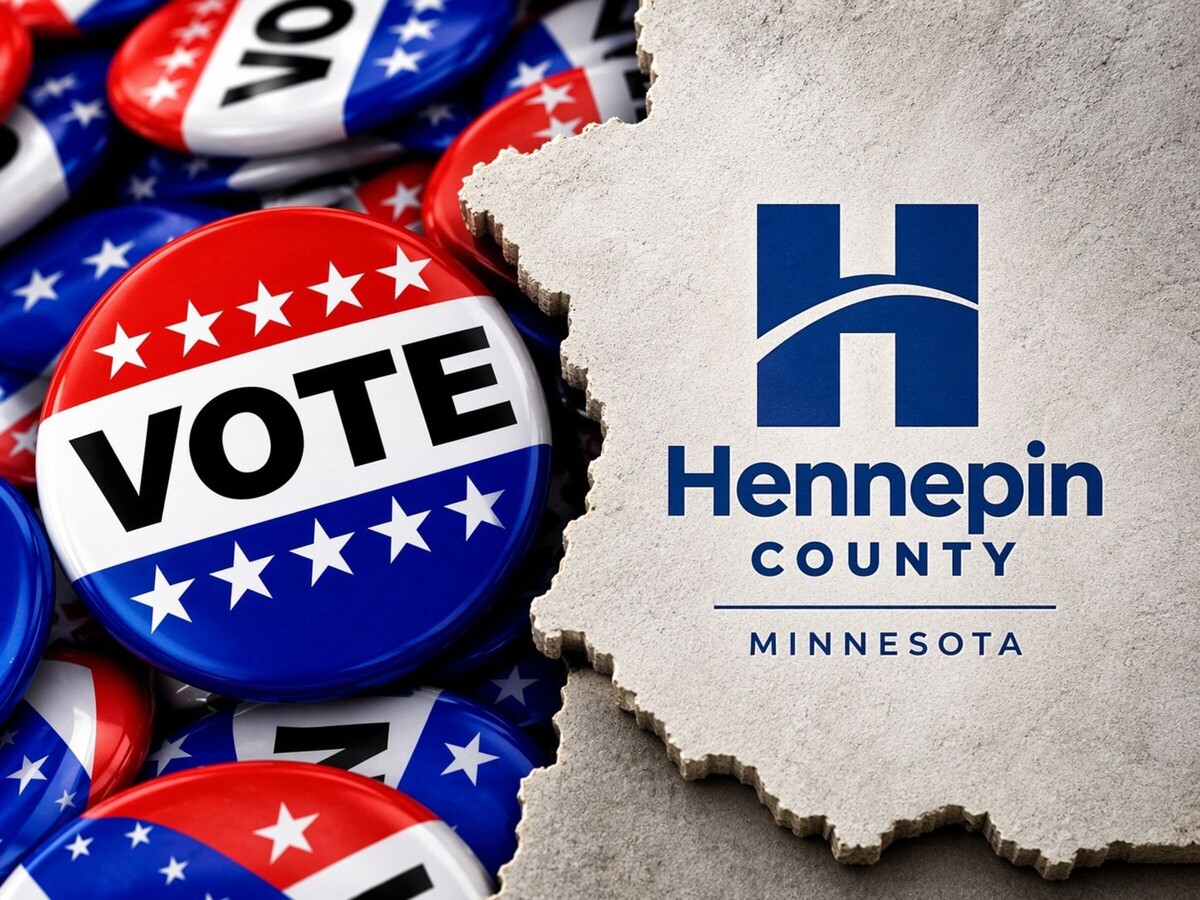
Hennepin County officials have rejected a request from the U.S. Department of Justice to place federal election monitors inside polling locations during Tuesday's general election, establishing restrictions on the federal government's monitoring activities as Minnesota voters choose their next governor, U.S. senator and other elected officials.
The decision, announced Monday by the Hennepin County Attorney's Office, follows a similar dispute over federal monitoring during Minnesota's August primary election.
The Justice Department had requested permission for its personnel to enter polling places and observe election activities. Following consultations with the county attorney's office, the Minnesota Secretary of State's Office and other officials, Hennepin County declined to authorize that access.
Federal monitors are nevertheless expected to be present outside selected polling locations.
Under Minnesota law, the personnel must remain outside the 100-foot boundary surrounding polling places unless otherwise legally authorized.
The restrictions come amid heightened scrutiny of federal election oversight, with state officials emphasizing the need to protect voters from interference while recognizing the federal government's legitimate responsibilities under voting rights law.
According to the Hennepin County Attorney's Office, Justice Department monitors are expected to comply with the county's decision and remain outside polling places.
The monitors are expected to wear civilian clothing and may approach voters after they leave polling locations to request interviews.
Participation in those conversations is entirely voluntary.
Voters are not required to answer questions from federal monitors as a condition of casting their ballots.
The county also emphasized that monitors cannot obstruct access to polling locations, direct election judges or interfere with election administration.
Those restrictions are intended to preserve the authority of local election officials while allowing lawful monitoring activities.
At a Monday election briefing, Secretary of State Steve Simon said federal monitors were expected in both Hennepin and Ramsey counties.
According to information reported by FOX 9, federal personnel could be deployed in approximately five or six two-person teams in Hennepin County and four or five two-person teams in Ramsey County.
Simon said he expected Justice Department attorneys rather than federal law enforcement or immigration officers.
He also indicated that the monitors would not be carrying firearms or displaying badges.
The distinction is significant because the Justice Department has conducted election monitoring under administrations of both major political parties.
Federal monitoring may serve legitimate purposes, including evaluating compliance with federal voting rights protections and ensuring accessibility for eligible voters.
However, the presence of federal personnel does not exempt them from applicable state election procedures or authorize interference with voters.
Hennepin County was not alone in restricting access to polling places.
Ramsey County also declined the Justice Department's request to permit monitors inside voting locations.
Minnesota officials have stated that federal personnel generally require authorization to enter polling places in the circumstances described.
The county decisions therefore establish clear operational boundaries for Tuesday's monitoring activities.
The restrictions do not prohibit all federal observation.
Instead, they distinguish between lawful activity outside polling locations and unauthorized entry or interference inside facilities where election judges administer voting.
Hennepin County Attorney Mary Moriarty said her office remains committed to protecting the integrity and safety of the election.
The office stated that reports of potentially unlawful behavior directed at voters or election workers would be reviewed and could result in prosecution where legally appropriate.
The county's position underscores the responsibilities of local prosecutors when allegations of voter intimidation, obstruction or other election-related offenses arise.
Election officials must protect the ability of eligible residents to vote without unlawful interference.
At the same time, any allegation of misconduct requires an appropriate factual investigation and application of the relevant law.
The presence of a federal monitor, by itself, does not establish misconduct.
Minnesota's Attorney General's Office has announced plans to observe the federal monitoring teams.
The additional oversight is intended to help determine whether monitors comply with state requirements while conducting their activities.
Secretary of State Simon also said his office would participate in observing the federal personnel.
The arrangement creates an additional layer of supervision involving state officials and the federal monitors.
It also reflects the practical challenge of coordinating election oversight among government institutions with different legal responsibilities.
Federal authorities enforce applicable federal voting rights laws, while state and local election officials administer Minnesota elections under state and federal requirements.
Those responsibilities can coexist, but disputes arise when the agencies disagree about access or authority.
The controversy takes place in a state where the relationship between federal authorities and local institutions has already been subjected to considerable scrutiny during 2026.
Federal immigration enforcement operations earlier in the year generated disputes involving constitutional protections, public safety and access to evidence following shootings involving federal personnel.
The deaths of Renee Good and Alex Pretti in Minneapolis brought particularly intense attention to questions of federal accountability and the responsibilities of state and local government.
The election-monitoring dispute is legally distinct from those incidents.
Justice Department election monitors are not performing immigration enforcement duties, and their presence should not be treated as evidence that immigration operations are occurring at polling places.
Nevertheless, both situations raise questions about how federal authority operates within Minnesota and how state and local institutions enforce applicable legal boundaries.
For voters, the immediate issue is whether the election can proceed without intimidation, obstruction or confusion over who is authorized to direct polling-place activities.
Minnesota officials are also taking steps to strengthen election security.
According to FOX 9's reporting on Monday's briefing, the state has allocated approximately $250,000 for cybersecurity penetration testing after changes in federal support for certain election security assessments.
The testing is intended to identify potential weaknesses in election-related systems.
Election security involves several separate responsibilities, including protecting voting equipment, maintaining accurate registration records, securing ballot-handling procedures and ensuring that election workers can carry out their duties.
The additional cybersecurity investment forms part of those preparations.
It should not be interpreted as evidence that Minnesota's election systems have been compromised.
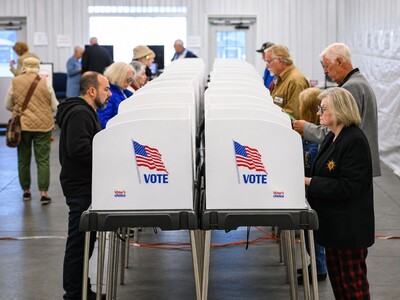
Minnesota polling places are open Tuesday from 7 a.m. until 8 p.m.
Eligible voters already in line at 8 p.m. may still cast their ballots.
Residents should report suspected intimidation or interference to election officials or appropriate authorities.
Voters approached by federal monitors outside a polling location are not required to participate in interviews.
Monitors and other members of the public may not prevent voters from entering polling places, direct election judges or disrupt voting operations.
The Minnesota Secretary of State's Office provides assistance through its election call center at 1-877-600-VOTE (8683).
Residents may also contact their county or municipal election offices.
The dispute over federal monitoring illustrates the importance of clearly defined responsibilities during elections.
The Justice Department has legitimate duties involving enforcement of federal voting rights protections.
Minnesota election officials have corresponding responsibilities to administer voting, protect ballot access and enforce applicable state procedures.
Neither responsibility eliminates the other.
For Hennepin County, the decision to restrict federal monitors to areas outside polling locations establishes the operational rules officials expect to apply Tuesday.
For residents, the central assurance is that eligible voters retain the right to cast their ballots without unlawful interference, regardless of which government agencies are present nearby.
The effectiveness of those safeguards will depend on compliance with the law, appropriate oversight and the willingness of election officials to respond to documented problems.
As Minnesotans vote November 3, the county's decision places a renewed focus on the responsibilities of government institutions to protect both election integrity and the rights of individual voters.

Local stories matter. Subscribe free to MinneapoliMedia and receive independent news, community reporting and important updates from Minneapolis, the North Metro and communities across Minnesota.
SUBSCRIBE FREE: https://minneapolimedia.town.news/subscribe
MinneapoliMedia | Community. Culture. Civic Life


Overcast, with a high of 63 and low of 54 degrees. Overcast for the morning, light drizzle in the afternoon, mist during the evening, light drizzle overnight.