58° and Light drizzle
Image
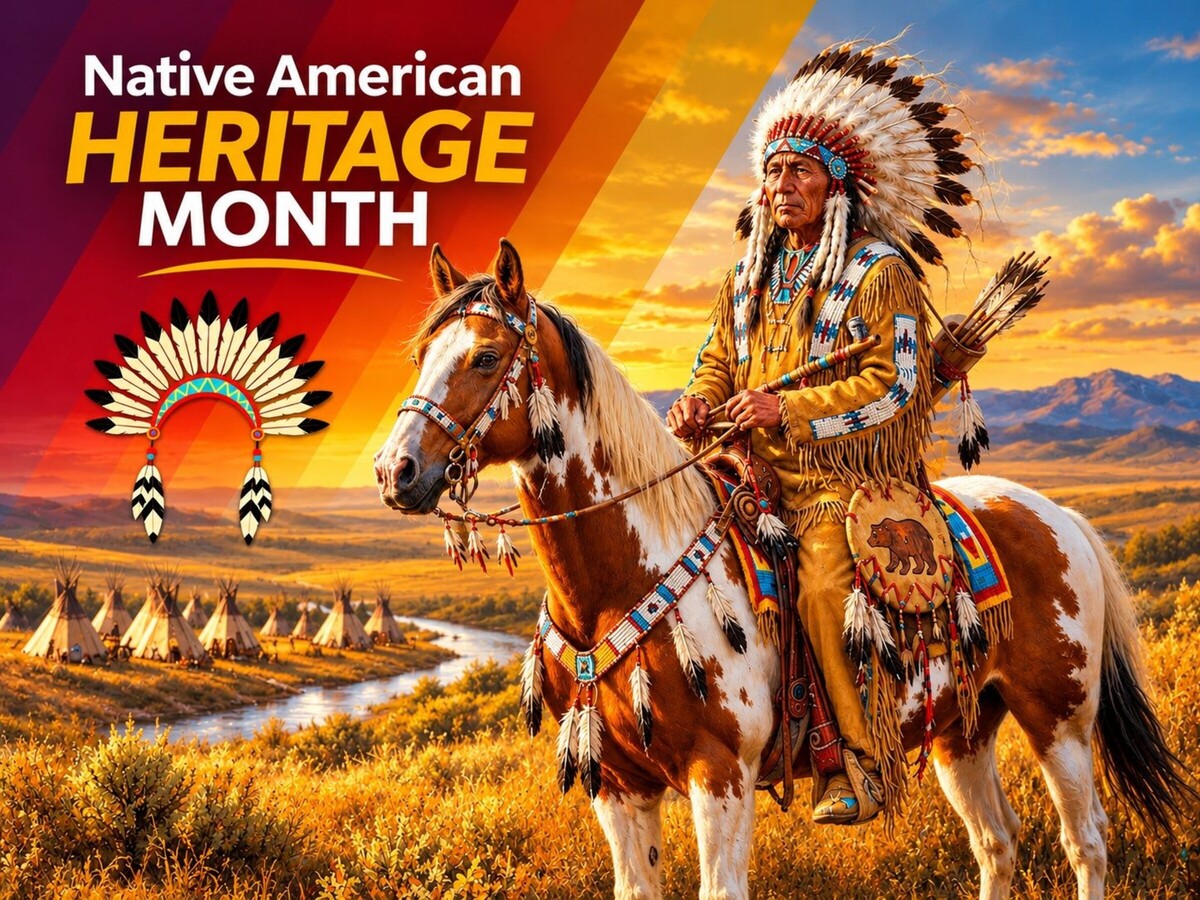



MINNEAPOLIS, MN (November 1, 2026).
National Native American Heritage Month begins with an opportunity and a warning.
The opportunity is to learn from the histories, governments, cultures and continuing contributions of American Indian and Alaska Native peoples. The warning is that a month intended to correct generations of erasure can become another form of erasure when institutions present Indigenous people as figures from the distant past rather than citizens, leaders and members of sovereign nations living in the United States today.
Schools will organize lessons. Museums will open exhibitions. Government agencies will issue proclamations. Libraries will display books by Native authors. Community organizations will host speakers, artists and cultural programs. These activities can provide valuable public education, especially in a country where generations of students were taught incomplete or inaccurate accounts of Indigenous history.
But commemoration cannot stop with ceremonies, performances, historical portraits and carefully worded statements of respect.
Minnesota is home to 11 sovereign Tribal Nations, consisting of seven Anishinaabe reservations and four Dakota communities. Each has its own government, leadership, laws, priorities and relationship with the state and federal governments. These nations existed before Minnesota became a state. Their sovereignty does not arise from a cultural designation granted by state officials. It is an inherent political and legal authority that predates the United States.
Native American Heritage Month must therefore address more than heritage. It must address political authority, treaty obligations, land, water, education, public safety, health care, language preservation and the right of Tribal Nations to shape decisions that affect their citizens.
A celebration that praises Indigenous art while ignoring Indigenous jurisdiction is incomplete. A school lesson that describes the Dakota and Anishinaabe only in the past tense miseducates students. A government proclamation that recognizes Native history while state agencies make consequential decisions without meaningful Tribal consultation turns respect into public relations.
Minnesota can observe this month with greater honesty. It can begin by recognizing that Indigenous people are not merely part of the state’s history. Tribal Nations are governments, Indigenous communities are active participants in public life, and the responsibilities created by treaties and law continue throughout the year.
The observance emerged from Indigenous advocacy
National Native American Heritage Month did not begin as a spontaneous gesture of federal goodwill. It developed through decades of advocacy by Native leaders who challenged a public culture that had marginalized Indigenous histories while federal policy continued to interfere with Tribal lands, governments, families and traditions.
In the early 20th century, Dr. Arthur C. Parker, a Seneca scholar and museum director, advocated for a national day recognizing American Indian people. Red Fox James, a Blackfoot advocate, traveled across the country seeking support from state governments for a national observance. Individual states and civic organizations gradually adopted commemorations, although no consistent national recognition existed.
Congress authorized Native American Awareness Week in 1976. Fourteen years later, Congress approved and President George H.W. Bush signed Public Law 101-343, designating November 1990 as National American Indian Heritage Month. Annual proclamations and related observances continued in later years.
That progression matters because it shows that recognition was demanded by Indigenous advocates. It was not simply presented to Native communities by the same federal government that had spent generations pursuing removal, allotment, forced assimilation and the suppression of Native languages and religions.
The federal government does not establish one binding national theme for every year’s observance. Agencies, Tribal Nations, educational institutions and community organizations develop their own programs. That flexibility can encourage local relevance, but it also requires discipline. Institutions should not invent ceremonial themes and present them as official national policy. They should ground their work in verified history and consult the Indigenous people whose experiences they intend to represent.
The month should not become a collection of generalized statements about resilience and tradition. Native communities are diverse. The experiences of Dakota people in Minnesota are not interchangeable with those of Anishinaabe nations, Alaska Native villages, Pueblo communities or the Cherokee Nation. Even within broader cultural and linguistic groupings, Tribal Nations maintain distinct governments, histories and relationships with the United States.
Recognition must begin with that specificity.
Sovereignty is the central fact
Many Americans understand Native identity primarily through race or culture. Those dimensions matter, but they do not fully describe the legal and political status of Tribal Nations.
Federally recognized Tribes have government-to-government relationships with the United States. They possess inherent rights of self-government and exercise authority over matters including citizenship, public safety, courts, economic development, natural resources, health services and education, subject to the complicated boundaries created by federal Indian law. As of January 30, 2026, the Bureau of Indian Affairs listed 575 federally recognized Tribal entities.
Minnesota law acknowledges federally recognized Tribes as sovereign political entities that existed before the United States and retained inherent authority to maintain governments, enact laws and determine jurisdiction. State law also recognizes that Minnesota cannot extinguish that sovereignty through ordinary legislative or judicial action.
These principles are not ceremonial language. They should determine how the state operates.
When Minnesota considers a transportation project, energy facility, pipeline, mining proposal, water regulation, child welfare policy or educational standard with Tribal implications, affected Tribal governments are not simply another category of public commenter. They are governments entitled to consultation conducted on a government-to-government basis.
Minnesota’s statutory consultation requirements reflect that obligation. State agencies are expected to consult individual Tribal governments on matters with Tribal implications. Consultation with an umbrella organization does not substitute for consultation with each affected nation.
The distinction is critical. Public notice allows residents and organizations to submit opinions. Government-to-government consultation recognizes political authority and requires agencies to engage Tribal leaders before major decisions become final.
Consultation also must be more than notification. An agency has not meaningfully consulted a Tribal Nation when it presents a nearly completed project, schedules a late-stage meeting and asks for comments after the principal decisions have been made. Consultation should begin early enough to influence the outcome. Agencies should explain how Tribal recommendations were evaluated and why they were accepted, modified or rejected.
Heritage Month provides an appropriate moment for every Minnesota agency to examine whether its consultation practices satisfy the purpose of the law or merely complete a procedural requirement.
The boarding-school record requires public honesty
Any responsible observance of Native American Heritage Month must confront the federal Indian boarding-school system.
For generations, federal policy separated Indigenous children from their families and communities. Children were sent to institutions designed to suppress their languages, spiritual practices, family relationships and cultural identities. Many received English names. Their hair was cut. Their clothing was replaced. Their languages and ceremonies were punished. Education was frequently combined with forced labor, military discipline and religious instruction intended to replace Indigenous beliefs.
The Department of the Interior’s Federal Indian Boarding School Initiative produced the first comprehensive federal investigation of that system. Its second and final report, released in 2024, identified 417 federal Indian boarding-school institutions across 37 states or territories. The investigation confirmed at least 973 deaths of American Indian, Alaska Native and Native Hawaiian children and identified at least 74 marked or unmarked burial sites at 65 school locations. The department also estimated that the federal government made more than $23.3 billion available, measured in 2023 inflation-adjusted dollars, for the school system and related assimilation policies between 1871 and 1969.
Those numbers are not an argument for assigning personal guilt to people living today. They are evidence of government policy whose consequences remain visible in families, institutions and communities.
The boarding-school system disrupted the transmission of languages, parenting practices, spiritual traditions and community knowledge. Children who survived abuse and forced separation often returned home carrying trauma they were not permitted or able to discuss. Some never returned. Families were denied complete information about deaths and burials. Communities continue searching for records and relatives.
The federal investigation also acknowledged that its documented death total is incomplete. Records were lost, scattered, withheld or never created. The confirmed numbers establish a minimum, not a final accounting.
Heritage Month programming should not present boarding schools as an unfortunate misunderstanding from another era. The system was not incidental to federal Indian policy. It was one of the mechanisms used to weaken Tribal identity and control Indigenous land and political life.
Schools, universities, churches and government agencies that participated in or benefited from this system have continuing responsibilities. They should preserve records, provide families with access to archives, protect burial sites, support culturally appropriate repatriation and contribute to language and community restoration.
Truth does not become divisive merely because it is painful. Students can understand that government institutions are capable of causing harm and that democratic responsibility includes examining the record honestly.
Minnesota history must include Dakota and Anishinaabe perspectives
Minnesota students cannot understand their state without learning about the Dakota and Anishinaabe nations whose histories, governments and relationships with the land long predate statehood.
For decades, classroom instruction often began Indigenous history with European arrival and ended it with treaties, warfare or removal. Native people appeared as supporting figures in a story centered on settlement. Their governments, legal systems, agricultural knowledge, trade networks, languages and continuing presence received limited attention.
That approach did not merely omit information. It taught students to imagine Indigenous people as populations that disappeared once Minnesota became a state.
Minnesota’s Indigenous Education for All initiative represents an important attempt to correct that failure. The program is intended to integrate the histories, cultures, languages, treaty rights, governance and contemporary experiences of Dakota and Anishinaabe people into K-12 education. The requirement applies to all students, not only American Indian students or schools with significant Native enrollment.
The phrase “for all” is essential. Indigenous education is not a special-interest supplement. Every Minnesota student needs this knowledge to understand the state’s legal structure, geography and history.
Students should know that treaties are legal agreements, not symbolic promises. They should understand how land changed hands and what rights Tribal Nations retained. They should learn why wild rice, or manoomin, has cultural, spiritual and economic significance to Anishinaabe communities. They should study the Dakota homeland, the consequences of the U.S.-Dakota War of 1862, forced removal and imprisonment, and the survival and restoration of Dakota communities.
Instruction should also reach the present. Students need to understand how Tribal governments operate, how membership differs from racial identity, how jurisdiction is determined and why Tribal Nations negotiate compacts with state and federal governments.
Accurate curriculum requires direct involvement from Tribal Nations. A state agency or textbook publisher should not unilaterally decide how to describe a nation’s culture, government or history. Tribal educators and historians must have the authority and resources to develop and review materials concerning their own communities.
Minnesota has taken steps in that direction. The Department of Education works with the 11 Tribal Nations and urban Indigenous communities on curriculum and educational policy. The state also holds annual hearings to receive testimony from American Indian students, parents and educators.
The test will be implemented. A mandate without trained teachers, accurate resources, protected instructional time and Tribal participation can become another promise that exists more fully in law than in classrooms.
Urban Native life belongs in Minnesota’s account
Native American Heritage Month must also challenge the assumption that Indigenous life exists only on reservations.
The 2020 Census counted approximately 9.7 million people who identified as American Indian or Alaska Native alone or in combination with another race, representing 2.9 percent of the national population. Native people live in Tribal communities, rural areas, suburbs and major cities.
Minneapolis holds an important place in modern Native political and community history.
The American Indian Movement began in Minneapolis in 1968 after approximately 200 Native community members gathered to address police mistreatment, inadequate housing, unemployment and the consequences of federal relocation policies. The movement developed community patrols and advocated for treaty rights, legal protection, education and self-determination. It eventually became an international force, but its origins were rooted in the daily experiences of Native residents in Minneapolis.
That history remains relevant because urban Native communities continue to be overlooked in policy discussions. A person does not surrender Tribal identity or community connection by living in Minneapolis, St. Paul, Duluth or another city. Urban Indigenous organizations provide education, employment services, health care, legal assistance, cultural programming and family support, often while navigating funding systems designed around geographic assumptions that do not reflect modern Native life.
Heritage Month should direct attention toward these institutions and the public policies affecting them. Urban Native organizations should participate in decisions involving housing, public safety, health, education and cultural preservation. Their involvement does not replace government-to-government consultation with Tribal Nations, but it is necessary for understanding the experiences of Indigenous residents who live beyond reservation boundaries.
Minneapolis should recognize its role as a center of Indigenous activism and institution-building. That history belongs in city schools, museums, public art, libraries and civic planning.
Health, safety and justice remain unfinished work
The condition of Indigenous communities cannot be assessed through cultural celebrations alone. Public policy outcomes matter.
American Indian communities in Minnesota continue to confront health disparities shaped by inadequate access to care, poverty, housing instability, environmental conditions, discrimination and the cumulative effects of harmful government policies. The Minnesota Department of Health created its Office of American Indian Health and Tribal Relations in 2023 to improve health outcomes, strengthen Tribal and urban Native public-health infrastructure and ensure Indigenous communities participate in statewide initiatives.
That office should be judged by measurable results and sustained partnerships, not by its creation alone. State health agencies need accurate data, but data collection must respect Tribal sovereignty, privacy and Indigenous control over community information. Tribal Nations must be partners in determining what is measured, how information is interpreted and how programs are designed.
Public safety presents another urgent responsibility.
Minnesota established the nation’s first state Office for Missing and Murdered Indigenous Relatives in 2021 after a task force documented systemic failures affecting Indigenous women, children and Two-Spirit people. The office provides support to families, coordinates with investigators and works to implement recommendations intended to prevent violence and improve government responses.
Its existence reflects years of work by Indigenous families and advocates who refused to allow missing relatives to remain invisible.
Minnesota must protect that work with stable funding, qualified leadership, reliable reporting and cooperation from law enforcement agencies. Families should not be forced to navigate conflicting jurisdictions or repeatedly explain why a disappearance deserves immediate attention. Investigative standards should not vary according to geography, race or the perceived circumstances of a victim’s life.
Heritage Month events often emphasize Native strength and resilience. Those qualities deserve recognition, but governments must not use resilience as an excuse for inadequate protection. Indigenous communities should not have to demonstrate extraordinary persistence to receive ordinary justice.
Military service deserves more than ceremonial praise
Public observances frequently honor Native military service, and rightly so. American Indian and Alaska Native people have served in the United States Armed Forces across generations, including during periods when federal policy restricted their rights, attacked their cultures and failed to respect Tribal sovereignty.
Code Talkers from the Navajo Nation and numerous other Tribal Nations used Indigenous languages to secure military communications during the world wars. Their service demonstrated the strategic value of languages that federal institutions had attempted to suppress in boarding schools.
This history contains a profound policy lesson.
The United States cannot honor Native languages when they serve military needs while allowing them to disappear through inadequate support at home. It cannot celebrate Indigenous veterans in November while tolerating gaps in health care, housing or mental-health services during the rest of the year.
Language revitalization is not an ornamental cultural project. Language carries law, philosophy, ecological understanding, oral history and relationships between generations. When a language loses fluent speakers, a community can lose knowledge that cannot be completely recovered through translation.
Minnesota should continue supporting Dakota and Ojibwe language revitalization through schools, Tribal colleges, community programs and teacher development. Those investments should be designed and governed with Tribal Nations, not imposed through programs that treat language as an academic artifact detached from community life.
Honoring military service also requires historical honesty. The Indian Citizenship Act of 1924 extended United States citizenship to American Indians born in the country, but citizenship did not automatically eliminate state barriers to voting or resolve the political status of Tribal Nations. Native citizenship in the United States exists alongside citizenship or membership within sovereign Tribal Nations.
This layered civic identity is one more reason public education must move beyond simplified narratives.
Culture should be celebrated without being commercialized
Native American Heritage Month provides welcome opportunities to experience Indigenous literature, music, visual art, film, food and public scholarship. These forms of expression document continuity, innovation and community life.
The public should participate respectfully and support Native creators directly.
Schools, museums, retailers and media organizations must also avoid turning culture into decoration. Generic feathers, costumes, mascots and craft activities can reinforce stereotypes rather than teach history. Institutions should not invite a single Native speaker to represent hundreds of distinct nations. Nor should they ask Indigenous employees to carry an organization’s entire educational burden without compensation or institutional support.
Public institutions should identify the Tribal lands on which they operate, but a land acknowledgment should lead to action. A statement recited at the beginning of an event has limited value if the institution has no sustained relationship with Tribal Nations, purchases no work from Native artists, offers no scholarships or partnerships, and ignores Indigenous concerns in its policies.
Museums and universities should continue reviewing collections containing sacred objects, funerary items and human remains. Repatriation is a legal and ethical responsibility, not an optional expression of goodwill.
Publishers and newsrooms have responsibilities as well. Native communities deserve coverage outside November. Reporters should distinguish among Tribal governments, Native nonprofit organizations and advocacy groups. They should use the names that nations use for themselves and avoid treating every disagreement involving a Tribal Nation as a cultural dispute. Many are legal, jurisdictional, environmental or economic policy questions requiring the same detailed reporting applied to other governments.
Recognition should produce measurable commitments
National Native American Heritage Month will be meaningful only if institutions can explain what changes after the programs end.
Minnesota’s state agencies should publish clear accounts of Tribal consultation, including the subjects discussed, the stage at which consultation began and how Tribal recommendations affected final decisions. Sensitive information must remain protected, but consultation should not disappear into an administrative process that the public cannot evaluate.
The Legislature should examine whether programs serving Tribal and urban Indigenous communities receive stable funding rather than short-term grants that force organizations to rebuild essential services from year to year.
School districts should report how they are implementing Indigenous Education for All, what training teachers receive, how Tribal Nations participate and whether classroom materials accurately address contemporary sovereignty.
Health agencies should establish outcomes with Tribal governments and urban Native organizations, not merely for them. Public-safety agencies should demonstrate that missing-person reports receive immediate, consistent responses and that jurisdictional questions do not delay investigations.
Universities, museums and libraries should review their collections, partnerships and procurement practices. Local governments should include Indigenous organizations in decisions affecting neighborhoods with significant Native populations. Employers should support Native employees without treating cultural identity as a seasonal diversity program.
None of these actions requires Minnesotans to agree on every issue involving Tribal governments. Sovereignty does not prevent disagreement. It establishes the status of the parties and the process through which disagreements should be addressed.
Tribal governments, like all governments, make decisions that can be debated. Respect does not require silence. It requires factual accuracy, legal seriousness and recognition that Native nations have authority beyond that of an ordinary interest group.
Heritage must be connected to authority
National Native American Heritage Month deserves celebration. Indigenous survival, public leadership, artistic achievement, military service, language restoration and community institution-building are worthy of sustained attention.
But celebration separated from power can become another means of keeping Native people within boundaries defined by others.
Minnesota should not praise Tribal traditions while disregarding Tribal governments. It should not teach children about treaties while treating treaty obligations as inconvenient historical claims. It should not honor Native veterans while underfunding health and community services. It should not mourn the boarding-school system while failing to invest in the languages and families that system attempted to destroy.
The purpose of learning history is not to remain trapped in it. The purpose is to understand the responsibilities that history created.
For Minnesota, those responsibilities are clear. Teach the full record. Respect the 11 sovereign Tribal Nations sharing this geography. Consult them before decisions are settled. Support urban Indigenous communities. Protect Native children and families. Preserve languages. Honor treaties. Fund public institutions according to the needs they are expected to meet.
Native American Heritage Month should help Minnesotans understand that Indigenous nations did not disappear when state borders were drawn. They remain governments, communities and political actors whose citizens continue to shape Minnesota.
Recognition is appropriate. Respect is necessary. Neither is complete without authority, accountability and action.

Local stories matter. Subscribe free to MinneapoliMedia and receive independent news, community reporting and important updates from Minneapolis, the North Metro and communities across Minnesota.
SUBSCRIBE FREE: https://minneapolimedia.town.news/subscribe
MinneapoliMedia | Community. Culture. Civic Life

Patchy rain nearby, with a high of 64 and low of 57 degrees. Light drizzle in the morning, moderate rain during the afternoon, patchy rain nearby in the evening,