59° and Light rain
Image
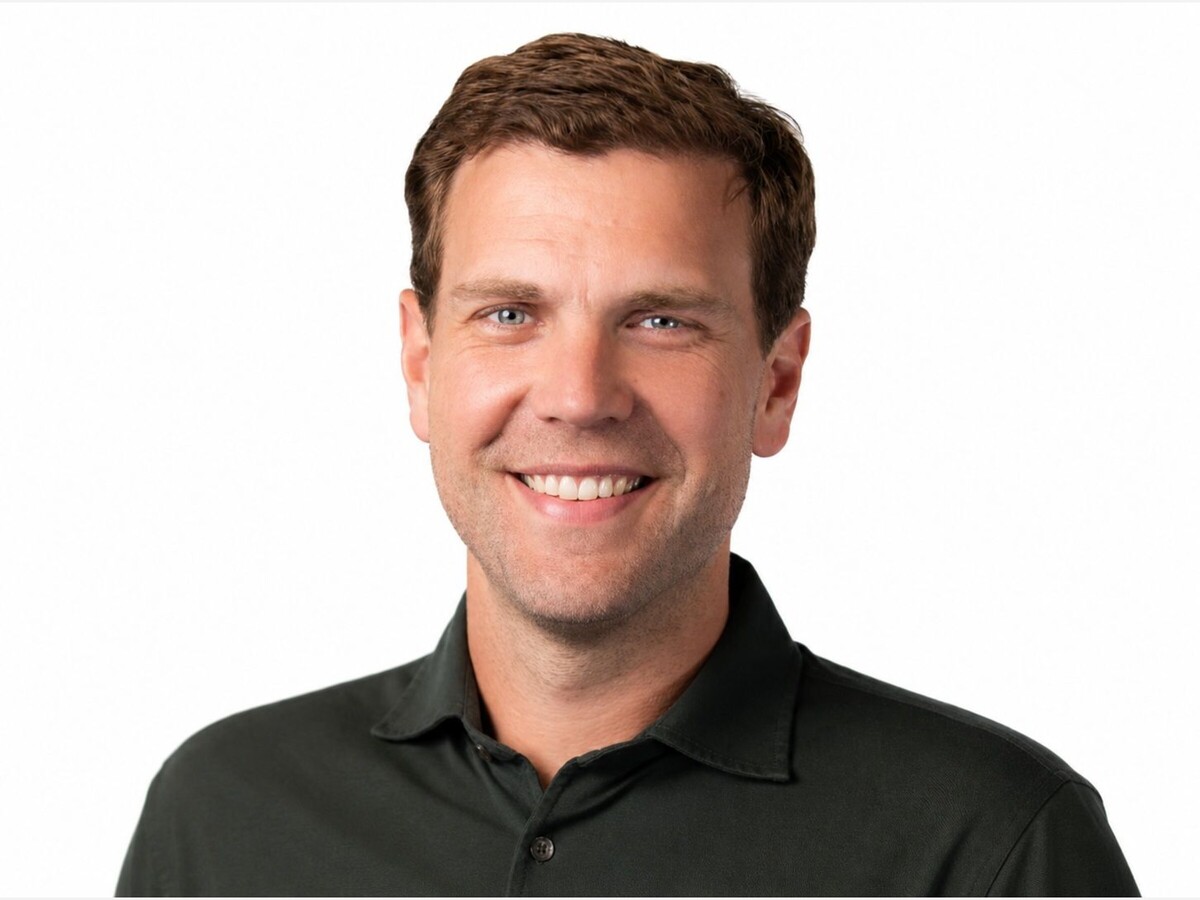



ST. PAUL, MN (August 10, 2026). Inside the cab of a tractor parked near the Minnesota State Capitol, Chris Abbott was talking about an industry that rarely receives the attention accorded artificial intelligence, semiconductors or advanced manufacturing.
The tractor was air-conditioned, quiet enough for conversation and, for 30 minutes Monday afternoon, became an unconventional interview room overlooking the Capitol grounds.
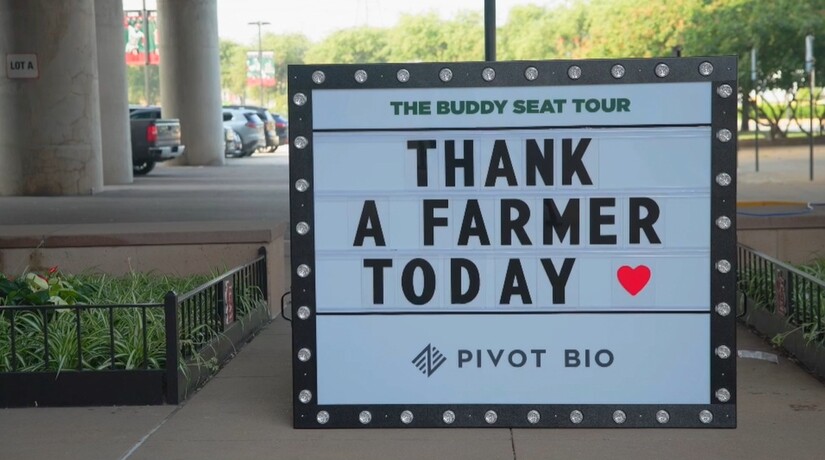
Abbott, chief executive officer of Minnesota-headquartered agricultural biotechnology company Pivot Bio, was in St. Paul as part of the company's 2026 Year of One Million Thanks Buddy Seat Tour, a more than 1,500-mile campaign traveling through agricultural communities to recognize farmers and draw attention to the economic and technological pressures facing American agriculture. Pivot Bio says the tour brings farmers, researchers, entrepreneurs, policymakers and agricultural leaders into conversations about the future of farming.
But in an extended interview with MinneapoliMedia from the tractor's buddy seat, Abbott moved well beyond the ceremonial purpose of the tour.
He spoke about why Pivot Bio relocated its global headquarters from California to Minnesota, the economics behind the company's microbial nitrogen technology, circumstances in which the product performs particularly well and where farmers may not need it at all, the financial strain he says is weighing heavily on multigenerational farm families, and his belief that American investors are overlooking agriculture while concentrating unprecedented amounts of capital around artificial intelligence and data centers.
At the center of his argument was a straightforward measure for agricultural innovation: farmers should become more productive and more profitable.
“If farmers aren't getting more productive and making more money, we're not doing our job as a technology company,” Abbott told MinneapoliMedia.
That philosophy matters because Pivot Bio is attempting something consequential in one of the most essential and difficult parts of modern agriculture: changing how crops receive nitrogen.
Synthetic nitrogen fertilizer helped transform global food production during the 20th century and remains indispensable. Researchers have estimated that roughly half of the world's population is supported by food production made possible by synthetic nitrogen fertilizer.
But nitrogen fertilizer also presents farmers with an enduring problem. The crop needs nitrogen to grow, yet nitrogen applied to fields can be lost through runoff, leaching and other processes before plants use it. Globally, a substantial share of nitrogen applied to crops is not ultimately absorbed by them, contributing to environmental pollution while representing an economic loss to farmers.
Pivot Bio is betting that microbes can improve that equation.

Abbott did not begin his relationship with Pivot Bio as its chief executive.
He first encountered the company as an investor after spending years examining technologies aimed at major challenges in agriculture and food.
About a decade ago, Abbott said, he became increasingly interested in nitrogen efficiency while studying approaches to in-season nitrogen use.
“There’s got to be a better way to produce and deliver nitrogen,” he recalled thinking.
His interest eventually led him to Pivot Bio and its founders. Abbott invested in the company and watched its development for approximately five years before becoming CEO in 2023.
What drew him, he said, was the scale of the problem.
“There’s no bigger opportunity for farmers, there’s no bigger opportunity for humanity on the planet, than continuing to optimize how we use fertilizer,” Abbott said.
He is careful not to portray synthetic nitrogen as something agriculture can simply discard.
About half of humanity, he noted, is fed because synthetic nitrogen made dramatically greater agricultural production possible.
“You can't not have it,” Abbott said. “On the other hand, is it imperfect? And can it be improved? For sure.”
The opportunity, as Abbott sees it, is not to pretend nitrogen is unnecessary but to improve how it is manufactured, distributed and delivered to plants.
That distinction is important.
Pivot Bio's products contain nitrogen-producing microbes that colonize plant roots. The company says the microbes consume sugars released through the roots and convert atmospheric nitrogen into a form available to the plant, delivering nitrogen close to where the crop can use it. MIT researchers describing the company's technology have explained the same fundamental mechanism, with engineered microbes growing in association with plant roots and fixing atmospheric nitrogen for the crop.
For corn, Pivot Bio markets microbial nitrogen products including PROVEN 40 and its newer PROVEN G3 generation. The company's current materials position microbial nitrogen as part of a farmer's overall nitrogen program rather than necessarily a complete replacement for conventional fertilizer.
Pivot Bio's presence at the State Capitol carried another significance.
This is no longer a California biotechnology company making a tour stop in Minnesota.
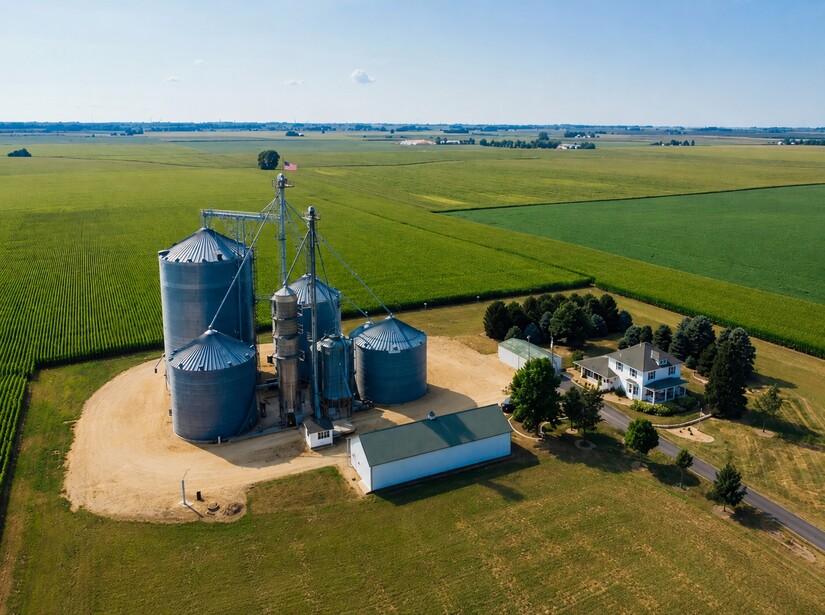
Pivot Bio moved its global headquarters from the Bay Area to the Twin Cities earlier this year. The company, which has been valued at approximately $2 billion and has raised roughly $600 million, said being closer to farmers, agricultural partners and talent were central reasons for the move.
For Abbott, a University of Minnesota graduate with deep personal ties to the state, the decision was also a homecoming.
“Minnesota's always been home for me,” he told MinneapoliMedia.
As Pivot Bio considered the next stage of the company's growth, Abbott said Minnesota offered an unusual convergence of three things the company needed: access to talent, proximity to major food and agriculture companies, and proximity to customers.
“Minnesota is perfect,” Abbott said. “The Venn diagram collides on those areas.”
He described the decision as an “absolute no-brainer.”
Pivot Bio has previously said its products have been used on more than 15 million acres of corn, including several hundred thousand acres in Minnesota.
For Abbott, physical proximity to farmers is not merely a geographic convenience.
“If you're going to do hard things with innovation, you ought to be as close to the customer as possible,” he said.
That is particularly true in agriculture, where the ultimate laboratory is not a controlled room but a farmer's field, with variables ranging from weather and soil type to fertility programs and management practices.

MinneapoliMedia asked Abbott to put himself across the kitchen table from a skeptical Minnesota farmer.
Forget the sales pitch, the question went. Why should this make economic sense for the farm?
Abbott said Pivot Bio's proposition rests on performance, economics and sustainability.
“If it isn't better and it isn't more economical, no farmer should care,” he said.
The company's microbes generally reach a corn crop through seed treatment and establish themselves around the root system, Abbott explained. The microbes obtain sugars released by the plant during photosynthesis and, in return, provide nitrogen.
He repeatedly described the process as “spoon-feeding” nitrogen to the crop.
But Abbott emphasized that the financial proposition is just as important as the biological one.
Traditional nitrogen fertilizer markets can be highly volatile because production and pricing are exposed to natural gas markets and international supply disruptions. That vulnerability became especially visible during the Russia-Ukraine war and again during the 2026 Iran conflict, which pushed fertilizer prices sharply higher ahead of spring planting.
Pivot Bio responded this spring by lowering prices and expanding production. In March, it also introduced a program allowing growers and retailers to lock in pricing and supply for the 2026, 2027 and 2028 growing seasons.
Abbott told MinneapoliMedia that within roughly 40 days of the multiyear offer becoming available, about half of the company's customers had signed three-year agreements.
For farmers operating businesses where fertilizer represents a major expense and commodity prices can move independently of input costs, predictability has considerable value.
Abbott said sustainability follows the same economic logic. Nitrogen that remains available near the root rather than being lost from the field represents greater efficiency for the grower as well as a potential environmental benefit.
Performance, price and sustainability, he said, are “the three things that farmers care most about.”

One of the most revealing moments of the interview came when Abbott was asked not where Pivot Bio's technology performs best, but where it does not.
“No product works 100 percent in ag,” he said.
Seeds perform differently from field to field, fertilizer responds differently under varying rainfall conditions, and biological products are no exception.
Pivot Bio, Abbott said, continually tries to determine where its products generate the strongest results and where they add less value.
He pointed to sandy soils and fields exposed to significant rainfall as situations where microbial nitrogen can have an advantage because conventional nitrogen may be more susceptible to moving through the soil profile or being lost.
In those circumstances, he said, a microbial product living in association with the plant's roots can continue supplying nitrogen during the growing season.
But Abbott also offered an answer that is unusual in an industry built around selling agricultural inputs.
If a farmer already has more than enough nitrogen, he said, that farmer may not need Pivot Bio at all.
“If you don't need more nitrogen, don't buy our product,” Abbott said.
The farmer might instead need to address sulfur, phosphorus, potassium or another part of the fertility program.
“Our product is just a small piece in that overall equation,” Abbott said. “We've got to help them look at it holistically.”
That acknowledgement is important because microbial nitrogen products have not been without controversy or inconsistent results.
Independent agricultural research has found mixed outcomes in some trials of commercial biological nitrogen products. A U.S. Department of Agriculture research summary concerning PROVEN 40 noted that previous studies had produced mixed results regarding whether the product supplied enough nitrogen to be commercially viable under differing conditions.
Pivot Bio itself has had to learn from an earlier commercial setback.
The Wall Street Journal reported this year that the company's rapid expansion during the fertilizer shock following Russia's invasion of Ukraine produced disappointing results for many customers in 2022. According to the Journal, only slightly more than half of customers that year reported a yield benefit. Abbott told the publication that poor product placement and improper use contributed to the problems, including situations in which farmers already applied sufficient conventional fertilizer or combined the microbes with incompatible products.
Since then, the company has reformulated products, strengthened its distribution and agronomic guidance, reduced prices and narrowed how it describes microbial nitrogen's role in a fertility program. Pivot Bio now says the products are intended to supply part of a crop's nitrogen requirements rather than eliminate the need for synthetic fertilizer altogether. The company says more recent trials and customer data have produced substantially improved results.
Abbott's comments Monday reflected that more measured approach.
Not every field needs the same thing, he said. The challenge is putting the right product in the right place and understanding the farm as a complete system.

The tractor tour itself is built around gratitude.
Pivot Bio launched the Year of One Million Thanks campaign in July, sending a working tractor dubbed the “Grati-Tractor” across rural America with the goal of collecting one million expressions of appreciation for farmers. Its Buddy Seat Tour began in St. Louis and has moved through agricultural communities and public events across the Midwest.
The company plans additional stops at major state fairs, including the Minnesota State Fair in September.
But asked what he has actually heard from farmers while traveling, Abbott did not talk first about technology.
He talked about fear.
“The thing that we're seeing and hearing a lot right now,” Abbott said, “is farmers are just under intense pressure and stress.”
He described conversations with people whose farms have survived through five generations but who now wonder whether they will be the generation that loses what their families built.
“They'll say things to me like, ‘Hey, I'm the fifth generation on my farm. Given how hard it is right now, I don't know if I can make it,’” Abbott said.
“You can hear what's in their voice. They don't want to be the one to screw up the farm.”
Farmers worry about whether their children or grandchildren will have the opportunity to return to the operation, he said. At the same time, they are managing variables over which they exercise little control: input prices, commodity markets, weather and geopolitical disruptions.
“They're trying to run a low-margin, hard business,” Abbott said.
That, he said, is part of why Pivot Bio created the One Million Thanks campaign.
Much of agriculture's work disappears into the supply chain before reaching the consumer. Grain may eventually become animal feed, food ingredients or ethanol blended into gasoline, but the person buying the final product often has no idea which farmer grew the crop behind it.
“The farmer sort of flies under the radar,” Abbott said. “They don't get enough credit and recognition.”
For Abbott, gratitude is therefore not intended to replace the larger conversation about farm economics. It is supposed to draw attention to it.
From there, the discussion inside the tractor turned to another subject: artificial intelligence.
American investment markets are currently consumed by AI, semiconductors, computing infrastructure and the data centers required to support them.
Abbott believes agriculture risks being overlooked.
Part of the problem, he said, is the very nature of farming.
A software company can release, test and revise technology repeatedly. Agricultural technology moves at the speed of growing seasons.
“In agriculture, you get one shot,” Abbott said. “You get a growing season to try it.”
That creates long adoption cycles, which can be difficult to reconcile with venture capital funds operating under investment horizons of seven to ten years.
Pivot Bio itself uses artificial intelligence, Abbott said, including in discovery work, modeling field trials, processing agronomic data and helping determine where products may perform best.
But he sees agriculture as an investment opportunity that is not wholly dependent on the AI infrastructure boom.
Abbott pointed to the increasingly intertwined relationship among data centers, energy demand, semiconductors and even construction equipment. Investors who believe they own diversified exposure, he argued, may in fact be placing multiple bets tied to the same underlying expansion in data-center construction.
Agriculture can provide a different source of technological growth.
“There’s a lot of really good innovation in agriculture and in other industries that's undercorrelated to data-center demand,” Abbott said.
His argument was not that AI is unimportant. It was that investors looking for technological growth should broaden their definition of what a technology industry looks like.
Agriculture, in his view, belongs in that conversation.

Pivot Bio began with scientists trying to answer an audacious question: could microbes associated with crop roots provide meaningful amounts of nitrogen to plants and reduce agriculture's reliance on conventional fertilizer?
Years later, the company has attracted hundreds of millions of dollars in investment, established commercial products and moved its headquarters into the heart of the Upper Midwest agricultural economy.
But Abbott said financial valuation is not how he ultimately wants to measure success.
He described a much tougher standard.
“I want to see our technology used on most acres,” he said.
The real tipping point, he said, will arrive when farmers stop asking whether they should experiment with Pivot Bio and instead say: “I wouldn't farm without it.”
“That’s when you know you've reached that tipping point,” Abbott said.
In his view, widespread adoption would mean not only that Pivot Bio had changed how agriculture thinks about crop nutrition but that farmers had become more efficient in the process.
He pointed to some of the company's longest-tenured customers, growers who have used the technology for five or six years, as examples of the kind of efficiency he wants more farmers to achieve.
Abbott also discussed early work outside the United States, including projects involving smallholder farmers in Kenya. He told MinneapoliMedia that some early users there had experienced yield gains as high as 70 percent.
MinneapoliMedia has not independently verified that specific figure, and results from individual agricultural trials or farms should not be interpreted as universal performance.
Still, Abbott sees the potential impact in global terms.
If microbial nitrogen eventually becomes a routine part of crop production, he said, it could improve farm efficiency and output not only for large American operations but for smaller farms in regions where access to conventional fertilizer can be expensive or unreliable.
For Abbott, however, the measure ultimately returns to economics at the farm gate.
He wants Pivot Bio technology to help push productivity upward while lowering farmers' cost of producing crops.
“No other industry do you get away with technology not being cost-deflationary,” he said.
Historically, he argued, farmers have frequently been asked to spend more for each marginal improvement.
“That's not how this is supposed to work,” Abbott said. “It's supposed to work where the innovation cycle carries the day and the cost to produce goes down, down, down as you adopt those technologies.”

The scene Monday was deliberately unusual.
A tractor at the Minnesota State Capitol. A biotechnology chief executive in the driver's seat. MinneapoliMedia interviewing him from the buddy seat.
But underneath the novelty was a serious question about the future of farming.
Can agricultural technology meaningfully reduce costs for farmers rather than simply offer them another input to buy?
Pivot Bio is asking farmers to believe that microbes can become part of the answer.
The company's history shows why skepticism remains warranted. Biological products can behave differently across farms and growing conditions, and Pivot Bio has already experienced what happens when commercial enthusiasm moves faster than consistent field performance.
But the company also represents something increasingly significant for Minnesota.
A roughly $2 billion agricultural biotechnology company has chosen the Twin Cities as its global headquarters and placed itself within driving distance of the people whose fields will determine whether its technology succeeds or fails.
Abbott believes that proximity matters.
And after weeks of sitting beside farmers during the One Million Thanks tour, he said the challenge confronting the industry is no longer abstract.
Farm families are asking whether their operations can survive another generation.
That makes the question of agricultural innovation larger than microbes, fertilizer or any single company's prospects.
If technology can make farmers substantially more efficient and profitable, Abbott believes it can help preserve the businesses, families and rural communities built around them.
“The thing that drives us,” Abbott said, “is I want to drive the performance up and the profitability up of every single one of our customers.”
“If farmers aren't getting more productive and making more money, we're not doing our job as a technology company.”
At the Minnesota State Capitol Monday, that may have been the most consequential message carried by the tractor.
Not simply thank you.
Make farming work.
And make sure the people who grow the food can afford to keep doing it.

Local stories matter. Subscribe free to MinneapoliMedia and receive independent news, community reporting and important updates from Minneapolis, the North Metro and communities across Minnesota.
SUBSCRIBE FREE: https://minneapolimedia.town.news/subscribe
MinneapoliMedia | Community. Culture. Civic Life



Overcast, with a high of 63 and low of 56 degrees. Overcast in the morning, light rain shower in the afternoon, overcast overnight.