39° and Clear
Image




ST. PAUL, MN (September 29, 2026)
When Liza Maya and Sylvia Williams began talking seriously about creating a food business, granola was not the destination. Their first idea was a bar: nutritious enough to satisfy Maya, a licensed nutritionist, and flavorful enough to satisfy Williams, a pastry chef who had spent years developing the judgment that tells a professional when a recipe is merely acceptable and when it is ready.
The bar would not cooperate.
Williams could make an individual tray that pleased her, but she could not reproduce the bars in larger quantities with the consistency she expected. She kept working at it, unwilling to place their names on a product that did not meet her standard. Maya eventually proposed a practical solution. If the bar would not hold its form, they could stop forcing it to become a bar. They could deconstruct it and sell the mixture as granola.
The pivot changed the company they were trying to build. It also revealed the strength of the partnership behind it. Williams had not failed at making a product. She had created the foundation for a different one, and Maya had recognized what it could become.
“I couldn't get the bar how I wanted it,” Williams recalled during a July 21 interview with MinneapoliMedia. “I'm a perfectionist.”
Maya’s suggestion released them from the original format without abandoning the work already invested in the recipe. The result was a granola with a texture they considered lighter and crispier than the dense clusters that had defined Williams’ previous experience with the category. Williams had never been much of a granola eater herself. Their version changed her mind.
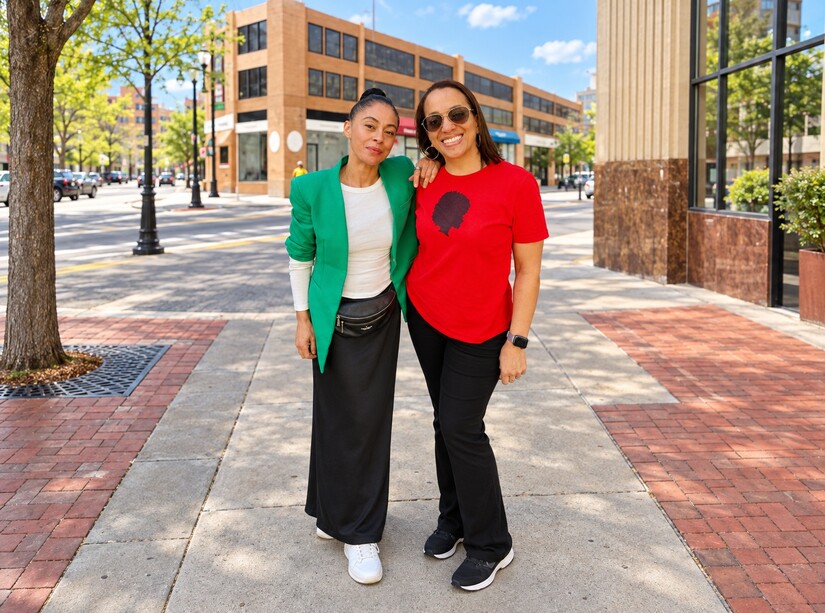
That origin story matters because Soul Grain did not begin with two founders studying a crowded grocery category and manufacturing a brand identity to exploit an opening. It grew out of a friendship of approximately 17 years, two distinct professional histories, and an unfinished idea that returned when the disruption of the COVID-19 pandemic gave the women time to reconsider what they had once hoped to build.
Maya grew up in France and came to the United States for college, attending the University of Alabama at Birmingham. She later moved to Minnesota and developed her career in nutrition. Soul Grain’s current company biography identifies her as a licensed nutritionist with a master’s degree in nutrition and functional medicine, a bachelor’s degree in psychology, and more than 20 years of experience examining the relationship among food, brain health, and emotional well-being.
Williams’ path was less linear. Born in Washington, D.C., and raised in Los Angeles, she also spent time in London before returning to Washington and graduating from Howard University. She later moved through New York and Los Angeles, attended culinary school, worked in restaurants and as a private chef, and cooked professionally in Anguilla at Cap Juluca before working at the St. Regis. Her working life also included cosmetology, a field she entered after earning her license at 16 and practiced for decades before retiring to go all-in on food, alongside writing for publications. She was accustomed to moving among different forms of work rather than treating one occupation as the permanent boundary of her life.
The women met in Minnesota around 2009 after their partners, both musicians, connected through a band. They became friends quickly. Both were raising young children, both were creative, and their occupations suggested an obvious area of collaboration. Maya understood nutrition and the functional role of ingredients. Williams understood pastry, flavor, structure, and the sensory experience of eating. They talked about doing something together, but the responsibilities of motherhood pushed the idea aside.
It did not disappear.
When the pandemic rearranged work and family life, they returned to the plan. They wanted to make something convenient and better for the consumer without treating pleasure as the enemy of nutrition. Maya could establish the ingredients she wanted in the base. Williams could determine how to make those ingredients function as food people would want to eat again. Maya described giving Williams a wish list. Williams took it into the kitchen and worked out the proportions, flavor, and method.
Puffed amaranth became central to the texture. Maya proposed using the small ancient grain, and Williams found that it helped produce the airy crispness they wanted. Once the base was stable, Williams could do what she knew best: build flavor around it.
Their division of labor is easy to summarize as science meeting art, but the actual relationship is more practical. Maya does not hand Williams a nutritional formula and wait for a finished recipe. Williams does not disregard function in pursuit of indulgence. They work from a shared expectation that neither dimension should cancel the other. The product has to survive both women’s scrutiny.
That balance has held through most of their flavor development, although not every experiment has resolved easily. During the interview, Williams discussed an unfinished effort to add more protein while preserving Soul Grain’s texture. The additional protein was changing the granola in ways she did not like. She had not solved it, but she did not describe the difficulty as defeat.
“I'm going to have to go back to the drawing board and crack open some books,” she said. “I'm going to get it.”
That response captured the working temperament Maya said she discovered more fully after friendship became business. The women already knew one another well, but building a company exposed the depth of the other’s discipline. Maya came to see Williams as not only creative but hardworking, dedicated, and loyal. Williams said Maya “goes hard,” describing her as a person who commits fully once she decides to proceed.
They also learned that friendship could function as business infrastructure. Capital, equipment, distribution, and production capacity are visible parts of a food company. Trust is less visible, but for Maya and Williams it has been just as necessary. They said they have not had a serious argument about the company. That does not mean the work has been effortless or that two friends will always agree. It means they entered the business with a relationship strong enough to absorb fatigue, pressure, and the ordinary frustrations of building something with limited resources.
Soul Grain formally launched in May 2022 from a commercial kitchen in Maplewood. The company entered a market already filled with oat clusters, nuts, dried fruit, cinnamon, raisins, and other familiar combinations. Maya and Williams did not believe the category reflected the range of people walking through American grocery stores. Their answer was not to discard granola’s basic identity. It was to use the familiar product as a vehicle for flavors customers rarely encountered in that aisle.
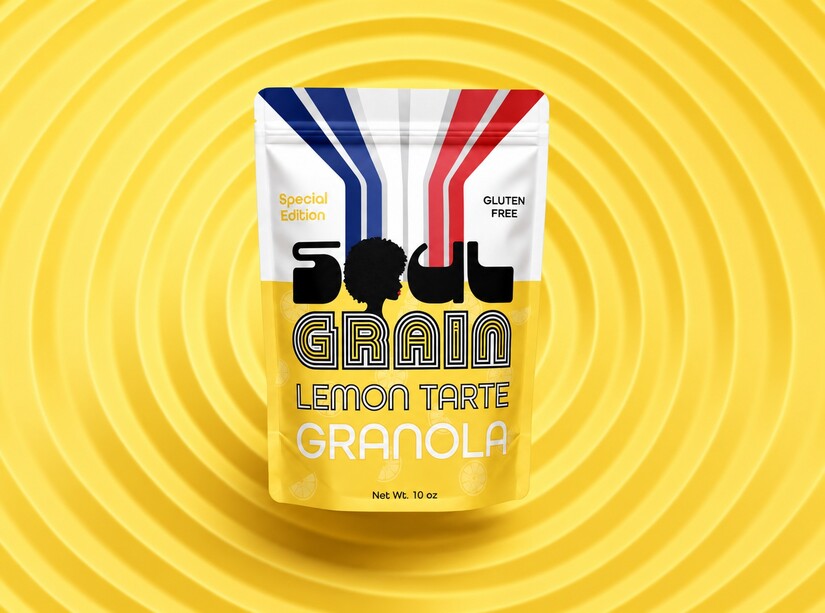
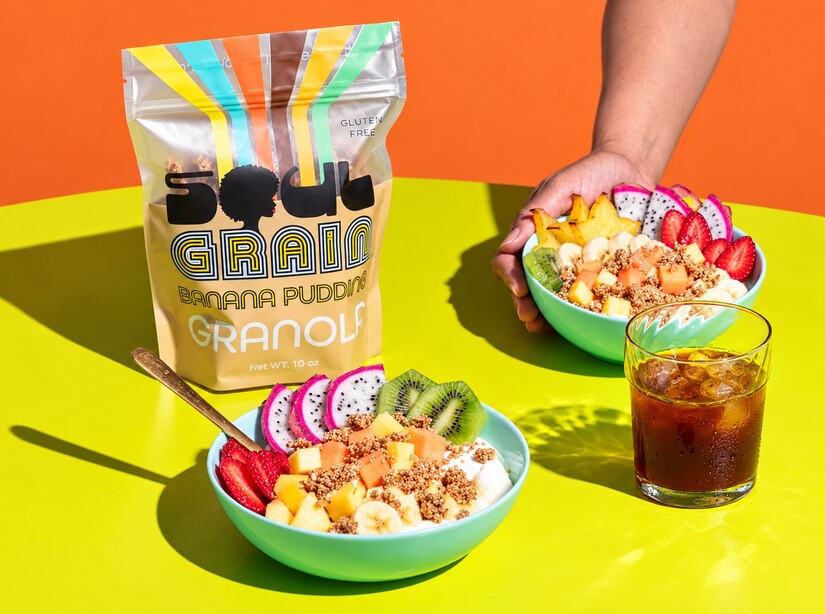
Banana Pudding drew from a dessert associated with Black family gatherings and community celebrations. Sweet Potato Casserole carried the memory of holiday tables. Coco Mango reached toward the Caribbean. Spiced Paradise incorporated grains of paradise, a West African spice Maya remembered her North African mother using. Lemon Tarte, released in July 2026, connected Maya’s French upbringing and African heritage with Williams’ skill as a pastry chef.
These are not product names placed on interchangeable recipes. The founders described each flavor as an attempt to translate a recognizable food memory into a new form. The measure of success is not simply whether a customer finds the granola pleasant. It is whether the flavor produces recognition.
Williams said customers tasting Banana Pudding have told the founders it reminds them of a grandmother’s dessert. Sweet Potato Casserole brings back holidays. Those reactions tell the women that the product is doing what they intended: allowing a packaged food to recover a place, person, or gathering that remains emotionally present long after the meal itself has ended.
For Williams, Banana Pudding and Sweet Potato Casserole return her to the home of her best friend’s grandmother. The adults would be upstairs preparing food while the younger people gathered in the basement, listening to hip-hop. Coco Mango reaches further south, to her time in the Caribbean. Maya’s memories run along a different route. Arriving in Alabama from France exposed her to banana pudding and sweet potato casserole during college. Spiced Paradise reaches back to her mother’s cooking. Lemon Tarte begins with the French dessert Maya is willing to indulge in even though she ordinarily limits sweets.
The company’s cultural purpose is therefore broader than declaring that Black-owned products belong on store shelves, although that claim remains important. Soul Grain is also asking what a mass-market food can carry. Its bags hold ingredients, but the founders want them to carry migration, family, regional cooking, and memories that do not ordinarily appear in the language of breakfast products.
That mission requires care. A company can reduce culture to packaging as easily as it can ignore culture altogether. Maya and Williams try to avoid that outcome by grounding their flavors in lived experience rather than using Black identity as decoration. The stories originate in the founders’ own histories and in foods they know. When they invite customers into those histories, they are sharing something specific rather than presenting a generic promise of diversity.
They are equally clear that celebrating the Black diaspora does not mean limiting the audience. Near the end of the interview, the founders recalled being asked whether people outside the culture could eat the granola. The question startled Williams because inclusion, in her view, is the purpose of sharing the product. Soul Grain highlights Black and Brown experiences, but it does not reserve those experiences for Black and Brown consumers. It asks others to encounter them through food.
Lemon Tarte made that invitation especially visible. Soul Grain released the flavor on July 13, one day before Bastille Day and during French-American Heritage Month. The launch also coincided with attention surrounding France’s multicultural national soccer team during the 2026 World Cup. Maya, a French citizen who grew up in France, wanted the product to draw attention to the presence and contributions of Black and Brown people within French society.
Williams began with Maya’s favorite French dessert and translated it into the company’s lighter granola format. The founders were not claiming that a snack could explain the complexity of French identity, immigration, or colonial history. Their point was more modest and more useful: national cultures are not static, and the foods presented as representative of a country often carry the movement and labor of many communities.

The Lemon Tarte project also demonstrated how Maya and Williams think beyond taste. Each Soul Grain package directs customers to a curated music playlist. Williams, an avid music listener, does not treat the playlists as an accessory added after the product is finished. Food, music, and culture are connected in her understanding of memory. The soundtrack helps locate the emotional world from which a flavor came.
Banana Pudding is paired with 1990s R&B and the atmosphere of a backyard gathering. Sweet Potato Casserole draws on old-school hip-hop. Coco Mango moves with Caribbean dancehall. Spiced Paradise is associated with music connected to Africa. The Lemon Tarte playlist, curated by Jahi Sundance, includes French hip-hop and R&B as well as American songs that sampled French music.
“It's a whole experience,” Williams said. “It's through nostalgia, music, the flavors that take you back to a specific place or time.”
Music also accompanies production. The founders play old-school hip-hop, jazz, Earth, Wind & Fire, and whatever else fits the mood of the day. Williams joked that one batch made under music the granola did not “agree with” failed to turn out correctly. The story was playful, but it revealed something serious about the company’s culture. Soul Grain’s public language about music is not a branding device disconnected from its operations. The same relationship among rhythm, memory, and food is present while the women work.
When Maya was asked to choose a song representing the company’s journey, she selected Jill Scott’s “Golden.” Williams resisted settling on one song because the answer could change with the day. James Brown might fit one production session; jazz might fit another. The difference between their responses reflected the personalities audible throughout the interview. Maya was concise and direct. Williams expanded through stories and associations. Their styles are not identical, but the company benefits from the difference.

The public milestones began arriving quickly. Soul Grain reached Kowalski’s Markets and other Minnesota retailers, as well as an airport shop serving travelers at Minneapolis-St. Paul International Airport. In February 2023, the St. Paul company won a $2,500 Judges’ Choice Award during Hy-Vee’s OpportUNITY Inclusive Business Summit, where 15 finalists selected from nearly 150 applicants pitched before judges and hundreds of attendees. In 2024, Soul Grain returned to the Hy-Vee competition and won its $30,000 grand prize. In May 2026, the University of Minnesota’s MN Cup named the company one of 10 semifinalists in its Food/Ag/Beverage division, part of a statewide field selected from 1,262 applications.
Recognition brought money, exposure, and evidence that people outside the founders’ immediate circle understood the potential of the product. Yet the milestone that made the business feel real to Williams was less ceremonial. It was walking into Kowalski’s and seeing Soul Grain on the shelf with a store label beneath it.
“That is us on the store shelf,” she remembered thinking.
The women told themselves they should celebrate. They did not. The next task arrived, followed by another. Approximately four years after the company’s launch, they were still talking about properly recognizing the moment. Their failure to pause was not indifference. It was an illustration of how easily small-business achievement becomes additional responsibility. A retail placement creates demand, production obligations, invoices, delivery schedules, and pressure to keep the opportunity alive.
The growth of Soul Grain has therefore been accompanied by a persistent operational question: How can the company increase volume without losing the quality that persuaded customers and retailers to care?
Maya and Williams initially produced the granola themselves. They later moved production to a contract manufacturer, commonly known as a co-packer, to gain capacity. The arrangement solved one problem but created another. The founders believed the product had changed. During the interview, they described the “love” in it as different, a phrase that could sound sentimental if separated from the realities of food manufacturing. What they meant was that outsourcing altered qualities they had controlled closely in their own process.
They returned to self-production while considering a longer-term answer. One possibility is finding another manufacturing partner capable of reproducing their method more faithfully. Their preferred ambition is to establish a Soul Grain production facility in Minnesota, hire employees, and build the company within the community that gave it its start.
That choice has a cost. Food production is physically demanding and time-consuming. Maya continued working full time in nutrition while contributing additional hours when production required them. Williams described the work as “blood, sweat and tears.” Both women spoke about reaching the end of production days barely able to walk, then finding something to laugh about because they were still together.
Capital remains another constraint. At the time of the interview, they said the company was self-funded and had not taken outside investment. They were not categorically opposed to investors, but they were cautious. Outside financing could accelerate growth, yet it could also change who makes decisions about the product and how quickly the company is expected to expand. For the moment, they valued their autonomy and wanted to understand the business on their own terms.
The founders’ concerns are not abstract. Small food companies must pay for ingredients, packaging, kitchen or manufacturing time, transportation, and labor before revenue has necessarily arrived. Retail payment schedules can leave a young company waiting after its expenses are due. Williams said plainly that small producers need to be paid on time. The comment cut through the celebratory language that often surrounds entrepreneurship. Visibility does not pay an invoice, and shelf space does not eliminate cash-flow pressure.
Maya and Williams do not portray their difficulties as exceptional. They described them as common to small businesses, particularly women-owned companies trying to grow without deep reserves of capital. They call some of the harder periods “exercises in character building.” The phrase contains humor, but it also reflects their refusal to romanticize the work. Building Soul Grain has required them to produce, sell, pitch, deliver, solve problems, and return to the kitchen while continuing to manage family and professional responsibilities.
The friendship has not removed those pressures. It has given them a way to bear them. When one is tired, the other understands why. When a recipe refuses to cooperate, the problem belongs to both of them. Their humor is not incidental. It is one of the ways they preserve the relationship while the business makes increasing demands upon it.
Their long-term vision is substantial but rooted in Minnesota. Maya wants Soul Grain to become a staple in household kitchens, the bag customers reach for instead of a familiar national brand. She also wants the company to create jobs, operate from its own space, and contribute to the local economy. Williams shares the desire to grow without surrendering the attention that distinguishes their product.
During the July interview, the founders said they were developing another flavor for a February 2027 launch. They did not identify the product publicly, and an experimental higher-protein recipe was still unresolved. Those plans belong to the company’s next stage, but the founders’ larger ambition is already clear. They want Soul Grain to be large enough to provide opportunity and durable enough to remain in the lives of customers, without becoming unrecognizable to the women who created it.
For Williams, the company also carries a personal argument about age and reinvention. She was 58 at the time of the interview and had entered a demanding new field after decades of work in other professions. She had practiced cosmetology from the age of 16 before retiring three years prior, pursued journalism, and built a culinary career. Soul Grain was not the fulfillment of a single straight-line plan. It was another decision to begin.
She wants younger people, including her own children, to understand that a life can change direction. A person can leave one occupation, return to an old idea, or attempt something that does not fit the timetable others expect. The outcome is never guaranteed. That uncertainty, in Williams’ view, is not a sufficient reason to remain still.
“Don't die with your ideas,” she said. “If you have an idea, just go for it, even if it flops, even if it doesn't work out.”
When asked which fellow Minnesota innovators should be featured next in the Builders of Minnesota series, the founders did not hesitate. Williams pointed to Bradley, founder of The Donut Trap, a St. Paul community hub and bakery. Maya highlighted Right Juices, a health and wellness venture located near Lexington and University Avenue in St. Paul. For both founders, supporting fellow local creators is part of the same ecosystem that allowed Soul Grain to take root.
Soul Grain has not flopped. It has moved from a shared commercial kitchen to grocery shelves, an airport retailer, statewide business recognition, and a growing direct-to-consumer market. Its founders have proved that banana pudding, sweet potato casserole, Caribbean fruit, African spice, and French pastry can occupy the same category without being flattened into novelty. They have also learned that a promising product does not make production easier, capital more available, or time more abundant.
The company’s future will depend on how Maya and Williams resolve those practical matters. They need a production model that protects consistency, sufficient capital to grow without destabilizing the business, retail partners that pay reliably, and space to continue developing products. Awards and press attention can open doors, but the work behind those doors will determine whether Soul Grain becomes the household staple they imagine.
What they have already built is more than a collection of flavors. They have created a Minnesota company from the overlap of two lives: Maya’s movement from France to Alabama and eventually Minnesota; Williams’ movement through Washington, Los Angeles, London, New York, Anguilla, and the professional kitchen; and the friendship that brought those histories into the same room.
The granola bar that would not hold together could have ended the idea. Instead, the women changed the form and kept the substance. That decision remains an apt description of their larger journey. Plans changed. Production arrangements changed. Careers changed. The friendship endured, and from it emerged a company determined to make room on the shelf for memories, cultures, and consumers the founders believed the aisle had overlooked.
For Maya and Williams, building Soul Grain is not only about persuading shoppers to try a different granola. It is about proving that cultural specificity and broad welcome can coexist, that nutrition and pleasure do not have to compete, and that two friends can turn professional differences into a shared advantage. Their work is unfinished, but the foundation is no longer hypothetical. It is present in every bag they produce, every shelf they reach, and every new entrepreneur who hears Williams’ advice and decides not to take an idea to the grave.

Local stories matter. Subscribe free to MinneapoliMedia and receive independent news, community reporting and important updates from Minneapolis, the North Metro and communities across Minnesota.
SUBSCRIBE FREE: https://minneapolimedia.town.news/subscribe
MinneapoliMedia | Community. Culture. Civic Life



Sunny, with a high of 65 and low of 46 degrees. Overcast in the morning, sunny during the afternoon, clear in the evening, cloudy overnight.