39° and Clear
Image
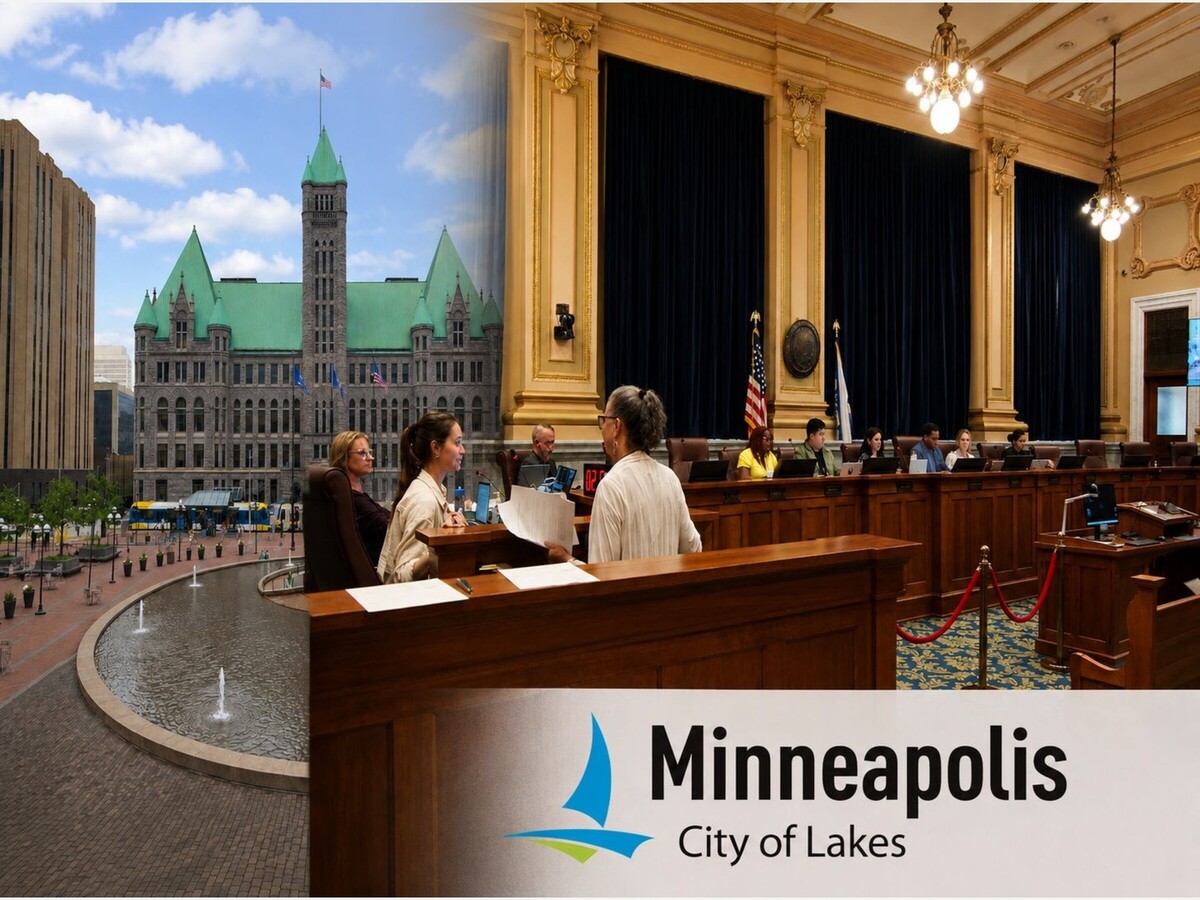



Minneapolis created its Behavioral Crisis Response program to answer a basic public safety question: Who should respond when a person is experiencing a mental health crisis but does not pose an immediate threat requiring an armed police officer?
Since December 2021, the city’s answer has been a team of unarmed mental health professionals dispatched through 911. The responders de-escalate crises, connect people with services and, when appropriate, keep police officers and ambulances available for emergencies that require them. The program grew from a limited pilot into a citywide operation available around the clock. It also became part of Minneapolis’ court-enforced police reform agreement with the Minnesota Department of Human Rights.
The city now plans to place that work in new hands. Minneapolis officials selected Community Bridges Inc., an Arizona-based behavioral health organization, to take over the program from Canopy Roots, the local Black-owned company that has operated it since its launch. The proposed contract would pay Community Bridges $5.9 million for a term beginning January 1, 2027, and ending December 31, 2028, with options for three additional one-year extensions.
Changing contractors is not inherently improper. No provider owns a public contract forever, and city officials have a responsibility to seek stronger service when experience reveals gaps. Minneapolis says it wants to move beyond short-term crisis intervention by adding longer-term stabilization, responding to a wider range of calls and positioning teams at fire stations. Those are reasonable goals. A system that repeatedly helps the same people through the same emergency without connecting them to durable treatment, housing or recovery support is managing a cycle, not solving it.
The problem is not the city’s authority to choose a new provider. The problem is that the City Council was asked to advance a consequential public safety contract without the documentation and transition plan needed to judge whether the change can be made safely.
On September 23, the council’s Public Health, Safety and Equity Committee postponed action until October 7. Committee Chair Jason Chavez said council members needed to review the contract and the city’s request for proposals, materials that staff had not submitted before the hearing. Council President Elliott Payne said he had not been shown an implementation plan that gave him confidence there would be no interruption in service.
That delay was justified. It should be used to produce answers, not simply to give the same proposal another two weeks on the calendar.
Behavioral Crisis Response is not a routine vendor arrangement. It is an emergency service reached through 911. People encounter it while suicidal, disoriented, overwhelmed or unable to care for themselves. Families call because they need immediate help and believe an unarmed clinical response is more appropriate than a police intervention. Dispatchers must decide quickly which response to send. Police, fire, emergency medical personnel and crisis teams must understand when to support one another and when to remain apart.
A transition failure in this system will not resemble a delayed office supply order. It may mean that a person in crisis waits longer for help, receives a police response because no crisis unit is available or falls through a gap between emergency intervention and follow-up care. The consequences can be serious even when no one intends harm.
The legal obligation is also specific. Paragraph 289 of the city’s settlement agreement with the Minnesota Department of Human Rights requires Minneapolis to fund and adequately resource a Behavioral Health Crisis Response Team that can respond across the city 24 hours a day, seven days a week. Another provision requires adequate training for dispatchers and supervisors so they can identify crisis calls, route them properly and recognize when a police response is unnecessary.
The agreement does not name Canopy Roots, and it does not prevent Minneapolis from selecting another qualified contractor. Assertions that a vendor change alone violates the agreement go beyond what the document says. At the same time, the city cannot treat the change as an ordinary procurement decision detached from reform compliance. The legal duty belongs to Minneapolis, regardless of which company employs the responders. If staffing, dispatch coordination or round-the-clock coverage fails during the changeover, the city cannot excuse the failure by pointing to a contractor.
The council therefore needs a written continuity plan before it votes. That plan should identify who will answer eligible calls on every shift through December 31 and who will assume responsibility at midnight on January 1. It should show staffing numbers, hiring deadlines, training schedules, vehicles, facilities, dispatch integration, clinical supervision, backup procedures and escalation protocols. It should explain how current responders will be recruited or retained, how confidential information and operational knowledge will be transferred lawfully, and what will happen if the incoming provider misses a readiness benchmark.
The public record raises an additional timing question. The last publicly documented amendment to the Canopy Roots contract increased its total authorization to $26.095 million and extended it through August 15, 2026. The proposed Community Bridges contract begins January 1, 2027. The city may have arranged interim coverage through another amendment or administrative action, but if so, officials should publish it. If no such agreement exists, they must explain under what authority the current service is operating and how it is being paid for. A public safety program required to operate without interruption should not have an unexplained four-and-a-half-month gap in the contract record available to the public.
Canopy Roots says its teams have handled more than 44,000 calls since the program began and reports no serious injuries to recipients or responders. Earlier city records documented service in every ward and precinct and described the program as a fourth branch of the city’s public safety system. The company now employs about 60 people, most of them first responders, according to reporting by MPR News.
Those figures do not settle the procurement decision. Some claims come from the incumbent contractor and should be checked against city data. Call volume alone does not establish response quality, and an absence of reported serious injury does not answer questions about response time, repeat calls, service connections or long-term outcomes. A responsible city should evaluate more than the number of vans dispatched.
Still, the record establishes that Minneapolis is replacing an experienced local operation with a functioning workforce, years of field knowledge and established relationships with 911, police, fire, hospitals and community organizations. That institutional knowledge has public value. The city should not discard it casually or assume it can be recreated through a new corporate structure on a fixed date.
Community Bridges also deserves an assessment based on evidence rather than geography. Being headquartered in Arizona does not make the organization unqualified to serve Minneapolis. According to its public materials and city staff’s description, Community Bridges operates addiction, behavioral health and mobile crisis programs in several states and employs approximately 1,700 people. Its broader treatment network may help Minneapolis address one of the current program’s limitations by connecting repeat callers to continuing care after an emergency response ends.
That potential is worth examining. It is not a substitute for a Minneapolis-specific operating plan.
The council should require Community Bridges to demonstrate how it will recruit a workforce that understands local neighborhoods, cultures and service networks. It should ask how many current Canopy Roots employees have been offered positions, what pay and benefits they would receive, and whether their seniority or specialized training would be recognized. It should require evidence that Minnesota licensing and practitioner requirements will be met before service begins. It should also determine who will provide clinical supervision in Minneapolis and how quickly a supervisor can intervene when responders confront a complex or rapidly changing situation.
The expanded scope requires equal scrutiny. City staff have described a mobile crisis model that would respond to some “livability” calls and provide longer-term stabilization. That language is too broad to approve without operational definitions. A mental health crisis, public intoxication, homelessness, disorderly conduct and a complaint about someone’s presence in a public place are not interchangeable conditions. If the city intends to route a wider class of calls to behavioral health responders, it must define eligibility, consent, safety exclusions and the circumstances requiring police, fire or medical support.
The council must also guard against turning clinicians into a general-purpose response to visible poverty. Crisis teams should not be used to remove people from public spaces because their presence makes others uncomfortable. Nor should responders be sent into situations involving weapons or active violence without adequate protection. Clear dispatch rules are necessary both to protect civil rights and to protect workers.
Longer-term stabilization must be described with the same precision. Will the incoming provider conduct follow-up visits, manage cases, arrange transportation, secure treatment appointments or help residents obtain housing and benefits? How long will follow-up continue? What happens when a person declines assistance? Which services will be delivered directly, and which will depend on referrals to agencies that may have waiting lists? The term “stabilization” sounds promising, but it has little value unless the contract defines the work, funds it and measures whether it occurs.
Minneapolis should publish the complete request for proposals, the evaluation criteria, the scoring results to the extent allowed by law, the proposed contract and the transition plan before the October 7 committee meeting. The public does not need confidential personnel data or legally protected trade information. It does need enough information to understand what the city requested, why Community Bridges scored higher than competing applicants and how evaluators weighed local experience, cultural responsiveness, workforce stability, clinical capacity, cost and continuity.
Transparency is especially important because the council was initially asked to act without receiving core procurement materials. City staff may have followed an established competitive process, and seven applicants reportedly sought the contract. Even so, procedural compliance should not be confused with informed legislative oversight. Council members cannot evaluate what they have not been given, and residents cannot assess a decision explained only through conclusions.
The city should also invite the independent evaluator overseeing the state agreement and the Minnesota Department of Human Rights to review the transition for compliance. Both declined to comment when MPR News reported on the proposed change. Their silence should not be interpreted as approval or disapproval. It means the public does not yet know their assessment. Because round-the-clock behavioral crisis response is an enforceable provision of the agreement, the city should request written guidance and make any response public to the extent permitted by law.
Oversight cannot end when a contract is signed. The final agreement should require public reporting on call eligibility, dispatches, response times, geographic coverage, unit availability, repeat contacts, voluntary transports, referrals, follow-up completion, injuries, requests for police assistance and occasions when police were sent because no crisis team was available. Data should be reported in a way that protects patient privacy while allowing the public to judge performance.
The city should also measure whether the expanded model reduces repeated crises and unnecessary police contact. If a small number of people account for a large share of calls, officials should explain whether those residents were offered continuing care and whether the referrals resulted in actual services. A referral handed to a person in crisis is not the same as an appointment kept, treatment received or stable housing secured.
Performance standards need enforcement. The contract should contain readiness deadlines, minimum staffing requirements, service-level expectations and remedies when the provider falls short. Minneapolis should retain the ability to require corrective action, withhold payment or arrange emergency backup coverage. It should also require regular financial reporting so that the council can distinguish money spent on direct response, clinical care, administration, transportation and subcontractors.
This level of scrutiny is not an argument for preserving the current contract regardless of performance. Canopy Roots should not receive preference solely because it built the program, and Community Bridges should not be rejected solely because it is based outside Minnesota. Public contracting requires competition, accountability and a willingness to improve services. It also requires government to recognize transition risk when it changes operators in an emergency system.
Minneapolis has spent years asking residents to believe that public safety reform will produce durable institutions rather than temporary experiments. Behavioral Crisis Response is one of the clearest examples of that promise. It directs some calls away from armed enforcement and toward trained mental health practitioners while preserving the ability to summon police, fire or medical support when circumstances require it. The model is practical, not symbolic. Its value is measured by what happens when a dispatcher answers the phone and a resident needs help immediately.
The City Council should not approve the Community Bridges contract until three conditions are met. First, the city must release enough of the procurement record to explain the selection. Second, officials must present an independently reviewed transition plan that guarantees continuous, adequately staffed, citywide service. Third, the contract must include precise performance measures for both emergency response and longer-term stabilization, followed by regular public reporting.
If Community Bridges can meet those standards and improve the system, Minneapolis should be prepared to move forward. If the provider is not ready, the city should extend existing coverage or establish another lawful bridge rather than impose an artificial deadline on people in crisis. The date on a procurement calendar is less important than the reliability of a 911 response.
Minneapolis is free to choose a new contractor. It is not free to create uncertainty around a court-ordered public safety service or to ask residents to trust a transition plan they have not seen.
Before the council changes who answers these calls, the city must prove that someone qualified will answer every one of them, at every hour, from every part of Minneapolis, without interruption.

Local stories matter. Subscribe free to MinneapoliMedia and receive independent news, community reporting and important updates from Minneapolis, the North Metro and communities across Minnesota.
SUBSCRIBE FREE: https://minneapolimedia.town.news/subscribe
MinneapoliMedia | Community. Culture. Civic Life



Sunny, with a high of 68 and low of 49 degrees. Partly Cloudy during the morning, sunny for the afternoon, clear in the evening,