 62° and Partly Cloudy
Image
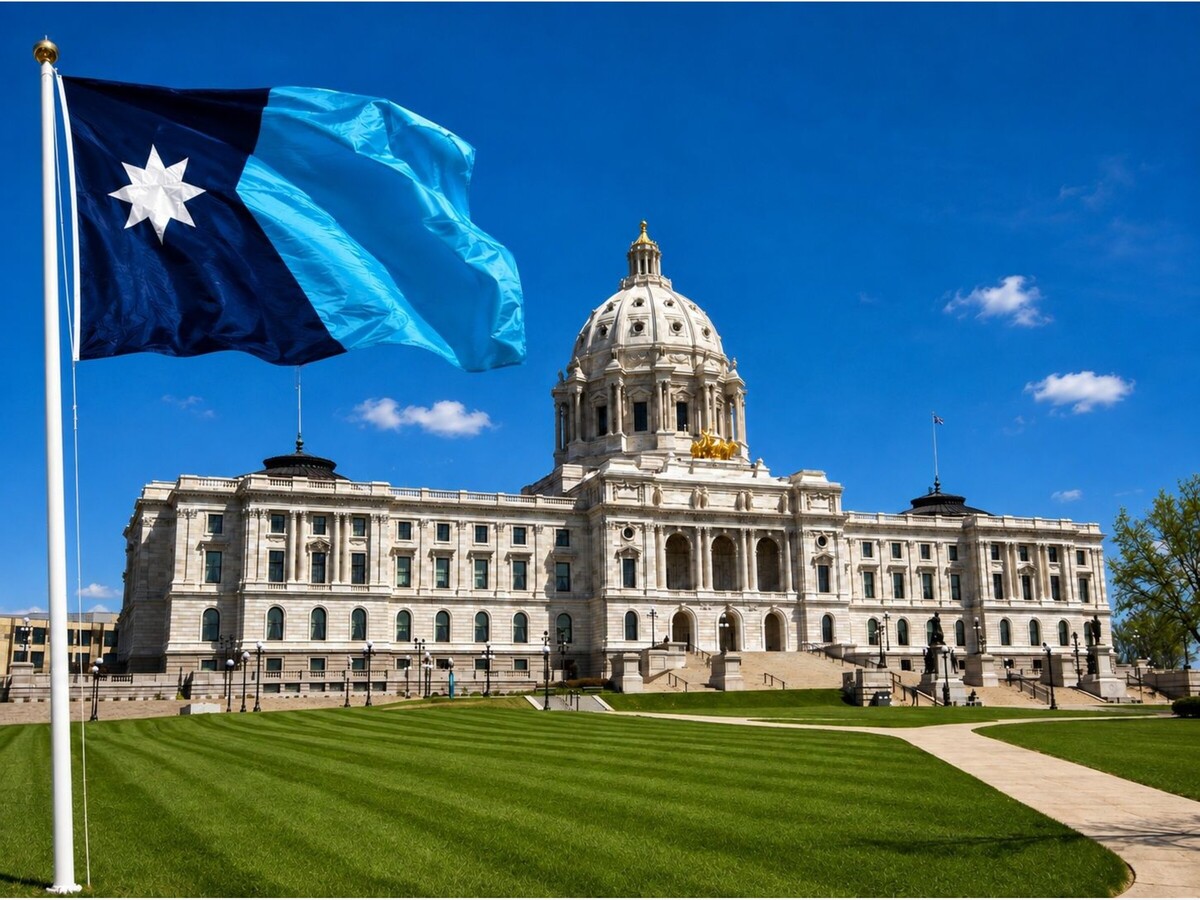



After Tuesday’s primary, the state no longer has a choice.
In both the contest for governor and the high-stakes battle for the United States Senate, Minnesota voters delivered an outcome unprecedented in state history: both major parties nominated women for each of the state’s two marquee races.
U.S. Sen. Amy Klobuchar secured the Democratic-Farmer-Labor nomination for governor. Minnesota House Speaker Lisa Demuth won the Republican nomination. Barring an extraordinary disruption to the general election, one of them will take the oath of office in January as Minnesota’s first woman governor.
Concurrently, Lt. Gov. Peggy Flanagan defeated U.S. Rep. Angie Craig for the DFL nomination for the open U.S. Senate seat, while former sports broadcaster Michele Tafoya captured the Republican nomination.
Minnesota enters the general election with women as both major-party nominees for governor and women as both major-party nominees for the Senate. This is not a symbolic footnote to a routine primary cycle. It is the defining structural shift in the state's modern political history.
Minnesota has previously sent women to local councils, legislative leadership, state constitutional offices, and Congress. Amy Klobuchar became Minnesota’s first woman elected to the U.S. Senate in 2006. Yet the chief executive office in St. Paul remained elusive.
The results of August 11 deserve recognition, but they also demand a more serious framework than celebration for its own sake. The primary outcomes should not be reduced to familiar clichés about shattered glass ceilings, nor treated as proof that gender has suddenly ceased to matter in electoral campaigns.
What happened Tuesday is more consequential: Minnesota voters did not merely advance women because women were available on the ballot. They selected experienced, politically established leaders from competitive fields, placing women at the center of the state’s political future across deep ideological and partisan lines.
The distinction is structural, not cosmetic.
Klobuchar did not arrive at the gubernatorial nomination as a newcomer whose main qualification was symbolic novelty. She entered after nearly two decades representing Minnesota in the U.S. Senate, following service as Hennepin County attorney. She built one of the most recognizable electoral track records in the state.
Demuth’s victory in the Republican primary was equally formidable. As Speaker of the Minnesota House, she navigated a complex, multi-candidate primary and defeated rivals backed by national celebrity status and influential endorsements. Republican voters made a deliberate choice, guaranteeing that Minnesota’s first woman governor will be elected regardless of which party wins in November.
Demuth’s candidacy carries an additional historical milestone. If elected, she would become Minnesota’s first Black governor in addition to its first woman governor, giving the contest dimensions of representation that extend well beyond gender.
The Senate contest reflects a parallel historic dynamic. Flanagan, a citizen of the White Earth Nation, won a competitive primary against a sitting member of Congress. She now stands one general election away from becoming the first Native American woman to serve in the United States Senate. Tafoya’s victory ensures that the seat vacated by Sen. Tina Smith will remain held by a woman, completing the all-woman major-party field in Minnesota’s open Senate contest.
For generations of American political history, women seeking executive authority faced a persistent, unstated requirement before voters evaluated their policy platforms: Can a woman actually win?
Minnesota’s 2026 primary rendered that question obsolete in the state's two highest-profile contests.
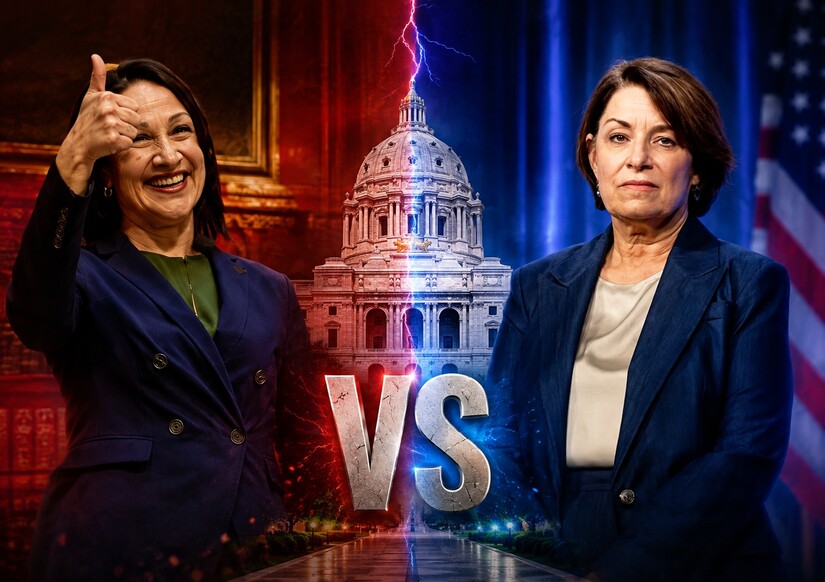
The question now facing the electorate is straightforward: Which woman should govern?
That shift marks progress of a durable kind because it moves women past the status of political novelty. Klobuchar and Demuth will not spend the autumn attempting to prove that a woman can manage state operations or command executive agencies. They will compete over tax policy, education funding, public safety, state spending, economic development, housing, and government oversight.
Flanagan and Tafoya will offer voters contrasting positions on federal spending, immigration, the national economy, public safety, healthcare, and reproductive rights.
They should be judged accordingly.
Equality in public life cannot mean celebrating candidates simply for reaching the ballot. True political equality requires the freedom to be scrutinized, challenged, supported, or opposed on the exact same substantive grounds as anyone else holding power. Representation opens the door; governing records, ideas, judgment, and character determine what happens next.
This principle is critical because the four nominees represent fundamentally different political traditions. There is no single political ideology called "women." There is no unified female stance on taxation, labor, public safety, agriculture, energy, or the scope of government.
Klobuchar and Flanagan differ politically within the DFL, just as Demuth and Tafoya bring distinct backgrounds to the Republican ticket. Women voters across Minnesota remain as ideologically diverse as the candidates on their ballots.
Women did not advance because Minnesota reached a sudden political consensus. They advanced while the state remains deeply divided, winning within those divisions on the strength of their campaigns.
Neither major contest should receive a passive examination because of its historical nature.
Voters must demand specific answers from Klobuchar about how her federal legislative background translates into managing a state executive branch, how she will address state fiscal pressures, and where her administration would diverge from DFL predecessors.
Demuth faces equal responsibility to account for her legislative stewardship, her policy priorities, her relationship with the national party, and her strategy for governing a politically divided state.
The Senate candidates deserve identical rigor. Flanagan’s potential historical milestone does not shield her policy record or legislative history from debate. Tafoya’s transition from sports commentary into candidate politics must be examined carefully as voters evaluate her readiness for federal office.
Historical significance and journalistic scrutiny are not competing duties. Both are required for a functioning democracy.
The four nominees did not arrive at this point through a uniform pipeline. Klobuchar came through prosecution and federal office; Demuth rose through local school board service and state legislative leadership; Flanagan built her career in community advocacy, the state house, and executive state office; Tafoya built national prominence in sports media before entering public life.
Their varied paths disrupt old assumptions about what political leadership looks like and where statewide candidates must originate.
There is a lesson here for both political parties. Parties cannot manufacture credible candidates in an election year. Strong leaders are the product of years spent building records, constituencies, and public trust. Tuesday demonstrated what happens when women actively accumulate the political capital required to compete for the highest offices.
The November campaign will be intense, partisan, and highly contested. Candidates will challenge records, and supporters will argue over the stakes.
Yet beneath the noise of the campaign sits an institutional change that will remain long after the signs disappear. Young Minnesotans growing up after 2026 will inhabit a state where the sentence "Minnesota has never elected a woman governor" is a historical artifact rather than a current reality.
The achievement is not that Minnesota discovered women are uniquely suited to govern. It is that Minnesota voters no longer require proof that women are equipped to compete for the authority to do so.
Metaphors of shattered glass suggest a fragile, single moment. Tuesday was something more enduring.
Minnesota voters walked through the door, reset the standard, and left the hard work of governing right where it belongs: in the hands of the electorate.

Local stories matter. Subscribe free to MinneapoliMedia and receive independent news, community reporting and important updates from Minneapolis, the North Metro and communities across Minnesota.
SUBSCRIBE FREE: https://minneapolimedia.town.news/subscribe
MinneapoliMedia | Community. Culture. Civic Life


Overcast, with a high of 91 and low of 60 degrees. Overcast in the morning, clear overnight.





What an awful human being she is. Funny she did not talk about the women of color in her IT Department she put out on the street when she arrived because of the corrupt vendor she enjoys so much. Look at her ratings on rate-my-professors, it tells you everything you need to know about this narcissist.