Image



By Tom Akaolisa, Editor
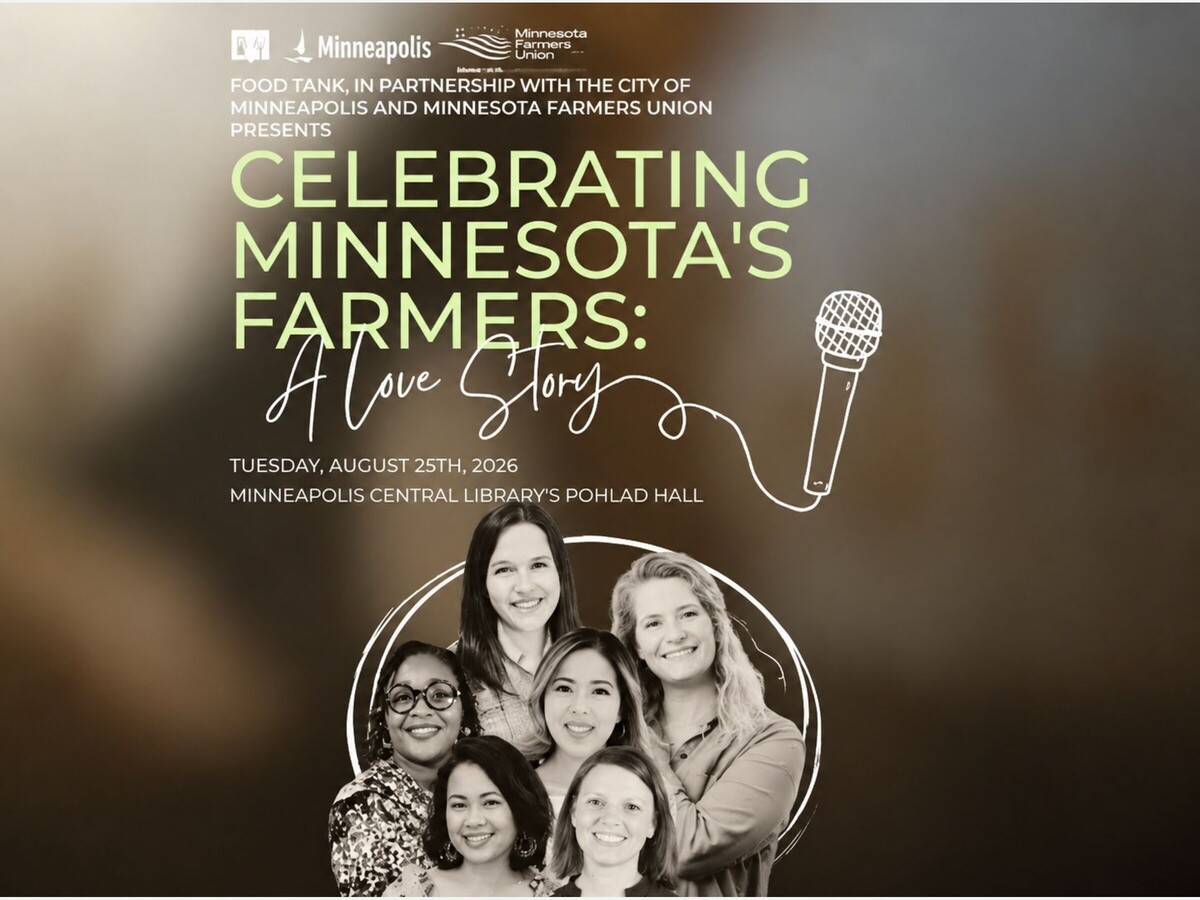
MINNEAPOLIS, MN (August 25, 2026). Minnesota agriculture is often described through acreage, commodity prices, weather reports and production totals. Tonight, inside Pohlad Hall at the Minneapolis Central Library, the people doing the work will describe it in more personal terms.
Six women representing different generations, communities and agricultural traditions are the central storytellers in “Celebrating Minnesota’s Farmers: A Love Story,” a live Food Tank production scheduled from 6 to 8 p.m.
They are fourth-generation organic dairy farmer Emily Zweber, seventh-generation livestock farmer and advocate Maddie Hokanson, regenerative farmer and educator Trisha Zachman, organic farmer and Hmong agricultural entrepreneur Mhonpaj Lee, third-generation Cameroonian farmer Anita Nain Fondikum, and chef, urban farmer and food-systems advocate Sina War.
Food Tank is presenting the program with the City of Minneapolis, Minnesota Farmers Union and Niman Ranch. Bernard Pollack, Food Tank’s co-founder, serves as director and dramaturg. Original short films created by filmmaker Haven Worley will accompany the farmers’ live stories.
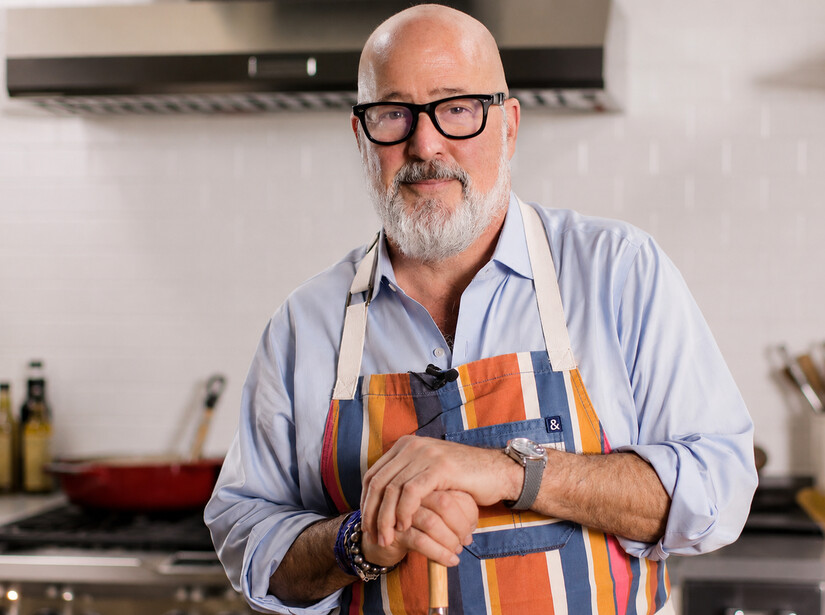
The six farmers remain the production’s organizing center. The program also places their experiences within a broader public conversation through a fireside chat featuring chef and food advocate Andrew Zimmern, remarks from Minnesota agricultural, civic and media leaders, and the involvement of Food Tank President Danielle Nierenberg, whose organization developed the international farmer-storytelling series.
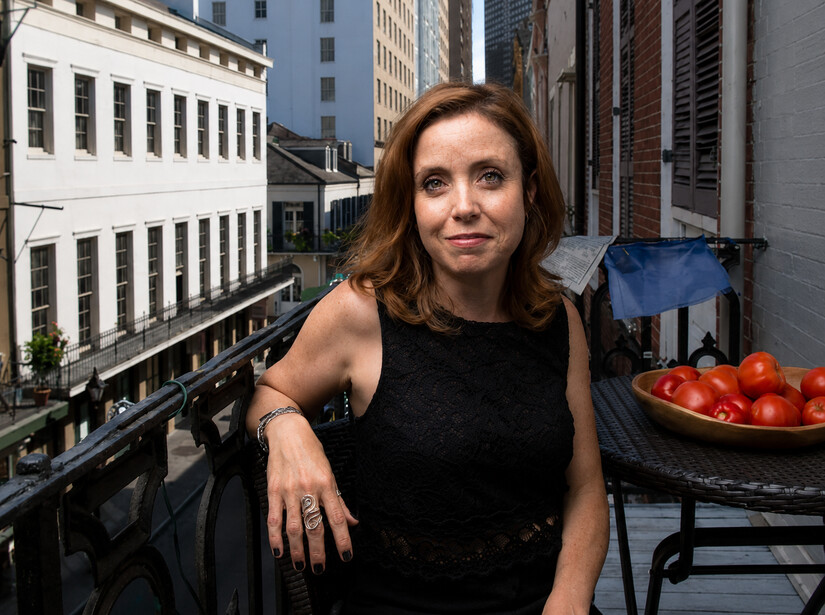
According to Food Tank’s official event announcement, the Minneapolis program is part of a series that has brought farmers to stages at Sundance, SXSW, London Climate Action Week, Climate Week NYC, Dublin’s Smock Alley Theatre and the Adelaide Fringe in Australia.
Its arrival in Minnesota presents an opportunity to challenge the idea that Midwestern agriculture has a single face, history or method of production.
The format is significant because it does not treat farmers as illustrative material for a discussion led entirely by politicians, chefs, researchers or corporate representatives. The farmers are the principal narrators.
Each comes to the stage with a distinct relationship to land, livestock, markets and community. Taken together, their stories show that Minnesota agriculture includes inherited farms and newly established plots, rural livestock operations and urban growing spaces, European American farm succession and agricultural knowledge carried from Cambodia, Cameroon and Hmong communities.
They also expose the pressures that unite farmers across those differences. Those pressures include access to land and capital, the cost of production, environmental uncertainty, market consolidation, succession planning, public misunderstanding of agriculture and the challenge of earning a viable livelihood from food production.
The production’s title describes farming as a love story, but that framing should not be mistaken for sentimentality. Farm life can contain attachment to land, animals, family and community while remaining physically difficult and economically precarious. The six women embody both sides of that reality.
Emily Zweber represents a form of agriculture deeply associated with Minnesota’s farming identity: the family dairy farm.
Zweber is part of a fourth-generation operation in Elko, Minnesota. She farms with her husband, Tim, and members of the Zweber family. The operation has been affiliated with Organic Valley and has combined organic dairy production with grass-fed beef, pork and pastured poultry.
A previous Food Tank profile of Zweber described the farm as a diversified fourth-generation family operation and reported that the Zwebers joined Organic Valley in 2008. Zweber has also served in cooperative leadership and used farm tours and school visits to connect consumers with agricultural production.
Her story reaches beyond the technical distinctions between conventional and organic certification. It concerns whether family dairy farms can maintain enough control over production, pricing and land management to survive.
Dairy farming demands continuous attention. Cows cannot be placed on hold when prices decline, weather changes or household pressures intensify. The work is daily, capital-intensive and shaped by decisions made far beyond an individual barn.
Zweber’s advocacy has repeatedly emphasized the importance of viable markets for farmers. Sustainable practices cannot endure if the people implementing them are unable to earn a living. Her presence therefore brings two intertwined questions to the Minneapolis stage: how food is produced and whether the economic system surrounding that production allows family farms to continue.
Her work as an agricultural educator is equally relevant. Most consumers now live at some distance from primary food production. Farm visits, school programs and direct conversations help narrow that divide. Zweber has used those encounters to explain animal care, organic production, cooperative ownership and the relationship between farming and environmental stewardship.
In a production built around farmers speaking for themselves, she represents both continuity and adaptation. The family farm remains, but it does not survive by standing still.
Maddie Hokanson enters the production as a seventh-generation livestock farmer and advocate.
That depth of family history can sound reassuring. It can suggest permanence, stability and a clear route from one generation to the next. Modern farm succession is rarely so simple.
A multigenerational farm carries land, buildings, equipment, knowledge and family identity. It can also carry debt, high operating costs, complex ownership questions and the expectation that a younger generation will preserve what earlier generations built.
Hokanson’s story gives the audience a way to examine inheritance as both opportunity and responsibility. Being born into a farming family may provide access to knowledge and an established operation, but it does not eliminate commodity volatility, land costs, environmental risk or the difficulty of building an independent role within a family enterprise.
As a livestock farmer, she also occupies a part of agriculture frequently discussed without the direct participation of the people raising animals. Public debates about meat, climate, animal welfare, land use and rural economics can easily flatten livestock production into slogans.
A farmer’s account adds practical questions. How are animals housed and cared for? What standards govern the operation? What markets are available to independent producers? Can a smaller family farm compete with highly consolidated systems? How should producers respond to environmental concerns while maintaining a viable business?
Hokanson’s advocacy places her within those conversations while grounding them in the day-to-day realities of a working farm.
Her generational position is particularly important. She represents continuity, but not inevitability. Every generation must decide whether farming remains possible, whether it can support a family and whether the operation can adapt without losing the values that gave it meaning.
Trisha Zachman’s path into regenerative agriculture includes experience on more than one side of the farming system.
Before committing herself more fully to farming and agricultural education, Zachman worked in the crop-protection industry. That professional background gave her direct exposure to conventional production systems, their tools and the economic reasoning behind them.
Her subsequent work at Feathered Acres Learning Farm and Inn, near Belgrade, Minnesota, reflects an evolution rather than a simplistic conversion story. She and her family raise livestock, including pasture-raised hogs connected to the Niman Ranch network, while using the farm as a place for education and public engagement.
Food Tank previously identified Zachman as a Niman Ranch farmer in its coverage of family farmers and sustainable livestock production. That relationship connects her work to conversations about independent farm markets, humane animal care and the long-term viability of smaller livestock operations. Food Tank has described Niman Ranch’s farmer network as one intended to support family-scale production and sustainable, humane practices.
“Regenerative” has become a popular term, but Zachman’s work helps translate it into farm-level decisions. Those decisions can include how animals move through pasture, how soil is protected, how nutrients cycle through an operation, how ecological diversity is encouraged and how a farm reduces dependence on practices that may degrade its productive base.
Her educational role matters because regenerative agriculture cannot be evaluated solely through branding. Visitors need opportunities to see what specific practices look like and ask how they affect soil, water, livestock and farm finances.
Zachman’s operation also reflects the growing use of agritourism and farm-based education as complementary enterprises. Those activities can provide additional income, but they also allow farms to serve as classrooms. The public sees more than a finished product. It encounters the choices, labor and biological systems behind it.
Her story is therefore not only about changing agricultural methods. It is about the willingness to reassess professional assumptions, apply new knowledge and invite other people onto the farm to see what that reassessment requires.
Mhonpaj Lee’s presence makes clear that Minnesota’s agricultural history cannot be told accurately without Hmong farmers.
Lee is the founder of Mhonpaj’s Garden and is widely recognized as a pioneering Hmong organic farmer and agricultural entrepreneur. Her farm has been identified as Minnesota’s first Hmong-owned certified organic farm.
That achievement carries importance beyond the certification itself. Organic certification requires documentation, inspections, compliance and the ability to navigate a regulatory system that can be burdensome for small producers. Farmers from immigrant and refugee communities may face additional language, financing, transportation and market-access barriers.
Lee’s work demonstrates that Hmong agricultural knowledge is not marginal to Minnesota farming. Hmong families have helped build farmers markets, introduced consumers to a wider range of vegetables and herbs, and preserved growing knowledge carried through migration and resettlement.
The crops cultivated by Hmong farmers often serve more than one market. They meet the cultural and culinary needs of Hmong and other Asian households while introducing new foods to a broader customer base. Farmers markets become places of commerce, cultural exchange and informal public education.
Lee’s organic production also challenges assumptions about who participates in certified agriculture. Her work connects inherited knowledge about seed, soil, food and community with the administrative demands of operating a modern Minnesota farm.
Entrepreneurship is central to that story. A farm must do more than grow good food. It must identify customers, manage transportation, meet food-safety requirements, control costs and withstand seasons in which weather or market conditions disrupt carefully made plans.
By appearing as one of the six central narrators, Lee is not being added to an established Minnesota farm story as a diversity footnote. Her experience helps define the story itself.
Anita Nain Fondikum brings another transnational agricultural history to Pohlad Hall.
Food Tank identifies Fondikum as a third-generation Cameroonian farmer. Her story connects Minnesota agriculture to knowledge developed in Cameroon and carried across borders through migration.
Migration can interrupt a family’s relationship to land without eliminating its agricultural identity. Skills involving soil, seed, crop timing, preservation, cooking and community exchange can endure even when the climate, market system and regulatory environment change.
For an immigrant farmer, establishing an operation in Minnesota requires more than learning a new landscape. It may involve navigating unfamiliar institutions, locating affordable land, securing equipment, adapting culturally important crops to a shorter growing season and finding buyers who understand their value.
Fondikum’s agricultural identity therefore contains multiple forms of expertise. There is the knowledge inherited through her family and the practical knowledge gained by rebuilding a farming life within a different food system.
Her inclusion also widens the meaning of “generational farmer.” In American agricultural reporting, that description frequently refers to the number of generations occupying a particular parcel of land. Fondikum’s story suggests another interpretation. A farming tradition can remain generational even when geography changes.
That distinction is important in a state shaped by immigration. Minnesota’s newest farming operations may be built by people whose agricultural knowledge is much older than their Minnesota acreage.
Fondikum represents farmers who are too often invisible in broad accounts of the state’s farm economy. Their holdings may be smaller. Their crops may not dominate commodity reports. Their sales may depend on direct markets and community relationships. Yet their production strengthens local food access and expands the state’s agricultural capacity.
Her story asks the audience to recognize migration not as the end of a farming tradition but as one of the ways that tradition is transformed and renewed.
Sina War’s work occupies several connected spaces. She is a chef, urban farmer, food-systems advocate, market leader and entrepreneur.
Her agricultural work is rooted in her family’s Cambodian history. War was born in California after her family’s displacement and survival as Cambodian refugees and grew up in Minnesota after her family moved to the state when she was young.
Through Twin Tiger Farm and Gardens, she has cultivated produce connected to Cambodian foodways and developed value-added products shaped by local ingredients. Her “Sina-racha” hot sauce is one example of that intersection, combining Minnesota-grown peppers with an entrepreneurial identity linked directly to War’s name and culinary practice.
The significance of culturally important crops extends beyond nostalgia. Access to familiar herbs, vegetables and flavors can help immigrant and refugee communities maintain relationships to memory, family and health. Growing those foods locally also reduces dependence on distant supply chains and creates opportunities for small-scale producers.
War’s background in farmers-market management and statewide market advocacy gives her a view of the food system beyond her own plots. A Minnesota Farmers’ Market Association profile identifies her as its Engagement and Inclusion Director and notes her previous work at the Minneapolis Farmers Market. In that capacity, she has worked with markets, food hubs and small-scale producers while developing partnerships intended to serve Minnesota’s increasingly diverse communities.
The Midwest Farmers of Color Cooperative similarly describes War as the owner of Twin Tiger Farm and Gardens, growing culturally significant produce and creating recipes, demonstrations and food events inspired by Cambodian heritage.
Her work illustrates why farmers markets are more than weekend retail spaces. They are points of entry into the formal food economy. Vendors must understand licensing, insurance, pricing, display, transportation and customer expectations. For beginning farmers, those requirements can become barriers before the first sale is made.
War’s advocacy addresses those structural realities. Helping immigrant and BIPOC growers gain access to markets means translating regulations, building relationships and ensuring that institutions recognize forms of agricultural knowledge they were not originally designed to accommodate.
Her culinary work completes the cycle. She does not merely grow ingredients. She demonstrates how they are prepared, explains their cultural meaning and creates settings in which the public can experience Cambodian food as part of Minnesota’s contemporary food culture.
Within the production, War’s story links genocide, refugee survival, food memory, urban land and entrepreneurship. It shows that planting a culturally important crop in Minnesota can be an act of economic development, education and historical continuity.
The six women do not represent every kind of farming in Minnesota, and no two-hour production could accomplish that. They do, however, disrupt several persistent assumptions.
They show that agricultural experience is not measured only by farm size. They show that inherited agricultural knowledge can travel across borders. They show that organic and regenerative systems are shaped by economics as well as environmental values. They show that livestock farming encompasses questions of animal care, market access, family succession and corporate concentration.
Their stories also reveal common needs.
Land must be obtainable. Financing must be accessible. Markets must return enough value to sustain production. Farmers need technical assistance that responds to their actual operations. Regulations must protect the public without becoming impossible for smaller or culturally distinct producers to navigate.
The public, in turn, needs a more accurate understanding of who farms and why.
That is where the production’s storytelling format becomes relevant. Data can show the decline of dairy farms, the cost of land or changes in farm ownership. A farmer’s testimony shows what those numbers require of a household.
Danielle Nierenberg’s role in the Special Report is substantive, but it remains supporting. She is not one of the six farmer subjects. She is the food-systems leader whose organization has built the stage on which their stories are being presented.
Nierenberg is president and co-founder of Food Tank, which she established with Bernard Pollack in 2013. Her work has addressed sustainable agriculture, factory farming, gender, food-system innovation and the relationship between agricultural production and public policy. She received the Julia Child Award in 2020, according to her official Food Tank biography.
Her involvement explains the conceptual structure of the Minneapolis production.
In the official announcement she wrote for the event, Nierenberg described live farmer storytelling as a “launchpad” that helps audiences understand how farmers feed communities and contribute to climate-smart innovation. The objective is not simply to produce a compelling evening. It is to turn recognition into continued public and professional action.
That distinction is central to Food Tank’s approach. The organization works at the intersection of journalism, convening, advocacy and cultural production. Its programs frequently bring farmers into conversation with researchers, policymakers, chefs, businesses, philanthropy and the media.
The risk in such gatherings is that institutional speakers can overshadow the people producing food. The structure of “A Love Story” attempts to reverse that hierarchy by treating the farmers’ accounts as the main text and the expert commentary as context.
Nierenberg also brings a personal Midwestern connection to the production. In her event essay, she rejects descriptions of the region as a monolith or “flyover country.” Instead, she characterizes Midwestern communities as locally rooted, globally connected and forward-looking.
The six farmers substantiate that claim. Lee, Fondikum and War connect Minnesota agriculture to Hmong, Cameroonian and Cambodian histories. Zweber, Hokanson and Zachman show how long-established family operations are changing in response to economic, environmental and generational pressures.
Nierenberg and Food Tank are therefore relevant not because the production needs a prominent institutional personality, but because their platform assembles those distinct experiences into a public record.
Andrew Zimmern’s appearance in a fireside chat provides another supporting layer.
Zimmern is one of Minnesota’s most recognizable culinary figures, but his relevance to this program is broader than celebrity. His work has increasingly combined food media with advocacy involving hunger, nutrition, sustainable food systems and the treatment of immigrant communities.
His official biography identifies him as a chef, television personality and food advocate. He serves as a Global Goodwill Ambassador for the United Nations World Food Programme and The Nature Conservancy and as a Voice for Nutrition for the International Rescue Committee. He has also worked with the Environmental Working Group and contributed to discussions surrounding the 2022 White House Strategy on Hunger, Nutrition and Health.
Zimmern’s connection to Minnesota makes his participation especially pertinent. His culinary career has helped present the Twin Cities as an important American food community. His membership in the Twin Cities Restaurant Coalition also connects him to the economic health of the region’s restaurant sector.
Restaurants, chefs and food media sit downstream from the decisions farmers make. They influence which ingredients receive attention, which producers gain reliable customers and how consumers understand cultural food traditions.
That creates a productive tension for the fireside format. Chefs often receive more public recognition than the people who grow and raise their ingredients. In this production, Zimmern’s appearance occurs within a program deliberately centered on farmers.
His most useful contribution is therefore connective. He can help translate the farmers’ experiences to audiences who first encounter agriculture through restaurants, television, travel or the grocery aisle.
That is particularly relevant to the stories of Lee, Fondikum and War. Culinary visibility can create demand for culturally significant crops, but that demand should not erase the communities and agricultural traditions from which the food comes.
It is equally relevant to Zweber, Hokanson and Zachman. Chefs and restaurants make purchasing decisions that can support organic dairy farms, independent livestock producers and regenerative operations. Those decisions have economic consequences beyond the menu.
Zimmern’s presence expands the conversation, but it does not change its center of gravity. The six farmers remain the people whose work makes the wider food culture possible.
The program will also feature remarks from Ed Eiffler-Jaramillo of the Minneapolis Mayor’s Office; Victor Stefanescu of the Star Tribune; Zoe Hollomon of the Midwest Farmers of Color Cooperative; Minnesota Farmers Union President Gary Wertish; former Minnesota Secretary of State Mark Ritchie; Minnesota Agriculture Commissioner Thom Petersen; and State Representative Pam Altendorf.
Video remarks are expected from U.S. Senator Amy Klobuchar, Minnesota Governor Tim Walz and U.S. Representative Kelly Morrison.
That lineup reflects agriculture’s reach into public policy, economic development, media, environmental stewardship, labor and food access.
The officials and institutional representatives may help identify resources, legislation and partnerships. The farmers provide the evidence against which those responses should be measured.
If a program about farmers concludes only that farming is admirable, it will have stopped short of the harder questions. Admiration does not secure land, repair a broken market or make a farm financially sustainable. Visibility is meaningful when it leads institutions, buyers and communities to change how they support producers.
The most durable outcome of “Celebrating Minnesota’s Farmers: A Love Story” may be the record it creates.
The live monologues, original films and supporting materials preserve stories that otherwise risk being scattered across market stalls, farm tours, community dinners, conference panels and social-media posts. When placed together, those stories reveal a more complete agricultural landscape.
Emily Zweber shows what it takes to keep a family dairy farm viable while pursuing organic production and public education.
Maddie Hokanson represents the weight and possibility of carrying a livestock operation into a seventh generation.
Trisha Zachman demonstrates how a farmer can reconsider conventional assumptions, adopt regenerative practices and turn a working farm into a place of learning.
Mhonpaj Lee establishes Hmong farming and organic entrepreneurship as essential parts of Minnesota agriculture.
Anita Nain Fondikum shows that generational farming knowledge can survive migration and take root in a new country.
Sina War connects Cambodian refugee history, culturally significant produce, farmers-market access, cooking and entrepreneurship.
Danielle Nierenberg and Food Tank provide the organizing platform. Andrew Zimmern connects the farm story to the wider culinary and public-policy conversation. Bernard Pollack and Haven Worley shape the stories for stage and screen.
But the production’s authority belongs to the six women.
Their lives complicate the old image of Minnesota farming, not by dismissing its history, but by showing how much of that history has been left outside the frame.
Tonight in Minneapolis, the frame becomes wider.
Event: Celebrating Minnesota’s Farmers: A Love Story
Date: Tuesday, August 25, 2026
Time: 6 to 8 p.m.
Venue: Pohlad Hall, Minneapolis Central Library
Presented by: Food Tank in partnership with the City of Minneapolis, Minnesota Farmers Union and Niman Ranch
Program information: Food Tank’s Minnesota event coverage

Local stories matter. Subscribe free to MinneapoliMedia and receive independent news, community reporting and important updates from Minneapolis, the North Metro and communities across Minnesota.
SUBSCRIBE FREE: https://minneapolimedia.town.news/subscribe
MinneapoliMedia | Community. Culture. Civic Life



Sunny, with a high of 74 and low of 49 degrees. Sunny for the morning, clear in the afternoon and evening, smoky haze overnight.