59° and Mist
Image



It was not a grand house, and there was not much money inside it. Some days, what the family ate made that plain. Evans remembers mayonnaise and ketchup sandwiches when there was no meat. She remembers cornbread and Alaga syrup. She remembers the time her sister threw away a sandwich and Evans, still hungry, retrieved it from the trash.
She tells these stories without asking anyone to feel sorry for the child she was.
"We were poor, but didn't know we were poor," she said.
What Evans remembers just as clearly is that a household with little somehow remained a place where there was room for other people.
"Our house was the community house."
Friends gathered there. Relatives came through. Members of the church became extended family. Her grandmother, the matriarch, kept watch over everyone, held the family together, and established rules that did not bend easily. School was one of them.
"We didn't have an option as far as going to school was concerned," Evans recalled.
Education, faith, service, and responsibility were not separate subjects in that household. They were parts of the same instruction about how a person should live.
Her grandmother returned repeatedly to the biblical principle that to whom much is given, much is required. She also gave her granddaughter another lesson that would travel even farther:
"My grandmother always said once you get your education, nobody can take that from you," Evans recalled. "They can take your house, your car, the clothes off your back. Once your mind's been educated, you've been freed."
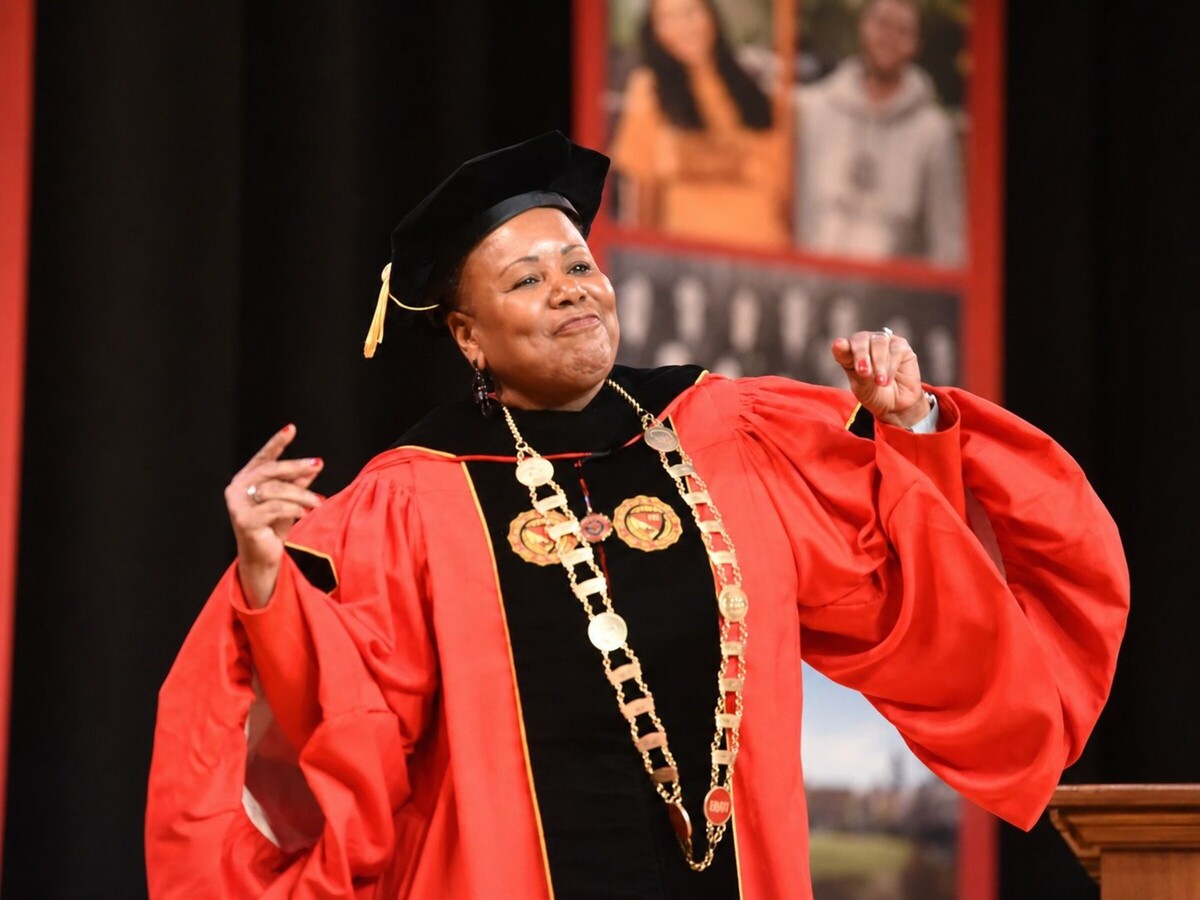
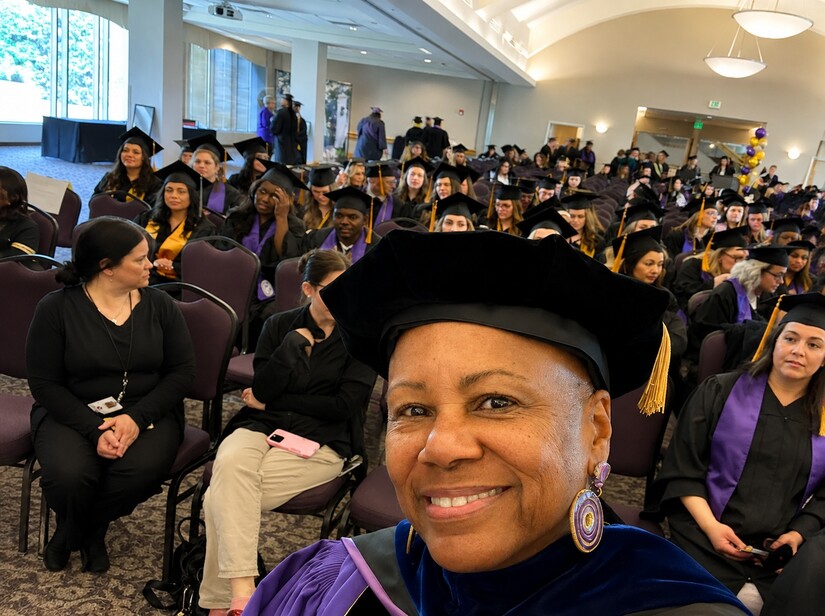
More than half a century later, that granddaughter sits in another place where people come through the door: the president's office at St. Catherine University in St. Paul.
Evans became St. Catherine's 12th president on July 15, 2024, becoming the first African American to hold the office in the university's history. She arrived after nearly three decades in higher education leadership and after helping guide Bloomfield College in New Jersey through an existential financial crisis and into a historic merger with Montclair State University. Before becoming a university president, she had been a counselor, counselor educator, professor, and senior administrator. She had earned tenure twice, published, worked with families in crisis, and mentored students trying to build lives their circumstances might once have made difficult to imagine.
The résumé is formidable, but Evans is more interested in whether her door is open.
"If my door is open, you can stop by and chat," she said.
She eats in the university cafeteria, where students can see her and approach her without navigating the formalities that ordinarily surround an institutional president. She does it deliberately. A presidency, in Evans' conception, should not become an ivory tower from which a leader observes the institution below.
That accessibility is easy to mistake for informality, but it is actually an expression of power as Evans believes power should be used.
During an extended conversation with MinneapoliMedia, she returned repeatedly to three words that have followed her from counseling rooms and classrooms into some of the most consequential decisions of her career: seen, valued, and heard.
The words can sound like the familiar vocabulary of contemporary institutional leadership until Evans begins explaining where they came from. In her telling, they are not management language. They are connected to poverty, race, faith, education, mental health, the expectations placed upon Black professionals, the obligations of women who become "the first," and a grandmother who taught her that whatever a person has carries with it a responsibility to somebody else.
They also help explain an unusual career trajectory. Evans did not grow up planning to become a university president. She planned to become a doctor.
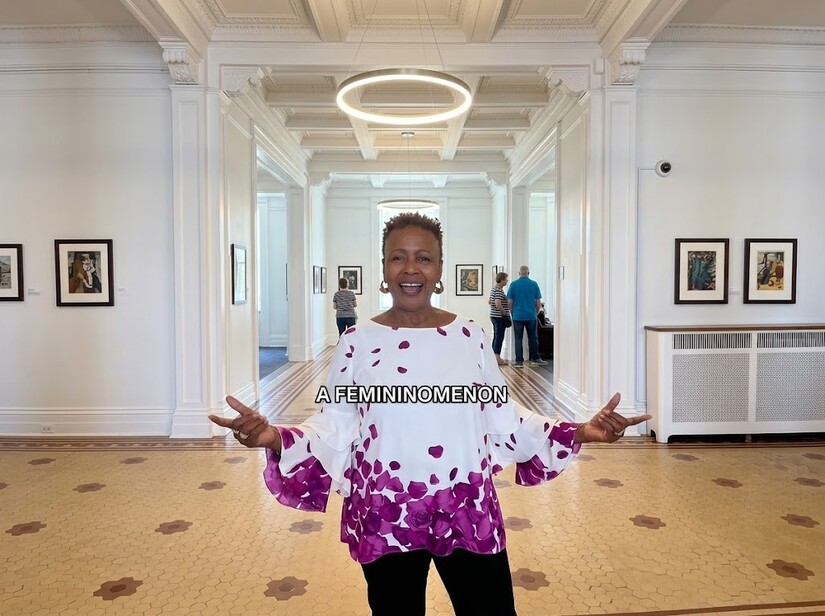
Marcheta Evans was sixteen when she graduated from high school in Washington, D.C. She enrolled at Oakwood College, now Oakwood University, the historically Black institution in Huntsville, Alabama, and began studying biology and chemistry. Medicine was the destination.
Then life started revising the plan.
Evans intended to travel to Osaka, Japan, as a student missionary teaching conversational English, but illness prevented her from going. There was also another complication: organic chemistry.
"I wasn't ready for organic chemistry," she said, laughing at the memory. "It was not my friend."
For a young woman accustomed to succeeding academically, struggling was unfamiliar territory. Yet that disruption eventually pushed her toward the University of Alabama and toward counseling.
There was a reason. Evans believed the school counseling she had received had not adequately prepared her for the future she imagined. Instead of allowing that disappointment to harden into resentment, she became interested in doing the work differently herself.
Counseling also presented another need she could recognize. Growing up in the Black church, Evans knew the language surrounding emotional struggle: Take your problems to God. God will not give you more than you can bear. Do not put your business in the street.
Faith sustained people, but Evans came to understand that faith and professional mental health care did not have to be rivals. She saw communities in which counseling carried a stigma and too few clinicians shared the cultural experiences of the people seeking help. She wanted Black and brown families to encounter professionals capable not only of applying clinical methods, but of understanding something about the worlds from which their clients came.
Her work eventually included court-mandated cases and families whose children had been removed from their care. She entered homes as part of efforts to assess whether environments were safe for children to return. She worked with people who had tried to solve their problems themselves before arriving in a counselor's office, sometimes voluntarily and sometimes because a court required them to be there.
The goal, as she understood it, was never to make a client permanently dependent on the counselor.
"My job is to work myself out of a job," she said.
Give people tools. Help them develop the capacity to solve problems. Be available when they need help again, much as someone might return to a physician for a checkup, but do not make dependency the measure of successful counseling.
Years later, Evans would carry that philosophy into university leadership. She finds the connection between counseling and a presidency so obvious that she wonders how presidents without that training manage the job.
"I don't know how anybody could be a president and not have a counseling background."
A university president deals not simply with budgets, trustees, enrollment projections, and strategic plans. The work involves faculty members anxious about careers, students struggling with uncertainty, staff members carrying personal and professional pressures, parents worried about their children, and communities whose interests do not always align.
Evans learned early that hearing those people requires more than allowing them to speak.
"It's one thing to listen and another thing to hear."
You listen, she said, with your eyes as well as your ears. Tone matters. Silence matters. Body language matters. Culture matters. The words a person chooses may reveal only part of what that person is trying to communicate.
Those lessons became part of the leader she would eventually become, but they did not make her gentle in the simplistic sense of the word. Evans has always had an edge. She describes her younger self with an expression that sounds almost contradictory coming from someone who spent her career in counseling:
"I was the bully's bully."
She is short, she readily points out, but physical stature never persuaded her to remain silent when someone else was being mistreated.
"You were not going to do that on my watch."
Leadership, then, did not suddenly appear when someone handed Evans an administrative title. Its earliest form was protective. Someone was being pushed around. Someone needed to speak. Something needed to get done. Evans was unlikely to be the person waiting quietly for somebody else to do it.
That instinct followed her into higher education, where she began noticing who occupied positions of authority and who did not. Decisions were being made about students like those she taught and communities like those she knew, yet relatively few of the people making those decisions looked like her.
Evans reached a conclusion:
"I didn't want to have a seat at the table," she said. "I wanted to be at the head of the table."
The distinction is central to understanding her ambition. Evans does not apologize for wanting authority, nor does she describe authority as the destination. The point of reaching the head of the table, she argues, is what becomes possible once you are sitting there.
One of the most revealing episodes Evans shared about leadership did not occur in a president's office. It happened in a classroom at Auburn University at Montgomery.
Evans was teaching a class in which only a small number of the students were Black. Several of them approached her with a concern: they believed she was harder on them than she was on the other students.
Evans listened. Then she considered what they were telling her.
They were right.
"You're right. I am," she told them.
Her explanation came from experience. Evans knew what it meant for Black professionals to enter environments in which merely being as good as everyone else might not be enough. She understood what is sometimes described as the "Black tax," the expectation that a Black person may have to perform at a higher level simply to receive the same presumption of competence.
She thought she was preparing her students for that world. But their challenge forced her to consider something else: whether, in trying to protect them from an unequal standard awaiting them outside the classroom, she had imposed another unequal standard herself.
The encounter changed her. It did not cause her to abandon high expectations; it made her more conscious of how she applied them and more attentive to the individual circumstances students carried into her classroom.
The episode reveals a quality more consequential than certainty: Evans could be corrected. For someone who would later occupy positions in which people may hesitate to challenge the person in charge, that capacity matters.
Another student tested the opposite side of her teaching philosophy. A master's student submitted writing Evans believed did not meet graduate-level expectations. Evans marked the problems. The student was upset, telling Evans that no one had previously informed her that her writing was inadequate.
Evans showed her the professional standards she was applying.
The lesson Evans took from the confrontation was not that she should lower expectations to spare someone's feelings, but that institutions can fail students when they confuse avoiding discomfort with providing support.
Care sometimes means correction.
That conviction would remain with her as her responsibilities grew, as would the lesson from the Black students who challenged her: demand something of people, listen when they tell you what your demands are doing to them, and then be willing to adjust.
For Evans, being heard has never meant being agreed with. It means being taken seriously enough that what you say can matter.
By the time Evans began moving into senior university administration, she possessed the credentials higher education uses to establish professional legitimacy. She had taught, published, and earned tenure. She had experienced the anxiety surrounding academic advancement and the pressure to produce scholarship.
She calls that experience "street cred." It matters when she sits across from faculty members now because she has lived something of the professional world in which they are trying to succeed.
Eventually, the woman who wanted the head of the table began reaching it.
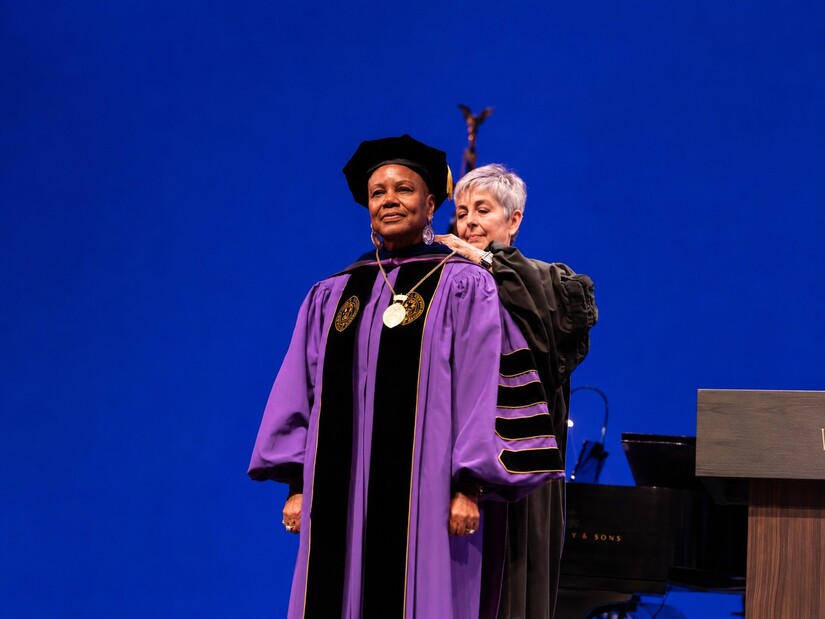
In 2019, Bloomfield College selected Evans as its 17th president. In the institution's more than 150-year history, she became the first woman and first African American to lead it. Five years later, St. Catherine University would make history again when Evans became its 12th president and first African American president.
At her formal installation in November 2024, she described herself as the first Black woman in the role and connected the milestone not merely to personal achievement, but to what inclusion could represent within an institution.
Evans understands the symbolism, but she is more interested in the obligation.
"People need to be able to see themselves in certain roles to be able to believe that they can do that."
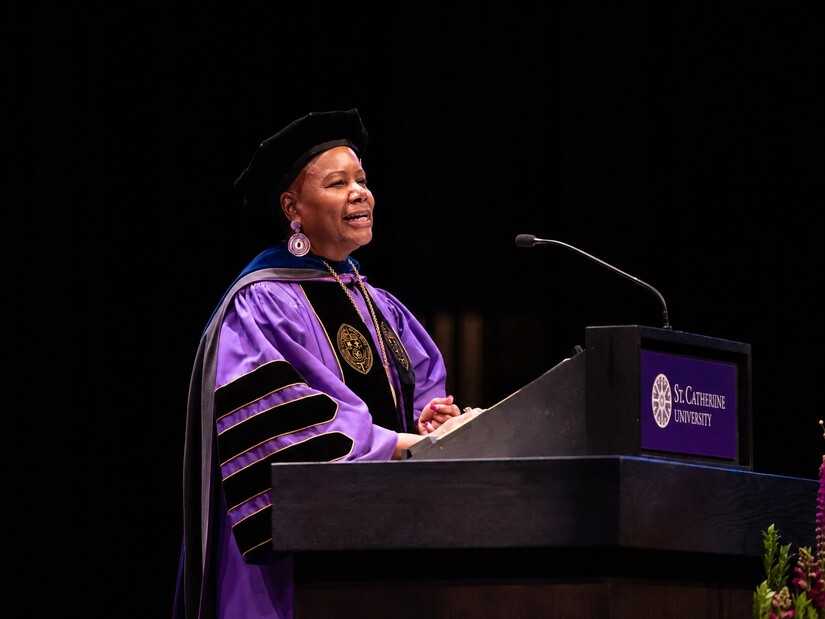
Institutions communicate possibility not only through what they teach, but through whom they entrust with authority. A student can be told repeatedly that leadership is open to her while looking upward and seeing little evidence of that promise. The responsibility of being first, Evans believes, is to make sure the path does not close behind you. She hopes the distinction eventually becomes unremarkable.
That responsibility has become especially important in her work with women. Evans has watched accomplished women inspect job descriptions as though every qualification were a prerequisite carved in stone. If they cannot satisfy nearly all of them, they may decide they are not ready. She has also watched men approach opportunities with considerably less hesitation.
The pattern frustrates her. Women, she argues, have often been conditioned to minimize their achievements even when they have done the work.
Evans tells them to write it down. Claim the accomplishment. Describe the leadership. Not boastfully, but factually. Her argument is not that women should imitate empty self-promotion, but that humility should not require self-erasure.
There is a tension here that Evans does not attempt to resolve by pretending ambition is somehow beneath her. She is competitive and likes to win, laughing about still wanting to beat younger relatives at sports for as long as her body will allow it.
Yet that competitiveness exists beside another conception of leadership learned long before she knew the vocabulary of executive administration: the person at the head of the table still has to serve the people around it.
That belief would be tested most severely at Bloomfield, where Evans would confront a question far more difficult than how to become president: she would have to decide what leadership required when preserving an institution's future might mean giving up its independence.
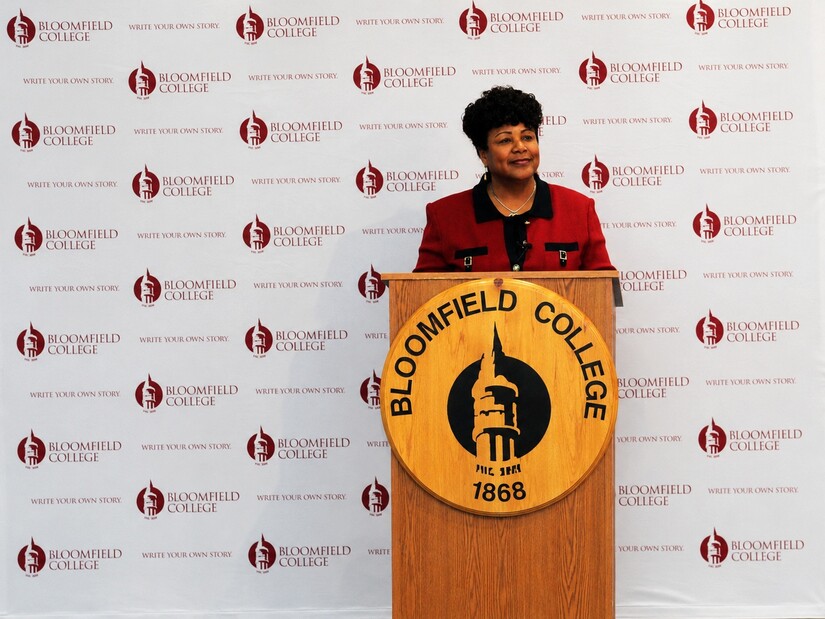
Bloomfield College was not where Evans expected to become a president. She had worked at larger institutions and imagined leading a university with perhaps 8,000 to 15,000 students. Bloomfield was small, a private college in northern New Jersey serving many first-generation and lower-income students, including large numbers of Black and Hispanic students.
She went to the interview without assuming much would come of it. Then she arrived.
"I just fell in love."
What drew her was not institutional prestige or scale; it was the students.
Evans noted that the median family income among her Bloomfield students was a little over $32,000, an amount that took on additional significance given the cost of living in New Jersey. Some students arrived with needs extending far beyond tuition and textbooks. Financial instability was real, and family obligations did not disappear when a student enrolled in college. For these students, higher education could alter not only an individual career, but the economic trajectory of a family.
Evans accepted the presidency in 2019. Then came COVID-19.
Across American higher education, the pandemic emptied campuses, destabilized enrollment, strained budgets, and forced institutions to improvise forms of teaching and student support almost overnight. For colleges already operating with limited financial margins, the disruption was not simply operational; it threatened survival.
At Bloomfield, Evans understood quickly that sending everyone away was not an uncomplicated solution. Some students lived in crowded households, some came from communities in New York and New Jersey being devastated by the virus, and some needed the campus to remain a place where they could live.
Bloomfield kept housing available for students who needed it, and Evans kept coming to campus. The doors were locked, she recalled, but she went to her office because students were still there.
"I still had students on campus."
The pandemic entered their lives with terrifying intimacy. One student, Evans recalled, lost nine family members.
For a counselor who had become a president, the crisis collapsed any remaining distinction between institutional management and human care. Enrollment projections and financial models mattered, but behind those numbers were people grieving relatives while trying to remain students.
Evans was struggling with isolation herself. Her husband, an introvert, handled the enforced solitude rather well, she recalled with amusement. Evans did not.
"I'm an extrovert. I love people."
She put a walking pad beneath her computer setup so that during the endless hours of virtual meetings and crisis management, she could at least keep moving.
There were days when the cumulative strain overwhelmed any polished language about leadership and resilience. On one of them, Evans prayed:
"Lord, I don't want to grow anymore today."
The line is funny when she tells it now, but it was not a joke at the time. She had spent years believing difficult experiences carried lessons, that setbacks could become preparation, and that faith required perseverance. Yet there are moments when the language of growth becomes inadequate to the experience of enduring it.
Bloomfield was approaching one of those moments. The pandemic did not create all of the college's financial problems, but it intensified pressures already confronting the institution. Enrollment was hit hard, and the question Evans could no longer avoid was whether Bloomfield could survive independently.
She concluded that it might not.
"I knew that either we needed to find a partner or this institution was going to close."
For a college president, there are few admissions more consequential. Presidents are hired to strengthen institutions and project confidence to students, employees, trustees, donors, and prospective families. Publicly acknowledging that a college may not survive carries immense risk: the disclosure may frighten applicants, unsettle employees, alarm donors, and deepen the instability a leader is trying to solve.
Evans knew that, but she disclosed the problem anyway. In October 2021, Bloomfield publicly sought a strategic partner or substantial philanthropic support.
The decision was unusual enough to attract national attention within higher education. Some wondered why she would speak publicly, whether students would leave, or if acknowledging vulnerability would accelerate the decline.
Evans' reasoning was more straightforward: she did not want Bloomfield to become one of those colleges that appeared to be functioning until, suddenly, it was not. Concealing the danger would not make it disappear, and protecting the appearance of institutional strength was not the same thing as protecting the institution's students.
Something unexpected happened: institutions responded. More than 30 expressed interest, eight submitted formal proposals, and eventually, the strongest possibility emerged from just a few miles away: Montclair State University.
Bloomfield and Montclair first formalized their intention to explore a strategic relationship in December 2021. Their governing boards approved a merger plan in October 2022, and on July 1, 2023, the combination became official.
Bloomfield College of Montclair State University was created in what the institutions described as the first merger between a private college and public university in New Jersey. Students enrolled during the transition were able to continue their education, and Montclair offered employment opportunities to nearly 90 percent of Bloomfield's faculty and staff.
Evans moved from president of independent Bloomfield College into the role of chancellor of Bloomfield College of Montclair State University.
The significance of the decision becomes clearer when one considers what the solution required of her personally: preserving Bloomfield's mission meant accepting the end of Bloomfield's independence, and it also meant accepting the end of her own presidency there.
Montclair State President Jonathan Koppell later publicly described Evans' decision to pursue the merger as extraordinarily bold, specifically noting that she knew it would change Bloomfield's status, her status, and the status of many other people.
Leadership is easy to praise when the leader emerges with more authority than before. Bloomfield presents a harder measure. Evans had spent decades preparing to sit at the head of the table; when the students she served needed something different, she was willing to surrender that particular chair.
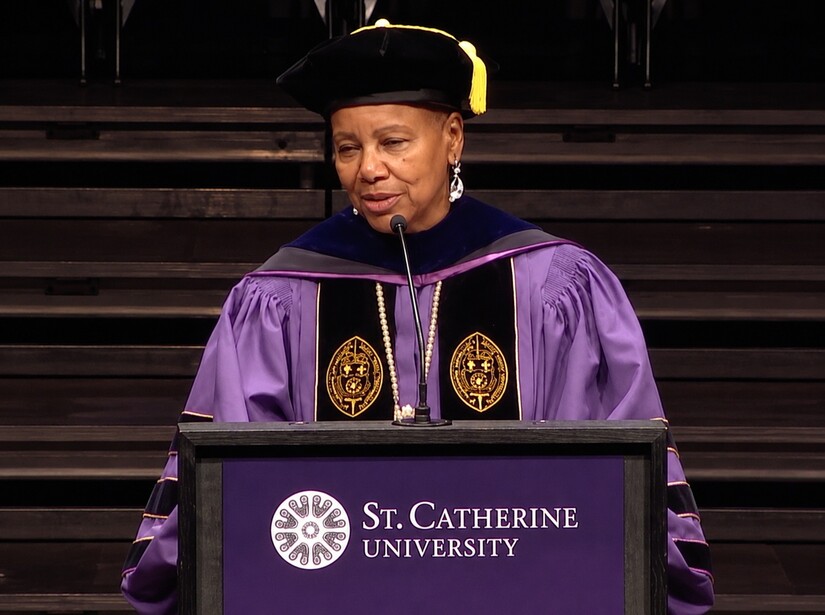
Institutional mergers are often narrated through the language of finance: assets, debt, enrollment, real estate, accreditation, governance, and employment. All of those questions mattered at Bloomfield, but Evans describes the outcome through another unit of measurement: students.
She remembers Bloomfield graduates moving into six-figure careers in fields such as computer science and game design. The salaries mattered to her not as a bragging point for the college, but because she understood where some of her students had begun.
A young person raised in a household surviving on a modest family income can experience a six-figure salary as more than professional advancement; it can reorder relationships throughout a family. That brings complications of its own. Evans had seen families so financially strained that relatives came looking for a student's work-study check. Once a graduate begins earning considerably more money, expectations do not simply disappear.
Success creates a new question: how does the graduate honor and help the family that sacrificed for them without sacrificing the financial stability that education was supposed to create?
For Evans, that is where financial literacy becomes part of student success.
"How do I help them still make sure they take care of their family and honor their family, but also set them up to be financially successful?"
This is the part of social mobility that commencement statistics rarely capture. A diploma may change one person's earning potential, but it does not automatically teach that person how to inhabit a new economic reality.
Evans' interest in those questions reflects the counselor who never disappeared when she became an administrator. She sees students not merely as recipients of credentials, but as people moving between worlds.
That is why she returned to Bloomfield for commencement after she was no longer its president. Several students she had known were graduating, and the experience was bittersweet. She watched them cross a stage at an institution she once led, now existing in a different form because of decisions made during its most uncertain years.
A former student later responded to something Evans wrote about the experience on LinkedIn. His message, as she remembers it, credited her role in making sure there was still a Bloomfield from which students could graduate.
The comment moved her. But when Evans tells the story, she does not linger on being credited with saving an institution; she moves almost immediately to what the institution was there to save.
"It's the students that still have a place where they can be seen, valued and heard."
That distinction is important. Buildings can survive while missions disappear, and names can remain on signs while the people an institution was created to serve are gradually pushed aside. The question Evans faced at Bloomfield was not simply whether the college could remain legally independent, but what needed to survive for Bloomfield still to matter.
Then another institution came calling, this time in Minnesota.
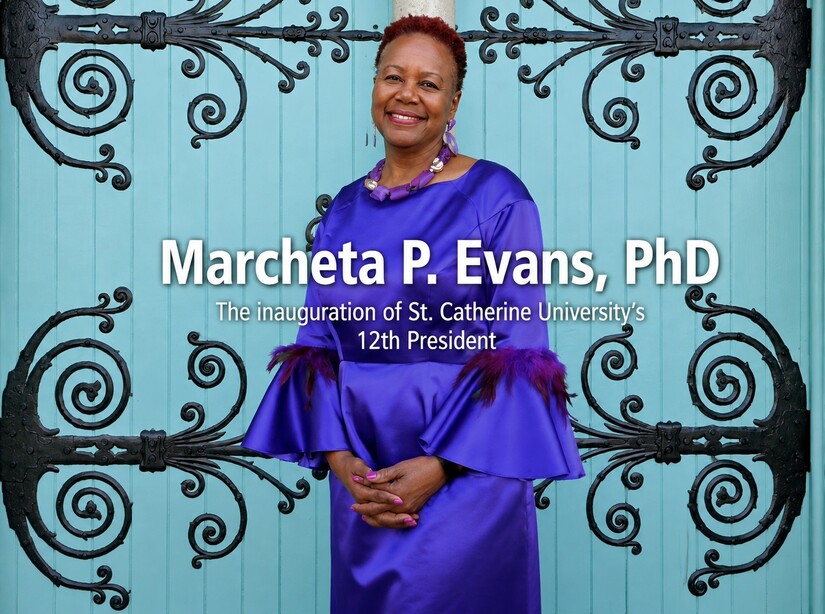
St. Catherine University traces its history to 1905, when the Sisters of St. Joseph of Carondelet founded the College of St. Catherine in St. Paul. Its mission is concise: to educate women to lead and influence.
Nearly 120 years after its founding, the university's presidential search led to Marcheta Evans. The institution's trustees selected a leader who had spent much of her career working at the intersection of education, access, institutional transformation, and service. For Evans, St. Catherine's historic focus on women made the opportunity especially resonant.
In July 2024, she became the university's 12th president and its first African American president.
The meaning of being first, however, has never rested comfortably for Evans in the ceremonial photograph. There is an obligation attached.
"People need to be able to see themselves in certain roles to be able to believe that they can do that."
The sentence sounds straightforward, but its implications are not. Institutions communicate possibility not only through what they teach, but through whom they entrust with authority. A university can tell women they should lead and teach them to influence institutions and communities, but leadership becomes something different when students can look toward the institution's highest office and encounter forms of authority that previous generations rarely saw there.
Representation alone is not leadership, but representation can alter what another person understands to be possible.
Evans sees reason for optimism in the young women around her. She speaks enthusiastically about their research, their community service, and the sophistication of the work students are undertaking, rejecting the easy narrative that younger generations are somehow incapable of meeting the challenges before them.
"These young women are doing phenomenal things."
Technology is one example. Artificial intelligence has created anxiety across education about academic integrity, employment, and the future of learning, but Evans remembers earlier technological transitions with enough perspective to resist panic. She remembers typewriters, correction fluid, and mainframe computers. Now a device in her hand can produce information that once required considerably more time and machinery.
The technology changes, but the educational responsibility remains.
"It's here," she said of artificial intelligence. "We can't be afraid of it."
The question, for Evans, is how people use it ethically and responsibly. Her confidence ultimately rests not in the technology, but in the people learning to live with it.
"The hope is in the people."

When Evans talks to younger women about leadership, there is something she wants them to understand that cannot be seen in the title: "It's not about them."
Some people, she said, want to become president simply so they can say they are president. Her question is more demanding: what are you doing with the role?
Evans remembered once describing the way she worked alongside an administrative assistant. If the telephone needed answering, she could answer it. If papers needed assembling, she could help assemble them. If something ordinarily handled by someone else needed doing and that person was occupied, she could do it.
Someone once offered her another piece of advice: If you're the queen bee, sometimes you have to act like it.
Evans understood the point. There are moments when authority must be exercised decisively, and a president cannot outsource every difficult decision in the name of collaboration. But she rejects the idea that exercising authority requires performing superiority.
"Yes, I have positional power, but I also know how to be a servant."
The distinction between management and leadership matters to her. Managers can control processes; leaders, as Evans describes them, create the conditions in which talented people can do their best work.
"I'm not the smartest one in the room."
Her job is to find people who know things she does not know, get them the resources they need, establish direction, bring people together when necessary, and remove obstacles. The president does not have to possess every answer; the president has to help build an institution capable of finding them.
There is a temptation when writing about someone such as Evans to organize the story around a sequence of firsts. The milestones are historically important, but they are also insufficient. A first can become a monument to institutional progress while obscuring the harder question of what happens afterward.
Evans' career suggests another measure. At Bloomfield, the consequential act was not becoming the first woman and first African American president; it was what she did when the presidency stopped being the thing that most needed preserving. At St. Catherine, the significance of her appointment will ultimately depend on what becomes possible under her leadership, including the barriers removed, the voices welcomed into consequential conversations, and the legacy inherited by future students.
These questions do not have answers yet. Evans is a sitting president, not the completed subject of a historical biography, and her St. Catherine presidency is still being written. A serious assessment of leadership cannot confuse promise with accomplishment, but the record Evans brought to Minnesota provides evidence of how she understands the responsibility.
When Bloomfield's future became uncertain, preserving her presidency was not her final measure of success. When students challenged her teaching, being the professor did not make her incapable of being wrong. When clients came to her as a counselor, keeping them dependent was not the goal.
Again and again, the pattern returns to the same question: what becomes possible for other people because you were entrusted with power?

For all the historic weight attached to Evans' arrival at St. Catherine, her conception of leadership is often expressed through decidedly ordinary acts. Her office door is one; the cafeteria is another.
"I eat every day in the cafeteria," she said.
There is strategy beneath the simplicity. Students do not necessarily walk into the president's office when something is bothering them, assuming the president is too busy, too distant, or too important. A cafeteria changes the social equation. Students can see her, approach her, and sit down. The president becomes a person before becoming an office.
Evans believes that proximity helps her understand institutional culture in ways formal reports cannot. It also keeps her close to the reason she entered education in the first place: students.
Ask what sustains her through difficult periods and she mentions prayer and family. She and her husband have six children, five of them daughters. Then she begins talking about commencement.
When Evans spoke with MinneapoliMedia, St. Catherine had recently held four graduation ceremonies. More than a thousand students graduated, she recalled. Evans shook hands and gave hugs to graduate after graduate.
"There is no greater joy than that."
For a president, commencement can easily become ceremonial labor: sit on the stage, deliver remarks, confer degrees, pose for photographs. Evans sees something else. For first-generation students in particular, the person crossing the stage is rarely the only person whose life has changed. Families have sacrificed, parents have waited, children have watched, and a degree enters the family.
That transformation returns Evans to the lesson her grandmother taught when there was little money in the house, but no negotiation about whether the children would be educated: once the mind has been educated, it has been freed.
The lesson has followed her from Alabama to New Jersey to Minnesota. It also explains why retirement, which Evans acknowledges is somewhere on the horizon, makes her uneasy. She feeds off people. What happens when the students are no longer outside the office? What happens when there is no commencement at which she is expected to stand?
She laughs about finding something else to do, perhaps teaching as an adjunct, but something. It is difficult to imagine Marcheta Evans withdrawing quietly from education. She has spent too much of her life inside other people's possibilities.
When asked what legacy she hopes to leave, Evans does not name a building.
"Not a building," she said. "It's always about people for me."
She hopes someone will remember that she opened a door, that she removed a barrier, and that something another person accomplished became possible, in some measure, because she helped.
The instinct appeared even as our interview was ending. MinneapoliMedia traditionally asks guests appearing in The Power of Her to identify other African American women whose stories deserve greater attention. Evans did not hesitate. She named two women in Minnesota higher education: Camille Davidson, president of Mitchell Hamline School of Law, and Nisha Botchwey, dean of the University of Minnesota's Humphrey School of Public Affairs.
Then she offered to introduce them.
The moment was small enough to pass unnoticed, but it revealed something that an hour of discussion about leadership could not have demonstrated more efficiently: asked to look back upon her own accomplishments, Evans began opening doors for somebody else.
There is a symmetry in that instinct. Long before the presidencies, before tenure and publications, before Bloomfield and Montclair and St. Catherine, there was a house in Alabama where a woman without much material wealth kept making room for other people.
Her granddaughter watched. She learned that education could free the mind. She learned that having little did not excuse you from giving something. She learned that faith carried obligations. She learned that people needed to be cared for, sometimes quietly, without recognition. She learned that when someone was being pushed around, somebody ought to step forward.
The institutions would come later, as would the titles, but the fundamental idea did not change: leadership meant making room.
Marcheta Evans grew up inside that open door. Today, another one bears her name. When the president is inside, she prefers to keep it open.

Local stories matter. Subscribe free to MinneapoliMedia and receive independent news, community reporting and important updates from Minneapolis, the North Metro and communities across Minnesota.
SUBSCRIBE FREE: https://minneapolimedia.town.news/subscribe
MinneapoliMedia | Community. Culture. Civic Life

What an awful human being she is. Funny she did not talk about the women of color in her IT Department she put out on the street when she arrived because of the corrupt vendor she enjoys so much. Look at her ratings on rate-my-professors, it tells you everything you need to know about this narcissist.
So she literally killed one college in New Jersey and now is killing another one. St. Thomas is wiping the floor with what is left of St. Kate's, which is why I transferred there. And yes, I am a student of color.


Overcast, with a high of 67 and low of 51 degrees. Partly Cloudy in the morning, overcast in the afternoon, clear overnight.