Image



When Emily Zweber answered her phone on the morning of August 25, she was still doing chores.
The connection was difficult near the barn, so she began walking away from it to hear more clearly. There was no quiet office waiting for the conversation and no real break in the workday. Later that day, Zweber was due in Minneapolis for Food Tank’s Celebrating Minnesota’s Farmers: A Love Story, a gathering at Minneapolis Central Library that brought together six Minnesota women farmers. The following day, her family was preparing to load in at the Minnesota State Fair.
There were animals to care for before either could happen.
“There won’t be a time before this. This is it,” Zweber said when offered the possibility of postponing the interview.
That interruption-filled beginning offered its own introduction to Zweber Farms and to the working life that Emily and her husband, Tim, have chosen. Farming here is not an occupation that begins when an event starts or ends when a public conversation about agriculture is over. Animals have to be fed and milked. Pastures have to be managed. Weather has to be dealt with as it comes. Equipment has to work in January as surely as it does in August.
For Zweber, that daily responsibility is inseparable from a much longer story.
A Farm Built by Change
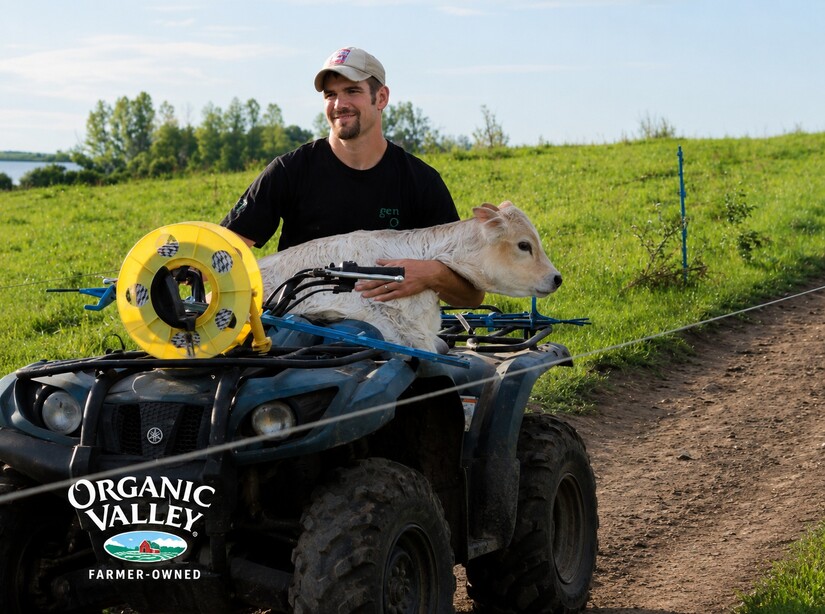
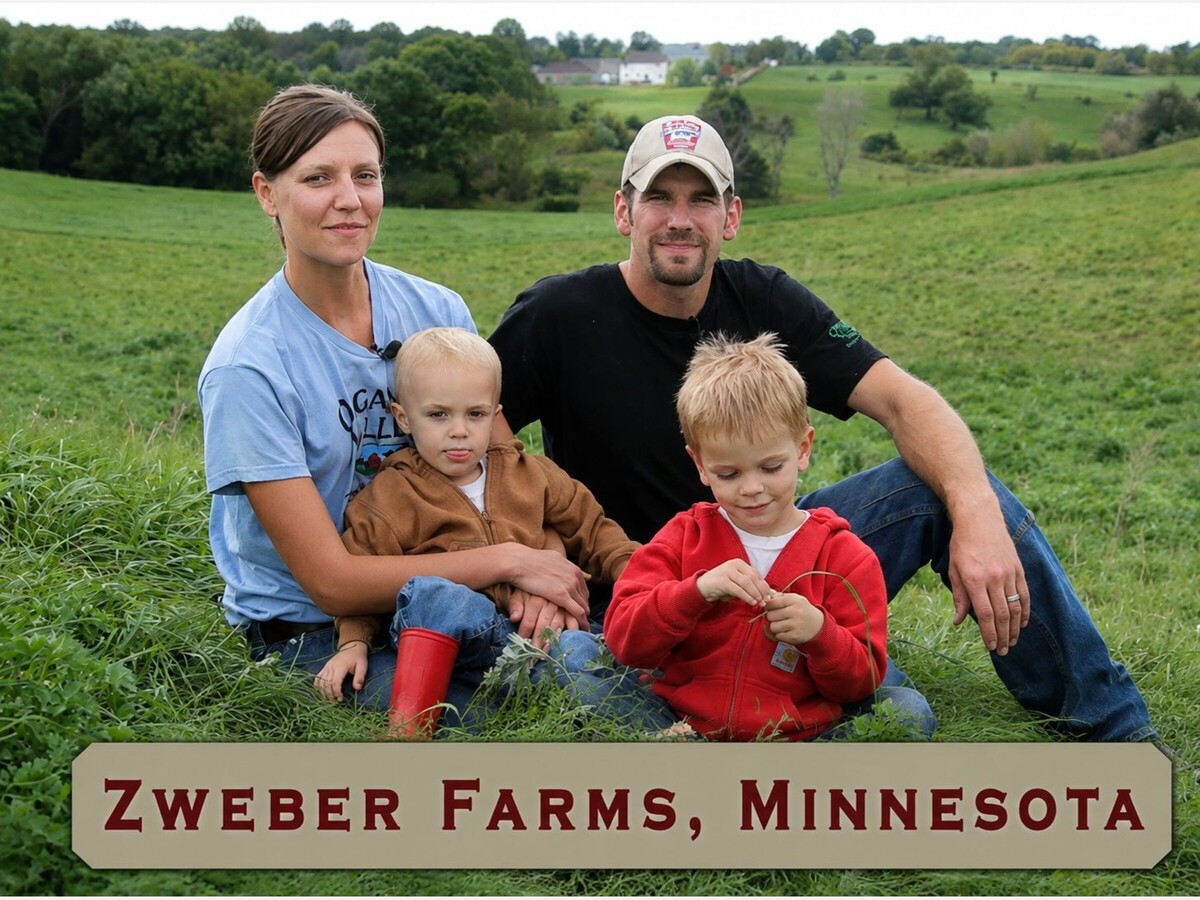
The farm her husband’s family operates in Scott County dates to 1906, but the family’s agricultural roots reach further back. Zweber said the family came from Germany in 1847 and farmed in the Elko New Market area before John James Zweber, Tim’s great-grandfather, purchased the present farm in 1906.
More than a century later, Emily and Tim are part of the fourth generation on the farm and are raising the fifth.
Emily did not grow up on Zweber Farms. She grew up on what she describes as a Minnesota hobby farm, where her family raised chickens and pigs largely for their own use and as 4-H projects. Her involvement in 4-H ultimately introduced her to Tim, who came from a dairy farming family.
The relationship brought her into a farm history that was already generations old. Becoming part of a century-old operation did not mean accepting that everything had to remain as it had been.
For Zweber, one of the lessons of the farm’s history is almost the opposite: survival has repeatedly required change.
“I think this farm has always been innovative,” she said.
She points to Tim’s grandfather, Emery Zweber, who she said embraced emerging dairy technologies during the 1940s and 1950s, including refrigeration for milk storage and artificial insemination as the technology began changing dairy genetics. The family still has records connecting the herd to an early Holstein bull used in artificial insemination, she said.
That history matters to Emily because it complicates an assumption sometimes made about multigenerational farms: that preserving a family farm means resisting change.
At Zweber Farms, the family’s answer has been to preserve the farm partly by continuing to change it.
When Expansion Wasn’t an Option
When Emily and Tim returned to the farm as young adults, the central question was economic. They married in 2006, the same year Tim completed college. Emily had graduated two years earlier. Tim’s parents were still relatively young and actively farming.
Bringing another couple into the operation meant the same acreage would now have to support two family households.
“We were having the discussions of, how do we create an income on this farm that supports two families, essentially?” Zweber recalled.
Many farms confronted with that equation have an obvious path: expansion. More acres, more animals, and greater production can spread fixed costs and increase gross revenue.
Zweber Farms did not have that option.
Residential development had increasingly surrounded the property. Emily describes the farm today as effectively being in suburbia, constrained by houses and by local land-use realities. There was little opportunity to acquire enough neighboring acreage to make expansion the family’s strategy.
“We couldn’t get bigger,” she said. “There was just no more land to be had.”
If the farm could not substantially increase its physical footprint, the family would have to create more value from what it already had.
That calculation helped lead the Zwebers toward certified organic dairy production.
The decision was not made casually. The family spent considerable time discussing the transition and what it would require. Because they were already grazing cattle, one significant element of organic management was already part of their operation. Certification also meant detailed recordkeeping, inspections, and new management requirements.
Tim took responsibility for much of the paperwork.
The farm began its organic transition in 2007 and sold its first organic milk in 2008.
For Emily, the change was not about rejecting modern agricultural knowledge. She describes their approach as deeply connected to science, particularly understanding soil biology, plant growth, and animal physiology while finding ways to operate with fewer external inputs.
“We could farm in a way that really promoted the health of the land and the animals,” she said.
That philosophy would eventually push the farm further.
The Winter That Changed the Herd
The move to fully grass-fed dairy production came through a far less deliberate process.
During the winter of 2013, the farm’s silo froze.
Until then, the Zwebers had fed corn silage, made by harvesting much of the corn plant and preserving it as cattle feed. When the silo door froze, the family could not access the silage for the winter.
The problem inadvertently created an experiment.
One of their concerns about moving toward a fully grass-fed system had been whether the cows could maintain production through a Minnesota winter without the additional energy supplied by grain. Suddenly, they were going to find out.
The cows did well.
Then, in 2014, Organic Valley was looking for farms in the area to participate in a 100 percent grass-fed milk program.
The Zwebers signed up.
“I don’t think we would have actually taken that plunge had it not just been forced on us by weather,” Emily said.
What began with a frozen silo became a permanent part of the operation.
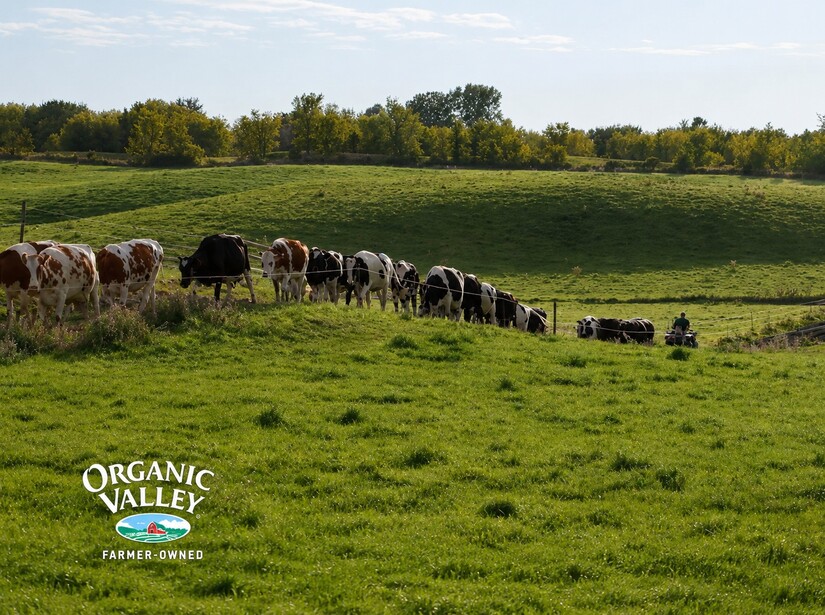
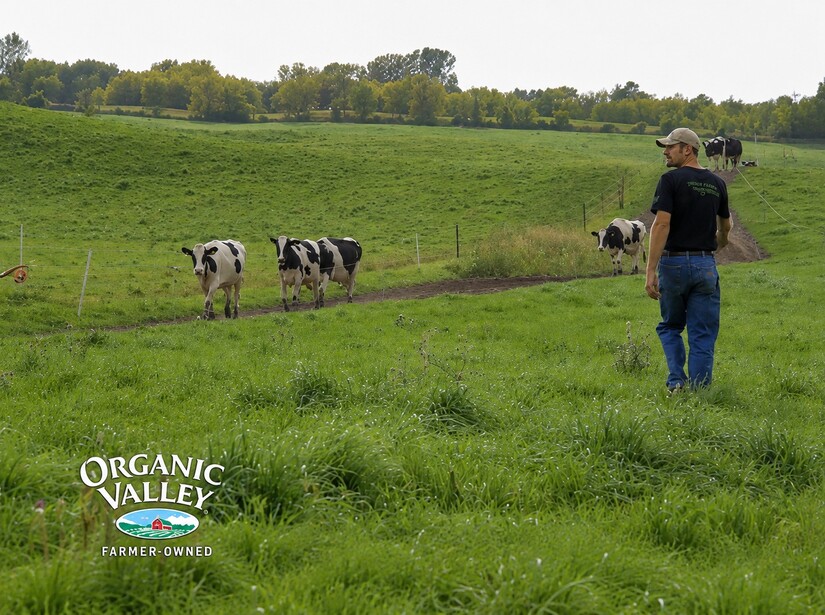
Today, grass and other forage crops define much of the landscape at Zweber Farms. The family does not grow grain. Its acreage is primarily devoted either to pasture that animals graze directly or to grasses, alfalfa, and other forage harvested for winter feeding.
Spend a day there, Emily said, and one of the most obvious differences is where the animals are.
Outside.
The dairy cows graze on pasture. Beef cattle are on pasture. Chickens are raised on pasture. During winter, the dairy herd has access to a hoop-style shelter, but the cows can choose whether to remain inside or go outdoors.
Visitors arriving for a farm tour in the middle of the day can sometimes be surprised by how few cows they initially see. The herd may be three-quarters of a mile away on a distant pasture.
“You’ve got to catch us during milking,” Zweber said.
That system reflects her belief that animal health, soil health, food production, and the long-term health of the farm cannot easily be separated.
Her starting point is straightforward.
“Do what’s good for our family, our land and our animals,” she said.
For a dairy farmer, animal welfare is also a daily operational concern. Emily wants the farm’s cows to remain healthy and productive for as long as possible. Over years of caring for them, she said, individual animals also become familiar personalities.
The family’s experience showing cattle through 4-H and at agricultural exhibitions has given her another way to see the results. Judges, she said, sometimes express surprise when they learn the age of some Zweber cows because the animals appear younger.
Emily attributes that longevity in part to the amount of time the cattle spend walking and grazing and to a feeding system that does not rely heavily on grain to push milk production.
The farm also places considerable emphasis on sanitation and milk quality. Zweber said the operation has repeatedly ranked among Minnesota’s top dairy farms for milk quality, something she connects directly to the daily work of keeping cows and milking areas clean.
That kind of work rarely makes it into the romantic image of farming.
Neither does January.
What the Weather Demands
Asked what consumers seldom understand about the life behind the food they purchase, Zweber did not begin with commodity markets or agricultural policy.
She began with the temperature.
“Negative 50 Fahrenheit wind chills,” she said.
An August morning can offer sunshine, a light breeze, and ideal conditions. Winter can bring frozen equipment, ice, bitter wind, and animals that still require exactly the same level of care.
The obligation does not change because the weather has become dangerous or uncomfortable.
“We work through it all,” she said. “It doesn’t matter if it’s a 106-degree heat index or if it’s negative 50. We have to provide for the animals. They are living beings, and they depend on us.”
There are mornings when getting out of bed is difficult.
“The cows are calling, and you’ve got to do it,” she said.
Weather has always shaped agriculture, but Zweber believes the pattern her family is now experiencing has become more difficult to manage. For her, climate change is not an abstract agricultural debate. She sees its consequences in the increasingly extreme swings between drought and heavy rainfall that affect forage production, grazing, and water management on the farm.
Over roughly the past decade, she said, the farm has increasingly dealt with extremes rather than what she remembers as more typical growing seasons. Several recent years have brought serious drought conditions. Another brought excessive rain.
“We’re not getting any of those normal years anymore,” she said.
For a pasture-based farm, the consequences are immediate. Grass needs moisture. Hay has to reach sufficient growth before harvest. Too little rain reduces forage production; too much can make fields inaccessible and complicate harvesting.
The farm’s location near residential development creates another challenge. During intense rainfall, runoff from roofs, streets, and other hard surfaces in surrounding areas moves onto the farm.
The Zwebers have tried to adapt at the farm level.
Emily said the farm received assistance through a Minnesota Department of Agriculture grant to improve natural ponds along a stream crossing the property. The project created what she described as a small “lock and dam” type system intended to hold more stormwater and reduce flooding in areas the family needs for grazing.
It is a clear example of climate adaptation on an individual farm: decisions about managing runoff after a storm so cattle can safely graze a field afterward.
What Consumers Choose
That connection between the farm and the larger community also shapes Zweber’s years of consumer outreach.
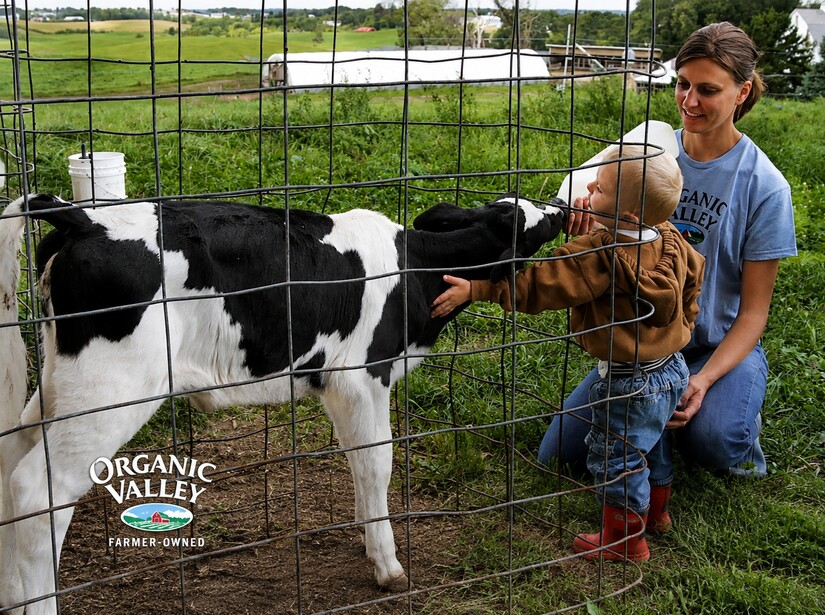
The family hosts tours and operates an on-farm store, giving Emily regular contact with people who want to understand the origin of their food.
Over the years, she has watched the customer base change.
Early customers, she said, tended to include people strongly interested in environmental issues and organic food. Later, she began seeing more mothers looking for reassurance about what they were feeding their families. More recently, she has noticed customers from across the political spectrum.
To Zweber, the shift suggests that knowing where food comes from does not belong exclusively to one political or cultural constituency.
“People just want to know where their food comes from,” she said. “They want that reassurance that the animals are being treated well, the land is being treated well, and what they’re feeding their families is actually healthy.”
The larger disconnect begins when food reaches consumers already packaged, with most of the production decisions hidden from view.
How an animal is raised affects the farm, its land, its costs, and ultimately what kind of agricultural system consumers support, she argues. The grocery store represents the end of a much longer chain of decisions.
That was also the conversation Zweber wanted Minnesotans to consider as the State Fair prepared to open.
Agriculture at the fair is highly visible. There are cattle barns, competitions, exhibits, and generations of tradition. Behind the broad label of “Minnesota agriculture” are farms that look radically different from one another.
Some dairy herds graze. Others are housed primarily in barns. Some farms milk dozens of cows. Others operate at an industrial scale.
Zweber does not argue that consumers must make the same choice she has made.
She argues that they should understand that they are making one.
“When you buy food, you really are telling farmers what you want, and we will respond to that,” she said.
The economics of her own farm demonstrate the point. Zweber said their grass-fed cows produce less milk than they could under a different feeding system. The model works because customers are willing to purchase grass-fed organic milk for reasons other than obtaining the lowest possible price.
“If they weren’t buying grass-fed milk, we probably wouldn’t produce it,” she said. “That’s just the reality of it.”
Who Gets to Farm Next
The relationship between consumer demand and farm economics becomes especially important when considering who will farm next.
For the Zwebers, that question is already present.
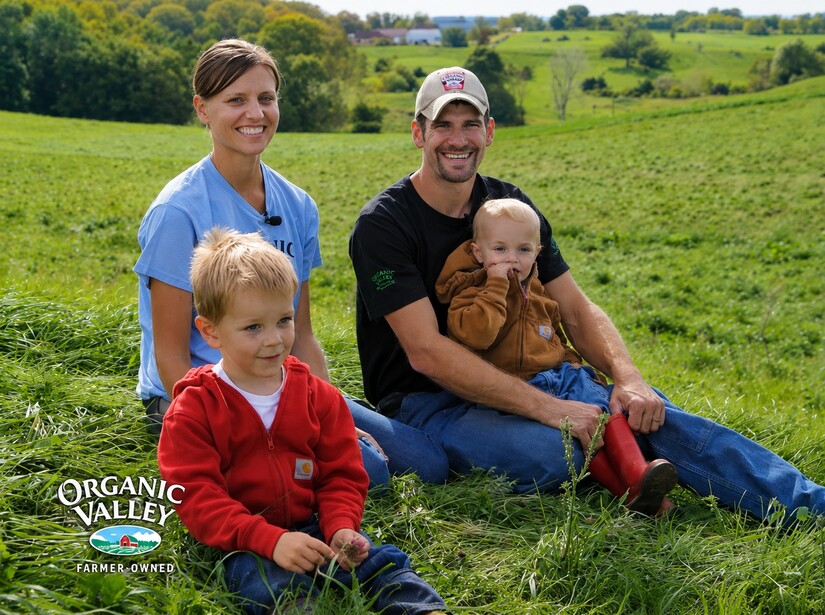
Emily and Tim are raising children on the same land where generations before them built their livelihoods. Yet she is careful not to describe the farm as an inheritance carrying an obligation.
She and Tim chose farming.
Their children, she believes, must be allowed to choose as well.
“We have never pushed our kids, saying, you know, the farm is what Tim and I chose,” she said. “If they choose it, that’s great, and we’ll find a place for you. If they don’t choose it, that’s fine too.”
If one of their children does return, Emily hopes that person will bring something new to the operation, much as she and Tim brought organic production and later expanded direct-to-consumer sales.
That may be essential because the economic constraints that led the family toward organic farming two decades ago have not disappeared.
The farm still cannot solve succession simply by buying neighboring acreage and adding more cows. Residential development makes land expansion difficult. Any fifth-generation farmer will have to find additional value within a finite land base.
For beginning farmers without inherited land, that equation can be considerably harder. Emily acknowledged that her children, should they choose farming, would begin with an advantage that someone starting from scratch would not have.
Health insurance is another vulnerability Zweber sees for family farms.
Emily said the four adults at the center of the operation, she and Tim and Tim’s parents, work full time on the farm. She considers that arrangement unusual because many farm families she knows depend on off-farm employment, including jobs that provide health insurance.
She sees the burden particularly clearly among women in dairy farming.
Emily’s own experience with the gender divide in agriculture began before she joined Zweber Farms. When she studied agricultural economics in college in the early 2000s, she said she was one of only two women in the program.
Women were more visible in agricultural communications, she recalled, but far less represented in some of the technical and economics-oriented areas she encountered.
On farms, however, women’s work has always been harder to overlook.
In dairy operations, Emily said, women frequently perform much of the milking and animal-care work. On her own farm, many of the young people she has hired for those jobs have been girls and young women.
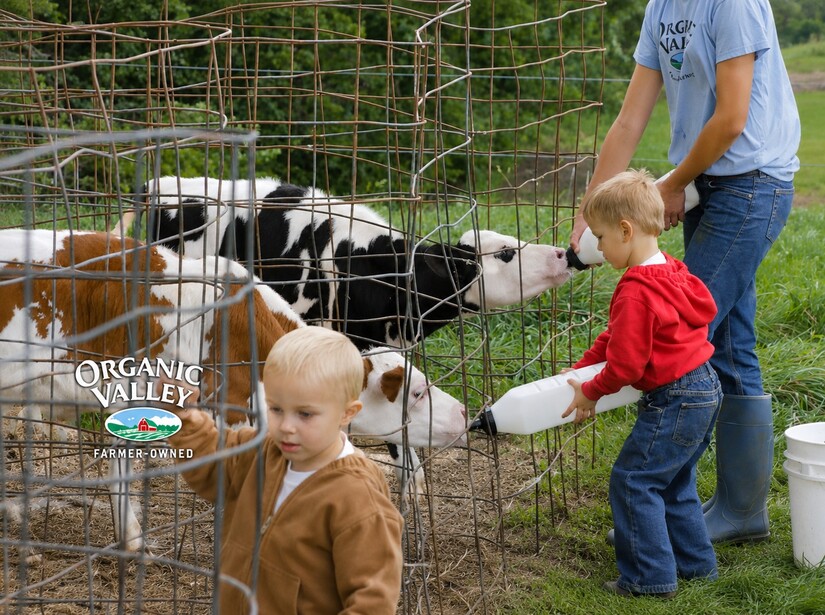
She believes careful observation is particularly important in an organic dairy system. A cow or calf that appears only slightly different from normal may be showing the earliest sign of a health problem. On an organic dairy farm, Zweber said, noticing those changes early is especially important because her treatment options become more limited as a health problem progresses.
For Emily, that close observation is a skill that deserves more recognition.
The public image of farm work often emphasizes tractors, fieldwork, and harvest machinery. Milking cows twice a day, feeding calves, watching animals for subtle changes, and maintaining sanitation are less dramatic but no less central to keeping a dairy farm functioning.
“The daily grind of getting in there and milking those cows and feeding those cows” is where many women’s contributions can disappear from public view, she said.
There is another burden.
Women on family farms, Zweber said, frequently hold off-farm jobs partly because those positions provide access to health insurance. That can mean milking before leaving for work, spending a day as a nurse or school employee, then returning to farm responsibilities afterward.
She believes the cumulative workload contributes directly to burnout.
“It is super unfortunate that we just don’t have our health care system figured out in the United States,” she said. “I think you would find a lot more women full time on the farm.”
The issue extends beyond gender to the fundamental viability of family farms. If a farm cannot provide enough income and basic benefits to support the people operating it, succession becomes more difficult no matter how deep the family’s attachment to the land may be.
The Zwebers have one advantage that a first-generation farmer does not: land.
Emily speaks plainly about what that means for her children.
If they decide to farm, they will begin with generational wealth embedded in property accumulated and preserved by the family. Someone trying to build an equivalent operation from scratch, Emily said, would face a very different economic reality because of the cost of acquiring land.
That acknowledgment matters in a story often told almost entirely through perseverance. Hard work has sustained Zweber Farms, but so have assets passed from one generation to another, consumer markets willing to pay for differentiated products, the ability to adapt, and a location that creates both commercial opportunities and severe constraints.
Family farming survives through a complicated combination of those factors.
And then there is the reason to keep doing it.
Near the end of the conversation, the subject returned to the title of the Food Tank gathering: Celebrating Minnesota’s Farmers: A Love Story.
After the frozen equipment, bitter winters, droughts, excessive rain, paperwork, financial pressures, early mornings, and uncertainty, what remained to love?
By then, Zweber was sitting on her porch.
She could see her cows.
“They’re grazing,” she said.
The answer became much simpler than the economics that had preceded it.
“I love that our land is being used in a way that’s just beautiful,” Zweber said. “It’s good for the cows, for the soil. It’s good for the plants. And I can be happy and proud of that.”
There is also the family.
Farming means that the Zwebers do not begin each morning by leaving one another for separate workplaces. Their work is difficult, but much of it remains shared.
“Our family can do this together,” she said. “I’m not waking up in the morning and our family’s going separate ways. We are here doing this together.”
A puppy could be heard in the background as she spoke.
The chores that had occupied her when she first answered the phone were still part of the day. The Minneapolis event was still ahead. So was the State Fair and the work required to get there.
Zweber Farms has survived since 1906 not because each generation has reproduced the one before it, but because successive generations have decided what should remain and what has to change.
For Emily and Tim Zweber, that has meant organic certification, grass-fed dairy production, direct relationships with consumers, and a farm increasingly shaped around pasture, soil, and animal health. For their children, if they choose farming at all, the answers may be different.
Emily appears comfortable with that.
The inheritance she describes is larger than a prescribed way of farming. It is land, history, opportunity, and the responsibility to decide what comes next.
For now, she can sit on her porch and look across a farm bordered by a world that has changed dramatically since John James Zweber bought the property 120 years ago.
The houses are closer. The weather is less predictable. Land is more expensive. Agriculture is more technologically sophisticated. Consumers are asking different questions. The economics require constant adjustment.
The cows are still grazing.
And Emily Zweber is still choosing to farm.

Local stories matter. Subscribe free to MinneapoliMedia and receive independent news, community reporting and important updates from Minneapolis, the North Metro and communities across Minnesota.
SUBSCRIBE FREE: https://minneapolimedia.town.news/subscribe
MinneapoliMedia | Community. Culture. Civic Life


Overcast, with a high of 59 and low of 49 degrees. Overcast during the morning,