47° and Partly Cloudy
Image




Publication Date: September 2, 2026 | Minneapolis, MN
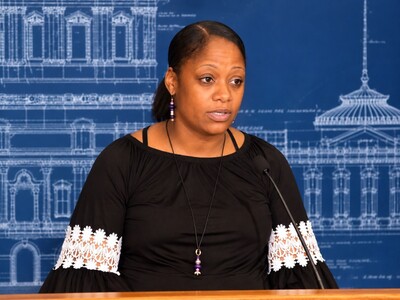
Long before Damaris Melo-Gyasi became an award-winning architect, entrepreneur, and founder of Design by Melo, she began writing something she had no intention of publishing. It was for her daughter.
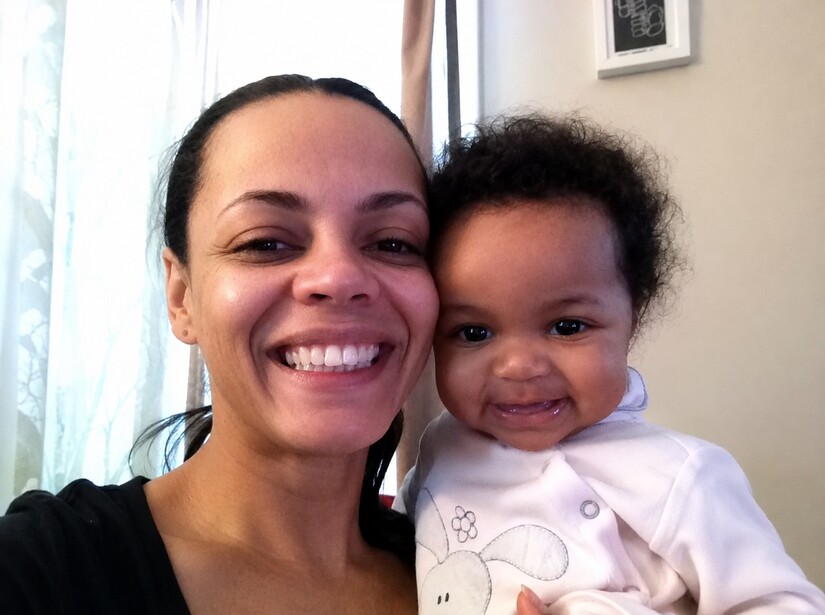
Her daughter was about a year old when Melo-Gyasi began thinking about the distance between the childhood she had known in Brazil and the childhood her daughter would experience in the United States. “I knew for a fact that I would lose some of the nuances of my upbringing,” she said. “You forget things.”
What concerned her was not simply forgetting dates or events. It was losing the texture of where her family had come from and what earlier generations had endured to make her daughter's life possible.
“My mom comes from poverty,” Melo-Gyasi said. She is careful with that word when describing herself. “I don't say I come from poverty because, to me, poverty is a strong word. It means a lot of lack, and I had what I needed. I had a home. I never didn't have food or clothing.”
Her parents' circumstances had been different. “My parents went through poverty,” she said. “They had to choose what meal to eat. Neither of them finished middle school.”
Her daughter, by contrast, was growing up with access to education, organized sports, and opportunities for personal development that Melo-Gyasi's parents could scarcely have imagined. “I thought I had to write it down for her,” she said. “If nothing else, for her.”
That private act of preservation eventually became Making My Way: A Story of Grit and Grace, a memoir about far more than architecture. It is a story about aspiration and access; about faith and disappointment; about immigration, education, and professional opportunity; about what happens when determination meets systems that do not always reward it; and, perhaps most importantly, about the people who sometimes decide to open a door.
For Melo-Gyasi, that last part matters enormously. She does not want readers to close her book believing that she simply worked harder than everyone else.
“I never pulled myself up by my own bootstraps,” she said. “There was always someone. There was something that came that gave me a break.”
That distinction may be the most important argument in the book.
People had been telling Melo-Gyasi for years that she should write a book, but she did not take them particularly seriously. “I think a lot of people could write a book,” she said. “Maybe all of us should write a book about our lives.”
Her first attempt was not intended for bookstores. It was essentially a family document, written so her daughter would one day understand the life that preceded her own. The early manuscript was spare. “This happened. This happened. This happened,” Melo-Gyasi recalled with a laugh. There was little description of place or atmosphere and relatively little reflection. She was recording events rather than constructing a memoir. “And I'm not a writer,” she said. “I told the story so my daughter could know her story.”
She copyrighted the manuscript, put it away, and expected that perhaps her family and friends would read it someday when she was much older. Then her professional life began drawing greater national attention.
In 2019, Melo-Gyasi received a national Young Architects Award. During the nomination process, she worked with a professional writer who repeatedly interrupted their conversations with essentially the same observation: there was a book here.
“I was like, ‘Yeah, no,’” Melo-Gyasi recalled. She was already raising a child and running a business. Writing a memoir sounded less like an opportunity than another impossible demand on her time. But after the award, more people encountered her story. “And everybody would say the same thing: ‘Have you thought about writing a book?’”
Still, she resisted.
Eventually, a friend who had written several books helped connect her with writer Iris Dawson. Melo-Gyasi hired Dawson and began a process that would last more than a year. Every other Saturday, for roughly 90 minutes, they talked. Dawson took the original manuscript, identified gaps, and began asking questions. The process transformed a chronology into a story.
But another Black woman architect ultimately helped Melo-Gyasi understand why that story might belong beyond her family. “She said, ‘Well, that's not for you, though. It's for the other girls like you who need to read it.’”
That changed the equation. “If by sharing this story I can have girls all over the world, or at least over the country, realize that they also can go beyond their circumstances, then I think that's worth the effort.”

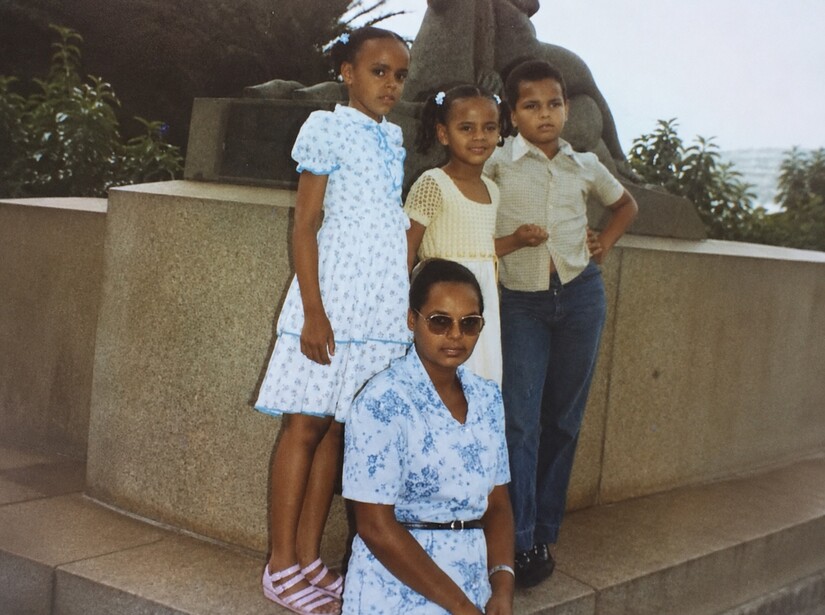
One of the defining moments in Melo-Gyasi's life occurred when she was seven. A woman architect came to her family's home in Brazil to help her father with plans for a house.
The professional circumstances were modest. Melo-Gyasi's father already knew largely what he wanted and what he could afford. The architect was young and early in her career. Seven-year-old Damaris understood none of those details. What she saw was a woman. A professional woman.
“She was wearing a blouse and a pencil skirt, and it was a weekday,” Melo-Gyasi recalled. “The way she carried herself was captivating to me.” Architecture itself was almost secondary. “I think it was more the essence of her.”
Melo-Gyasi had grown up watching her mother work at home, sewing clothes and caring for the family, while her father went out into the wider world. As a child, she thought his life looked more exciting. “I wanted to have my dad's life,” she said.
Then this architect appeared and disrupted the binary. “She showed me that it was possible,” Melo-Gyasi said. “I don't have to just stay home. I can go out, like my dad.”
Representation, in that moment, was not a slogan or institutional initiative. It was simply a seven-year-old girl seeing a woman occupy a place she had not previously imagined women could occupy.
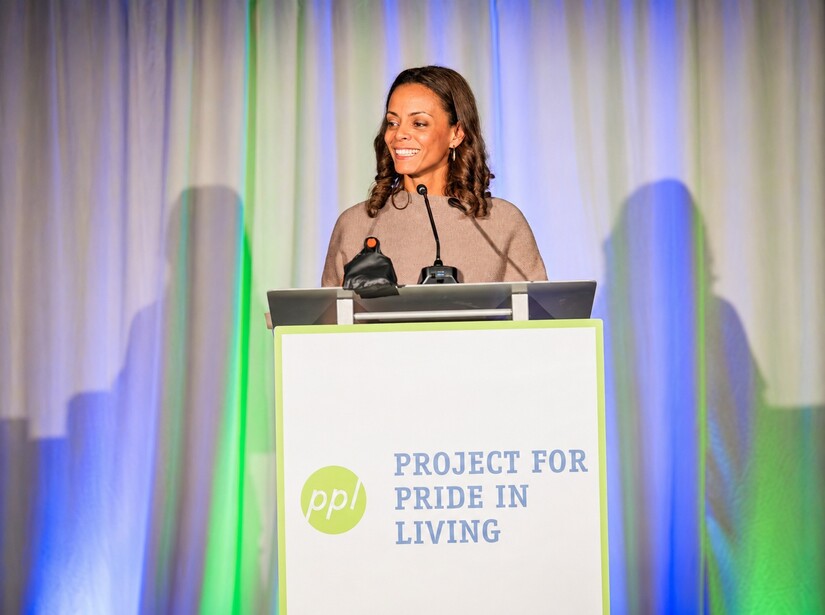
Melo-Gyasi remembers being perceived as someone who always wanted more. But with the benefit of adulthood, she interprets her parents' concerns differently than she once might have.
“I don't think my parents were necessarily telling me to reduce my expectations,” she said. “They were trying to tell me, more so, ‘You should be grateful. You should be content.’”
Her parents understood scarcity. They had built a life in which their children had a home, food, and clothing. Her mother made their clothes. The family had more stability than many people around them. From their perspective, Melo-Gyasi's restless ambition could sometimes appear like dissatisfaction.
“I was content and grateful,” she said. “But I also was a dreamer.”
Beyond her family, however, there were institutions and professional environments that communicated something different. “There were a lot of moments when people or systems, or both, were telling me that I was not enough,” she said. Sometimes the message was explicit. More often, it was structural. “This is not for you,” she remembers those systems effectively saying. “This is for them over there.”
Why didn't she believe them? Melo-Gyasi traces part of the answer to the very religious childhood that would later become far more complicated in her adult life.
She spent much of her week in church. There were choir rehearsals, Bible study, worship services, music, and religious instruction. The message she absorbed repeatedly was that possibility was not reserved for somebody else.
“I was hearing that you can do anything with God,” she said. “All things are possible.” That conviction became a counterweight to everything outside the church telling her otherwise. “These people and the systems are telling me that it's not for me,” she recalled thinking. “I'm like, ‘Hey, I don't believe that. I believe this.’”
Success stories often make perseverance sound heroic. Melo-Gyasi does not.
“If it sucks, it hurts,” she said. “Perseverance doesn't feel like strength. It feels like defeat.”
That lesson came early. She wanted to study architecture at the University of São Paulo and faced an intensely competitive admissions process. She failed. Then she tried again, and failed again.
The second failure was especially painful because she had improved dramatically and come close enough to know the goal was possible. But close was still failure.
“Perseverance tastes more like defeat than it tastes like strength when we're in the middle of things,” she said. She knew immediately that she would try a third time. “There was no question about it.”
But knowing she would continue did not make the experience noble or pleasant. It meant another year of studying. Another year of depending on her parents when she believed she should already be working. Another year of asking for help and stretching already limited resources.
“I was supposed to be working full time,” she said. “I was supposed to be, like my siblings, helping, giving my parents money.”
Trying again therefore carried emotional costs beyond the examination itself. “There we go again,” she remembers thinking. “I'm going to have to stretch, ask for a favor again, apologize to my parents again, and then go back and study hard again.”
She eventually succeeded. But the memoir refuses to retrofit triumph onto the years when triumph was not guaranteed. “It felt like defeat,” she said. “It did not feel virtuous at all.”
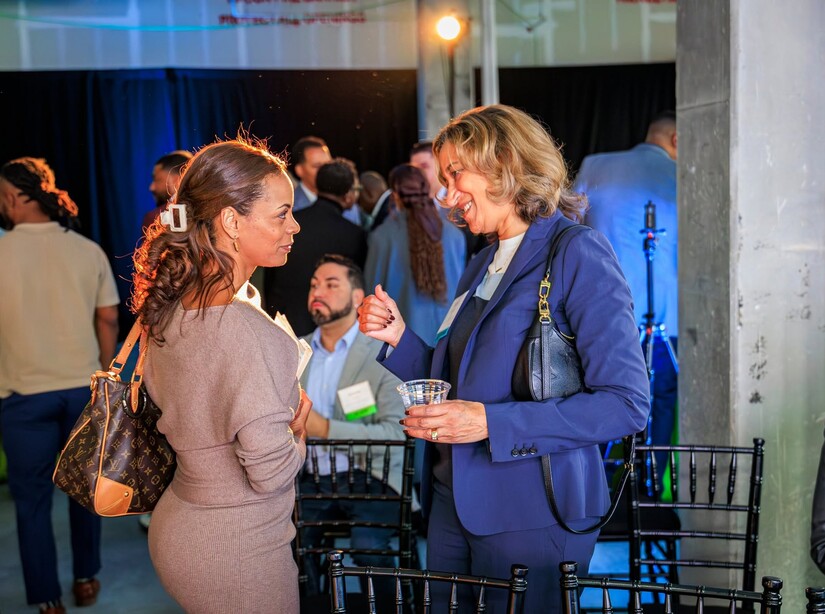
The subtitle of Melo-Gyasi's memoir pairs two forces she considers inseparable: grit and grace.
“Grace is not earned,” she said. “And grace is also not fair. Grace is favor.”
People who have read the book often comment on how much grit her journey required. Melo-Gyasi's response is usually that grit alone would not have been enough.
“Faith is for when grit is not enough,” she said. “That's when grace shows up.”
She remembers pursuing an educational scholarship that did not officially exist for her. She called repeatedly. She traveled there. She waited. She returned after being turned away.
“That is grit,” she said. “When you're doing everything you can.”
But eventually someone she did not know had to make a decision she could not make for herself. Someone had to say: give this young woman an opportunity. “That someone really thought, ‘We don't do that, but this kid has been here every day or calling every day. Give her whatever she's asking.’”
That, Melo-Gyasi said, was grace.
The distinction continues to shape how she approaches business and difficulty. She believes faith cannot become an excuse for avoiding the work within one's control.
“I can pray that I get a big break, or that I get a grant,” she said. “But am I doing everything I can?”
Can expenses be reduced? Can the business become more disciplined? Are the numbers being watched closely enough? Has every available option been pursued?
“God is not going to do your job for you,” she said. “He will show up when the natural has capped. He comes with the supernatural.”
For Melo-Gyasi, grace is also the ability to continue when circumstances offer little reason for optimism. “You still have a peace in your heart that allows you to keep moving and keep working.”
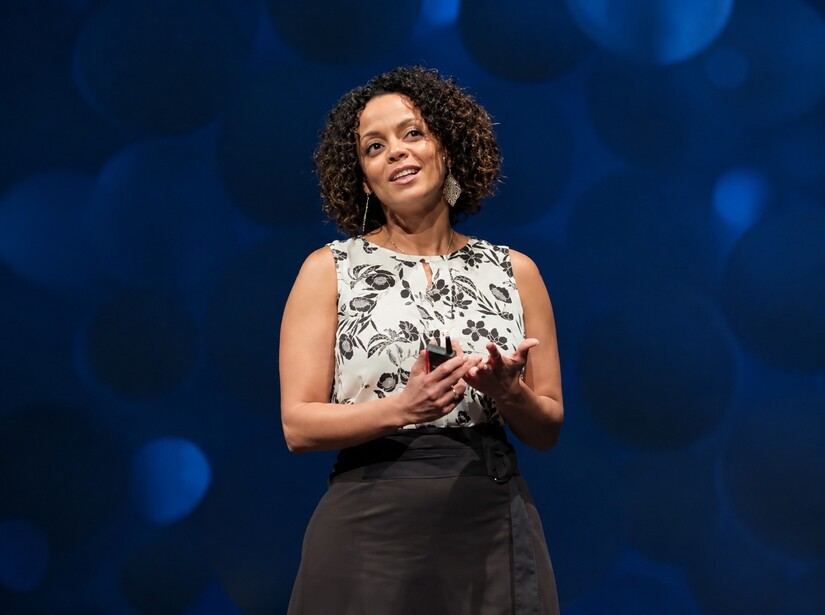
Writing about one's life creates another problem: a life contains other people's lives. Melo-Gyasi and Dawson developed a practical test for deciding what belonged in the book.
“Does it tell your story better?”
If an anecdote reinforced the themes of becoming, overcoming circumstances, and making a way forward, it stayed. If it did not, however entertaining it might be, it could go.
There was another boundary Melo-Gyasi took seriously. Not every experience involving her belongs entirely to her. She deliberately chose not to tell stories that would require exposing private details belonging to other people, particularly when those details were unnecessary to the memoir's purpose.
“Half of that story is not mine to share,” she said of one deeply personal chapter of her adult life. “It's someone else's story, not mine.”
The decision was not about hiding imperfection. It was about respecting ownership. There are stories, she acknowledged with humor, that might generate plenty of attention precisely because they involve relationships, conflict, and private life. But attention was never the point.
“That doesn't add to the message,” she said.
The story she wanted to tell already had its arc: a girl without many advantages who developed large ambitions and found her way through determination, faith, opportunity, and the grace of other people. “That story is complete.”

Melo-Gyasi's journey crossed countries, cultures, and professional worlds. Geography, she said, may have been the easiest border.
“The financial definitely was a very hard one,” she said. “It continues to be.”
Success does not eliminate the problem. The level simply changes. “As you ascend, you don't have the access,” she said. “My story keeps repeating itself, to be honest with you.”
Then there are gatekeepers. “The gatekeepers of my life are still there,” she said.
In architecture and development, relationships often determine who is invited into a room, considered for a project, or trusted with an opportunity. Established firms may already have decades-long relationships with clients. Breaking into that cycle requires more than competence.
“You can do everything right and people may still not think that I am worthy of a project because they already work with their buddies,” she said.
For an entrepreneur, a single substantial project can alter the trajectory of a company. That makes the doors controlled by other people particularly consequential.
“The climb is steep,” Melo-Gyasi said. “There's always somebody holding a door shut in front of you.”
The obstacles she can attack herself do not frighten her nearly as much. “The barriers that are up to me to break, sure, I give them hell every Monday,” she said. “I don't mind them. It's hard when somebody else holds the door and holds the cards.”

Faith may be the most complicated inheritance in Making My Way. Melo-Gyasi grew up Pentecostal in a religious environment she describes as highly focused on rules and performance.
“I grew up believing that God is watching you, so if you sin, you're in trouble,” she said.
There were detailed expectations around appearance and behavior. As a child, she internalized the idea that obedience and blessing were closely connected. Then she began encountering people whose lives complicated that theology. Two women in particular stood out because of the way they treated people whom others in their religious community were quick to criticize.
“The way they accepted people, they loved people,” Melo-Gyasi said. That generosity challenged her. “I was like, ‘Okay, that makes more sense with what I believe, because Jesus died for all of us. Jesus loved people.’”
As a teenager, she also began attending another church gathering whose style differed dramatically from what she had known. The music was louder. The appearance of the people leading worship challenged many of the conventions she had been taught. But she recognized something familiar underneath it: faith.
“I started progressing to my own relationship with God versus the scary judgment of God I was taught,” she said.
Adult life deepened that evolution. There were decisions she regretted, difficult relationships, and periods when circumstances became far darker than she expected. Those experiences changed the way she understands judgment.
“When you find yourself there, you realize it's not that black and white,” she said. “It's not that simple.”
Her conclusion is not that choices have no consequences. It is that human beings rarely understand enough about another person's life to appoint themselves judge. “We all have our journeys to travel,” she said. “It's my place to love and accept, not to judge.”
The lesson remains unfinished. Melo-Gyasi admits that traces of the conditional theology of her childhood can still surface, especially in the way she judges herself.
When she lost her first pregnancy at eight weeks, for example, an old instinct surfaced immediately. Her first thought was to wonder whether she had somehow done something wrong. Then she stopped herself. That moment revealed how deeply some childhood beliefs had settled inside her, even after her adult theology had changed.
“My faith has definitely changed,” she said, “and my understanding of God's love and who God is has 100 percent changed. Maybe 99, because I'm still learning.”
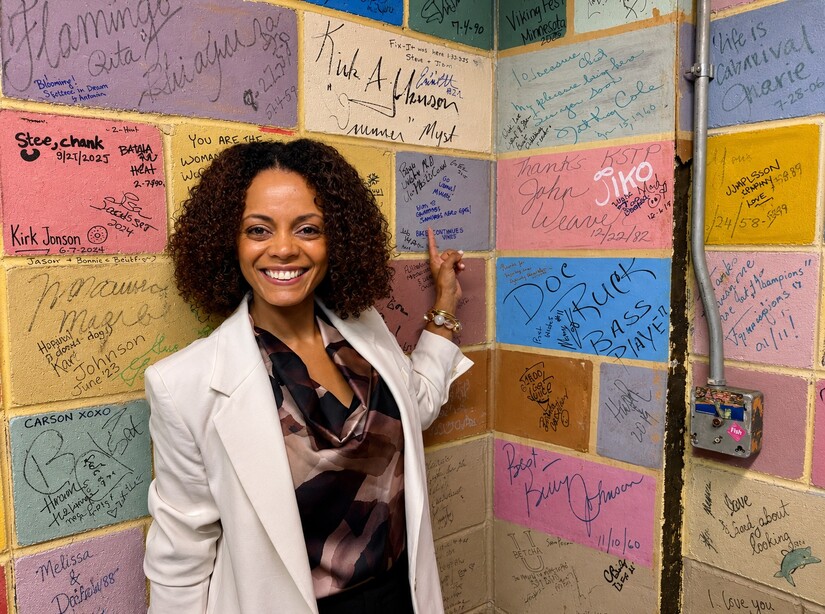
Melo-Gyasi has spent her career thinking about space, materials, movement, and how environments affect human beings. But when she became an author, she discovered that architectural expertise did not automatically translate into literary structure.
Asked whether being an architect helped her design the memoir, she laughed. “I did not. No, I did not.”
Architecture does influence what she notices. “The things I describe sometimes, it's like, ‘Oh, nobody else would notice that,’” she said. “The space, what the environments do to you and how you feel.”
But Dawson became, in Melo-Gyasi's description, “the architect of the book.”
The original manuscript was chronological. Then Dawson began moving pieces. “She was the one actually creating the architecture, the structure of the storytelling part,” Melo-Gyasi said.
Events were no longer included simply because one happened before another. They were placed where they best illuminated the emotional and thematic journey. Once the interviews were complete and the gaps had been filled, chronology yielded to narrative. The architect had entrusted somebody else with designing the experience.
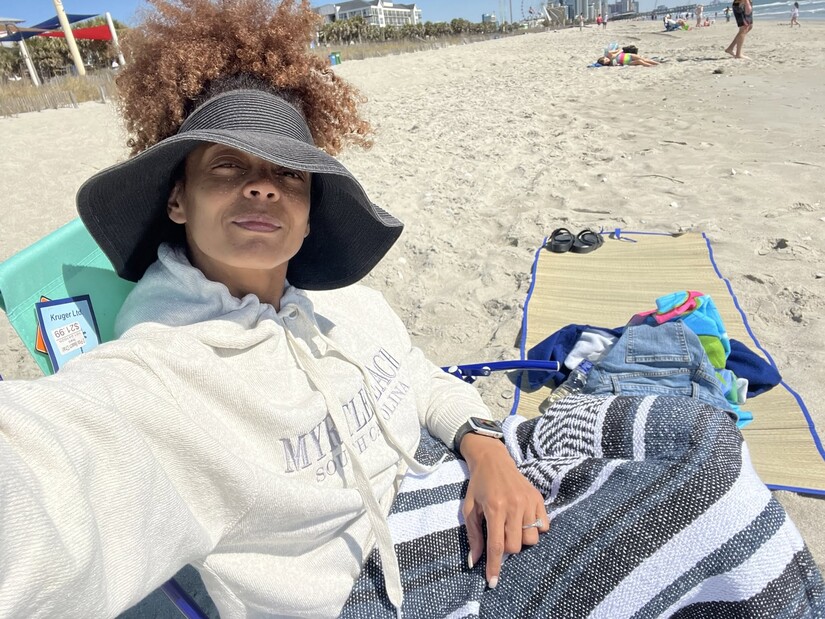
Memoir allows an author to look backward knowing what the younger person on the page could not possibly know. Melo-Gyasi has surprisingly little criticism for her earliest self.
“My zero-to-28 version? I don't have anything to forgive about her,” she said. “She was on point. She was a dreamer. She was a believer. She was a fighter.”
Adulthood became more complicated. There are personal and business decisions she can now revisit and recognize as mistakes. That can be especially painful when an old decision produces a present consequence.
“As a business owner, I can look back and say, ‘I shouldn't have done that,’” she said. The hardest part is sometimes believing she deserves help when she can identify her own role in creating the problem. “It's very hard to believe, or even ask for help, when you know you are here because you got yourself here.”
She is learning to distinguish accountability from permanent self-condemnation. The mistakes have also given her something unexpected: an ability to recognize another person standing where she once stood.
“What this has done for me is help me help other people,” she said. “You don't see it, but I see it. And the reason why I see it is because I was there.”
Experience becomes a kind of ministry. Still, she admits that forgiving oneself intellectually and actually releasing the judgment are different things. “It's hard to let go and not continue to condemn yourself now because of something you have done,” she said.
That, too, remains part of making her way.

Near the end of the book's production, Melo-Gyasi listened carefully to the audiobook recording to catch errors in pronunciation, tone, and delivery. Hearing her own life narrated back to her produced an unexpected concern.
“Oh my gosh,” she remembers thinking. “I really hope people don't only see this book as a story of someone overcoming odds.”
Because the inspirational interpretation contains a trap. A reader could look at Melo-Gyasi's life and conclude that difficult systems cannot really be that difficult. After all, she made it.
That is precisely the conclusion she does not want. “I don't want to be a disservice to people like me in the past, or people like me now,” she said.
Her story, she insists, is not evidence that determination alone defeats structural inequality. “If they are really reading and paying attention, I never pulled myself up by my own bootstraps. Never.”
Someone always appeared. A scholarship. A mentor. A client. A professional connection. A person willing to reconsider the normal rules. “There was always someone,” she said. “There was something that came that gave me a break.”
So she wants the reader to ask two questions. The first is obvious: Why do some people have to overcome so much merely to reach opportunities that others encounter much more easily?
The second is more uncomfortable: Whose gatekeeper am I?
“Am I a door for people?” Melo-Gyasi asked.
She does not believe effort should be irrelevant. She is deeply invested in discipline and preparation. But almost everyone, she argues, knows somebody who has done the work and still cannot get the break. “They work hard. They do everything as they're told, but they never get a break.”
That is where individual responsibility becomes communal responsibility. Melo-Gyasi points to her own firm.
There have been clients willing to hire her before her résumé could offer the reassuring precedent of having already completed the exact kind of project they were entrusting to her. Opportunity Crossing, the award-winning affordable housing development in Minneapolis, is one example.
An organization could have selected the same established firm it had used before. That would have been easier. Instead, someone decided another firm had already received many opportunities. Why not allow Design by Melo to have this one?
“I think we all hold that kind of break for other people,” Melo-Gyasi said. The question is what we do with it.

If a young woman somewhere closes Making My Way and remembers only one thing, Melo-Gyasi knows what she wants it to be.
“Don't believe them.”
Not because obstacles are imaginary. “They are there. The systems are there. Don't pretend they don't exist.”
Her message is instead that another person's assessment of your possibility does not have to become your own. “You are enough, and you have what it takes.”
But even that sentence requires an amendment. “Yes, you can do it,” she said. “But just know that the fight is not only yours.”
Again and again in her life, opportunity arrived because somebody knew what she was trying to do. A friend saw something and told her. A boss knew she wanted to travel and helped. A connection led to another connection.
None of those people could have helped if Melo-Gyasi had kept her aspirations entirely to herself. “I think we need to share our dreams and our vision more openly,” she said. “Because you never know who is listening. And you never know who they know.”
She calls it “communal sponsorship.” The phrase pushes directly against the mythology of the solitary self-made person.
Melo-Gyasi worked. She studied. She failed and returned. She knocked. She called. She waited. She built. But somebody still had to answer.
“Accept your community,” she said. “Accept the communal sponsorship of your dream, because it's super powerful.”
That may be the clearest explanation of Making My Way. The title is singular. The story is not.
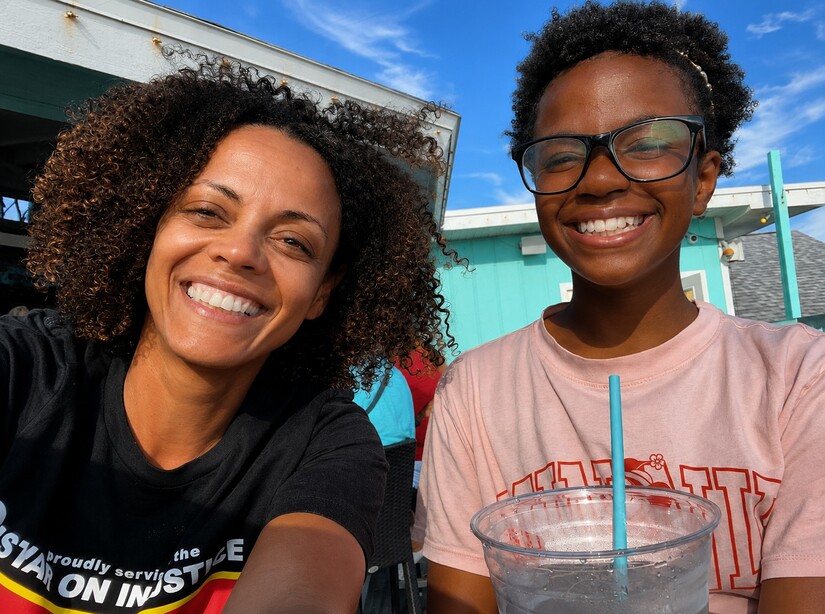
MinneapoliMedia traditionally closes its long-form conversations by asking guests whose story should be preserved next. Melo-Gyasi had several answers.
She immediately mentioned De'Vonna Pittman, an author and entrepreneur who had played a role in connecting Melo-Gyasi with the writer who ultimately helped develop her memoir. When told that Pittman was already scheduled for a MinneapoliMedia conversation, Melo-Gyasi kept going.
She suggested other women in business, construction, public leadership, and entrepreneurship whose experiences she believes deserve attention, and offered to make introductions.
The instinct was consistent with the philosophy she had spent the previous hour describing: A door opens. You walk through it. Then you look behind you. And if someone else has done the work and is waiting there, perhaps you hold the door.
For Melo-Gyasi, Making My Way began as an attempt to make sure one daughter understood what came before her. Years later, it has become something larger.
It is not an instruction manual for reproducing Damaris Melo-Gyasi's life. It is not an argument that hardship is good for people. And it is certainly not proof that grit magically neutralizes inequality.
It is the record of a woman who repeatedly encountered the limits of what she could accomplish alone, did everything she knew how to do anyway, and then discovered that some of the most consequential moments of her life depended on another human being deciding to help.
That is where grit meets grace.
And it is why, after everything Melo-Gyasi has built, perhaps the most consequential thing she is asking readers to consider is not whether they can become more like her. It is whether they might become the person who opens the next door.

Local stories matter. Subscribe free to MinneapoliMedia and receive independent news, community reporting and important updates from Minneapolis, the North Metro and communities across Minnesota.
SUBSCRIBE FREE: https://minneapolimedia.town.news/subscribe
MinneapoliMedia | Community. Culture. Civic Life



Sunny, with a high of 63 and low of 47 degrees. Partly Cloudy in the morning, sunny for the afternoon, clear in the evening, overcast overnight.