Image



Editor’s Warning: This story includes discussion of suicidal thoughts and psychiatric hospitalization. Anyone in the United States experiencing a mental health or suicide crisis can call or text 988 to reach the 988 Suicide & Crisis Lifeline.
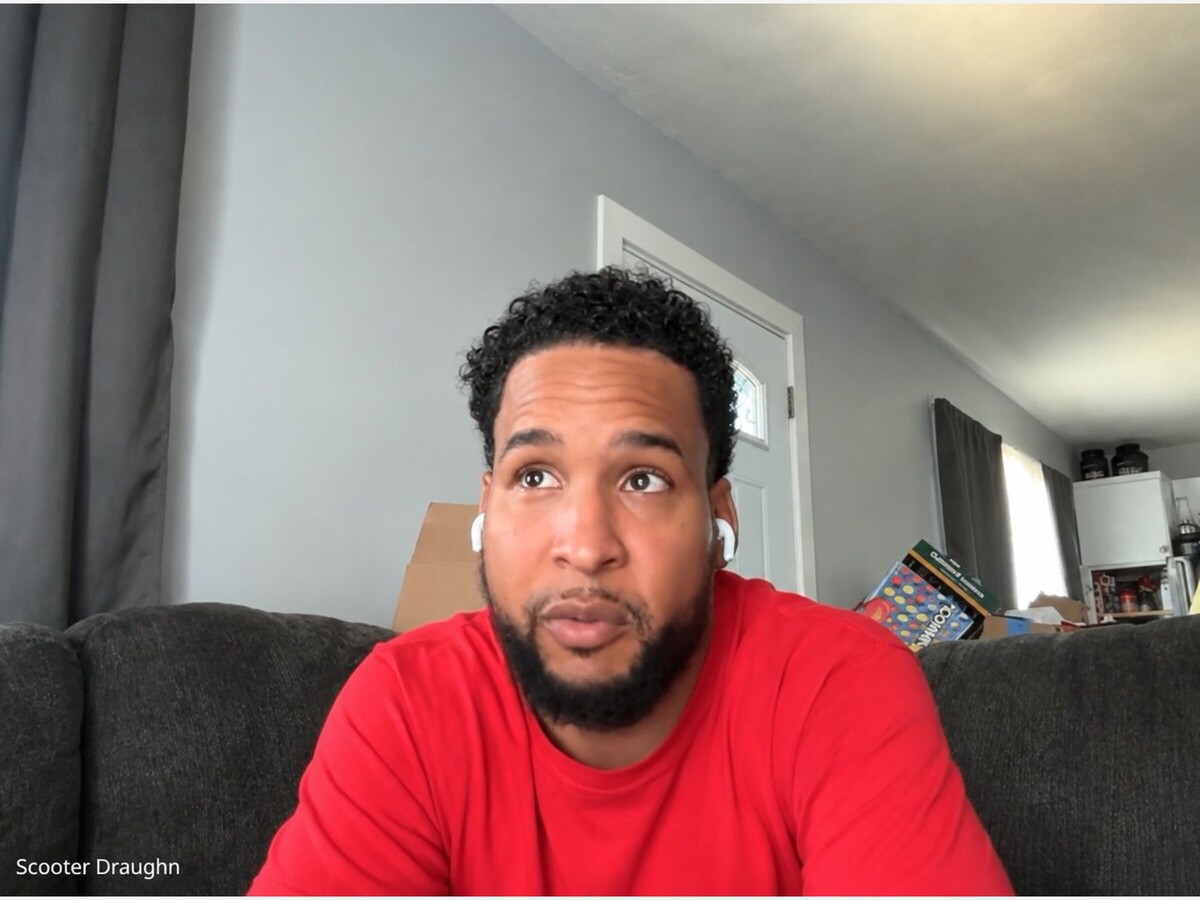
BROOKLYN PARK, MN (September 10, 2026). Clint Draughn had been speaking for only a few minutes when he established two things that would remain true throughout the conversation.
The first was that he wanted to be called Scooter.
The nickname came before he could walk. At about four months old, he said, he moved by scooting across the floor on his stomach. The name followed him through childhood and into adulthood, becoming so familiar that hearing “Clint” can briefly feel as though someone is addressing another person.
“Please call me Scooter,” he said. “It feels more like family.”
The second was that he would not discuss his life, his survival, or the work of Honored 2 Help without talking about God.
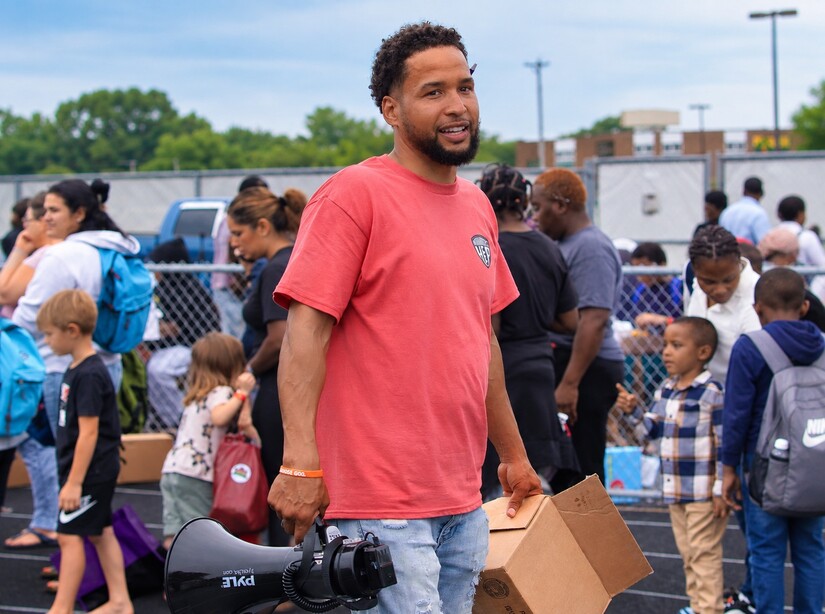
Draughn is the founder of the Brooklyn Park based faith organization whose mission is “increasing equity through community engagement.” Through free barbecues, food distributions, school supply drives, holiday assistance, mentoring, and community gatherings, Honored 2 Help has become a dependable presence for families across Brooklyn Park and the surrounding Twin Cities.
Yet Draughn resists any telling of that work that places him at the center.
“There ain’t no doing God’s work without God,” he said. “It all routes back to Him.”
That conviction is not a slogan added to the organization’s public identity. It is the framework through which Draughn understands nearly every chapter of his life, including childhood, employment, family loss, mental health crises, and the community turmoil that eventually led him to begin serving meals from a grill.
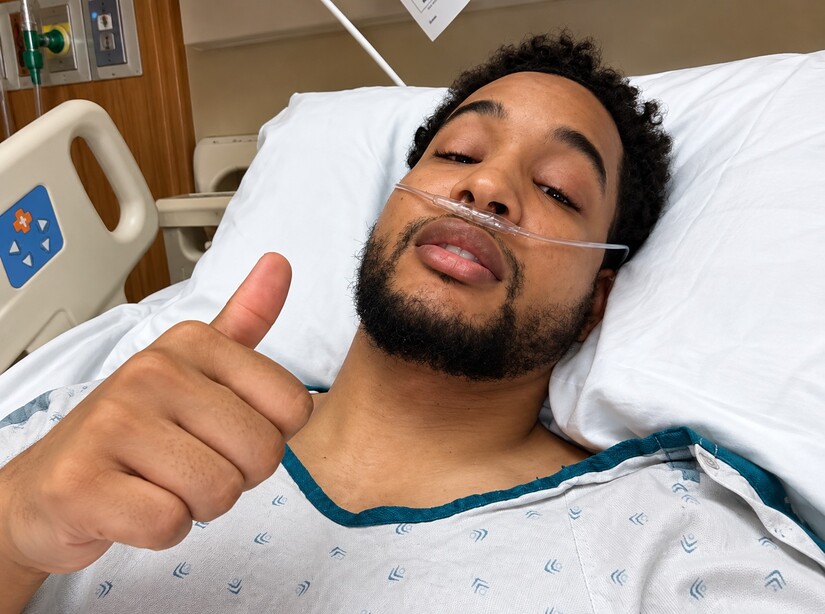
During an extended conversation with MinneapoliMedia, Draughn spoke with unusual openness about the suffering behind his public work. He described periods when he did not want to live, hospital stays during which he was monitored around the clock for his safety, and a season when pain and disappointment caused him to become someone he no longer recognized.
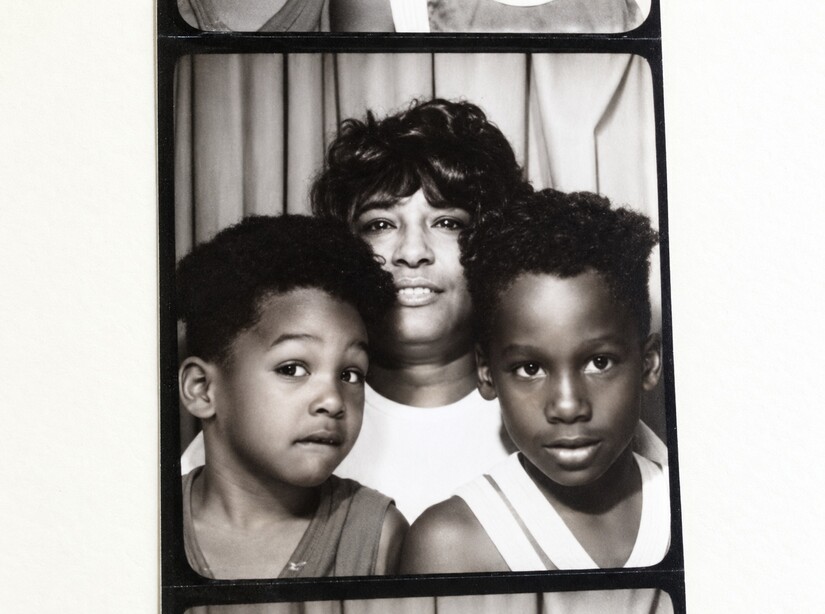
He also described the people and experiences that helped bring him back: a mother who survived cancer and never stopped praying, a father whose death forced him to confront grief, a mentor who showed him what service looked like, and a faith that became most tangible when his own strength was gone.
“I’m not looking for sympathy,” Draughn said. “I’m looking for empathy. Sympathy is, ‘I’m sorry all this happened.’ Empathy is, ‘I just want to better understand.’”
That distinction has become central to how he serves others. Honored 2 Help does not approach families as problems to be solved or recipients whose hardship must be displayed to validate an organization’s work. Draughn said he wants people to be treated the way a person would respond to a brother, sister, niece, or nephew who needed help.
“You’re not going to go tell everybody they need help or put them on blast or make them feel like they need help,” he said. “You’re just going to help your brother.”
Before the nonprofit work, there was a child learning what endurance looked like at home.
Draughn said his mother lived through profound hardship long before he was old enough to understand it. He later watched her survive cancer twice after having already faced the disease once before. During her treatments, he shaved her head, stayed with her at night, encouraged her to eat, and helped care for her.
He remembers a woman who worked as many as three jobs at once, stayed awake late trying to solve the family’s problems, and prayed on her knees when circumstances offered few easy answers.
“My mother is the epitome of strength and beauty,” he said. “I look at her, and I’m inspired and motivated by never quitting because I saw her always go.”
The lessons were not delivered as formal instruction. He absorbed them by watching her continue.
Draughn also learned responsibility through work. At about 11 or 12, he helped at a pizza shop where his father worked with the owner. He made pizzas, used the oven, prepared chicken and mozzarella sticks, and made garlic bread and cheese bread.
Around the same period, he joined a youth sales program that sent children into neighborhoods in pairs to sell cookies, candy, and cordial cherries. The candy sometimes melted in the summer heat. Dogs barked behind unfamiliar doors. Draughn, who was comfortable and talkative around people he knew, sometimes struggled to knock and deliver the sales pitch to strangers.
He occasionally returned to the van without making a sale. What stayed with him, however, was the experience of confronting something uncomfortable and discovering that it could be survived.
“The challenges have benefits,” he said. “If you don’t take on the challenge, you don’t get to reap those benefits.”
At 14, he began working at Dairy Queen. Goodwill Easter Seals and Best Buy followed, along with jobs in customer service, sales, marketing, and other industries. He eventually entered real estate and entrepreneurship.
Each position, Draughn said, became a kind of school. He learned that the most important element of sales or customer service was not the product or the reward waiting for the salesperson. It was the relationship with the person being served.
“A lot of people focus on themselves,” he said. “They focus on the market, and they focus on the things that would benefit them if they’re successful at it. But just in the words ‘customer service,’ what comes first? The customer. And what’s most important? The service.”
That philosophy was not always consistently reflected in his own life.
Draughn described himself as genuine, loving, and kind, but he did not present an airbrushed version of his past. He acknowledged making poor decisions and hurting other people after becoming bitter and brokenhearted.
He believed emotional hardness might protect him from further injury. Instead, he said, it caused him to inflict pain.
“There was a portion in my life where I got bitter and brokenhearted, and I became a person that I wasn’t,” Draughn said. “I thought that was my protection mechanism. I thought that was the way that I could get away from continuing to be hurt. All I was doing was hurting other people, and I’m not willing to do that anymore.”
His mental health struggles became life-threatening.
“There have been times where I was suicidal. There have been times where I didn’t want to live anymore, and I ended up in the hospital, in units where they had to watch me 24/7 so I didn’t kill myself. I’ve been depressed. I’ve been down to my lowest low.”
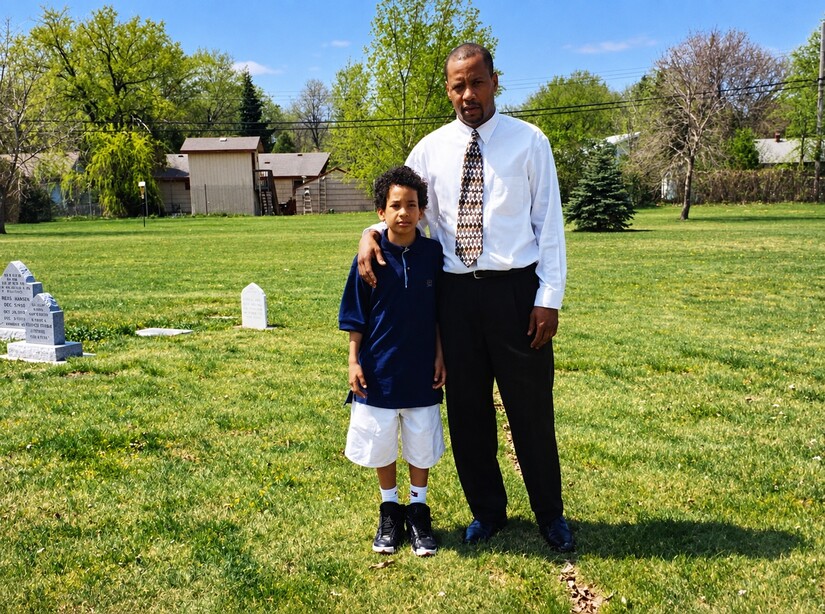
Draughn said he has experienced repeated deaths since he was about 6 or 7. The accumulated losses included close friends, beloved cousins, and, in 2015, his father.
Earlier that year, Draughn had been baptized. Months later, his father called to say he had an unusually severe headache. Draughn suggested aspirin, but his father knew something was wrong. Medical testing found a golf ball sized tumor in his brain and cancer that had spread through his lungs.
His father died that November.
Draughn struggled to understand the loss until, he said, his father appeared in a dream. There were no spoken words, but Draughn felt he understood the message: His father wanted to embrace him, but they were now on different sides of life. Draughn still had work to complete.
“Do what you’ve got to do until you get over here,” Draughn recalled of the message he received.
He awoke with a sense of peace.
Each creative pursuit he later developed served that same underlying purpose: to inspire people by sharing where his strength originates. Draughn writes poetic prayers, creates motivational content, records music, and self published a 155 page book titled Colorful Advice, handling the writing, design, and editing independently. For Draughn, these creative outlets became ways to process pain and communicate hope.
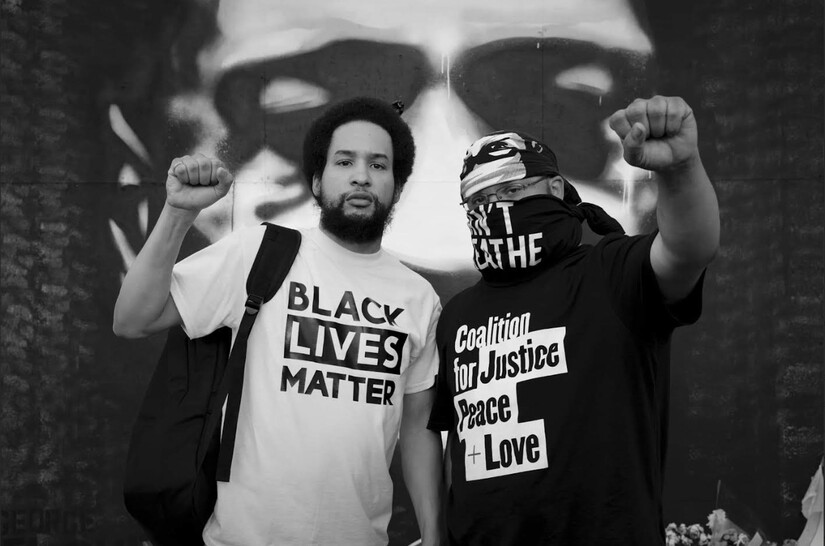
The years that followed his father's death were a series of checkpoints during which he felt God repeatedly redirecting him. He began volunteering and found that service gave him a sense of purpose. By 2020, as protests and unrest followed the murder of George Floyd in Minneapolis, he believed the direction had become unmistakable.
“The instruction was simple: Go,” he said.
Draughn went to the intersection of 38th Street and Chicago Avenue, where Floyd had been murdered by a Minneapolis police officer. He marched, protested, listened, and watched. The experience placed him inside a public reckoning over race and policing, but he had not yet created the organization that would become Honored 2 Help.
A year later, after Brooklyn Center police officer Kim Potter fatally shot 20 year old Daunte Wright during a traffic stop, Draughn again felt called to respond.
He lived nearby in Brooklyn Park. He joined a march to the Brooklyn Center Police Department and remembered a man he had seen providing free barbecue near George Floyd Square. Draughn asked him to bring the grill to Brooklyn Center. Draughn, then working in real estate, had recently received a commission check of about $3,500. He said he committed approximately $500 of it to buying food.
The grill arrived. Draughn and others began cooking.
“If you were outside at the Brooklyn Center Police Department around the Daunte Wright time, and you saw those people grilling, making food, that was us,” he said. “We were down there every day.”
They fed grieving relatives, protesters, children, community members, and police officers. The grill remained operating amid tense confrontations, projectiles, and surrounding disorder. Draughn recalled cooking while people sought cover and continuing to distribute food as the situation around them grew volatile.
He also challenged officers directly. During one confrontation, he stood close to an officer and asked what he would feel if Wright had been his son. Draughn said the officer began to cry.
Draughn’s response was not rooted in the belief that food could resolve police violence, racial injustice, or the unbearable grief of a family whose loved one had been killed. It was rooted in the more immediate knowledge that people in pain still needed to be cared for.
He recalled standing near another grieving family after 12 year old London Bean was fatally shot in north Minneapolis in 2021. As media and public officials arrived, Draughn watched the child’s mother react to the attention surrounding the family’s worst moment.
The people present might not have been thinking about eating, he said, but they still needed food. Feeding them was one concrete thing he could do.
“I know pain very well,” Draughn said. “Even if the pain wasn’t exactly the same, I can empathize with them. I didn’t have a son to lose, but I’ve lost my favorite cousins, best friends. I lost my father.”
Knowing pain, he said, also taught him to recognize what could relieve some portion of it.
“Because I know pain so well, I know love well,” he said. “And I know that’s the medication. That is the remedy for the pain, to show that love.”
Honored 2 Help received its name during those early acts of service.
People repeatedly approached Draughn to thank him. His response was that he was honored to help. After saying it several times, he recognized that the phrase captured the work’s intended spirit. He created a Cash App account for donations and began trying to establish something more durable, even though he had little idea how to build or operate a nonprofit.
He was not thinking about what the effort might become.
“It wasn’t about fame,” he said. “It wasn’t about news stories. It wasn’t about cameras. For the longest time, I didn’t even pull out my camera.”
Draughn later came to understand that documenting the work could show others what was happening and encourage participation. Still, he remains wary of turning service into a performance centered on the giver.
“This isn’t a me thing,” he recalled saying during a television interview. “It’s a we thing. Ultimately, it’s a He thing.”
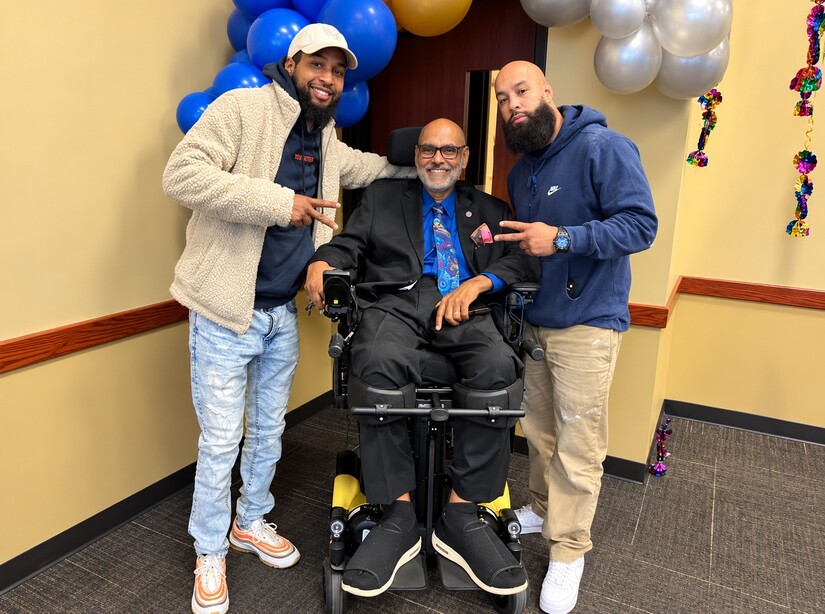
One of the people in that “we” was Pastor Ron McConnico, whom Draughn described as a mentor, an uncle like presence, and a pillar of the community.
McConnico provided the large grill used in the organization’s work and repeatedly showed up whenever Draughn needed help serving. He was living with amyotrophic lateral sclerosis, commonly known as ALS, but Draughn remembers him as persistently positive and committed to helping others.
During the interview, Draughn stepped away and returned with a drawing of McConnico made by a young artist McConnico had mentored. The picture showed the pastor as a superhero passing a baton to another figure. McConnico had written a message thanking Draughn for his prayers and included a reference to the Gospel of Luke.
Draughn had focused so intently on the picture of his mentor that he had not fully considered the meaning of the waiting hand until that conversation.
“He’s passing the baton,” Draughn said, his voice breaking as he examined it.
McConnico’s influence did not depend on elaborate speeches. Draughn learned from what the pastor consistently did.
“He taught me a lot without saying a lot because his actions showed him,” Draughn said. “He showed up, man. Anytime we needed to use the grill, anytime it was anything serving, anything serving God, he was for it.”
Draughn spoke at McConnico’s funeral and delivered one of the poetic prayers he writes as part of his ministry. The drawing has remained in his room. He said he had barely touched it since McConnico’s death.
Grief remains present in the work, but so does the responsibility Draughn believes McConnico entrusted to him.
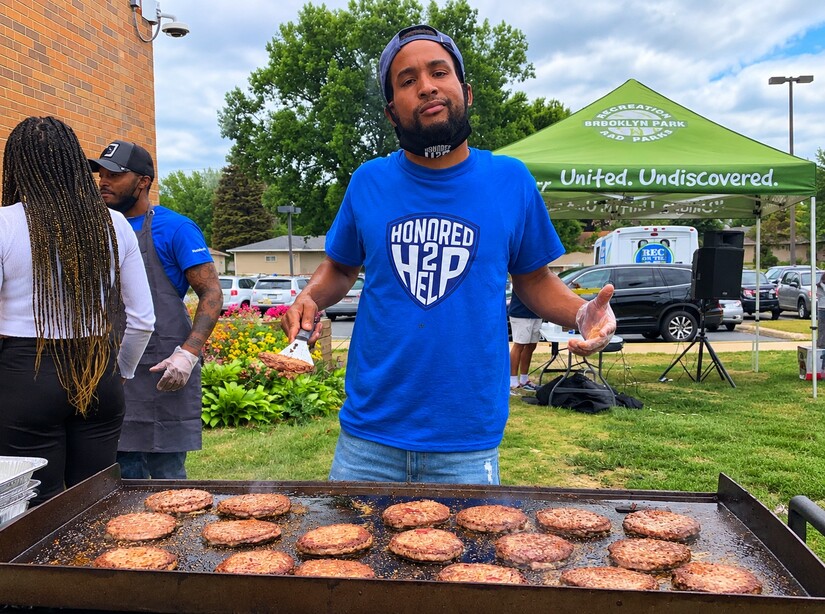
Honored 2 Help’s activities have grown beyond the original barbecue. The organization runs back to school events, organizes monthly food distributions, and provides holiday support. In 2022, local reporting documented Draughn renting a U-Haul to deliver complete Thanksgiving meals to families, including turkeys and groceries rather than requiring people to travel to a central distribution site.
Draughn’s earliest Christmas initiative began with $100 of his own money during the COVID-19 pandemic, when restrictions prevented the large holiday gathering he would have preferred. He bought coloring books, crayons, and other small gifts at a dollar store. A relationship with the Salvation Army helped the effort expand, and news coverage brought broader attention.
The resulting drive collected more than 2,000 gifts and assisted approximately 220 families, Draughn recalled. He dressed in a Santa suit and became “Scooter Claus.” Families drove through to receive the gifts.
On the morning of the distribution, Draughn checked his personal bank account. It was overdrawn by $68.
He put on the costume anyway and went outside into bitter winter weather to hand gifts to children.
Some people might interpret that as evidence of insufficient boundaries or an unsustainable model of service. Draughn understands the concern. He also knows what it meant to the families who arrived, including adults who cried, hugged him, and expressed relief that their children would have something for Christmas.
The story illustrates both the power and the fragility of Honored 2 Help. Much of the organization’s visible success has rested on sacrifices the public never sees.
Draughn said his basement, garage, and two storage spaces have been filled with supplies accumulated through years of community work. Although he hopes the organization will eventually have enough funding to provide wages, he said he has not been paid for leading it.
His vehicle was not working at the time of the interview, requiring him to borrow his mother’s car even as he believed he should have been helping care for her.
“People see the backpacks and the school supplies and the food and all that. How am I living, though? Who’s helping the helper?”
The question brought him to tears.
Building Honored 2 Help, he said, has required sacrifice. It has also required him to continue when volunteers, collaborators, or supporters could remain only for a season.
At one point, Draughn asked God why more people had not been sent to help carry the work. The answer he believed he received was direct: “I told you to do it.”
Draughn interpreted that not as an instruction to reject help but as confirmation that his own obedience could not depend upon the continued presence of other people. When assistance was necessary, he trusted it would arrive.
“If He said that I could do it, then I was qualified to do it,” Draughn said. “Even when people are disobedient, I’ll stay obedient.”
There is a legitimate tension in that commitment. Community work cannot become durable if its founder is perpetually exhausted, financially strained, or carrying an organization alone. Draughn acknowledged needing resources, infrastructure, and a sustainable budget. His willingness to sacrifice has carried Honored 2 Help through its formative years, but its future will require more people to assume responsibility for the mission alongside him.
Draughn already imagines Honored 2 Help buses traveling into different neighborhoods to deliver food and other necessities. He envisions larger events that bring essential resources into communities through experiences that feel welcoming and enjoyable rather than institutional. He wants the organization to have the funding required to help more people and sustain that work across generations.
He is reluctant, however, to claim complete ownership of the vision.
“I want it to become what God wants it to become,” he said. “My goals and plans are to follow Christ.”
He does not present faith as proof that suffering will disappear. His own testimony would not permit that conclusion. Faith, in Draughn’s account, is what allowed him to continue through seasons that did not make sense.
He compares adversity to Minnesota winters. A person does not end winter by refusing to step outside. The person puts on a coat, confronts the cold, and does what the season requires.
Draughn also remembers learning to ride a bicycle with the help of an older brother and his friends. They placed him on a bike too large for him, pushed him forward, and laughed as he crashed into parked cars and fell. By the end of the night, his elbows and legs were bloodied, but he could ride. The next day, he was back on the bike.
The method was rough, and Draughn does not offer it as a guide to teaching children. What he carried from it was the discovery that difficulty could reveal an ability he did not yet know he possessed.
“The challenges are blessings,” he said.
That belief does not excuse the suffering he has endured, nor does it eliminate the consequences of choices he regrets. It helps explain why his response to pain has become a commitment to remain available to other people.
For Draughn, community and family are not separate categories. He has been an uncle since he was about 5 years old, and his large extended family includes many nieces and nephews. When his young relatives introduced their friends to “Uncle Scooter,” he accepted those children as nieces and nephews, too. If he bought ice cream for one, he believed he should include the others.
The instinct remains visible in Honored 2 Help. The organization’s programs distribute material necessities, but Draughn’s larger objective is to create an environment in which people feel that they belong to one another.
He refuses the notion that families experiencing hardship should simply accept whatever is cheapest or easiest to provide. If he prepares chicken, he wants it cooked with the same care he would show someone he loves. When others raise concerns about the expense, Draughn asks them to consider the greater cost of a community filled with people who feel abandoned, bitter, and hopeless.
“What is more expensive?” he asked. “To have a community full of people who are bitter and hurting?”
Love, he said, must become visible through what people are willing to give.
“How could I say that I love you and I’m not willing to give to you?” Draughn said. “This isn’t a job for me. This is my life. This is a lifestyle.”
The man who once required constant hospital supervision to keep him alive now works to convince other people that their lives matter. The child who watched his mother pray and survive became an adult who sees prayer and action as inseparable. The real estate commission that could have remained personal income became food for people gathering outside a police station. The mentor’s grill became a place where protesters, officers, grieving families, and neighbors could all be fed.
None of those transformations makes Draughn immune to exhaustion, grief, or material need. He began the conversation by admitting that he was struggling to put his condition into words.
“I’m just doing my best,” he said.
But the vulnerability of that admission may offer a more accurate understanding of community leadership than an account built only around successful events and smiling photographs. Draughn is not serving from a life untouched by pain. He is serving from direct knowledge of it.
He does not claim to have every answer for Minnesota’s inequities, mental health crisis, poverty, or fractured civic relationships. His answer begins at a more human scale: listen, show up, feed people, preserve their dignity, and treat the person in front of you as family.
Six years after he first believed he was told to go, he is still going.
“I haven’t been told to stop yet,” Draughn said.

Local stories matter. Subscribe free to MinneapoliMedia and receive independent news, community reporting and important updates from Minneapolis, the North Metro and communities across Minnesota.
SUBSCRIBE FREE: https://minneapolimedia.town.news/subscribe
MinneapoliMedia | Community. Culture. Civic Life

Sunny, with a high of 73 and low of 49 degrees. Sunny in the morning, clear in the afternoon and evening, smoky haze overnight.