55° and Patchy rain nearby
Image
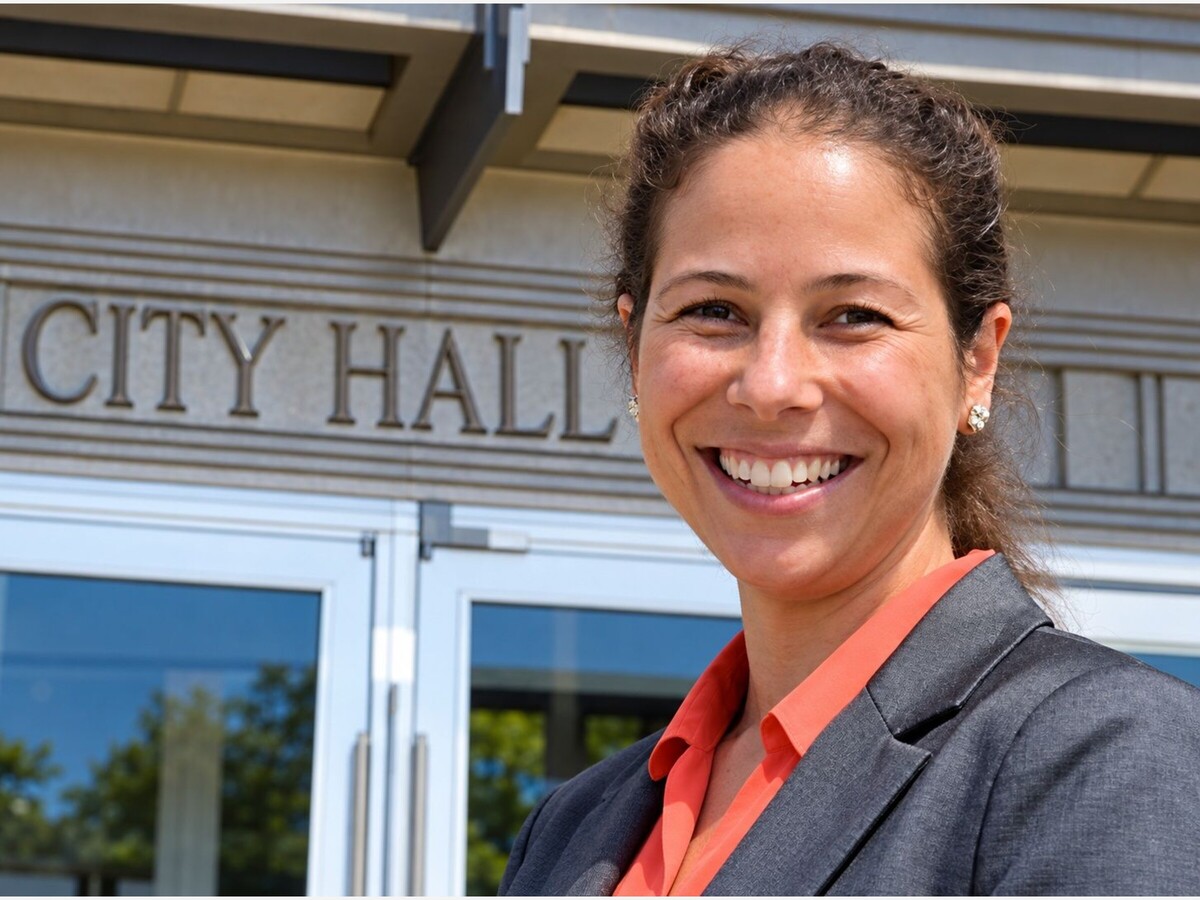



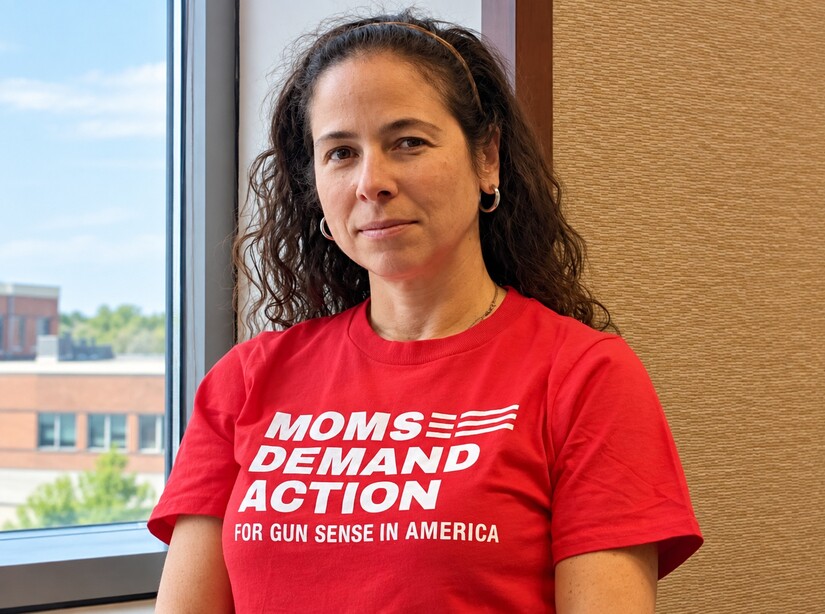
SAINT PAUL, MN (September 13, 2026) Rebecca Noecker had already spent three hours knocking on doors when she sat down with MinneapoliMedia on September 4.
She planned to return to the doors after the interview.
“I love door knocking,” Noecker said. “You can still go up to someone’s door. You can still knock. You can still talk to a stranger. Have a conversation.”
It was an appropriate setting for the inaugural edition of THE CANDIDATE, MinneapoliMedia’s new longform interview series examining the people who ask voters to entrust them with public office.
The purpose is deliberately broader than campaign platforms, endorsements and election strategy. THE CANDIDATE asks who a candidate is, what formed that person, what experience has changed, where public service has produced success or failure, and what gives that candidate reason to believe voters should place power in their hands.
Noecker enters that examination with a record stretching back a decade.
Candidate Profile: Rebecca Noecker
|
Category |
Detail / Record |
|
Current Office |
Saint Paul City Council President (Ward 2) |
|
Target Office |
Ramsey County Board of Commissioners (District 5) |
|
Municipal Service |
Elected to the Saint Paul City Council in 2015; serving since January 2016 |
|
Leadership Roles |
Council President; Chair of Council Operations, Policy and Audit Committees |
|
General Election Matchup |
Nonpartisan general election vs. Rep. María Isa Pérez-Vega |
She represents Ward 2 on the Saint Paul City Council, covering West 7th Street, the West Side, Summit Hill, Railroad Island, Lowertown and downtown. She is the current City Council president and chairs the Council Operations, Policy and Audit committees.
She is now seeking the District 5 seat on the Ramsey County Board. Minnesota Secretary of State records show Noecker and state Rep. María Isa Pérez-Vega advanced as the two candidates for the November general election after a three-person filing field that also included Charles Barklind. The office is nonpartisan.
The interview began, however, not with the county race but with an unusual connection between Noecker’s campaign and MinneapoliMedia.
Campaign material discussing automated license plate readers had incorporated language from a MinneapoliMedia editorial arguing that the public debate should not be reduced to a simple choice between supporting law enforcement and supporting privacy.
Noecker acknowledged the use of the material at the beginning of the interview and said the campaign should have attributed it.
Then the conversation moved to why the argument had caught her attention in the first place.
The interview has been edited for length, clarity and readability. Minor repetitions, false starts and transcription artifacts have been removed without changing the substance of the responses.
MINNEAPOLIMEDIA: When you or your campaign came across my editorial about Flock cameras, what was it about that argument that resonated strongly enough that you wanted to use it in your campaign?
REBECCA NOECKER: First of all, thanks so much for being so gracious about the fact that we borrowed from your piece. I don’t know that I realized we did that without attribution, so I’ll make sure that we do that in the future.
What really resonated with me about your piece was the way you talked about the choice between the fact that there might be things that keep us safe, but they are still invasions of our privacy at an unacceptable level.
I think right now there’s sort of an assumption that public safety is paramount and privacy might be important, but if something keeps us really, really safe, then the most important thing is that.
You took a much more nuanced view that now that technology is advancing to a certain point, privacy and safety are competing values and need to be treated equally. We need to wrestle with what the right balance is between them, not just assume that one is paramount.
I really appreciated the thoughtfulness that you brought to it. It’s something that I want to see more of in our politics.
Context: On August 26, 2026, Noecker and Council Member Saura Jost sponsored a resolution calling on Saint Paul and Ramsey County to end their contracts with Flock Safety. The resolution cited concerns about privacy, mass surveillance, data sharing and the possible use of locally collected information by other law enforcement agencies. The City Council adopted the resolution that day.
MINNEAPOLIMEDIA: Where do you personally draw the line between technology that legitimately helps government keep people safe and technology that gives government too much power to watch its citizens?
NOECKER: I think, first of all, a lot depends on how it all begins.
When we start to consider a new technology and we have a public conversation at the very beginning about what the technology is, what it does, what the benefits could be and what the costs could be, and we allow people to weigh in and have a public conversation about how we create guardrails, that is important.
The example that always comes to mind is body-worn cameras for our Police Department. That was a relatively new technology when we implemented it, and it was coming out of a request and really a demand for accountability for police.
We had a public hearing about the policy. We had a robust conversation with the council and the public about what those rules would be. Since then, those cameras have helped build trust and accountability.
In the case of Flock, we didn’t even know we had a contract with Flock until very recently. That’s a very different situation.
A lot also depends on what happens to the data. Who owns the data? How is it stored? How is it shared? Who can access it?
When data is held only by the police department, that’s one thing. When the data is being shared by our Police Department with other departments, which might share it with other departments, or with a third party that might change its contract rules, that’s a whole different story.
Frankly, this is all really new. We also have to be humble as policymakers and say we’re not technology experts. We’re not futurists. We don’t know what we don’t know.
That’s when we need to be looking to others for expertise and engaging community members who know both from lived experience and from technological or professional experience what a strong policy should be.
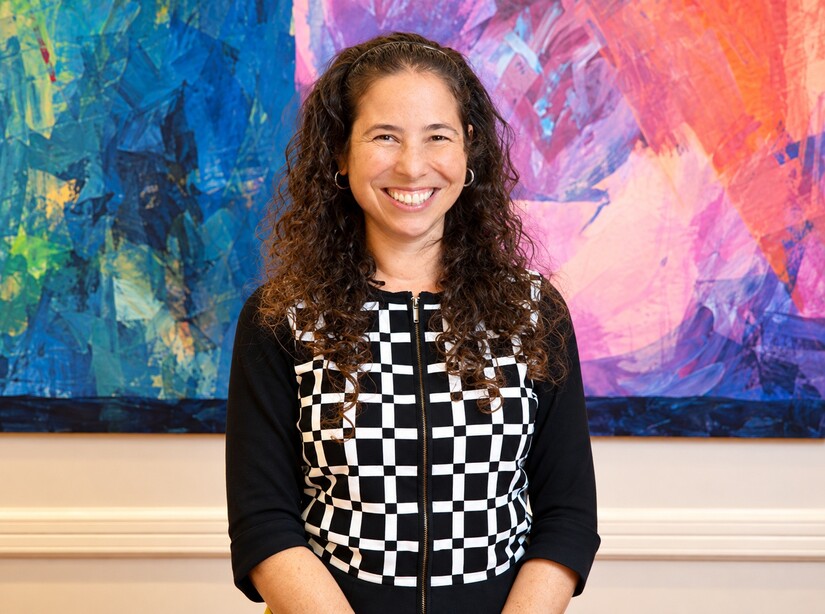
MINNEAPOLIMEDIA: You grew up in St. Louis Park, the daughter of two physicians who served veterans, and you’ve spoken about your family and your Jewish faith instilling the idea that when you see something wrong, you have some responsibility to do something about it. Who was Rebecca Noecker before politics, and where did that sense of obligation come from?
NOECKER: I can’t pinpoint the moment, but I feel like as long as I can remember, I’ve always been someone who has pushed back against the status quo and really resisted the idea that the way things are is the way they have to be.
My parents were people who were very involved in the community and making things better.
My Jewish faith teaches us, and this is actually a quote that’s up in my office at work, that it’s not your responsibility to finish the work, but neither are you free to turn away from it.
There may be problems that are bigger than you or your lifetime or generations, but that doesn’t mean you are free to abandon working on them.
When I was seven years old, I brought together my fellow neighborhood kids for a Good Deeds Club. We decided to march with signs protesting all the problems the adults were causing for the environment, which, you know, have totally been solved now, so I don’t even know why we were worried.
When I was 21 and hired for my first job as a teacher, I led a union action to protest some of our working conditions, and I was the only teacher not rehired the next year. I was basically fired for doing that, but I felt it was really important.
On the City Council, my very first day on the job, I asked why we voted in this weird way where we didn’t even say “aye.” At the time, they would just read everybody’s names really fast, and that meant yes. You had to say no really quickly if you meant no.
You could sit through a whole meeting and never say a word, and you’d vote for all these important things. People watching had no idea what was happening.
Within two months, as a very baby council member, I passed a rule that changed the way we had done business as a council for 150 years because it just didn’t make sense.
I guess I’m always questioning why we are doing things this way, how it can work better and, specifically, how it can work better for people.
What I want to do with my life is make sure that as many people as possible can live as full and fulfilling lives as possible, free of pain and suffering. That’s what motivates me every day.
MINNEAPOLIMEDIA: After Harvard, you joined Teach For America and taught middle-school science in Baton Rouge. Was that the point where you stopped thinking primarily about helping individuals and started thinking more seriously about changing systems?
NOECKER: Yes. I remember the feeling of powerlessness.
Teaching was the hardest thing I’ve ever done. I’m now married to a teacher, so I continue to see it every day. I want to shout out to all the teachers who might be listening. You have the absolute hardest and most important job.
In one school, I taught eighth graders who had basically been promoted from grade to grade without ever having to pass a test showing whether they were learning anything. By the time they got to eighth grade, the state instituted a high-stakes test. You couldn’t graduate without passing it.
Many of my students couldn’t pass it because they had been failed so many times by all the grades before them and by the society around them. I had kids who were just in my class because they had to wait until they were 16 before they could officially drop out of school.
It was heartbreaking.
I could do my best, but these students had years of disinvestment and disadvantage. They also had opportunities and assets that people weren’t seeing. They had so much potential, and often that just wasn’t being recognized or brought out.
It made me want to take a bigger, system-wide look at what was going on.
MINNEAPOLIMEDIA: After teaching, your path took you to Teach For India and later the Justice and Reconciliation Project in Uganda. What did India and Uganda teach you about government, bureaucracy, poverty, reconciliation and human dignity that you eventually brought home to Minnesota?
NOECKER: I was really grateful to be able to travel to different places early in my life. It was formative because I was able to see a totally different way of life.
One of the things I saw in both Uganda and India, where I lived in Pune, was extreme poverty in a way I had never experienced it here in the United States, and also extreme inequality.
The other thing I experienced was feeling like a real outsider.
I was the racial minority, although because I was a white racial minority, people often assumed I was wealthy, educated and would know what to do. There was huge privilege associated with that. But I also didn’t know the language. I didn’t know the culture.
I remember being in the foreigners’ regional registration office where I had to get my visa renewed, not understanding what was going on, being there week after week and hour after hour, never making any progress and never having anyone help me.
I got so frustrated that I broke down in tears on one occasion because it felt like I didn’t understand how the system could help me.
I’ll never forget that feeling of powerlessness because government should be there to help.
If you’ve never been somewhere where you’re the stranger, you’re the outsider, you might take it for granted that the governments and systems we’ve designed may work for you. But they don’t necessarily work for everybody. I experienced being on the other end of that.
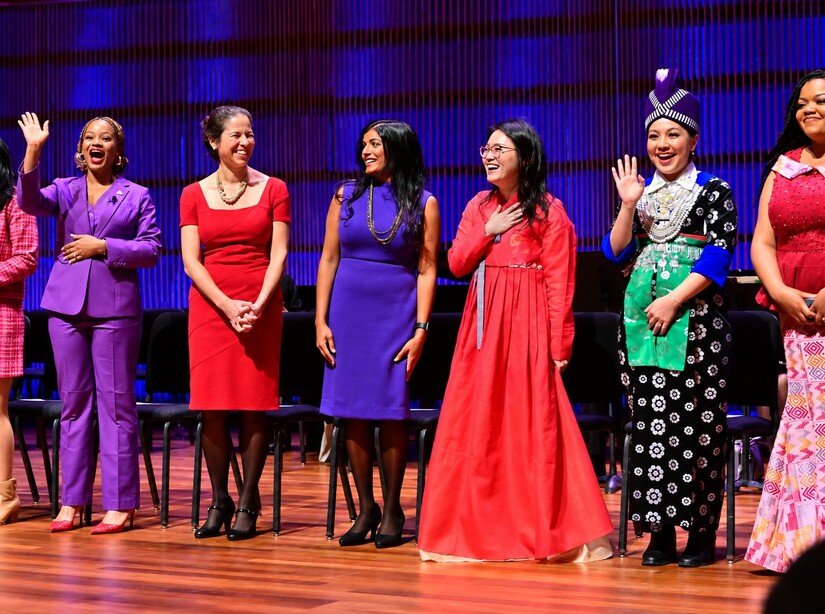
MINNEAPOLIMEDIA: Years ago, you described having what you called a “Matrix moment,” realizing that the systems governing our lives aren’t forces of nature. Human beings created them, which means human beings can change them. You’ve now spent roughly a decade inside government. Do you still believe systems are as changeable as the younger Rebecca Noecker believed they were?
NOECKER: More than ever.
That’s actually part of why I’m running for this seat. I don’t want to leave local government.
It is amazing to me how you can ask the right question, dig into the report that’s in front of you, build a new relationship with someone who has never been a partner before but has incredible expertise or resources to bring, and suddenly things change.
I’ve seen hundreds of new units of housing spring up where before there was an empty field. I’ve seen new sidewalks and bikeways go in. I’ve seen our minimum wage go up. I’ve seen us pass laws to protect trees, keep guns stored safely, fight wage theft and keep tenants safe.
These are all things that fundamentally change the environment that we live in.
It is no more and no less than someone, or usually someones, saying, “Wait a second. This isn’t working. We need to change it.”
MINNEAPOLIMEDIA: You first won your City Council seat in 2015. You’ve gone from a relatively young first-time candidate to the longest-serving current member of the council and now Council President. What has Rebecca Noecker learned about having power that candidate Rebecca Noecker did not understand about seeking power?
NOECKER: You have a lot less of it than I think people think you do. It’s mostly relational power at the local level.
I have six colleagues, so that means I need three people to vote with me on any issue to get it done, or four if the mayor doesn’t like it and we need to override a veto.
I might need those same people to vote with me on the very next issue, and that next issue might literally be 20 seconds later on the same agenda.
The nature of the work is that the power is in those relationships.
If I have some issue on the table and give speeches and nobody else agrees with me, I can do nothing.
Similarly, if I agree on every major thing everyone else is doing, then why am I there?
I have a big problem with unanimous votes unless it’s a very straightforward issue. I think most of the time there should be disagreement. I think that’s healthy. That’s how our system is designed.
I have no problem having a healthy disagreement with the mayor. I never have, because that’s how you get to the best decision.
MINNEAPOLIMEDIA: You’ve had ten years to try to change Saint Paul. Name something important you genuinely tried to accomplish and couldn’t. Why couldn’t you do it, and what responsibility do you personally accept for that failure?
NOECKER: When people ask me what I’m proudest of, I often have trouble pointing to one thing because I’m proud of a lot of things. But one of the things I’m proudest of actually was a failure.
It was the work that I did to try to create funding for early childhood education and childcare in Saint Paul.
It’s an issue I really believe in. The data are clear that when we invest in our youngest residents, kids ages zero to five, that’s the best investment we can make in an equitable, thriving society. It helps children get ready for school and helps their parents be able to work.
I worked for eight years bringing together a coalition of providers, parents, community advocates and elected officials, figuring out what we could do and how we could find more money.
We ended up getting the question on the ballot in 2024, asking voters in Saint Paul whether they would be willing to raise their property taxes to create a more sustainable funding source for early childhood.
That was defeated at the ballot, and it was a huge disappointment.
Context: In 2023, then-Mayor Melvin Carter vetoed the City Council measure placing a property-tax proposal for early childhood care on the 2024 ballot, citing concerns about cost, administrative feasibility, oversight and competing municipal priorities. The City Council subsequently overrode his veto, allowing the measure to proceed to voters, who rejected it in the November 2024 election.
MINNEAPOLIMEDIA: In your mind, why was it defeated?
NOECKER: I think there were a number of things.
We had some political opponents who were powerful. Former Mayor Melvin Carter came out strongly against it at the time, and it’s really hard to try to do something past the executive branch, although goodness knows I tried.
I also think there’s a huge concern, and I’m hearing it at the doors now and again, that property taxes are just unsustainable.
A lot of folks I would talk to said, “I really believe in this. I totally understand the need for funding for childcare. It should be at the state or federal level because we just can’t afford another thing at the local level.”
I happen to agree with that.
I also know that sometimes the local level is where things begin, where things are piloted and then spread. But I totally hear that concern, and I think that was ultimately the biggest issue.
MINNEAPOLIMEDIA: Knowing what you know now, what would you have done differently?
NOECKER: I think I probably would have either tried to find another funding source or taken a longer approach.
We knew property taxes were going to be the hardest sell, but they were the one source we could control ourselves as a city. Going through the Legislature to get a different kind of tax was harder and longer.
In retrospect, taking a longer approach, doing the work to get the mayor on board, getting more legislators on board and trying to find a specific revenue source to pilot something in Saint Paul would have been a better approach.
But I also don’t know. Sometimes things do have to wait for their time to be right. A lot of these initiatives take multiple attempts before they succeed.
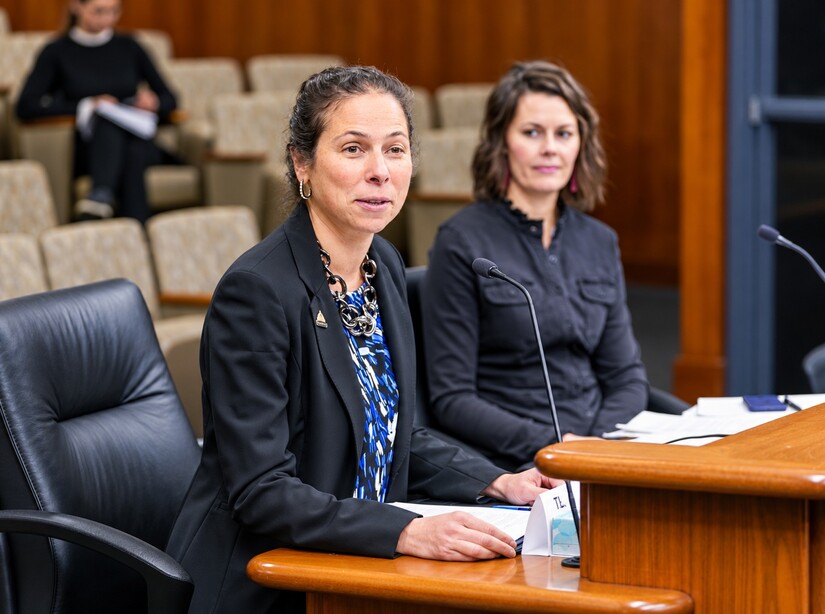
MINNEAPOLIMEDIA: Your record contains moments when the principle may have been easier than the implementation, including childcare, rent stabilization, housing production, homelessness, Summit Avenue and downtown revitalization. How do you decide when compromise represents responsible governing and when compromise means abandoning the thing you were elected to fight for?
NOECKER: I’m not sure I’ve figured that out yet.
When I was interning for state Rep. Jim Rhodes when I was in high school, I remember asking him what I thought was this very difficult question: What if your constituents want you to do one thing, but your heart tells you to do something else?
Now I realize that question was foolish because if your constituents are all telling you one thing, that would be a very easy situation. That’s almost never the case.
I represent 45,000 people. They all have different points of view, and my gut is often telling me something different from what some of them are saying.
I think the most important thing is to think about public benefit first and foremost. How much is this going to help or how much is it going to hurt?
I also think about how I would explain my decision the next day to someone who disagreed with me. Sometimes I think about how I would explain it to my kids because they are the best keepers of conscience there are.
In local government, people care more about things happening in their lives that make their lives better than they do about the right virtues being articulated and nothing happening. Compromise is almost always the way that things actually happen.
If you’re compromising and something good is going to happen, even though something perfect is not going to happen, I will choose the good.
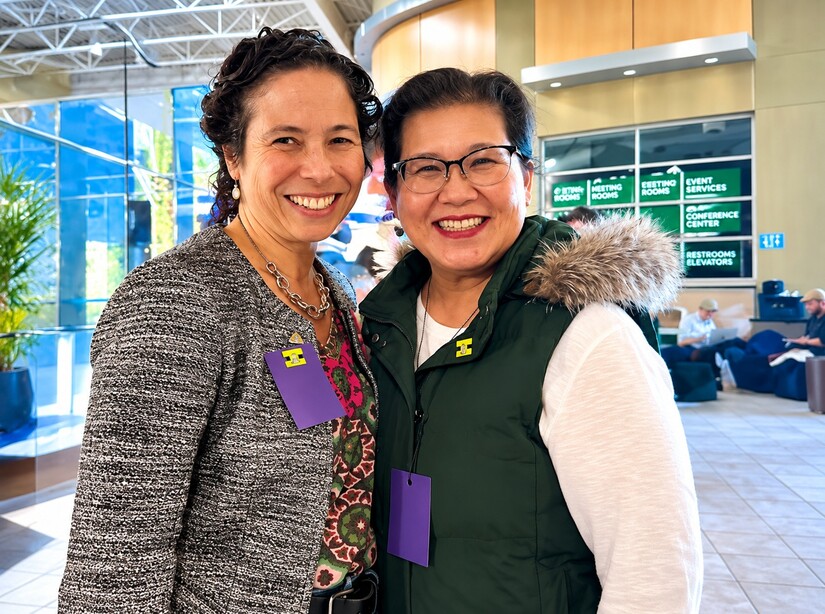
MINNEAPOLIMEDIA: How is your relationship with Mayor Kaohly Her?
NOECKER: I’m a big fan of Mayor Her. I think she brings the right determination, the right values and the right approach.
Working with her has been night and day compared to the last administration. I truly feel like I am a partner with her.
That does not mean we always agree. We’re disagreeing right now on the budget, for example. But again, that’s a feature, not a bug of the system. Healthy disagreement is what we should have.
When I’m in a meeting with her, I genuinely believe we are both trying to do the same thing. We are trying to advance each other’s goals. We are not trying to get in each other’s way or take credit.
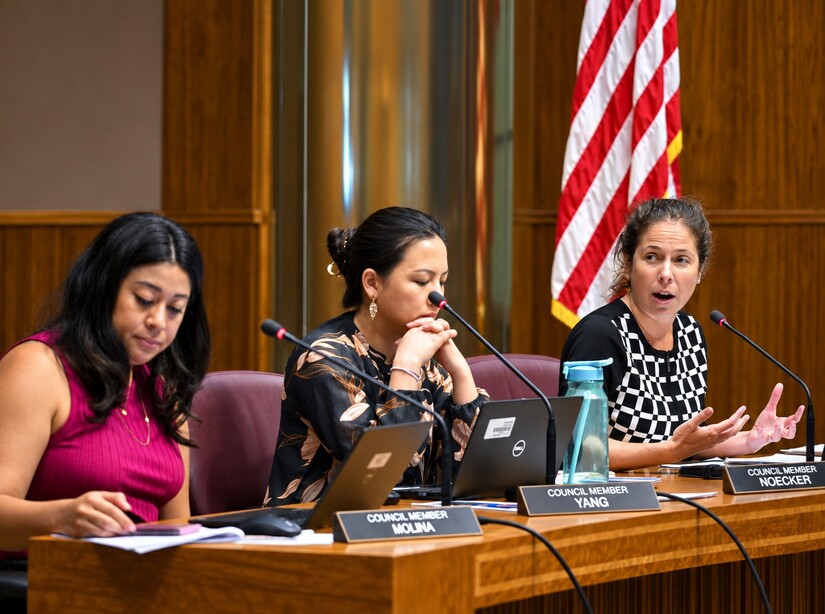
MINNEAPOLIMEDIA: You have represented downtown Saint Paul for a decade and made its revitalization a major part of your work. Yet downtown continues to face significant challenges. Without allowing the government or the private sector to pass responsibility to somebody else, after ten years representing downtown, what part of its present condition belongs to your record?
NOECKER: When it comes to something like downtown Saint Paul, it’s very difficult to claim credit solely for any aspect of it. It’s a very complicated system.
There are individual pieces that I have been a fighter for.
Our downtown skyway system, for example, I have regularly opposed closures of that system. I have been fighting recently to reopen the entire system.
I am part of the Downtown Alliance board, and I think the creation of the Downtown Alliance was a really big part of what’s going right downtown right now. We needed one table where people could come together to talk about the issues and chart a path forward.
There are individual development projects that I’ve been involved in, not just me, but things I’m proud of, like Pedro Park. That was a park people in the community had wanted for decades.
Whenever one of these efforts can lead to more civic infrastructure, that’s a real win because it means that organizing effort is going to continue into the future and continue connecting people.
There are specific things where I’ve had more of a role, but overall it’s a big ecosystem, and it has taken a ton of partnership.
MINNEAPOLIMEDIA: What can Rebecca Noecker accomplish as a county commissioner that Council President Rebecca Noecker simply cannot accomplish?
NOECKER: I’ve become more aware over the last ten years of all the things that the city can do. There’s a lot. But there are also a lot of things we can’t do or that we need partnership for.
Those are the things that I think we need better leadership from the county on, and that I think I can provide.
The county runs the social and human side of a community. They are the pass-through entity for public benefits from the federal government and state. They handle child protection, elections, corrections, the jail, the Sheriff’s Office and County Attorney’s Office.
The county does public health and workforce development for the city. They do transit projects. They own parcels downtown that could be part of downtown revitalization.
Homelessness, mental health and chemical health are all county responsibilities.
Those pieces are integral to revitalizing downtown, expanding our tax base, bringing down property taxes and taking care of our unhoused neighbors.
The City of Saint Paul needs Ramsey County and vice versa. We need to be working in lockstep.
I got tired of having conversations at the city where we would say, “Well, if only Ramsey County would blink.”
I decided maybe what we need is someone who knows Saint Paul, is a champion for Saint Paul and knows how to do this kind of local government work to move over to the county and help build that bridge back to the city.
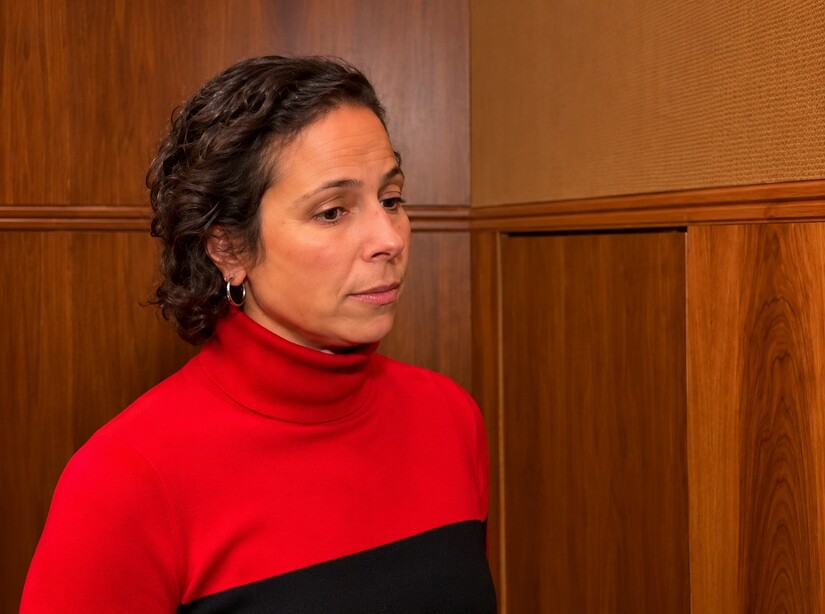
MINNEAPOLIMEDIA: You are running against María Isa Pérez-Vega, another experienced progressive public official. A voter could look at the two of you and see two women who care deeply about this community and share positions across many broad areas. What is the meaningful choice between you? What would Ramsey County government look like under Rebecca Noecker that it would not look like under María Isa Pérez-Vega?
NOECKER: I think a campaign is ultimately a job interview. You are going to voters and applying and interviewing. You’re going door to door to lay out your credentials and say, “This is what I think I would bring to this job.”
In this case, what I would bring uniquely is the experience I’ve had from ten years on the Saint Paul City Council during the volatile times we were talking about.
It has really given me an understanding of how local government works and how to work on a nonpartisan, seven-member, year-round, detail-oriented body, which is exactly what the county is and exactly what the City Council is.
The Legislature is a very different animal. Being in a partisan body, part of the year, working on higher-level issues and having a caucus you’re part of, that’s a different type of work.
One of the things I uniquely bring is knowledge of how to get the things done that I’m talking about.
I have a lot of detailed policy ideas, and voters don’t just have to trust and hope that I’ll be able to do those things. They can see from my track record that I’ve already done things like that at the city, and they know I have experience on a body just like the County Board.
I also think it’s relevant that I am by far the most labor-endorsed candidate in this race. Fighting for workers is something I’ve been doing from day one, including as a worker myself when I got not rehired. That speaks to the way I do the work, which is always to center the frontline workers.
MINNEAPOLIMEDIA: After ten years in elected office, why should a voter who believes the government hasn’t delivered enough, look at you as an agent of change rather than part of the government they are frustrated with?
NOECKER: They could easily look at me as part of the current city government that they’re frustrated with. But I’m applying for a new job.
I’m running for a job that has been held by the same person for 32 years, since I was 10 years old.
The nature of jobs is that when you first enter them, you’re coming fresh. You’re changing things. You learn from each job opportunity you have, and you bring that to the next job.
The agent of change is the fact that I would be a new person in this job, coming to it with a new approach, taking what I’ve learned from City Hall but bringing that same fight against the status quo that I always have, and knowing how to change the status quo in a way that I didn’t when I started on the council.
I think there’s a value in experience, even political experience.
Sometimes we’re too quick to say, “Out with them. They’ve had four years.” Just like you want an experienced lawyer, banker or driver, you want an experienced politician.
But you don’t want someone who’s been so long in the role that they have lost the fire, lost the freshness or don’t really believe their effort is going to lead to impact in the same way they did at the beginning.
I absolutely have that fire in the belly for this role.
Every person I’m talking to at the doors, I’m coming away with new ideas for things I would want to do and feeling more excited about this race.
That’s how you want it to be. You want to be getting more excited about the job, not less, as you’re talking to the people who would be your bosses.

MINNEAPOLIMEDIA: Someday you won’t be Council President. You may or may not be Commissioner Noecker. Campaigns end, elections end and titles eventually disappear. You are also a daughter, a wife, a mother and someone who has spent a significant portion of her adult life in public service.
When your children are old enough to look back at all the meetings, campaigns, late nights, criticism and time their mother gave to this work, what do you hope they understand about why you did it?
NOECKER: I hope that they see it is worth it to put your all into something.
I hope they see that there is value in being passionate about things, throwing yourself into things, doing the hard work and not knowing if you’re going to succeed.
They’re 12 and 13 now, so it’s not like when I first ran and they were one and a half and one wasn’t even in the world yet. They have real questions about my strategy.
My son was sitting in the back seat the other day saying, “I don’t like this lit piece, Mom. You don’t have enough pictures of you smiling,” or something like that. So they’re giving me good strategic advice. They’re paying attention.
I am either going to win or I’m going to lose, and they will feel that too.
But what I hope they remember from all of this is that the outcome is not the most important thing. It’s the effort.
It’s the passion that you bring to it, the energy you bring to it, and it’s doing it for a reason. Just working hard alone is not valuable.
But doing it in service of others, in service of an idea of how you can make things better, with the idea that the world is not perfect but it’s our responsibility to make it a little bit more so every day, that is worth the fight regardless of the outcome.
At the end of the interview, Noecker headed back to the campaign trail.
The substantive question she leaves for voters is not whether she has experience. Ten years in Saint Paul government answers that.
The question is what that experience now means.
Noecker describes those years as evidence that institutions can still be changed, but also as a lesson in the limits of individual political power. She has learned that relationships matter, that public resistance cannot simply be dismissed, that the funding mechanism can defeat a worthy policy, that failure can alter strategy, and that compromise sometimes determines whether government accomplishes anything at all.
She is now asking Ramsey County voters to decide whether those lessons belong on the County Board.
That decision is theirs.
THE CANDIDATE begins with a different task: making sure voters have the opportunity to hear the person asking them to make it.

Local stories matter. Subscribe free to MinneapoliMedia and receive independent news, community reporting and important updates from Minneapolis, the North Metro and communities across Minnesota.
SUBSCRIBE FREE: https://minneapolimedia.town.news/subscribe
MinneapoliMedia | Community. Culture. Civic Life



Overcast, with a high of 67 and low of 50 degrees. Clear in the morning, overcast for the afternoon, clear during the evening, overcast overnight.