Image



BURNSVILLE, MN (October 6, 2026).
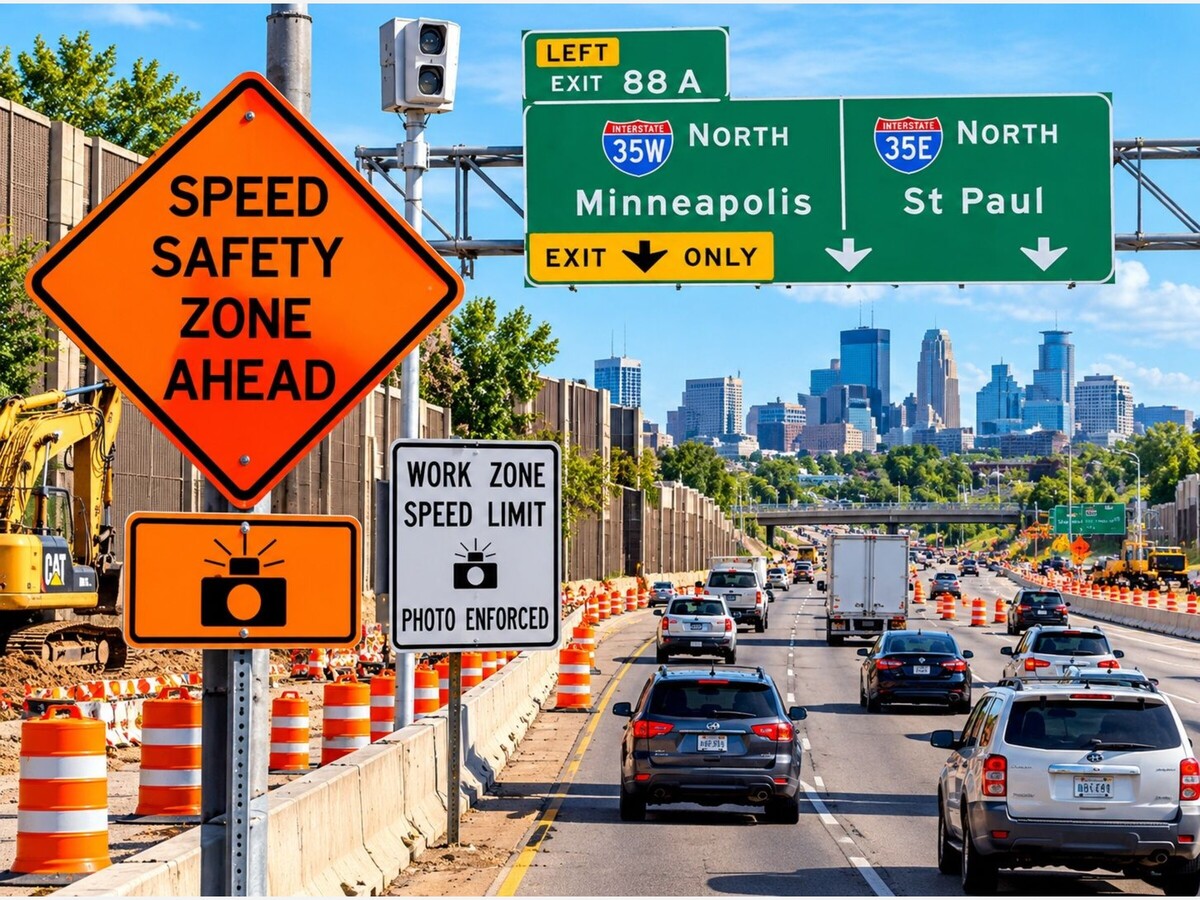
Minnesota's experiment with automated traffic enforcement has moved from planning into active highway use, with the Department of Transportation deploying work-zone speed cameras Monday on Interstate 35W in Burnsville.
The cameras are operating in the northbound I-35W construction zone approximately one-quarter mile north of the McAndrews Road bridge.
Drivers will see orange signs notifying them when the system is operating.
Vehicles recorded traveling 10 mph or more above the work-zone speed limit may trigger a warning letter mailed to the vehicle's registered owner.
No fines or traffic citations will be issued during this MnDOT pilot.
The distinction is important because the technology is not functioning as a conventional automated ticketing system during the test.
MnDOT says the cameras record the license plate, a still image and a short video of the rear of a speeding vehicle. The system does not photograph or attempt to identify vehicle occupants.
Warning letters can be sent after the first, fifth and 10th recorded work-zone speeding violations.
MnDOT is testing whether the technology changes driver behavior and improves safety for road workers and motorists.
The agency says more than 11,000 crashes occurred in Minnesota work zones between 2021 and 2025, resulting in more than 600 injuries and 22 deaths.
Research from jurisdictions already using automated speed enforcement has shown substantial reductions in extreme speeding and serious crashes, although Minnesota officials will evaluate the state's own results before recommending whether the program should expand.
MnDOT says studies elsewhere have found vehicles traveling at least 10 mph above speed limits declining by as much as 88 percent, while fatal and serious-injury crashes have fallen between 19 and 56 percent in areas using the technology.
The Burnsville deployment is expected to continue through October.
MnDOT plans another deployment in 2027 at a location that has not yet been announced. State law permits the department to test cameras in as many as four work zones through 2028.
The broader Minnesota traffic-camera pilot runs through July 31, 2029 and also authorizes Minneapolis and Mendota Heights to test automated systems under separate programs.
MnDOT emphasized that its cameras are not Flock Safety license-plate readers.
That distinction is particularly relevant in Minnesota, where law-enforcement use of automated license-plate reader networks has generated debate about retention, interstate data sharing and government surveillance.
The I-35W cameras have a different purpose: identifying vehicles exceeding the work-zone speed threshold and testing whether warnings change driving behavior.
Whether Minnesota eventually permits automated citations will not be decided by MnDOT alone.
Transportation officials say any broader enforcement system or authority to issue tickets would require decisions by the Minnesota Legislature after the pilot has been evaluated.
For now, drivers exceeding the work-zone limit by 10 mph or more face something Minnesota motorists have not traditionally encountered on state highways: a camera may record the violation even when no trooper is waiting beside the road.
The consequence during the pilot is a warning.
What Minnesota does after studying the results remains undecided.

Local stories matter. Subscribe free to MinneapoliMedia and receive independent news, community reporting and important updates from Minneapolis, the North Metro and communities across Minnesota.
SUBSCRIBE FREE: https://minneapolimedia.town.news/subscribe
MinneapoliMedia | Community. Culture. Civic Life



Patchy rain nearby, with a high of 48 and low of 41 degrees. Don't forget your umbrella! Patchy rain nearby in the morning, light drizzle for the afternoon and evening, patchy rain nearby overnight.