59° and Clear
Image
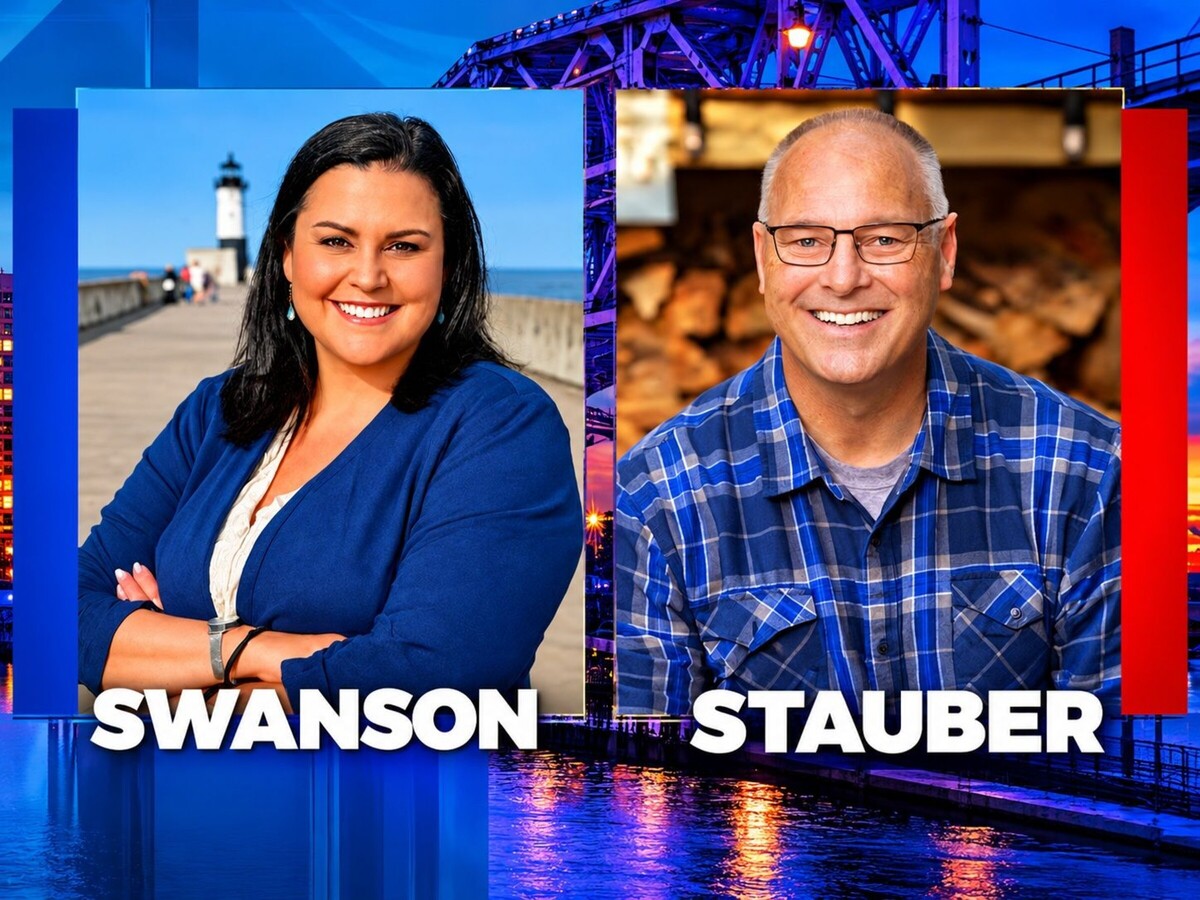



DULUTH, MN (October 8, 2026).
With less than four weeks remaining before the November 3 general election, Republican U.S. Rep. Pete Stauber and DFL challenger Trina Swanson met in Duluth Tuesday evening for what could be their only televised debate, offering voters in Minnesota's Eighth Congressional District a direct comparison of their positions on mining, economic development, immigration enforcement and the financial pressures facing working families.
The hour-long debate, broadcast by WDIO on October 6, brought together an incumbent seeking another term in Congress and a former federal immigration official challenging his record. Their exchanges reflected competing views about the district's economic future and the responsibilities of the federal government, but they also exposed sharp personal and political disagreements over the Trump administration and Minnesota's reputation.
Stauber, who was first elected to Congress in 2018, has made support for mining and domestic mineral production central to his work in Washington. Swanson, who spent nearly two decades in federal immigration service before leaving in 2025, has emphasized government accountability, affordability and environmental protections during her campaign.
Boundary Waters Mining Exposes a Fundamental Divide
One of the debate's clearest disagreements concerned proposed mining near the Boundary Waters Canoe Area Wilderness, an issue that has divided northeastern Minnesota communities for years.
Stauber defended efforts to reopen the federal permitting process for mineral development in the Boundary Waters watershed. He argued that the United States needs greater domestic production of critical minerals used in manufacturing, technology and national security, and that restricting American mining strengthens dependence on foreign suppliers.
Stauber specifically connected opposition to mining with China's position in global mineral supply chains, arguing that domestic restrictions benefit a strategic competitor.
Swanson challenged the wisdom of permitting mining so close to the Boundary Waters, emphasizing the potential environmental consequences for one of the country's most distinctive wilderness areas.
Her position is not a blanket rejection of mining. Swanson has previously described herself as supportive of responsible mining while opposing projects that could threaten the Boundary Waters watershed.
The disagreement comes after Congress overturned a 20-year federal mineral withdrawal affecting more than 225,000 acres of Superior National Forest land earlier this year. Stauber supported that action, while Gov. Tim Walz subsequently issued an executive order intended to protect the Boundary Waters watershed from certain forms of mineral development.
For northern Minnesota, the stakes involve both economic opportunity and environmental protection. Mining projects can generate construction employment, long-term industrial jobs and tax revenue, but they also raise concerns about water contamination, reclamation obligations and the future of tourism and outdoor recreation.
The candidates' disagreement therefore extends beyond whether Minnesota should mine critical minerals. It concerns where mining should occur, what environmental safeguards should govern development and how the federal government should weigh economic benefits against potential damage to public lands.
Affordability and the Economic Pressures Facing Families
The candidates also confronted the rising cost of living, an issue affecting households across a district that includes communities with very different economic circumstances.
Swanson criticized the priorities of the Trump administration and congressional Republicans, arguing that government policies have disproportionately favored wealthy individuals and corporations while ordinary workers struggle with household expenses.
She specifically pointed to the financial pressures facing laborers, nurses, teachers and other working Americans.
Stauber defended the Republican approach to economic policy and emphasized his support for domestic industry and economic development.
The discussion reflected a broader question facing the district: whether federal economic policies are improving conditions for residents whose wages must cover housing, groceries, transportation, health care and other necessities.
The candidates were also asked about strengthening smaller communities and rural economies.
Political science professor Kevin Taber of the College of St. Scholastica subsequently observed that neither candidate offered an especially strong response to questions about revitalizing smaller communities experiencing population decline.
That assessment is significant in a congressional district spanning approximately 30,000 square miles, where many communities face difficulties retaining younger residents, attracting employers and sustaining local services.
Economic development in northeastern Minnesota cannot be measured solely by major mining projects or industrial investments. Smaller communities also depend on health care, agriculture, tourism, education, local businesses and the availability of workers willing and able to remain in the region.
Data Centers and the Question of Community Accountability
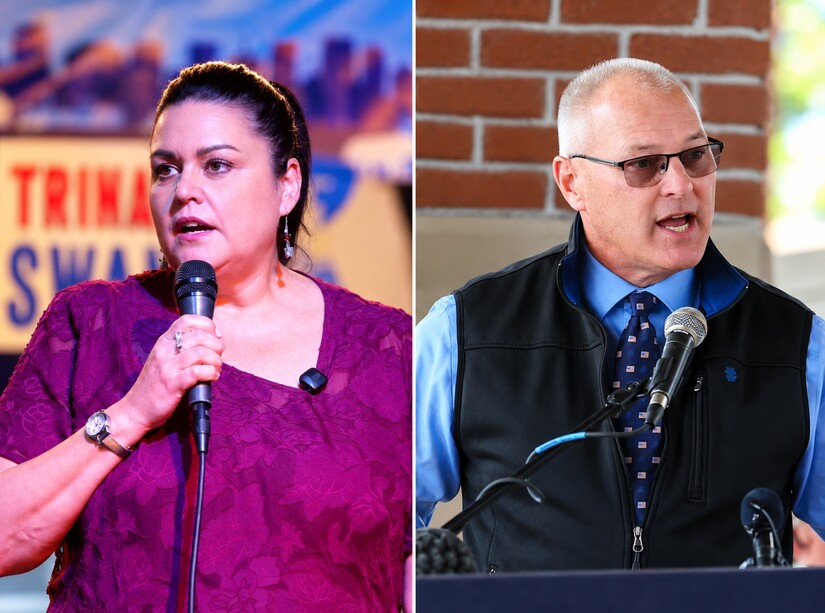
Data-center development also featured in the debate, reflecting the growing controversy surrounding proposed large-scale technology facilities in Minnesota.
The issue has particular relevance in Hermantown, where Google is pursuing a major data-center project and where both candidates have personal connections to the community.
Stauber has previously emphasized the construction employment and economic investment associated with the proposed Hermantown facility. He has argued that the project could benefit the region if developed appropriately.
Swanson has raised concerns about transparency, environmental review, electricity demand and the use of nondisclosure agreements by public officials involved in data-center negotiations.
Her criticism has focused partly on whether communities receive enough information about proposed developments before consequential decisions are made.
Those concerns have become increasingly important as Minnesota evaluates data-center proposals requiring substantial electrical capacity and infrastructure investment.
Supporters argue that such facilities can generate construction jobs, property-tax revenue and investment. Critics question the relatively limited number of permanent jobs, the potential burden on electrical systems and whether existing utility customers could face additional costs.
The debate placed those competing concerns within the broader congressional race, although the available reporting does not establish a detailed exchange of new policy commitments from either candidate on the Hermantown project.
The unresolved question for residents is how elected officials would ensure that major technology investments provide measurable public benefits while protecting taxpayers, utility customers and natural resources.
Immigration Enforcement Becomes a Personal Confrontation
The debate also turned toward Swanson's departure from federal service, producing one of the evening's more pointed exchanges.
Swanson previously served as director of international operations for U.S. Citizenship and Immigration Services. She left federal employment in 2025, saying she had been directed to undertake actions she believed were unethical.
Stauber criticized that decision and portrayed her departure as a refusal to enforce immigration law under the Trump administration.
He also connected his criticism to the Biden administration's immigration policies, which he characterized as insufficiently restrictive.
Swanson has maintained that her decision reflected concerns about professional ethics rather than an unwillingness to perform lawful duties.
The exchange illustrates a central difference between the candidates' political identities. Stauber has aligned himself closely with President Donald Trump and his administration's immigration priorities, while Swanson has made her experience inside the federal government and her decision to leave it part of her argument for changing congressional representation.
The debate did not resolve the competing accounts of her departure. It did, however, give voters an opportunity to hear how each candidate interprets the obligations of federal officials when they disagree with directives from an administration.
Stauber Challenged Over His Description of Minnesota
Another notable confrontation occurred when Swanson challenged Stauber over his previous characterization of Minnesota as a failed state.
Stauber denied having used that description and accused Swanson of misrepresenting his comments.
However, a January 8 interview with Newsmax provides important context. During that appearance, Stauber described Minnesota under Gov. Tim Walz as an example of a failed state.
Stauber said during Tuesday's debate that his criticism concerned fraud in Minnesota.
The distinction matters because there is a difference between criticizing failures in state government and describing an entire state as having failed.
Minnesota has experienced major fraud scandals involving publicly funded programs, and those cases have prompted legitimate questions about oversight, enforcement and accountability.
But Swanson's challenge concerned the language Stauber previously used to describe the state he represents.
The exchange was one of the debate's clearest moments in which a candidate's previous public remarks became an issue requiring an explanation before voters.
Two Candidates, Different Political Paths
Stauber enters the final weeks of the campaign with the advantages of incumbency and a district that has moved toward Republican candidates in recent elections.
He won his first congressional election in 2018 and subsequently secured reelection in 2020, 2022 and 2024 by double-digit margins.
The Eighth District supported Donald Trump by approximately 14 percentage points in the 2024 presidential election.
Swanson faces the challenge of winning over voters in a district where Republicans have demonstrated considerable electoral strength. She won approximately 77 percent of the vote in the August DFL primary and has conducted a district-wide campaign emphasizing direct engagement with residents.
Her campaign includes a series of town halls under the name “Let's Fix It!” with stops in communities throughout the district. She has invited Stauber to participate in those gatherings, criticizing what she considers insufficient opportunities for constituents to question him directly.
Stauber, meanwhile, has emphasized his congressional experience, his support for mining and his work on regional economic development projects.
Both candidates are seeking to persuade voters that their approach will best serve a district where economic opportunity, environmental protection and the availability of essential services remain closely connected.
A Debate With Consequences Beyond Election Night
Tuesday's debate took place while absentee voting was already underway in Minnesota, making it especially relevant for residents preparing to cast ballots before November 3.
The exchange demonstrated that the race involves more than disagreements over national political figures. The candidates differ over the future of mineral development near the Boundary Waters, the responsibilities of federal immigration officials, economic priorities and the degree of transparency communities should expect from major industrial and technology projects.
Their discussion also revealed areas where voters may reasonably demand greater specificity, particularly on rural economic development, affordability and how federal policies would translate into measurable improvements for smaller communities.
For residents of the Eighth Congressional District, those questions will remain important regardless of which candidate wins.
The region's future depends not only on whether major projects receive approval or opposition, but on whether communities can retain residents, sustain local businesses, protect natural resources and provide opportunities for future generations.
With less than a month remaining before Election Day, Stauber and Swanson have presented competing arguments for how those responsibilities should be met. Voters now have a clearer view of their differences, along with several questions that deserve continued examination before ballots are counted.

Local stories matter. Subscribe free to MinneapoliMedia and receive independent news, community reporting and important updates from Minneapolis, the North Metro and communities across Minnesota.
SUBSCRIBE FREE: https://minneapolimedia.town.news/subscribe
MinneapoliMedia | Community. Culture. Civic Life


Sunny, with a high of 72 and low of 52 degrees. Sunny for the morning, clear for the afternoon and evening,