58° and Sunny
Image




ST. PAUL, MN (October 15, 2026). Xcel Energy has proposed an alternative to a conventional Minnesota electricity rate case, offering to freeze customer base rates for calendar years 2027 and 2028 in exchange for accelerated recognition of federal tax benefits associated with five battery storage projects.
The proposal was submitted October 9 by Northern States Power Company, Xcel Energy's Minnesota utility subsidiary, to the Minnesota Public Utilities Commission.
Xcel disclosed the filing in a report to the U.S. Securities and Exchange Commission.
The plan could provide a period of greater rate stability for Minnesota electricity customers, but its financial structure and long-term implications require regulatory review.
The company has requested a commission decision by January 2027.
If the proposal is not approved, Xcel expects to file a conventional electric rate case in early 2027.
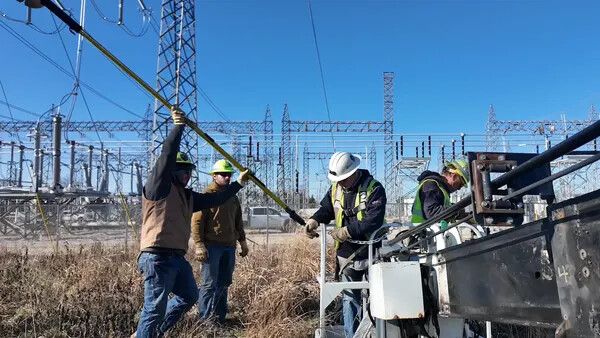
The proposal is called the Electric Customer Rate Stability Plan.
According to the SEC filing, it contains three principal elements.
First, customer base rates would remain frozen during 2027 and 2028.
Second, Xcel would accelerate the recognition of federal investment tax credits related to five battery energy storage projects.
Third, the company would continue certain existing regulatory adjustment mechanisms, including previously approved true-up and tracker arrangements.
The third provision is particularly important.
A base-rate freeze does not necessarily mean that every amount appearing on an electricity bill would remain unchanged.
Customers may encounter charges or adjustments governed by mechanisms outside the base-rate component.
The plan therefore should not be described as a guarantee that every customer's total monthly bill will remain identical for two years.
Federal investment tax credits can reduce the financial cost of qualifying energy projects.
Battery storage systems are designed to store electricity for use at another time, helping utilities manage variations in supply and demand.
Depending on their design and operation, storage projects can support reliability and help integrate electricity generated from variable sources.
Xcel's proposal would recognize the financial benefits of certain federal tax credits earlier than originally scheduled.
The company says those benefits could offset the additional revenue it would otherwise seek to recover from customers for necessary capital investments.
The proposed arrangement is therefore based on the timing of tax benefits rather than a promise that utility operating expenses will stop increasing.
The Minnesota Public Utilities Commission must evaluate whether the proposed arrangement is consistent with applicable utility law and reasonable for customers.
Regulators will need to examine the timing and value of the tax credits, the costs being offset and the consequences for future rate proceedings.
One question is whether using benefits earlier reduces the amount available to offset costs later.
Another is whether the proposed freeze adequately protects customers if other approved adjustment mechanisms continue changing charges.
A third concerns the treatment of investments that Xcel makes during the two-year period.
The company has indicated that the accelerated tax credits would help offset the revenue requirement associated with ongoing capital improvements.
Regulators must assess whether the arrangement produces an appropriate balance between customer affordability and the utility's financial obligations.
For households managing tight budgets, greater predictability in electricity base rates could be valuable.
Electricity is an essential expense, and changes in utility costs affect residents regardless of whether they own or rent their homes.
However, the exact savings from the proposal have not been independently established for a typical residential customer.
Without a verified customer bill comparison, it would be misleading to assign a specific monthly or annual savings figure.
The impact may also vary depending on customer usage, rate class and the components of a bill that remain subject to adjustment.
Electricity costs also affect businesses, nonprofit organizations, schools and other institutions.
A period of base-rate stability could help some organizations plan their operating expenses.
For businesses with substantial electricity consumption, even modest changes in rates can affect budgets.
But the proposal's effect on different customer classes must be evaluated through the regulatory filing.
The public should not assume that every residential, commercial and industrial customer would receive an identical financial benefit.
The proposed freeze would apply to calendar years 2027 and 2028.
It would not establish a permanent prohibition on future rate increases.
The treatment of costs and tax benefits after the proposed period is therefore a central question.
Regulators and consumer advocates must examine whether the plan provides a durable financial advantage or primarily changes the timing of rate recovery.
That analysis requires access to the underlying financial calculations, not simply the headline promise of a freeze.
Xcel has asked the Minnesota Public Utilities Commission to act by January 2027.
If regulators decline to approve the plan, the utility expects to pursue a conventional rate case.
That would place the company's proposed revenue requirements before the commission through the ordinary rate-setting process.
For Minnesota customers, the immediate development is an offer of two years of base-rate stability.
Whether the arrangement is approved, and whether it produces the financial benefits the company anticipates, remain open questions.
Official Resources
Xcel Energy SEC filing, October 9, 2026:
https://www.sec.gov/Archives/edgar/data/72903/000007290326000175/xel-20261009.htm
Minnesota Public Utilities Commission: https://mn.gov/puc/
Xcel Energy: https://www.xcelenergy.com/

Local stories matter. Subscribe free to MinneapoliMedia and receive independent news, community reporting and important updates from Minneapolis, the North Metro and communities across Minnesota.
SUBSCRIBE FREE: https://minneapolimedia.town.news/subscribe
MinneapoliMedia | Community. Culture. Civic Life


Overcast, with a high of 51 and low of 43 degrees. Light drizzle during the morning, light rain in the afternoon, overcast during the evening,