59° and Partly Cloudy
Image
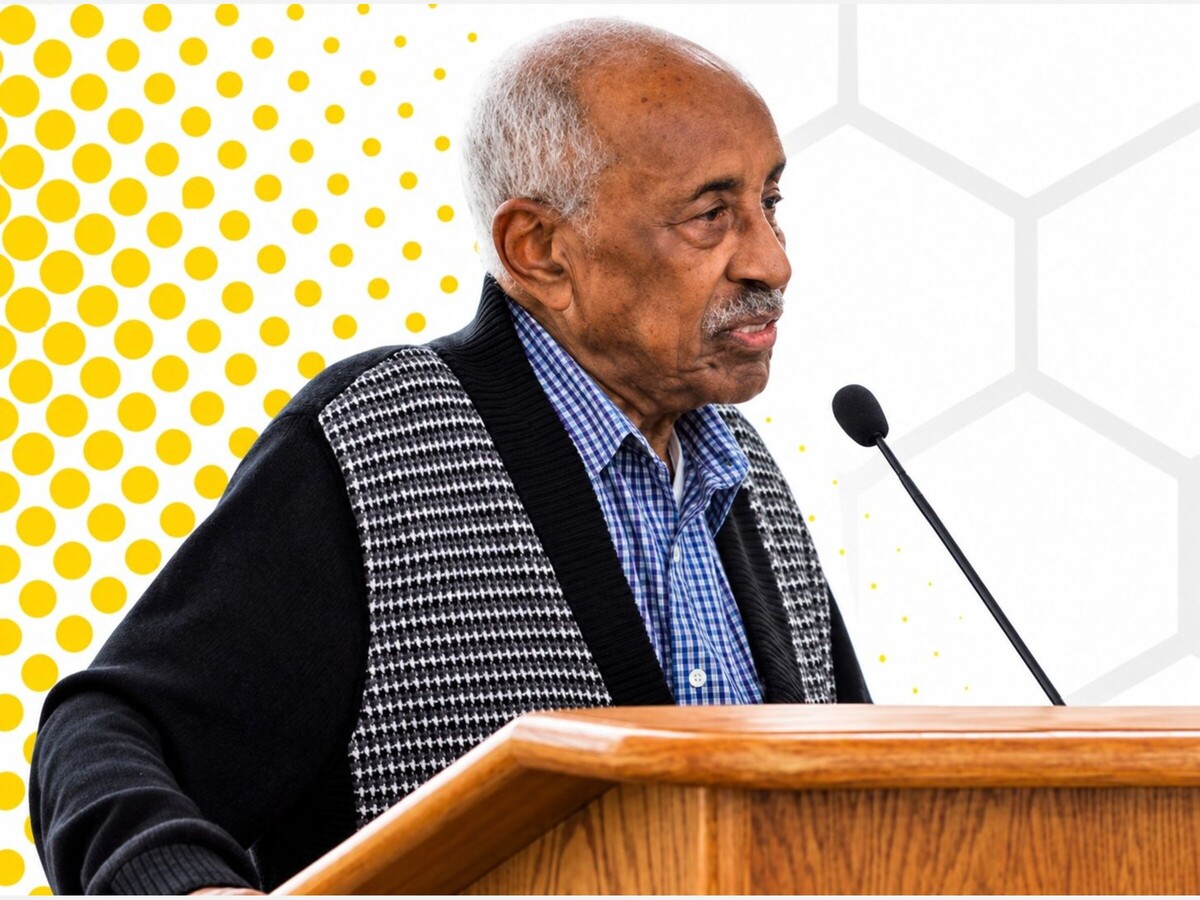



SAINT PAUL, MN, October 19, 2026: On October 27, community leaders, advocates, educators, former honorees, and supporters are expected to gather in the auditorium at Mitchell Hamline School of Law in Saint Paul for the 20th Annual Sons of Bransford Awards. The occasion will recognize African American men and women whose contributions have improved lives and strengthened communities across Minnesota. It will also commemorate James Edward Bransford, whose experience overcoming addiction informed years of work helping others obtain treatment, navigate the criminal justice system, and rebuild their lives.
The anniversary deserves attention beyond the ceremony itself. Twenty annual editions of a community recognition program represent a sustained effort to acknowledge forms of leadership that do not always receive the public attention afforded to elected officials, business executives, or the heads of major institutions. The Sons of Bransford Awards have maintained a commitment to honoring people whose work is often measured through the lives they influence rather than the positions they hold.
MinneapoliMedia believes this kind of recognition is an important part of Minnesota's civic responsibility. Communities depend on individuals who mentor young people, help families navigate difficult circumstances, advocate for fair treatment, and provide support to those confronting addiction, incarceration, or other serious challenges. Their contributions deserve accurate documentation, public acknowledgment, and institutional support.
The awards also present an opportunity to consider what James Bransford's life reveals about rehabilitation and the role of community relationships in helping individuals change their circumstances. His career demonstrated that personal experience, professional knowledge, and sustained involvement can contribute to meaningful public service.
The 20th anniversary should therefore be understood as more than a celebration of past accomplishments. It is an occasion to examine how Minnesota recognizes service, preserves African American community history, and supports the people who continue work that established institutions cannot accomplish alone.
James Edward Bransford was born in Maryland on December 11, 1930, the eldest of five children, according to the awards' 20th anniversary flyer. The organizers' biographical account identifies Lincoln University as part of his educational background, although it does not specify his period of attendance or the institution's location. He served in the United States Army during the Korean War and later attended Macalester College in Saint Paul, earning a bachelor's degree in biochemistry in 1957. His early career included work as a biochemist at a veterans hospital.
His life also included serious struggles with alcohol and substance use. Those difficulties affected his employment and personal circumstances before he entered recovery. The anniversary flyer identifies May 21, 1974, as the beginning of that recovery, a date that gives particular significance to the decades of service that followed.
An August 2020 obituary in the Minnesota Star Tribune documented his recovery and subsequent professional work. Bransford became a founding member of African American Family Services, previously known as the Institute on Black Chemical Abuse, and spent much of his career helping people whose difficulties with addiction had brought them into contact with the criminal justice system.
His recovery experience informed his approach to treatment. He understood that addiction could disrupt employment, family relationships, housing stability, and personal well-being. He also recognized that individuals seeking recovery could face stigma and institutional barriers that made improvement more difficult.
Bransford did not regard those difficulties as reasons to abandon people. His work reflected the conviction that individuals should have access to appropriate treatment and opportunities to change their lives.
That conviction deserves continued consideration because public discussions about addiction and criminal justice often become divided between competing demands for accountability and rehabilitation. These responsibilities need not be treated as mutually exclusive.
Accountability is essential to a functioning justice system. So is the recognition that some forms of criminal behavior are connected to treatable conditions and circumstances that punishment alone cannot resolve.
Minnesota should continue to examine where treatment, supervision, rehabilitation, and other interventions can produce better outcomes for individuals and communities while preserving public safety and the rights of victims.
Bransford's career provides a historical example of why those questions matter. His contribution was not the discovery of a single solution to addiction or criminal behavior. It was his sustained commitment to helping people obtain assistance when their circumstances were difficult and their prospects uncertain.
His example also challenges a narrow understanding of personal achievement. Bransford's legacy cannot be separated from the difficulties he experienced before entering recovery. Those experiences helped shape the perspective he later brought to professional service.
A society that values rehabilitation must recognize that people can make substantial contributions after serious personal setbacks. It must also ensure that opportunities for recovery are supported by effective services rather than left entirely to individual determination.
Bransford worked with the Hennepin County Public Defender's Office, where he helped individuals and families identify addiction treatment opportunities and alternatives to incarceration. The anniversary flyer describes his tenure there as lasting 13 years, while the Minnesota Star Tribune documents his departure in 2010. Taken together, these accounts establish his involvement with the office, although a precise employment chronology would require personnel records or further confirmation.
His responsibilities brought him into contact with people whose legal difficulties were connected to substance use disorders and other challenges affecting their lives.
The Minnesota Star Tribune described him as a respected presence in the Hennepin County courthouse. Former Hennepin County Judge Kevin Burke recalled his persistence in assisting people who had experienced repeated setbacks.
That persistence was an important part of Bransford's professional contribution.
People navigating the criminal justice system may also confront unstable employment, inadequate housing, untreated health conditions, and strained family relationships. These circumstances do not excuse criminal conduct, but they can influence whether individuals are able to address the problems that contributed to their involvement with the courts.
Bransford worked within that complicated environment, helping connect individuals with services that could support recovery and rehabilitation.
His service also extended to the relationship between chemical dependency and domestic violence. According to the anniversary flyer, Bransford led work addressing domestic violence at the Phyllis Wheatley Community Center, including a chemical dependency and domestic violence initiative identified as the Excelsior Project.
The program's inclusion in the organizers' historical account broadens the understanding of his professional interests. It suggests that his work recognized the overlapping challenges that can affect individuals and families when substance use and violence are present. The precise dates, operating structure, and outcomes of the Excelsior Project have not been independently established, but the initiative is an important part of the history the organizers have chosen to preserve.
After leaving the Public Defender's Office in 2010, Bransford continued working in addiction recovery, including approximately five years assisting East African residents at the Brian Coyle Community Center in Minneapolis. He later worked at Nurturing House, a substance use treatment facility in Saint Paul.
His continued involvement reflected a commitment that extended beyond a particular job title or institution.
MinneapoliMedia believes the broader lesson is that effective community support often requires cooperation across professional and institutional boundaries.
Courts, treatment providers, schools, housing organizations, employers, and community advocates have different responsibilities. Their work nevertheless intersects when individuals face problems that cannot be addressed by a single service.
A person entering addiction treatment may need stable housing to maintain recovery. Someone returning from incarceration may need employment assistance and appropriate supervision. A young person experiencing difficulties at school may benefit from coordinated support involving educators, family members, and trusted mentors.
No single organization can reasonably be expected to resolve all these needs.
Minnesota's public institutions should therefore place greater emphasis on practical coordination, reliable access to services, and evaluation of programs intended to support rehabilitation.
Bransford's work demonstrated the value of connecting people with available resources and maintaining relationships through difficult periods.
That approach deserves recognition because community service frequently involves work that is time-consuming, emotionally demanding, and difficult to summarize through conventional measures of professional success.
The origins of the Sons of Bransford Awards illustrate why recognizing community leadership during a person's lifetime matters.
According to the program's 20th anniversary flyer, Bransford experienced serious health problems in 2005 that nearly claimed his life. The following year, a group of African American men decided that his years of service deserved recognition while he was still alive.
Their message, as recalled in the anniversary account, was direct: “Give him his roses now!”
The organizers describe that decision as the beginning of the Sons of Bransford Awards, affectionately known as the S.O.B. Awards. What began as a tribute to one man's service developed into an annual recognition program honoring African American men and women whose leadership has improved community conditions and individual lives.
The circumstances surrounding the program's creation give its mission a meaning that cannot be fully understood through the presentation of awards alone. The founding impulse was not simply to establish another annual ceremony. It was to acknowledge a living community contributor at a moment when his health had made the opportunity to express appreciation especially urgent.
The program's published mission continues to emphasize honoring both prominent and less visible contributors, including people who have helped others overcome adversity.
Its philosophy includes a straightforward principle: individuals who contribute to their communities should receive recognition while they are still alive to appreciate it.
That principle is more significant than it may initially appear.
Communities frequently celebrate individuals after their deaths, when memorials, tributes, and retrospective accounts document achievements that received limited attention during their lifetimes.
Such recognition can be meaningful for families and future generations. It cannot, however, replace the opportunity to acknowledge individuals while they remain active and able to participate in the appreciation of their work.
The Sons of Bransford Awards seek to address that imbalance.
Their approach recognizes that community leadership does not always correspond to formal authority. A person may hold an influential position without maintaining close relationships with the people affected by institutional decisions. Another individual may exercise considerable positive influence without holding any prominent title.
A neighborhood mentor who consistently assists students, an advocate who helps families obtain services, or a recovery professional who remains involved with clients through repeated difficulties can make substantial contributions to community well-being.
These forms of leadership should not be regarded as secondary simply because they are less visible.
MinneapoliMedia supports recognition programs that establish credible standards for identifying and honoring such contributions.
The importance of the Sons of Bransford Awards lies partly in their willingness to acknowledge work that might otherwise remain familiar only to the people directly affected by it.
Public recognition can strengthen community relationships, introduce younger generations to experienced leaders, and create opportunities to document contributions that deserve a place in Minnesota's historical record.
It can also encourage institutions to consider whether their existing recognition practices adequately reflect the diversity of people contributing to civic life.
An awards ceremony cannot replace fair employment practices, adequate public services, or meaningful institutional accountability. It can, however, contribute to a broader culture in which service is noticed and valued.
The program's significance is supported by examples from its recent history.
In September 2022, Minneapolis College announced that Jonathan Lofgren, a member of its Addiction Counseling faculty, had received a Sons of Bransford Educator Award.
The recognition was associated with the 14th Annual Community Empowerment Through Black Men Healing Conference, held virtually that year.
Lofgren had extensive experience in addiction counseling, recovery services, and education. According to the college, he had worked in the field for 35 years and joined its faculty in 2006. He also established the institution's Collegiate Recovery Program.
The announcement provided a particularly meaningful connection to James Bransford.
Lofgren recalled Bransford's personal concern for his well-being during his early professional years. His account described someone who took an interest in younger practitioners and maintained relationships within the addiction recovery community.
That recollection helps explain why an award bearing Bransford's name carries significance beyond a formal presentation.
Bransford's influence was not confined to the individuals he directly helped obtain treatment. It also extended to people working in the same field who remembered his personal involvement and professional example.
Recognizing an educator such as Lofgren reflects the importance of preparing future addiction counseling professionals and supporting students pursuing recovery.
The example also demonstrates how community leadership can operate through education.
A faculty member who trains counselors contributes to the quality of future treatment services. A recovery program that supports students can help individuals continue their education while addressing serious personal challenges.
Such work connects professional expertise with community needs.
The 2022 recognition therefore offers a documented example of the awards' stated purpose in practice.
A separate announcement in 2024 provides additional evidence of the program's continued operation.
Community advocate Samuel Simmons invited nominations for the 18th Annual Sons of Bransford Awards, seeking men and women whose leadership had positively affected the African American community.
The announcement identified HUE-MAN and Healing Brothers as sponsors and scheduled the ceremony at Metropolitan State University.
These records establish that the program has used community nominations and maintained relationships with organizations involved in advocacy and community healing.
They also demonstrate the value of preserving annual announcements and recipient information.
Without such records, the history of a recognition program can become difficult to reconstruct even while the program continues operating.
That concern becomes especially important as the Sons of Bransford Awards reach their 20th annual celebration.
One of the most important responsibilities associated with community recognition is historical preservation.
Minnesota maintains extensive public records concerning elected officials, government institutions, major organizations, and prominent professional accomplishments.
The contributions of neighborhood advocates, mentors, educators, and volunteers are not always documented with comparable consistency.
Much of their work takes place through direct relationships, informal assistance, and organizations with limited administrative resources.
When individuals retire, organizations close, or longtime community members die, valuable knowledge can disappear.
An awards program can help prevent that loss by maintaining accurate records of recipients, award categories, accomplishments, and ceremonies.
The Sons of Bransford Awards have reached a point at which such documentation deserves particular attention.
A comprehensive historical archive would help establish the program's founding chronology, identify recipients from previous years, and explain how the awards have developed.
It could also preserve photographs, event programs, speeches, and biographies that illustrate the contributions of individuals whose work might otherwise receive limited attention.
MinneapoliMedia believes organizers, educational institutions, libraries, and community history organizations should work together where possible to preserve records of longstanding African American recognition programs.
This recommendation is not limited to the Sons of Bransford Awards.
The broader issue concerns how Minnesota documents leadership outside its most prominent institutions.
A community's history is incomplete when it records only those who held office, accumulated wealth, or occupied widely recognized professional positions.
It must also account for the people who developed neighborhood organizations, mentored young people, supported families, and helped residents navigate difficult circumstances.
Their contributions form part of the state's civic history.
Accurate documentation also serves an educational purpose.
Students and younger community members benefit from learning about individuals whose work demonstrates different ways of participating in public life.
Historical records can show that leadership is not restricted to politics or corporate management.
It may emerge through counseling, education, cultural work, legal advocacy, social services, or sustained neighborhood involvement.
The Sons of Bransford Awards have the potential to contribute meaningfully to that record.
Their 20th anniversary is an appropriate occasion to strengthen the preservation of their own history.
Public recognition is valuable, but it should not become a substitute for the resources required to sustain community service.
Many organizations working in mentorship, addiction recovery, education, and family support face financial and administrative pressures.
Programs may depend on a combination of public funding, charitable contributions, volunteer labor, and partnerships with larger institutions.
These arrangements can make long-term planning difficult.
Community leaders may receive awards for work performed under circumstances that remain financially uncertain.
The public should celebrate their accomplishments while also considering whether the services they provide are adequately supported.
MinneapoliMedia believes Minnesota's institutions should treat community-based organizations as important partners in addressing public needs.
That does not mean every organization should receive funding without scrutiny.
Public resources require accountability, transparent administration, and evidence that programs are serving their intended purposes.
It does mean that smaller organizations should have fair opportunities to demonstrate their value and participate in partnerships when their services address identifiable community needs.
The work associated with James Bransford illustrates why these relationships matter.
He helped people navigate addiction treatment and the justice system, often working across institutional boundaries.
His career was shaped by the recognition that people confronting serious difficulties may require assistance from several sources.
Modern service systems remain complicated.
Individuals may struggle to identify available programs, meet eligibility requirements, arrange transportation, or maintain appointments while managing employment and family responsibilities.
Community advocates frequently help bridge these gaps.
Their work should be evaluated carefully, but its importance should not be dismissed simply because it does not always produce highly visible public outcomes.
An awards ceremony can draw attention to effective leadership. Institutions must then consider what can be learned from the work being recognized.
That includes identifying successful practices, supporting appropriate partnerships, and ensuring that people who need services can access them.
Recognition becomes more consequential when it encourages practical improvements rather than ending with a presentation and photographs.
The Sons of Bransford Awards also provide an opportunity to examine how leadership is passed from one generation to another.
Experienced advocates possess knowledge about institutions, public policy, neighborhood relationships, and previous efforts to address community problems.
Much of that knowledge develops through years of work and cannot be obtained entirely through formal education.
Younger leaders benefit when experienced professionals and community organizers are willing to share what they have learned.
The relationship also works in the opposite direction.
New generations bring different experiences, skills, and perspectives that can help established organizations respond to changing circumstances.
Effective mentorship requires openness on both sides.
Bransford's influence on younger addiction recovery professionals demonstrates the importance of those relationships.
Jonathan Lofgren's recollection of Bransford's personal concern illustrates how professional guidance can include attention to an individual's well-being.
Mentorship is not simply the transfer of technical knowledge.
It can involve encouragement, accountability, practical assistance, and sustained personal interest.
Those relationships are especially valuable in fields where practitioners regularly encounter difficult circumstances.
Addiction counseling, social work, education, and community advocacy can place considerable demands on the people providing services.
Professional support and mentorship can help individuals develop the judgment and resilience required for long-term involvement.
Minnesota's institutions should create more opportunities for experienced community leaders to share their knowledge with younger professionals and volunteers.
Awards programs can contribute by bringing recipients from different years into contact and documenting the work for which they were recognized.
The Sons of Bransford Awards' intention to celebrate previous and current honorees offers an opportunity to strengthen those connections.
The value of the gathering will depend not only on the awards presented but also on the relationships and future collaboration it encourages.
The Sons of Bransford Awards place particular emphasis on the contributions of African American men and women.
That focus reflects the program's history and its stated commitment to recognizing individuals whose leadership has improved conditions within African American communities.
Minnesota's civic life has benefited from generations of African American educators, legal professionals, artists, business owners, advocates, and community organizers.
Their contributions have included the development of institutions, the expansion of educational opportunities, advocacy for equal treatment, and support for individuals and families facing economic or social barriers.
Some of that work is widely documented. Other contributions remain less familiar outside particular neighborhoods or professional communities.
Recognition programs can help address those differences in public visibility.
Their importance should not be reduced to the identities of the people receiving awards.
The substance of the work being honored remains essential.
A credible recognition program should identify meaningful contributions, explain their significance, and preserve accurate accounts of the individuals involved.
The Sons of Bransford Awards' emphasis on community service provides a foundation for that approach.
Minnesota has experienced significant changes during the program's history, including economic disruptions, public health emergencies, and renewed debates about racial inequality and criminal justice.
The murder of George Floyd in Minneapolis in May 2020 intensified public attention to institutional accountability and the experiences of African American communities.
The COVID-19 pandemic also affected schools, health services, employment, and neighborhood organizations.
These developments created new pressures on many of the institutions and individuals involved in community service.
They reinforced the importance of public engagement and the need for reliable relationships between communities and the organizations serving them.
The Sons of Bransford Awards cannot be expected to resolve those challenges.
Their contribution lies in identifying people whose work has helped others navigate difficult circumstances and participate more fully in community life.
That is a meaningful role, provided recognition remains grounded in actual service and supported by accurate documentation.
James Bransford's influence also extended through his family.
His daughters, Tanya Bransford Lewis and Traci Bransford, pursued careers in law.
Tanya Bransford served as a Hennepin County judge and became associated with work involving juvenile justice.
Her father's career involved helping people in the public defense system obtain treatment and rehabilitation services. Her judicial responsibilities were distinct, requiring impartial application of the law and oversight of legal proceedings.
Both careers nevertheless involved institutions whose decisions directly affected individuals and families.
Traci Bransford developed a career in entertainment law.
The Minnesota Star Tribune's account of James Bransford's life described his encouragement of his daughters' education and civic participation.
He introduced them to African American literature and involved them in political activities during their youth.
These details help explain the broader values associated with his life.
Bransford's commitment to education and civic engagement was not limited to his professional responsibilities.
It was also reflected in the opportunities and experiences he encouraged within his family.
His involvement in cultural life included service on the board of Penumbra Theatre in Saint Paul.
The theater has played an important role in presenting African American stories and developing theatrical work in Minnesota.
Bransford's participation reflected interests that extended beyond addiction treatment and the criminal justice system.
The anniversary flyer also records that Bransford married Barbara Powers in 1995 and describes him as a loving grandfather. These details add to the family history surrounding his public service and underscore the personal relationships that remained important throughout his life.
Remembering these different aspects of his life is important because community leaders should not be reduced to a single professional achievement or personal difficulty.
Bransford was a veteran, scientist, father, husband, recovery advocate, and participant in Minnesota's cultural life.
His legacy includes the complexity of those experiences.
The awards bearing his name are most meaningful when they recognize that same breadth of contribution in others.
James Bransford died on July 31, 2020, at age 89, from kidney disease.
His death occurred during the first year of the COVID-19 pandemic, when restrictions on gatherings affected memorial services and community activities.
The Sons of Bransford Awards have continued in the years since his death.
That continuation gives the 20th anniversary additional significance.
The program no longer has the direct participation of the person whose life inspired its creation, but its stated purpose remains connected to his work.
The challenge for any organization carrying a person's name is to preserve the substance of that individual's contribution rather than relying solely on ceremonial remembrance.
For the Sons of Bransford Awards, that means continuing to recognize meaningful community service and maintaining the connection between public acknowledgment and the values Bransford demonstrated.
His career was not defined by an expectation that everyone he assisted would succeed immediately.
It was shaped by the belief that people deserved appropriate opportunities to seek treatment and improve their circumstances.
That approach required patience and a willingness to remain involved when progress was uncertain.
The same qualities are important in mentorship, education, and community advocacy.
Recognition programs should celebrate those commitments while remaining attentive to the practical needs of the communities they serve.
The anniversary offers an opportunity to reaffirm that responsibility.
The 20th Annual Sons of Bransford Awards are scheduled for Tuesday, October 27, 2026, beginning at 5:30 p.m. Central Daylight Time in the auditorium at Mitchell Hamline School of Law, 875 Summit Avenue, Saint Paul.
Healing Brothers, LLC, is identified as the organizer in the published event announcement.
The ceremony is intended to honor James Bransford's life, recognize current and previous recipients, and commemorate the program's anniversary.
The anniversary flyer directs attendees to sonsofbransford.com for additional information and includes a QR code for event details. A separate public event listing describes admission as free. Attendees should consult the organizer's information and registration page for current attendance requirements.
The complete list of 2026 recipients has not been independently verified from the publicly available event information.
That limitation does not diminish the significance of the confirmed anniversary gathering, but it underscores the importance of accurate public documentation.
Recognition is most meaningful when the people being honored, the reasons for their selection, and the history of the program are clearly recorded.
The upcoming ceremony provides an opportunity for organizers to strengthen that record.
It also offers previous recipients and community supporters an occasion to consider how the program can remain relevant in the years ahead.
The value of an anniversary should not be measured only by the number of ceremonies completed.
It should also be measured by whether the underlying mission remains meaningful and whether the organization continues to recognize contributions that deserve public attention.
The 20th Annual Sons of Bransford Awards deserve recognition as a sustained effort to honor African American leadership and community service in Minnesota.
James Bransford's life provides a compelling foundation for that mission. His recovery from addiction informed years of professional work helping others seek treatment, navigate legal difficulties, and pursue opportunities for rehabilitation.
His example demonstrates why communities should avoid defining individuals solely by their most difficult experiences.
It also shows the importance of institutions and professionals who remain willing to assist people when progress is uncertain.
The awards' founding history reinforces those lessons. According to the organizers, a serious health crisis prompted community members to recognize Bransford in 2006 rather than wait until his death to acknowledge his contributions. That decision established a tradition centered on the value of recognizing service during a person's lifetime.
MinneapoliMedia believes Minnesota should build on these lessons in three practical ways.
First, public institutions and community organizations should recognize meaningful service during the lifetimes of the people providing it. Recognition should be based on documented contributions and should include individuals whose work takes place outside prominent positions.
Second, longstanding community recognition programs should preserve accessible historical records. Recipient biographies, award categories, event programs, and accounts of significant accomplishments should be maintained so that future generations can understand the people and organizations that contributed to Minnesota's civic life.
Third, recognition should encourage practical support for effective mentorship, recovery, education, and community service. Awards can acknowledge achievement, but sustained improvement requires appropriate resources, institutional cooperation, and accountability.
These responsibilities extend beyond the Sons of Bransford Awards.
They apply to the broader question of how Minnesota identifies, supports, and remembers people whose work strengthens communities.
The anniversary ceremony offers an appropriate occasion to consider those obligations.
For two decades, the Sons of Bransford Awards have carried a name associated with recovery, persistence, and service.
As the program prepares to recognize another generation of community contributors, its enduring value will depend on continuing to honor those principles with accuracy, fairness, and purpose.
James Bransford's legacy deserves more than remembrance. It deserves the continued practice of the values that shaped his work.
That is the responsibility Minnesota should recognize as the Sons of Bransford Awards enter their third decade.
Event: 20th Annual Sons of Bransford Awards
Date: Tuesday, October 27, 2026
Time: 5:30 p.m. to 7:30 p.m. CDT, according to the event listing
Venue: Mitchell Hamline School of Law, Auditorium
Address: 875 Summit Avenue, Saint Paul, MN 55105
Organizer: Healing Brothers, LLC
Admission: Listed as free; consult the organizer for current registration requirements.
Event information: https://sonsofbransford.com
Registration: https://www.eventbrite.com/e/20th-annual-sons-of-bransford-awards-tickets-1987280852526

Local stories matter. Subscribe free to MinneapoliMedia and receive independent news, community reporting and important updates from Minneapolis, the North Metro and communities across Minnesota.
SUBSCRIBE FREE: https://minneapolimedia.town.news/subscribe
MinneapoliMedia | Community. Culture. Civic Life

Sunny, with a high of 65 and low of 46 degrees. Overcast in the morning, sunny in the afternoon, clear in the evening, cloudy overnight.