59° and Partly Cloudy
Image



MINNEAPOLIS, MN (September 22, 2026)
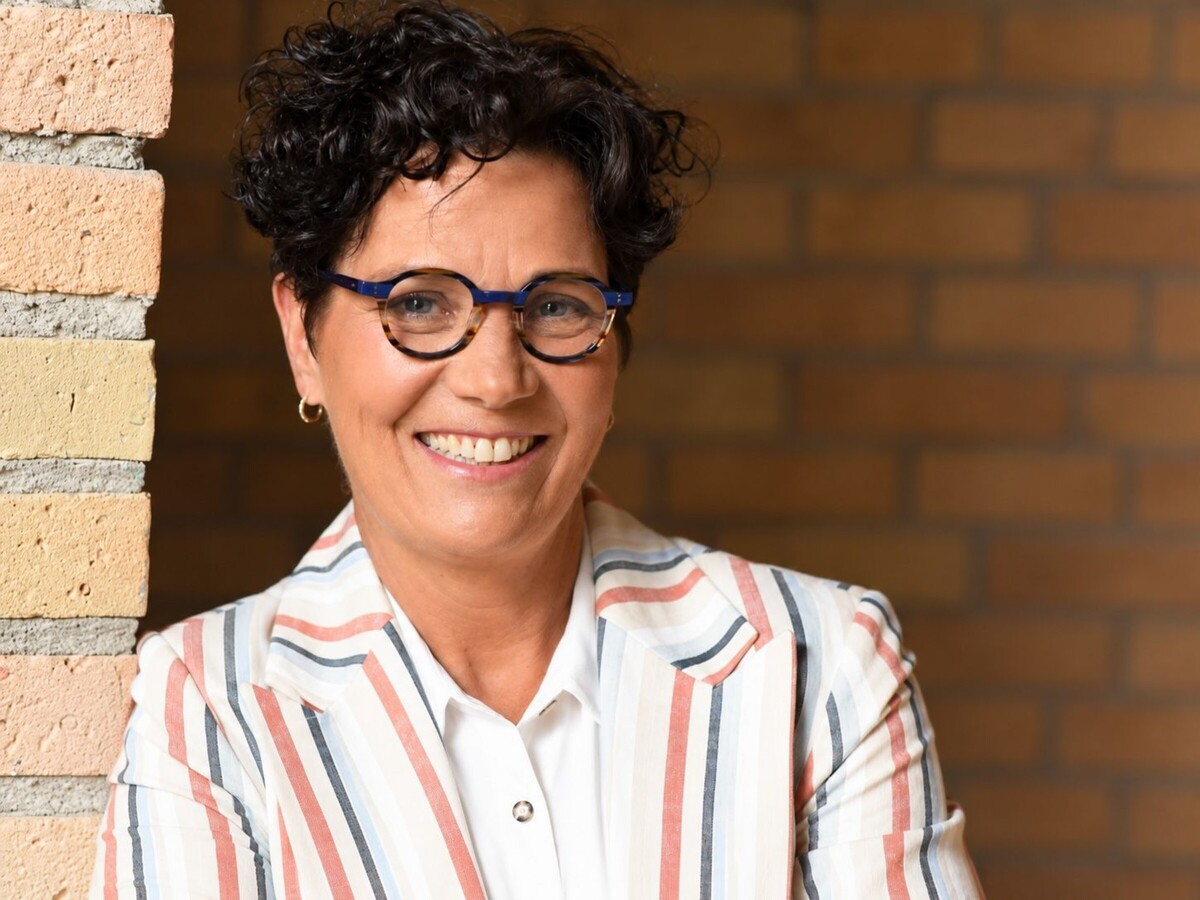
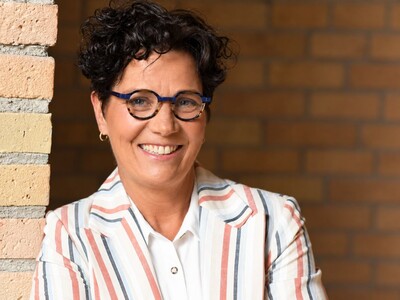
Lillian McDonald arrived home from fieldwork with just enough time to join the Builders of Minnesota interview from a room serving as both her kitchen and home office. She spoke lightly about the approaching cold, wondered aloud whether Spain might offer a more agreeable winter and then turned to the work that has occupied more than two decades of her life.
Her first instinct was to lower expectations.
“I don’t think I’m anything special,” McDonald said. “I just appreciate the time and the interest, actually, in the work.”
The distinction mattered to her from the beginning. McDonald is the founder of Emergency, Community, Health and Outreach, better known as ECHO, and now serves as senior managing director of Minnesota PBS Ready. Yet every time the conversation moved toward individual recognition, she redirected attention to the linguists, interpreters, captioners, public officials, health professionals and community leaders who helped build the system with her.
That system grew from a straightforward problem with grave consequences. Government agencies could issue accurate health and safety information, but the information could still fail if residents did not understand the language, trust the messenger or receive it through a platform they used. Translation could make words available. It could not, by itself, make communication effective.
McDonald set out to close that gap in 2004 with a small grant, a background in media and no assurance that her proposed model would work. What followed became an enduring part of Minnesota’s public-service infrastructure, first through ECHO and later through public media. The work has supported communication before, during and after emergencies, including the COVID-19 pandemic and the unrest following the murder of George Floyd.
Its growth is a story of institutional innovation, but McDonald describes it more fundamentally as a story of relationships. The strongest network, in her telling, was not built merely from cameras, broadcast towers or translation contracts. It was built by people who answered one another’s calls, challenged one another’s assumptions and stayed connected long before the next emergency arrived.
The origins of ECHO reach to the institutional reckoning that followed the terrorist attacks of September 11, 2001. Police, fire departments, public-health agencies and emergency managers confronted serious questions about how they coordinated across professional boundaries. The attacks also exposed an outward-facing failure: in a city defined by linguistic and cultural diversity, many residents struggled to obtain timely information they could understand.
Federal preparedness funding followed. Minnesota received a portion of that money, and McDonald applied for what she remembers as a modest seed grant.
“I had an idea,” she said. “I didn’t know if it would work.”
She began testing the concept with people from cultural communities whose experiences differed sharply from her own. For the first time in her career, she said, she was working closely with people of color from a range of backgrounds. She asked whether a communication model built with communities, rather than simply delivered to them, could succeed.
The answer was encouraging and demanding: If she could make it happen, they would help.
Those early collaborators contributed nights and weekends. They were not assembled to approve a finished concept. They shaped the concept. They explained how information moved through their communities, which institutions carried credibility, what language choices would create confusion and why a technically correct message could still miss its audience.
“The whole thing changed me,” McDonald said. “I was operating from all of my media experience and very minimal cultural experience.”
ECHO was established to help people with limited English proficiency obtain health, safety and emergency information in forms they could understand and use. It also recognized the distinct communication needs of people who use American Sign Language. McDonald stressed that ASL has its own linguistic structure and that access for Deaf and hard-of-hearing communities must be treated as part of the system, not as an optional addition.
The early network used television, the internet, telephone messages and community distribution partners. McDonald recalled beginning across eight languages and several platforms. Contemporaneous ECHO materials show how the formats differed: an early television series was produced in Hmong, Khmer, Lao, Somali, Spanish and Vietnamese, while a statewide telephone line carried recorded messages in ten languages, including Arabic, English, Oromo and Russian.
The distinction illustrates the larger method. ECHO was not a television program with translations attached. It was a communication network designed to use different tools for different audiences and circumstances.
Its early programs addressed influenza prevention, severe weather, bird flu, winter survival and family emergency planning. The subject matter could be ordinary or urgent, but the objective remained the same: help residents become familiar with useful information and trusted messengers before a crisis required immediate action.
McDonald said many institutions begin multilingual outreach by writing material in English, translating it and placing it on another platform. ECHO initially had to confront the limits of that approach as well.
“True communication is actually engagement,” she said. “It means understanding what the message is, how it applies to my community, what the community’s reaction is going to be and how can the community help us help themselves.”
That required work beyond the studio. McDonald went to coffee shops, businesses and community gathering places. She met people in their own environments and learned that health and emergency messages were inseparable from the economic pressures, political experiences, family responsibilities and cultural expectations shaping their decisions.
The process also required accepting disagreement. Two linguists could differ over a word. Dialects and usage could vary within the same language community. The most literal translation was not automatically the clearest or most trusted one. The governing question became which wording would accurately reach and inform the greatest number of people in the intended community.
McDonald learned that she could not make cultural compromises alone and expect communities to accept them. The people affected by those choices had to participate in making them.
“It’s more than words on paper,” she said. “It’s not just a translation. It’s never literal. It’s always about context. It’s always up for debate, and it changes, so you have to stay on top of it.”
In its early years, ECHO worked with about 70 linguists, according to McDonald. The roster changed as people moved into new jobs and new stages of their lives, but a core group stayed connected. Some have worked beside her for roughly 20 years. They became the contacts she could call when an emergency was unfolding and time had become the most limited resource.
“Most often they pick up because they know something’s up,” she said. “They want to be a part of it. They want to help.”
The work demanded two different forms of trust. Community members needed evidence that ECHO would listen, respect cultural knowledge and deliver information without using people merely as conduits. Public agencies, responsible for taxpayer dollars and public safety, needed evidence that an experimental model could produce measurable value.
McDonald credits government partners with taking the initial risk. Health departments, emergency managers and public-safety agencies saw Minnesota’s demographics changing and understood that conventional communication systems were not reaching everyone. They contributed funding when it was available, subject-matter expertise, community connections and ideas.
ECHO, in turn, helped convert official information into communication that communities could receive through people and outlets they already knew.
McDonald does not portray that arrangement as a charitable service performed for passive communities. Residents had everything to gain from participating, including useful experience, stronger professional networks and better information for their families. Many contributed because they wanted to serve their own communities. Public agencies participated because the information belonged to the public and needed to reach it.
The system developed gradually, McDonald said, “one emergency at a time, one culture at a time, one topic at a time.”
Its central purpose was equally direct: help more people remain healthy, safe and ready for emergencies.
ECHO began within government before becoming an independent nonprofit. As its work expanded, so did the number of platforms on which people expected to receive information. Social media accelerated the change.
The organization’s original half-hour programs allowed time for sustained community discussion. They were well suited to subjects that could not be responsibly compressed, including tuberculosis treatment, heat illness and the health consequences of an emergency. As audiences moved toward phones and short videos, ECHO added programs running three to five minutes and, later, one to two minutes.
McDonald resisted the idea that every subject could be reduced to a 15-second message. A short alert could tell someone to act, but it could not always explain why the action mattered or what should happen next. The challenge was to create quicker formats without abandoning the depth needed for public understanding.
The financial model was just as difficult. Commercial media depended upon advertising revenue, and multilingual health and emergency education was not designed to turn a profit. Community media studios gave ECHO affordable places to test ideas and produce programs, but their signals were limited. A statewide emergency required to reach beyond a single municipality or metropolitan area.
Public television had served as an ECHO production and broadcast partner from the early years. McDonald said the relationship was productive, but the station initially declined a larger institutional role because it already had substantial demands of its own. For roughly a decade, ECHO continued producing material that aired through public media while remaining organizationally separate.
By 2014, McDonald believed that arrangement could not carry the work indefinitely. Digital distribution was expanding. Audiences were fragmenting across platforms. Producing more formats with limited staff placed growing pressure on the independent nonprofit.
She went to ECHO’s board with a conclusion: the business model needed to change.
The board asked her to explore potential institutional homes. A health system showed interest. An employment organization did as well. McDonald returned to public media because the work still depended heavily on pictures and sound, and because television possessed an infrastructure capable of reaching large audiences quickly.
The planning took about 15 months and required approval from both boards, McDonald said. The transition took effect May 15, 2015.
Integration did not eliminate the practical constraints. It created another set of decisions about staffing, production and how to preserve ECHO’s community relationships inside a larger institution. Then the station’s chief executive proposed something far beyond the limited block of programs ECHO had previously received: a dedicated channel.
“What if I gave you an entire dedicated channel?” McDonald recalled him asking.
Her answer was immediate. It would help communities and government agencies considerably, but it would require yet another business model.
The team relied on automation to sustain regular programming with limited personnel. Educational programs could be produced in advance, loaded into the system and scheduled for broadcast. The lineup changed with Minnesota’s seasons, rotating information for spring, summer, fall and winter. During an emergency, staff and contract linguists could be called into active service.
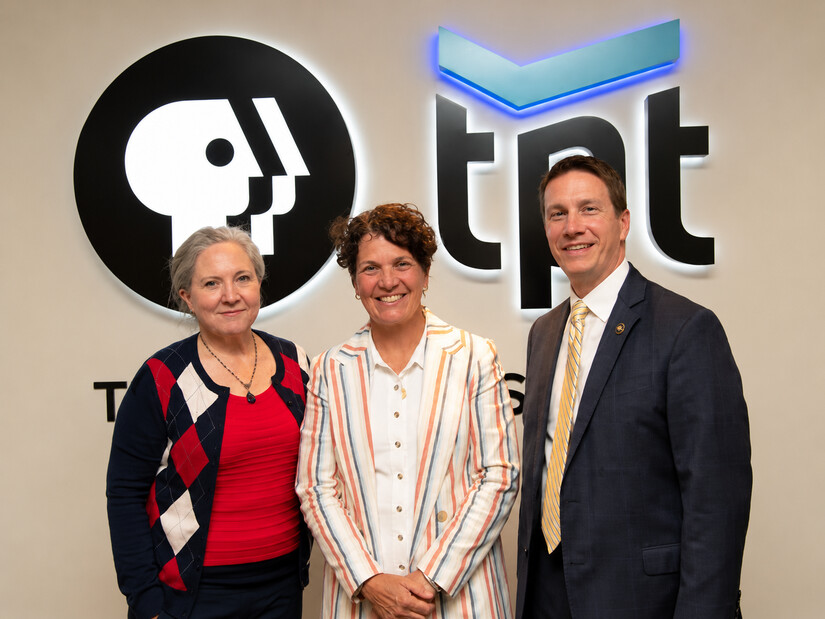
The public-media service became known as TPT NOW. On September 1, 2026, as Twin Cities PBS adopted the name Minnesota PBS, TPT NOW became Minnesota PBS Ready. Its tagline, “Helping Communities Prepare,” states the mission McDonald has pursued since ECHO’s beginning.
The name changed. The underlying work did not.
Minnesota PBS Ready continues producing educational material, maintaining relationships with government and cultural communities, supporting emergency communication and helping residents recover afterward. The service reaches much of Minnesota through its regular distribution and can be extended statewide when circumstances require it, McDonald said.
For years, ECHO had to demonstrate the value of preparedness during periods when no major emergency held public attention. Funding rose and fell. Grant priorities changed. Staff members and contractors moved on. A quiet year could make the communication network appear less urgent, even though quiet periods were when relationships needed to be maintained and educational work needed to continue.
“What I hate about that is we wait until there’s an emergency to recognize the value,” McDonald said.
The arrival of COVID-19 in 2020 showed what had been built during the preceding 16 years. McDonald did not have to begin by searching from scratch for people who could reach Minnesota’s cultural communities. Community leaders began calling her.
“How can I help you get my community information about COVID?” she remembers them asking.
For McDonald, those calls were evidence of an asset that could not be generated quickly through a grant award or translated flyer. The relationships were alive. People understood the work, knew how to reach her and wanted to participate.
Minnesota PBS Ready contributed to the wider public response by working through culturally specific media partners. English-language material could run through the public-media channel while Spanish, Somali, Hmong and other versions could be carried by outlets whose audiences already regarded them as familiar sources.
McDonald had once hoped residents would simply come to public television for the information. Experience showed that the more effective approach was to send official information through the channels communities already used.
During COVID-19, the service participated in multilingual press conferences and simulcasts through a hub of cultural media partners. Residents could hear directly from the government while receiving that information through trusted messengers who remained available in their communities after the broadcast ended. Those messengers could answer questions, reinforce the guidance and help people understand where the information originated.
The service also contributed to communication during the unrest following George Floyd’s murder and during other events with statewide public-safety implications. McDonald is precise about its place within that system.
“We’re not first responders,” she said. “We’re communicators, and we try to help first responders.”
That distinction helps determine which requests the service accepts. McDonald said the team has been asked to produce voting information, but she has kept its focus on health, safety and emergencies because other organizations can address elections and because limited resources require discipline.
Funding remains one of the work’s persistent constraints. Resources move with government priorities, grant cycles, competition and changing community needs. During periods of intense hardship, money may properly shift toward food, housing, school access and transportation. Public-information programs must then find a way to maintain readiness within what remains.
McDonald describes the process as making hay when the sun shines. When an opportunity becomes available, the team uses it. When resources decline, it plans, budgets and waits for the next opening without abandoning the mission.
The difficulty is structural. Emergency communication becomes most visible when failure carries immediate consequences. Yet the network is most effective when it has been funded, tested and trusted before the danger appears.
“These kinds of crises will bring us together,” McDonald said. “But we can’t wait for the crisis. That’s why my work continues.”
When asked about the hardest barrier she had encountered, McDonald did not begin with money, technology or bureaucracy. She began with self-awareness.
She entered the work with experience, good intentions and a substantial professional network. She later realized that none of those qualities gave her the lived knowledge of the communities she sought to serve.
“I didn’t realize just how much I didn’t know about what I was about to do,” she said.
She needed relationships strong enough to withstand correction. Community leaders had to be able to tell her when an idea would fail and why her experience as a white woman could not reveal what they understood from their own lives. McDonald said some people might describe those gaps as unconscious bias. She describes them as lessons about her own culture that she had not previously recognized.
One lesson came during a public-health matter involving the Somali community. McDonald arrived with members of her team for a meeting that was restricted to Somali men. Her colleagues asked her to wait outside.
She was the fundraiser, producer and business leader. She was accustomed to entering the room and carrying responsibility for the result. In that setting, responsible leadership required something else. She had to trust her colleagues to participate, bring back the information ECHO needed and identify a role that the community considered appropriate.
“That took a little of what I would call grace,” she said.
The moment captured an operating principle that had taken years to develop. Leadership did not always mean occupying the center of the conversation. Sometimes it meant recognizing whose presence, knowledge and relationships could move the work forward, then giving that person room to lead.
McDonald also remembers ECHO gatherings where people from Mexican, Asian and African communities sat together to produce programming about a shared issue. They compared cultural responses, questioned one another and sometimes teased one another about their differences. Humor was possible because the room had become safe enough for candor.
Those exchanges improved the information being produced, but their effect on McDonald was personal as well. Community members told her about war, displacement, trauma and the sacrifices they had made so their children could begin again. Their experiences changed the way she understood migration and survival.
Her own family history gave her another point of connection. McDonald described herself as the first American-born member of her immediate family. Her father was British. Her mother came from Slovakia and spoke no English. McDonald is careful not to equate her family’s experience with the circumstances of refugees who have survived war or persecution, but she remembers witnessing the cultural and linguistic adjustments her parents faced.
That history reinforces the conviction beneath her work.
“No one should be left out of information that will help them be the best they can be,” she said.
Minnesota PBS Ready now faces a communications environment very different from the one in which ECHO began. Mobile devices allow public agencies to move information quickly, but McDonald warns against treating any single technology as dependable under every condition.
Cellular and internet service can fail when storms damage power and communications infrastructure. Broadcast television and radio retain value because their transmission systems can continue operating under circumstances that leave individual devices or household connections unreliable.
McDonald wants audiences to know where Minnesota PBS Ready can be found before an emergency removes familiar options. She is also interested in updating multilingual warning and alert systems as new technologies become available. She said the service pioneered National Weather Service and emergency-alert programming in multiple languages, work she hopes can be modernized for the next generation of platforms.
At the same time, technology has created a less visible risk. Personalized media can separate people into narrow information environments and reduce the everyday contact through which neighbors build trust. In a disaster, resilience often depends upon relationships close to home.
McDonald’s concern extends to artificial intelligence. She sees uses for AI as a starting point and a tool for considering problems differently. She does not believe it should replace human judgment or the relationships required in health and safety work.
She offered the familiar experience of calling an organization and encountering an automated system whose limited menu does not include the caller’s actual problem. In an ordinary transaction, that can be frustrating. During illness, evacuation or another crisis, the inability to reach a person can intensify fear and leave a complex need unresolved.
Health and safety emergencies affect more than logistics, McDonald said. They affect families psychologically and socially. Recovery requires human support from multiple sources. Technology may assist that work, but it cannot carry the entire burden.
The service is also considering how to extend its relationships and reach, particularly in rural Minnesota, which McDonald believes has not received enough attention. Demographic change continues across the state, and communication systems must be capable of working with established and emerging language communities.
When Afghan refugees arrived in Minnesota, for example, the network was able to locate Dari and Pashto speakers through agencies and existing relationships. The process was practical and personal: McDonald asked members of the network whether they knew someone who could help. Someone did.
“At the end of the day, it’s a very small world,” she said.
When asked what she was proudest to have built, McDonald paused. The question brought her close to tears, but her answer did not settle on a channel, an institutional merger or a program count.
She spoke about the cultures that had taught her more about life. She spoke about colleagues who had shown her realities she had never experienced and about people who had overcome trauma to build new lives for the next generation.
At the close of every Builders of Minnesota interview, MinneapoliMedia asks the guest to introduce another person whose work is making the state stronger. McDonald could not immediately choose only one. Her thoughts went first to the linguists.
“They have a story to tell,” she said.
She began considering current and former collaborators, including people who had taken their skills to Voice of America and others still working in Minnesota. She also thought of local government partners who had supported the work from its earliest days. She promised to select three people and make the introductions herself, explaining to each person why she believed the Builders of Minnesota series should meet them.
That response was consistent with everything she had said during the interview. McDonald founded ECHO. She guided its development, defended its mission, led its transition into public media and continues directing its evolution. She also refuses to describe the result as hers alone.
When MinneapoliMedia suggested that Minnesota should honor her contribution, she immediately widened the frame.
“I don’t stand alone,” McDonald said. “I stand in community with the people who actually lifted up this idea because they believed in it.”
She named the people to whom she believes credit belongs: every linguist, captioner, signer, interpreter, community leader and subject-matter expert who helped carry information onto a platform where someone could use it.
That insistence does not diminish her role. It explains the nature of what she built.
ECHO was never intended to be a one-way pipeline through which an institution delivered instructions to silent audiences. It became a network in which public agencies contributed verified information, media organizations supplied production and distribution, community messengers applied cultural knowledge, and residents helped determine whether communication would work.
Minnesota PBS Ready carries that architecture forward. Its value does not rest only in what appears on a screen during an emergency. It resides in the relationships maintained between emergencies, the phone calls that are answered, the corrections that are welcomed and the trust that allows a message to move when time is short.
In 2004, McDonald could not know which emergencies Minnesota would face or how dramatically the media landscape would change. She knew only that too many residents were being left outside systems designed to protect the public.
She proposed a different system, and communities agreed to help her build it.
Minnesota did not yet know how much it would need that lifeline. Lillian McDonald and the people beside her built it anyway.

Local stories matter. Subscribe free to MinneapoliMedia and receive independent news, community reporting and important updates from Minneapolis, the North Metro and communities across Minnesota.
SUBSCRIBE FREE: https://minneapolimedia.town.news/subscribe
MinneapoliMedia | Community. Culture. Civic Life


Sunny, with a high of 67 and low of 46 degrees. Sunny in the morning, clear during the afternoon and evening,