40° and Light rain
Image



MINNEAPOLIS, MN (October 27, 2026).
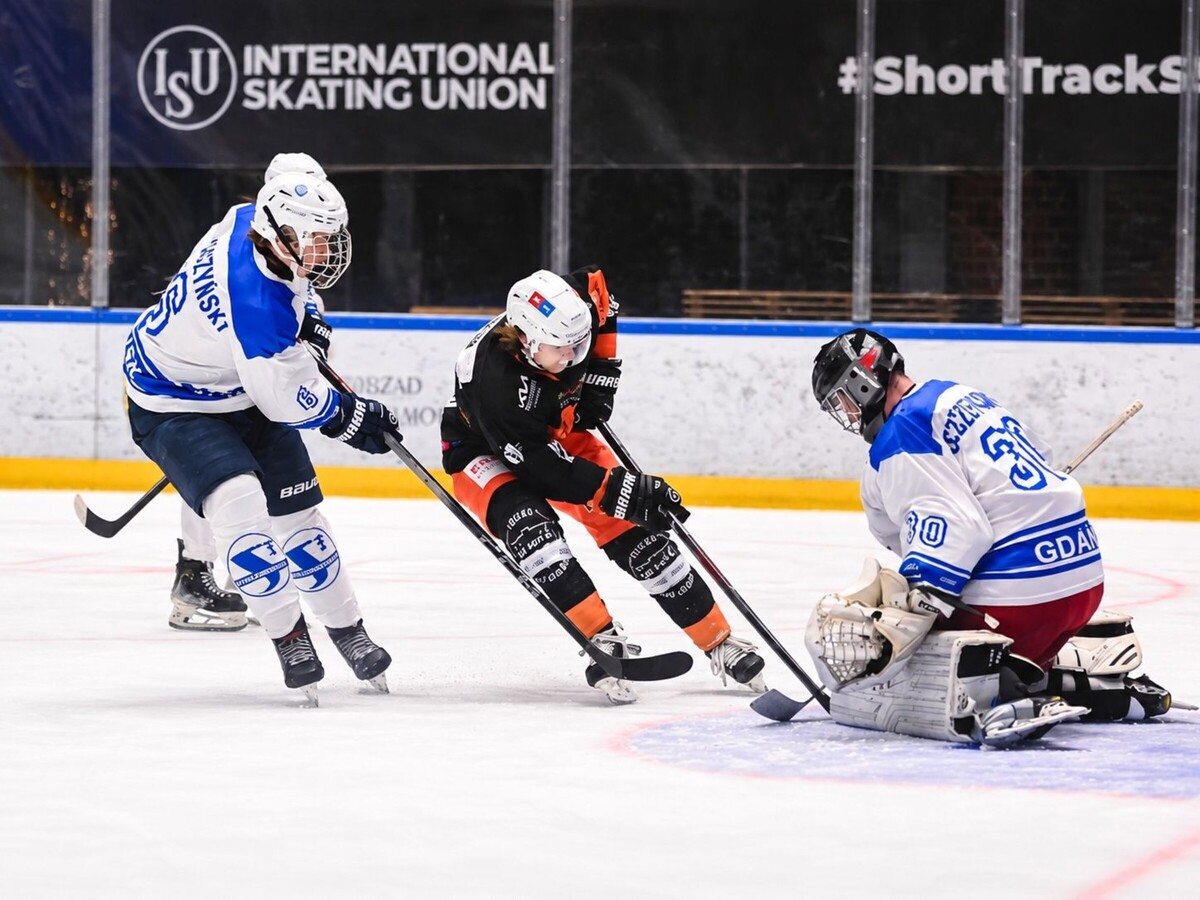
Jackson Fuller was beginning to think Fudeko GAS Gdańsk might lose a game it had worked desperately hard to win.
The score was tied 3–3 in the third period against GKS Stoczniowiec Gdańsk, and Fudeko kept finding itself shorthanded. Fuller, a Minnesota-born forward who plays center and serves on the penalty kill, was repeatedly sent back onto the ice to help defend against another power play.
He remembered five penalties against his team during the period. Each one gave Stoczniowiec another opportunity to take the lead.
The October 17 rivalry game was already proving more difficult than the meetings Fuller remembered from the previous season. Stoczniowiec had strengthened its roster, the stands inside Hala Olivia were packed, and the noise from supporters had followed the players through every shift.
Fuller was worried that Fudeko's penalties would eventually cost it the game. He concentrated on clearing the puck, staying in position and making sure he was not responsible for surrendering the decisive goal.
Fudeko survived the third period and forced overtime.
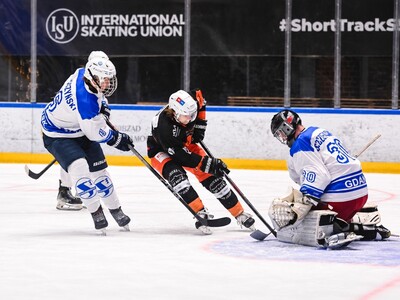
Fuller nearly helped win it. During a three-on-three shift, he directed a shot toward the goaltender's pads, hoping the rebound would reach a teammate in position to finish. The opportunity broke down when the puck bounced away.
He returned to the bench. Another Fudeko combination took the ice, and with six seconds remaining, a player Fuller identified as the brother of one of his roommates scored on a rebound.
Fuller and his teammates poured over the bench toward the scorer. They crowded against the glass, shouting and celebrating while their supporters erupted. Stoczniowiec fans responded with boos and angry shouting.
Fudeko had won 4–3.
Fuller had been looking forward to the matchup for weeks. Before the games, he jokingly told MinneapoliMedia that he wanted to prove himself the best American hockey player in Gdańsk. Stoczniowiec had recruited American players, and he was eager to measure himself against them.
Afterward, he acknowledged that the Americans on both teams had contributed. He believed he had recorded two assists in Sunday's rematch, and he remembered several direct battles for possession against the opposing players. He was not prepared to declare himself the clear winner of their informal competition, although he thought Fudeko's two victories gave him an advantage.
There was another reason the weekend mattered to him.
Among the supporters at Hala Olivia were fans carrying posters they had made for Jackson Fuller.
A year earlier, he had spent seven difficult weeks in Poland wondering whether he could bear the loneliness of living so far from home. Now people were coming to games with his name on their signs.
Fuller remembered the previous season's games against Stoczniowiec as comparatively comfortable victories. This year's opponent was different.
He said Stoczniowiec had recruited aggressively after a disappointing season, adding players who made the team more competitive. Fudeko knew it would face a stronger challenge, but Fuller said the players were uncertain how much the opposition had improved.
The venue added to the anticipation. Earlier away meetings had been played in a smaller practice rink, according to Fuller. This time, the teams competed in the main arena at Hala Olivia.
The stands were full, drums sounded throughout the game, and supporters chanted and cheered. Fuller described it as one of the largest crowds he had played before during his time in Poland.
Both teams appeared nervous early in Saturday's contest. Fuller remembered players gripping their sticks tightly and making mistakes as they tried to settle into the game.
Fudeko scored first when its captain powered past a defender and finished a move across the front of the net. The goal energized the bench, but Stoczniowiec answered quickly after a turnover.
Fudeko regained the lead through Fuller's roommate, Kuba Prokurat, who finished a breakaway opportunity. Stoczniowiec recovered again and eventually moved ahead 3–2.
With the second period nearly over, Prokurat scored his second goal to tie the game at three.
In the locker room, the instructions were to concentrate on defense, win individual battles and avoid unnecessary risks. Fuller recalled the emphasis on making sound plays and trusting that offensive opportunities would follow.
The third period tested that approach. Fudeko repeatedly found itself shorthanded, and Fuller was among the players responsible for killing penalties.
He admitted that he feared Stoczniowiec would eventually capitalize.
The penalty killers held their ground. Near the end of regulation, Fudeko nearly scored on another opportunity, but the chance went unfinished.
Overtime followed, and Fuller was among the players used during the extra period. His attempted rebound pass narrowly failed before another Fudeko combination produced the winner.
The celebration was immediate. Fuller remembered players rushing toward the scorer and opposing supporters shouting as Fudeko celebrated in front of them.
He also came away convinced that future meetings would be difficult. Stoczniowiec had improved, and its players would have plenty of motivation when the teams faced each other again.
Sunday's rematch produced another Fudeko victory, although the result was considerably less comfortable than the score initially suggested.
Fuller recalled his team building a 7–1 advantage before Stoczniowiec scored four unanswered goals. Fudeko held on to win 7–5, completing the weekend sweep.
He believed his teammates had become too comfortable with the lead while their opponents increased their intensity.
The change allowed Stoczniowiec to regain momentum and turn what had appeared to be a settled game into a tense finish.
Fuller did not attempt to excuse his team's lapse. Fudeko had relaxed, and Stoczniowiec had taken advantage.
He later discovered that some supporters had stopped watching before the comeback.
After the game, Fuller visited a local Polish restaurant where he sometimes receives meals through an arrangement associated with the team. People congratulated him on what they believed had been a 7–1 victory.
They had missed the final four Stoczniowiec goals.
Fuller realized that their impression of the game was considerably more flattering than the experience he and his teammates had just endured. He accepted the congratulations without recounting every detail of the collapse.
The weekend also included physical confrontations that demonstrated how heated the rivalry had become.
Fuller recalled an incident near the boards during Sunday's game after an opposing player delivered what he described as a cross-check against a Fudeko defenseman. Fuller intervened, grabbing the player's jersey and becoming involved in the exchange before officials separated them. Penalties were assessed to both teams.
He also described an encounter after the game when an opposing supporter approached the area where Fudeko players were leaving the bench and exchanged angry words with one of his roommates. Security intervened.
Fuller considered the incidents part of the rivalry's intensity, although he also described Saturday's contest as cleaner than some previous meetings.
The two victories strengthened Fudeko's confidence, but the narrow overtime result and Sunday's comeback showed that Stoczniowiec would be a difficult opponent throughout the season.
Fudeko's derby sweep followed an opening weekend that had raised serious questions about the team's preparation.
The club lost its first two games, including a 7–0 defeat that Fuller remembered as particularly discouraging.
He had received substantial ice time, but Fudeko struggled to generate sustained offense. Whenever the players appeared to develop momentum, a turnover or defensive breakdown seemed to give the opposition another opportunity.
Fuller remembered returning to the bench exhausted, only to be called upon again.
Afterward, former teammates and friends who had followed the game contacted him, asking what had happened.
Some were people he had grown close to during his first season overseas and who were now living elsewhere in Europe. They continued following his progress even after their own hockey careers had taken them in different directions.
Fuller struggled to explain the result.
The following game ended in a 5–4 loss. Although he was disappointed by another defeat, he considered the performance a substantial improvement. Fudeko had competed more effectively and shown signs that it could challenge its opponent.
As the season progressed, Fuller came to believe that the early results reflected problems in preparation rather than a lack of ability.
According to Fuller, Fudeko had completed only about five on-ice practices as a full group before its first games. A Swedish coach who had been expected to lead the team departed shortly before the season began, leaving the organization to establish another coaching arrangement.
The roster was also unsettled. Some imports, including Fuller, had arrived after locally based players began summer preparations. Other additions joined the team after the opening weekend.
Practice facilities created another problem.
Fuller explained that one rink available early in the season was approximately three hours away, making regular training difficult. A closer facility, about 30 minutes away, subsequently became available.
The team began practicing more consistently, with approximately four on-ice sessions each week alongside gym work.
The additional preparation gave players time to understand one another's movements, learn the system and develop confidence in their assignments.
Fuller believed the difference was considerable.
During the opening losses, players had often been reacting individually, without the shared understanding needed to execute effectively. By the time Fudeko faced Stoczniowiec, they were better able to coordinate breakouts, organize defensive coverage and create opportunities through deliberate teamwork.
He admitted that the opening defeats had made him wonder whether he had returned to a team capable of competing for a championship.
The victories that followed helped restore his confidence.
After sweeping Stoczniowiec, Fudeko traveled south to face SMS PZHL Katowice and returned with two more wins. Fuller reported an overtime victory in the first contest and a 6–4 result in the second.
The four-game winning streak improved Fudeko's record to 4–2.
Fuller was encouraged, although he remained aware that the team had played only a small portion of its schedule. The improvement would have to continue against opponents throughout the season.
One of the people helping Fuller adjust to his second season is Kuba Prokurat, the teammate whose two goals helped keep Fudeko alive during the first Stoczniowiec game.
Prokurat joined the organization late in the previous season after spending much of the year playing at Poland's highest hockey level. He appeared in several regular-season games and the playoffs, developing an effective partnership with Fuller.
The two are now roommates.
Fuller sees similarities in their playing styles. Both rely on speed, determination and persistent effort rather than physical size. Their familiarity has helped them anticipate one another's movements and work together more effectively.
Prokurat has also become a source of practical advice.
Because he speaks English, Fuller can ask detailed questions about Polish hockey systems that might otherwise be difficult to communicate. They discuss breakouts, power-play positioning, shooting opportunities and the tendencies of opposing goaltenders.
Fuller considers Prokurat someone he can learn from as he continues adjusting to the league.
Those conversations matter because Fuller's responsibilities have expanded.
He is receiving substantial ice time at center, his preferred position, and is being used on the power play, penalty kill and during three-on-three overtime.
The opportunities have given him greater involvement in the team's performance, but they have also brought new challenges.
Fuller had expected that returning for a second season would make the competition feel more familiar. He had spent months learning the system during his first year and believed he had developed a better understanding of what was required.
Instead, he found himself being challenged again.
The level of competition appeared stronger, and his expanded responsibilities demanded further adjustment.
He welcomed the challenge. Fuller did not want another season merely to repeat what he had already experienced. He wanted to improve, contribute more consistently and become the kind of player his teammates could depend upon in difficult situations.
His relationship with Prokurat has helped him pursue those goals while strengthening the friendships that have become central to his life in Poland.
During the October 25 interview, Fuller described a moment in the locker room that surprised him.
A teammate said something in Polish. Fuller answered in Polish without consciously preparing his response.
The teammate reacted with surprise, realizing that Fuller had understood the original remark. Fuller was surprised himself.
He had responded naturally enough that he did not immediately recognize what he had done.
It was a small exchange, but one that would have been difficult to imagine during his first weeks in Poland.
When Fuller initially arrived in Gdańsk, he struggled with the isolation of living in another country. He had left behind family, friends and the familiarity of Minnesota, expecting that the excitement of playing hockey overseas would help him adjust.
The reality was more complicated.
He found himself alone in his apartment, confronting long evenings without the companionship he had taken for granted at home. He missed the people closest to him and wondered whether the opportunity was worth the emotional cost.
During those early weeks, he considered leaving.
The experience eventually changed as he developed friendships with teammates and other people he met in Poland. Those relationships gave him reasons to remain, and he returned for a second season knowing that he would not be starting from the same place.
Fuller said he now has people he can contact when he feels lonely or homesick. He knows where to go and whom to talk to when something goes wrong.
The difficult days have not disappeared.
He still experiences frustration after poor performances and occasionally misses home. He still encounters situations that remind him he is living in another culture.
But he has developed ways to manage those experiences without becoming overwhelmed by them.
Fuller expressed surprise at how much resilience he has discovered in himself. Before traveling overseas, he had imagined the excitement of living abroad and pursuing hockey in another country. He had not fully anticipated the demands of adapting to a different environment for an entire season.
He now understands that the experience requires more than enthusiasm.
There are ordinary responsibilities, unfamiliar customs, difficult days and moments when the easiest response would be to withdraw.
Fuller has learned to rely on the people around him and continue working through those challenges.
The exchange in Polish offered a quiet indication of how far that adjustment had progressed.
A language that once made everyday life more difficult had become familiar enough for him to answer a teammate without thinking.
Fuller's decision to return to Poland was influenced by a goal he has pursued since childhood.
He wants to win a championship.
Despite years of competitive hockey, it remains an achievement he has never experienced.
Fuller remembers playing at Bloomington Kennedy, competing in junior hockey and continuing his career at the University of Minnesota Crookston, where he eventually became a captain.
Each stage brought opportunities and accomplishments, but none ended with the championship celebration he had imagined growing up.
He recalled the outdoor rinks of Minnesota, the hours spent shooting pucks in the driveway and the games played with friends.
He remembered early practices, sore muscles and the desire to improve enough to impress coaches and make his parents proud.
There were also smaller childhood rewards. Sometimes his parents offered to buy him a video game if he scored a goal.
Fuller laughed while recalling those experiences, but they remained meaningful to him. They were part of the reason he continued playing and part of the ambition that eventually carried him overseas.
At Bloomington Kennedy, he remembered a season that represented progress for the program, although the team was not a championship contender.
His junior hockey years brought other opportunities, but the COVID-19 pandemic disrupted some of the possibilities he had hoped to pursue.
College offered further development and leadership responsibilities, but the championship remained beyond reach.
Now, in Poland, Fuller sees another opportunity.
He wants to score goals, record assists and produce statistics that demonstrate his contributions. He takes pride in his individual performance and hopes his career record will reflect the work he has invested.
But he considers winning with his teammates the larger achievement.
For Fuller, a championship would connect the experiences of his childhood with the years of preparation that followed. He has imagined the moment of celebrating with teammates for so long that the possibility remains a powerful motivation.
He is also aware that the opportunity may not last indefinitely.
Medical school remains part of his future, and Fuller has already postponed that path to return for another season. Once he commits fully to medicine, he believes an extended overseas hockey career may no longer be practical.
He has not settled every detail of that transition, but he recognizes the importance of the opportunity before him.
He wants to finish this chapter knowing he gave himself a genuine chance to accomplish something he has pursued for most of his life.
Fuller estimated that Fudeko had approximately 22 regular-season games remaining at the time of the interview, followed by a playoff format he expects to be more demanding than the previous year.
He anticipates a competitive season in which comfortable victories will be less common.
Stoczniowiec's improved roster has already demonstrated how quickly the balance between teams can change. Fuller expects more games decided by narrow margins, more overtime contests and more situations in which teams pull their goaltenders late in regulation to pursue an equalizer.
One opponent he is particularly interested in facing is a university-affiliated team in Opole.
Fuller described the club as having a roster composed largely of North American players, many of whom are studying while competing in European hockey.
He remembers the team as physical, aggressive and willing to engage in frequent verbal exchanges during games.
He also recalled suffering an injury during a meeting with the club last season.
Fuller expects the next encounters to be difficult, but he is eager to see how Fudeko responds.
He does not identify any upcoming opponent as an easy victory. Based on what he has seen, he believes the league is becoming more competitive and that his team will need to maintain its preparation throughout the season.
The championship remains his principal hockey objective, although he is also thinking about what he wants to carry away from Poland when his playing days eventually end.
He hopes to maintain friendships with people he has met overseas. He would like to return to Poland in the future and welcome friends from there to visit him in America.
He wants experiences he can remember and stories he can share years from now.
Those hopes have become important because he knows this period of his life may be difficult to reproduce once he begins medical school.
He wants to enjoy it while he can.
Fuller has also begun exploring more of the sporting culture around him. After the hockey derby, he attended a professional soccer rivalry match in northern Poland and was astonished by the atmosphere.
He described large banners, flares, smoke, intense chanting and repeated interruptions to play. He recalled approximately 20 minutes of added time because of the stoppages.
The spectacle was unlike anything he had experienced at an American soccer match, and he was eager to share photographs of the occasion.
The outing was another experience that would have seemed distant from the life he knew in Minnesota.
Now it was something he could describe with the excitement of someone who had been there.
Near the end of the interview, Fuller was asked what young hockey players in Minnesota might learn from his experience.
He returned to the ordinary moments that had shaped his own relationship with the sport.
He spoke about outdoor hockey, driveway shooting sessions, street games with friends and the early mornings spent preparing for practice.
He remembered how much he wanted to improve and how often he imagined what it would feel like to win something significant with teammates.
His advice was to appreciate those experiences while they were happening.
The hours of practice, the difficult games and the friendships formed along the way were not simply obligations to complete before reaching a larger goal. They were part of the experience that gave the goal its meaning.
Fuller knows that because he is still pursuing the championship he imagined as a child.
His career has taken him far from Minnesota, but he continues to draw motivation from the same experiences that first made him love hockey.
He has not achieved everything he wants. Fudeko has only recently recovered from a difficult beginning, and the season remains long. He still has to compete for his place, adjust to the demands of the league and prepare for opponents determined to defeat his team.
He also continues learning how to live abroad.
During the interview, Fuller spoke about the people who have helped him, the friendships he wants to preserve and the satisfaction he feels when he recognizes how much more comfortable he has become in Poland.
He has not forgotten the loneliness of his first weeks in Gdańsk. It remains part of his understanding of what the experience has required.
But his circumstances have changed considerably.
He now shares an apartment with teammates, has people he can rely upon and plays in front of supporters who recognize him.
When the October 25 conversation ended, Fuller offered an invitation to visit Gdańsk. He said he could provide a place to stay and tickets to watch Fudeko play.
The offer came naturally, followed by another request that photographs from the recent games be shared with readers back in Minnesota.
He wanted people at home to see what was happening around him.
The championship he returned to pursue is still months away, and there is no certainty that Fudeko will win it. Fuller knows how much work remains.
For now, he has a team that has begun winning again, friends who have become part of his everyday life and a growing familiarity with the city where he once struggled to feel at home.
He had been surprised earlier that day when a teammate spoke to him in Polish and he answered without hesitation.
It was an ordinary conversation in a hockey locker room. Neither player had planned anything remarkable.
For Jackson Fuller, it was another small part of a life in Poland that no longer felt quite so foreign.

Local stories matter. Subscribe free to MinneapoliMedia and receive independent news, community reporting and important updates from Minneapolis, the North Metro and communities across Minnesota.
SUBSCRIBE FREE: https://minneapolimedia.town.news/subscribe
MinneapoliMedia | Community. Culture. Civic Life

Overcast, with a high of 56 and low of 41 degrees. Light drizzle in the morning, overcast during the afternoon, patchy rain nearby overnight.