49° and Mist
Image
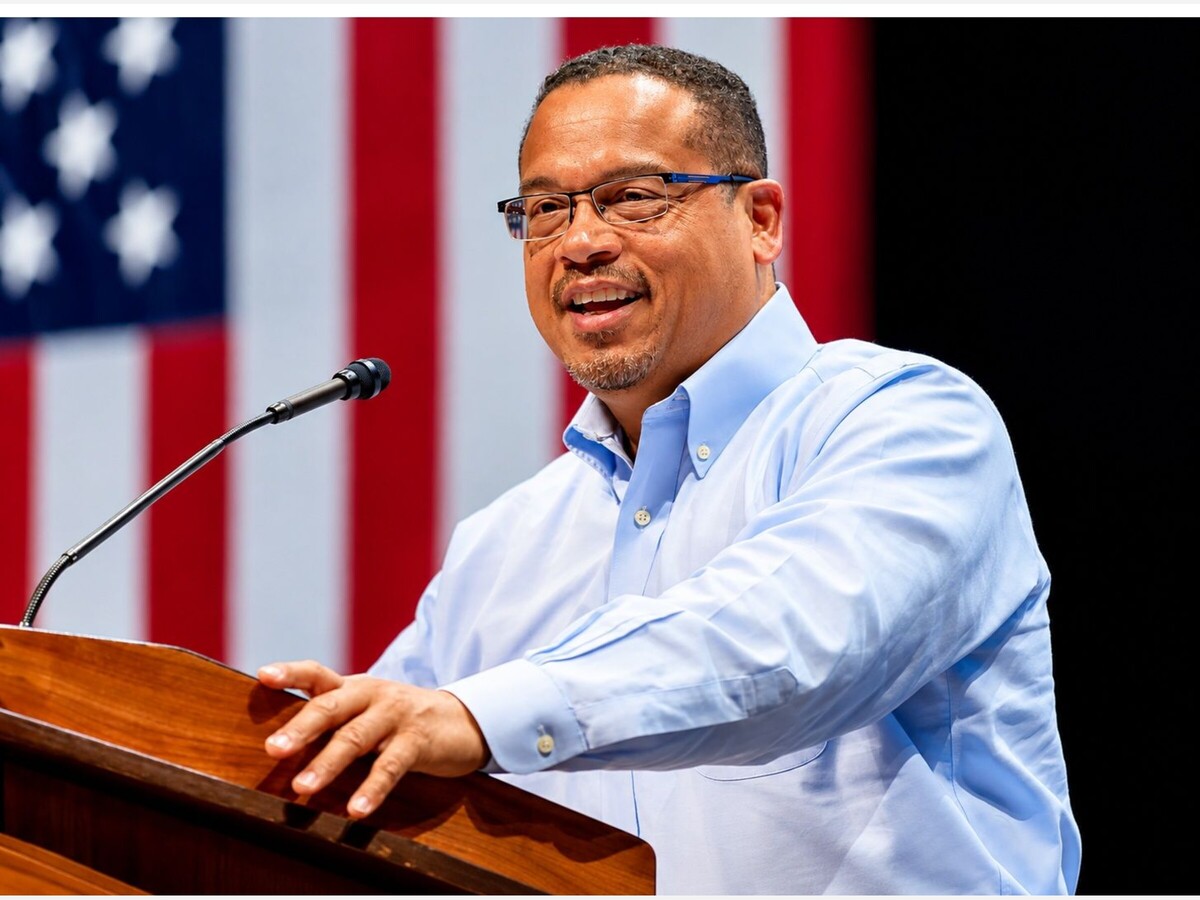



ST. PAUL, MN (October 28, 2026). When Keith Ellison became Minnesota's 30th attorney general on January 7, 2019, he assumed responsibility for an office whose work touches nearly every part of state government. Its attorneys defend state agencies, represent Minnesota in court, enforce consumer protection laws, oversee charitable organizations and, under specific statutory authority, prosecute criminal offenses.
Most Minnesotans may never encounter the attorney general in a courtroom. They are more likely to experience the consequences of the office's work through a disputed paycheck, an unsafe rental property, a deceptive financial agreement, a fraudulent healthcare provider or a lawsuit affecting the public services on which their families depend.
Ellison's tenure has brought renewed attention to those connections. His approach treats economic exploitation, corporate misconduct and certain forms of discrimination not simply as private disputes, but as matters with consequences for public safety and community stability.
The philosophy is sometimes described as regulatory justice, the use of civil and regulatory authority to address conduct that harms the public, including conduct that may fall outside conventional criminal prosecution.
There is an important distinction between inventing such an approach and expanding its application. Minnesota's attorney general had substantial consumer protection, antitrust and civil enforcement responsibilities long before Ellison entered office. His contribution must therefore be measured not by the suggestion that he created those powers, but by how his administration has used them, what results have followed and where the limits of those powers remain.
That distinction is central to understanding the man and the office he leads.
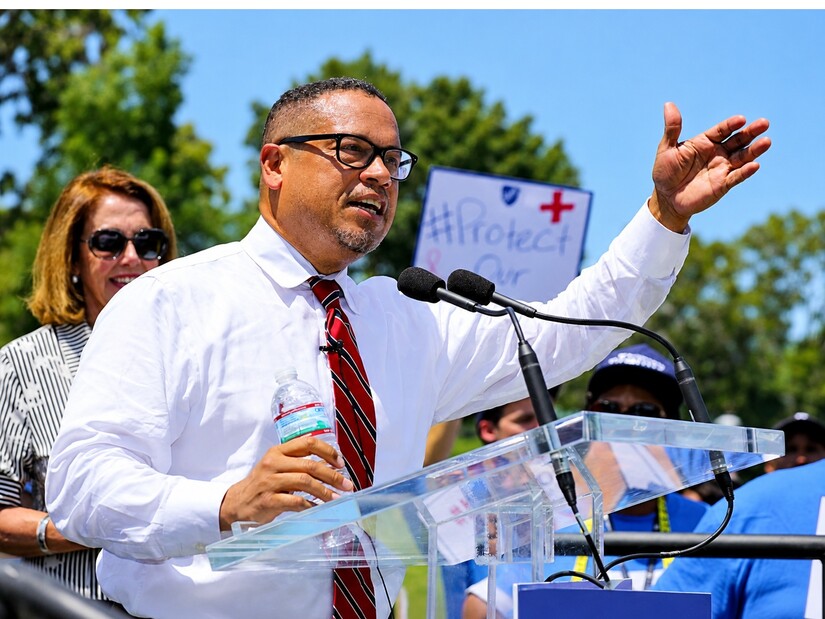
Ellison's understanding of public protection did not begin with his election as attorney general.
He graduated from the University of Minnesota Law School in 1990 and spent approximately 16 years practicing law before his congressional career. His work included civil rights and defense law, along with five years as executive director of the Legal Rights Center, a Minneapolis nonprofit providing legal representation and advocacy.
That experience placed him in direct contact with people whose encounters with the legal system were often shaped by limited resources, unequal bargaining power and difficult personal circumstances.
His public career followed a path through the Minnesota House of Representatives and the United States Congress. Elected to represent Minnesota's Fifth Congressional District in 2006, he served from January 2007 until January 2019.
During his congressional years, Ellison served on the House Financial Services Committee, where questions of banking, housing, consumer credit and financial regulation occupied a significant part of his legislative responsibilities. He also helped establish congressional groups focused on antitrust enforcement and consumer justice.
Those subjects would become recurring concerns in his work as attorney general.
His election to statewide office also carried historical significance. Ellison became the first African American and first Muslim American elected to statewide office in Minnesota.
Such milestones matter in a state where questions of racial disparity, religious inclusion and equal access to opportunity have remained persistent subjects of public debate. But representation alone does not establish the effectiveness of public leadership. The more consequential question is what an officeholder does with the authority entrusted to him.
For Ellison, that authority has increasingly been exercised through the intersection of consumer protection, civil rights and public accountability.
In June 2023, Ellison announced the establishment of the Attorney General's Office's first dedicated Civil Rights Division, supported by funding approved through the state budget.
The division was designed to investigate discrimination and fraudulent conduct affecting consumers in housing, education, healthcare, financial services and other markets.
Its creation reflected an important recognition: discrimination does not always announce itself through an explicit refusal to serve someone. It can appear in rental requirements, lending arrangements, pricing systems, inaccessible services or business practices that place disproportionate burdens on protected communities.
The division's work complements, rather than replaces, the responsibilities of the Minnesota Department of Human Rights.
Ellison's office identified discriminatory pricing, redlining, unfair housing practices and potentially discriminatory algorithms among the areas requiring attention.
Housing offered a particularly immediate example.
Before the division was established, the Attorney General's Office had pursued litigation involving landlords accused of failing to maintain habitable properties, improperly withholding tenant funds or exposing residents to hazardous conditions.
In announcing the new division, the office pointed to a judgment exceeding $1 million involving violations of the rights of 267 families, primarily in North Minneapolis. It also identified litigation involving HavenBrook Homes, Progress Residential and Pretium Partners over housing conditions and lead-paint hazards.
For a tenant living with an unresolved maintenance problem, the legal distinction between a consumer protection violation and a civil rights violation may seem remote. The immediate concern is whether the home is safe, whether the landlord is accountable and whether the law offers a meaningful remedy.
Yet those distinctions matter because different laws provide different remedies, and not every instance of poor housing conditions establishes unlawful discrimination.
The Civil Rights Division represents an attempt to bring additional enforcement capacity to circumstances in which market conduct and unequal treatment overlap.
Its longer-term significance will depend on the cases it brings, the remedies it obtains and whether those remedies produce lasting improvements.
Few legal disputes demonstrate the practical meaning of economic protection more clearly than wage theft.
For workers living from one paycheck to the next, unpaid wages can mean missed rent, overdue utility bills, postponed medical care or an inability to purchase groceries.
The consequences become more severe when workers depend on their employers for housing, transportation or continued employment.
Ellison established a dedicated wage-theft enforcement function early in his administration, bringing additional attention to employers accused of withholding compensation or violating wage laws.
One of the office's most significant cases involved Evergreen Acres Dairy in central Minnesota.
In January 2024, Ellison's office sued the dairy operation and associated defendants, alleging that workers had been deprived of millions of dollars in earned wages. The complaint also described allegedly substandard employer-controlled housing and circumstances in which workers feared retaliation.
The state initially alleged at least $3 million in unpaid wages.
The civil case reached a settlement in 2024. Under its terms, Evergreen agreed to pay $250,000 in back wages, address employee housing conditions and comply with additional requirements concerning employment practices. The settlement also provided for continued monitoring.
The distinction between the original allegations and the settlement amount is important. A $3 million allegation is not the same as a judicial finding that the entire amount was stolen.
A separate criminal case was subsequently brought against the dairy's owner, Keith Schaefer, involving wage-theft and racketeering charges. Those charges must be understood independently of the resolved civil matter.
The case illustrates both the possibilities and the limitations of enforcement. Workers received a financial remedy and additional protections, but the public record also invites questions about how such practices developed, how long they continued and whether existing oversight mechanisms could have intervened sooner.
The same concern extends beyond agriculture.
Ellison's office has pursued litigation involving Madison Equities and alleged overtime violations. In January 2026, the Minnesota Supreme Court reinstated the attorney general's wage-theft claims, allowing the litigation to proceed. That ruling did not itself establish the company's liability.
In another case, the office reached a July 2026 settlement requiring Minnesota Fundraising Initiative, a nonprofit involved in staffing stadium concessions, to wind down and dissolve. The state had alleged that workers were improperly classified as volunteers despite receiving compensation or other benefits.
These cases involve different industries and legal circumstances, but they raise a common question about the relationship between economic power and legal protection.
A worker's entitlement to lawful compensation does not depend on the worker's citizenship, social standing, professional title or bargaining power.
That principle is not unique to Ellison. What distinguishes his administration's record is the collection of enforcement actions through which his office has sought to apply it.
Large corporations exercise influence over aspects of everyday life that previous generations could scarcely have imagined.
Social media platforms shape communication and entertainment. Pharmaceutical companies influence access to essential medicines. Technology companies collect extensive personal information. National businesses can affect prices, competition and consumer choice across entire industries.
For a state attorney general, challenging misconduct by such corporations often requires cooperation with counterparts across the country.
Ellison has participated in multistate actions involving technology companies, pharmaceutical manufacturers, antitrust concerns and consumer protection.
In August 2026, his office announced Minnesota's participation in a proposed national settlement with Meta Platforms, the parent company of Facebook and Instagram.
The agreement, announced in connection with litigation alleging harmful social media design practices affecting children, carried a potential national value of up to $17.1 billion.
The terms described by the Attorney General's Office included a minimum national payment of $12.2 billion, with the larger amount contingent on specified conditions. Minnesota was projected to receive at least $214 million and potentially as much as $307 million. The proposed settlement also included requirements concerning protections for younger users.
At the time of the announcement, the settlement remained subject to federal court approval.
That qualification is essential. A proposed settlement, even one announced by participating attorneys general, should not be described as a completed recovery before the necessary legal approvals have occurred.
The case nevertheless illustrates how state consumer protection authority can be exercised collectively against companies whose operations extend far beyond any single state's borders.
Ellison's office has also sued TikTok, alleging that the platform's design encourages harmful patterns of use among young people and that aspects of its virtual currency operations violate Minnesota law.
In March 2026, a Hennepin County judge denied TikTok's motion to dismiss the state's lawsuit.
The ruling allowed the case to proceed. It did not establish that every allegation against TikTok was true.
These distinctions are particularly important when the defendants are corporations whose products are used by millions of people and whose conduct is the subject of ongoing legal and scientific debate.
The state's responsibility is to investigate, establish its claims through lawful procedures and pursue remedies where the evidence supports them.
The companies retain the right to contest those claims.
That is not a weakness in the enforcement system. It is part of the system's legitimacy.
Perhaps no area of Ellison's record demands more careful examination than fraud involving public resources.
Minnesota has confronted serious questions about the administration of programs intended to provide food, healthcare and other essential assistance. Investigations and prosecutions have exposed vulnerabilities in oversight systems, prompting public concern about whether government agencies acted quickly enough when warning signs emerged.
Ellison's office occupies a significant, but not unlimited, place in that system.
The attorney general does not possess unrestricted authority to prosecute every criminal offense in Minnesota. County attorneys and federal prosecutors retain substantial responsibilities, while the Attorney General's Medicaid Fraud Control Unit has specialized criminal enforcement authority.
Understanding those boundaries is necessary when evaluating both the office's achievements and criticism of its performance.
The Medicaid Fraud Control Unit has produced a substantial record.
According to the Attorney General's Office, since 2019 the unit has secured 358 Medicaid fraud convictions and obtained approximately $90 million in judgments and recoveries.
Those figures describe the work of investigators, attorneys and partner agencies operating within a specialized enforcement structure. They are institutional results under Ellison's leadership, not cases personally tried by the attorney general.
In September 2026, the office announced criminal charges against nine individuals involving alleged Medicaid fraud exceeding $3 million.
Among the defendants was Duluth psychotherapy provider Peter Jason Meilahn, accused of submitting more than 27,000 false claims involving approximately $2.2 million. Other charges involved home-care services and allegations of exploitation of vulnerable adults.
At the time of those announcements, the charges remained allegations requiring adjudication.
A more developed example emerged in the prosecution of Abdifatah Abdulkadir Yusuf.
The Medicaid Fraud Control Unit prosecuted a case involving approximately $7.2 million in fraudulent billings. After a jury returned guilty verdicts in 2025, the district court granted a judgment of acquittal. On October 26, 2026, the Minnesota Court of Appeals reversed that decision, reinstated the jury's verdict and returned the matter for resentencing.
The appellate ruling represented a significant development in a case that also demonstrated the complexity of criminal litigation.
Fraud enforcement is not simply a matter of announcing charges. Evidence must survive examination in court, verdicts can be challenged and legal outcomes may change during appellate review.
The broader question is whether the state can prevent fraudulent payments before substantial public money has already been lost.
The pandemic-era child nutrition scandals placed that question before Minnesota with particular urgency.
Public funds intended to feed children became the subject of investigations into false claims, inadequate oversight and the diversion of money from its intended purpose.
Federal prosecutors have led the major criminal prosecutions associated with Feeding Our Future. Ellison's office has pursued separate civil remedies under the Minnesota False Claims Act.
In September 2026, the office announced an $18.5 million civil settlement involving Partners in Nutrition, a nonprofit sponsor of child nutrition sites.
Under the consent judgment, the organization agreed to surrender approximately $18.52 million remaining in its possession, cooperate with continuing investigations and dissolve.
The money was to be returned through the Minnesota Department of Education to the U.S. Department of Agriculture.
The agreement resolved claims against the organization, but did not release associated individuals or vendors from potential civil liability.
On October 26, Ellison filed two additional civil lawsuits involving Nasib Bakery and East African Healthcare Network, along with named individuals and affiliated entities.
The Nasib Bakery complaint alleged false reimbursement claims involving hundreds of thousands of meals purportedly served at a Minneapolis site. The second lawsuit alleged that a network associated with East African Healthcare Network claimed more than $10 million in reimbursements through arrangements involving multiple meal sites.
These are serious allegations. They are not findings of guilt.
The defendants are entitled to contest the state's claims, and the outcomes will depend on the evidence and subsequent court proceedings.
The cases nevertheless underscore an important public responsibility. Recovering money after suspected fraud is discovered cannot substitute for preventing fraud through competent administration, timely investigations and effective oversight.
Minnesotans have reason to demand both.
The same standard must apply to every institution involved, including agencies responsible for distributing funds, organizations responsible for monitoring programs and enforcement offices charged with pursuing wrongdoing.
The state's response has also included legislative changes.
In 2026, Ellison worked with lawmakers, including Representative Matt Norris and Senator Ann Johnson Stewart, to advance the Medical Assistance Protection Act.
The legislation sought to strengthen Medicaid fraud investigations, expand enforcement resources and improve the state's ability to pursue complex schemes.
The Minnesota Legislature passed the measure, and Governor Tim Walz signed it into law in May 2026.
The law represents an institutional response to weaknesses identified in the enforcement system, but its ultimate effectiveness will depend on implementation, staffing, investigations and measurable outcomes over time.
More investigators and stronger statutory tools may improve the state's capacity to uncover wrongdoing. They do not automatically eliminate fraud.
The distinction matters because the public deserves more than a promise that a new law will solve a longstanding problem.
It deserves evidence that the law is working.
Ellison's approach to public protection also extends into circumstances traditionally associated with criminal justice.
In February 2026, the Attorney General's Office announced a $1 million settlement with Fleet Farm, resolving litigation concerning the sale of firearms to straw purchasers.
The case involved allegations that the retailer had failed to respond appropriately to warning signs surrounding suspicious firearm purchases.
The settlement required changes in employee training, monitoring, reporting and internal procedures designed to identify potentially unlawful transactions.
For Ellison's office, the case demonstrated how civil litigation could address business practices connected to public safety risks.
The significance was not limited to the monetary payment.
The required changes sought to reduce the likelihood that similar conduct would occur again.
That preventive objective is central to the regulatory justice framework.
A related approach appeared in the multistate settlement involving Hyundai and Kia, which addressed vehicles sold without certain anti-theft technology.
The agreement included free hardware remedies for affected vehicles, commitments concerning future vehicle security and monetary relief.
The underlying issue extended beyond individual vehicle owners. Widespread thefts can affect insurance costs, law enforcement resources and neighborhood safety.
The legal theory connects corporate decisions to consequences experienced by the broader public.
It also raises a question that deserves continued scrutiny: how far should civil enforcement extend when corporate practices contribute indirectly to criminal conduct?
The answer must be grounded in statutory authority, evidence and judicial review rather than the preferences of any individual attorney general.
The relationship between state authority and federal power has become another defining area of Ellison's work.
As of October 1, 2026, the Attorney General's Office listed 80 lawsuits on its federal litigation tracker involving challenges to actions of the Trump administration.
The disputes cover subjects including federal funding, healthcare, education, immigration, privacy and the authority of federal agencies.
Some cases have produced preliminary injunctions or other favorable rulings for Minnesota and participating states. Others remain unresolved, and some have resulted in adverse decisions.
The number of lawsuits alone is therefore not a measure of success.
Each case must be examined according to its legal arguments, procedural history, outcome and consequences for Minnesotans.
The disputes also reflect a broader constitutional tension.
Federal law is supreme within its lawful sphere, but states retain constitutional powers and may challenge federal actions they believe exceed statutory or constitutional limits.
An attorney general's responsibility includes defending the state's legal interests even when the dispute involves politically contentious federal policies.
That responsibility does not mean every challenge will succeed or that every disagreement between state and federal officials constitutes unlawful overreach.
It means the courts remain an important forum for resolving disputes over governmental authority.
For Minnesota residents, the practical stakes can involve access to healthcare, continuity of public benefits, educational funding or the handling of sensitive personal information.
These consequences deserve attention beyond the political language surrounding the litigation.
Ellison's tenure has also unfolded during one of the most consequential periods in Minnesota's recent history.
The murder of George Floyd in Minneapolis in May 2020 brought worldwide attention to the state and placed extraordinary demands on its criminal justice institutions.
Ellison's office assumed responsibility for prosecuting former Minneapolis police officer Derek Chauvin, working with a team of attorneys that included outside counsel and prosecutors with substantial trial experience.
Chauvin was convicted in April 2021 of second-degree unintentional murder, third-degree murder and second-degree manslaughter.
The prosecution became an important part of Ellison's public record, but the verdict was the result of a collective legal effort, extensive evidence, witness testimony and a jury's determination.
Its significance should not obscure the continuing debates over policing, accountability, public safety and racial disparities that followed.
Nor should a successful prosecution be mistaken for the resolution of the institutional problems that made the case so consequential.
The distinction between accountability in an individual case and lasting reform of public institutions is one of the central challenges facing government.
It is also relevant to the evaluation of Ellison's broader record.
A settlement may resolve a lawsuit without eliminating the underlying practice across an industry. A conviction may punish fraud without repairing the oversight failures that allowed it. A civil rights division may expand enforcement capacity without ending discrimination.
Public leadership must be assessed against those realities.
The Attorney General's Office is powerful, but it is neither a legislature nor a court.
Its attorneys cannot enact laws independently. They cannot determine guilt without judicial proceedings. They cannot guarantee that every business complies with the law or that every public program operates without abuse.
They can investigate, advise, litigate, prosecute within their authority, negotiate settlements and seek court-ordered remedies.
They can also recommend legislative changes and cooperate with other agencies.
That framework places a particular responsibility on the person leading the office.
Ellison must decide where limited resources should be directed, which cases merit sustained attention and how to balance urgent public concerns against the legal obligations of representing the state.
Those choices deserve scrutiny.
So do the results.
The public is entitled to know how much money has actually been recovered, how much remains subject to appeal or collection, whether promised corporate reforms have been implemented and whether enforcement efforts have reached the communities most affected by unlawful conduct.
The same questions should apply regardless of the political affiliation of the attorney general.
They are measures of institutional accountability, not political loyalty.
Nearly eight years after Ellison first took office, Minnesota has a substantial record through which to examine his understanding of the attorney general's responsibilities.
His administration has expanded civil rights enforcement within the office, pursued wage-theft cases, participated in major corporate litigation, prosecuted Medicaid fraud, negotiated settlements involving public safety concerns and challenged federal actions affecting the state's interests.
Some of those efforts have resulted in convictions, monetary recoveries and enforceable agreements. Others remain contested or await final resolution.
The record also reflects the work of legislators, career public servants, investigators, partner agencies, courts and communities that brought complaints and evidence forward.
That shared responsibility is important.
The work of protecting a state cannot be reduced to the personality of one elected official, however visible that official may be.
For the residents whose lives are affected, the meaning of protection is often less abstract than the legal arguments surrounding it.
It may be the wages that finally arrive, the apartment that becomes habitable, the fraudulent provider removed from a public program or the child whose personal information receives stronger safeguards.
It may also be the confidence that public institutions will respond to misconduct without regard to wealth, influence, background or political connections.
Ellison's career, from civil rights lawyer to legislator, member of Congress and attorney general, offers a sustained examination of how legal authority can be used to pursue those objectives.
His tenure also demonstrates that enforcement cannot be separated from accountability. Government must be prepared to investigate wrongdoing while remaining answerable for its own decisions, delays and limitations.
The lasting measure of his service will not be the number of press releases issued, the size of the corporations challenged or even the total number of lawsuits filed.
It will be found in the legal precedents that endure, the protections that remain effective, the public money recovered, the misconduct prevented and the degree to which Minnesotans can rely on their institutions to treat them fairly.
That is the larger question behind regulatory justice.
Not simply whether the state possesses the power to act, but whether it uses that power lawfully, consistently and effectively for the people it serves.
And that is the standard by which Keith Ellison's contribution to Minnesota's public life will continue to be judged.

Local stories matter. Subscribe free to MinneapoliMedia and receive independent news, community reporting and important updates from Minneapolis, the North Metro and communities across Minnesota.
SUBSCRIBE FREE: https://minneapolimedia.town.news/subscribe
MinneapoliMedia | Community. Culture. Civic Life


Mist, with a high of 68 and low of 48 degrees. Mist for the morning, thundery outbreaks in nearby in the afternoon, light rain shower for the evening, clear overnight.